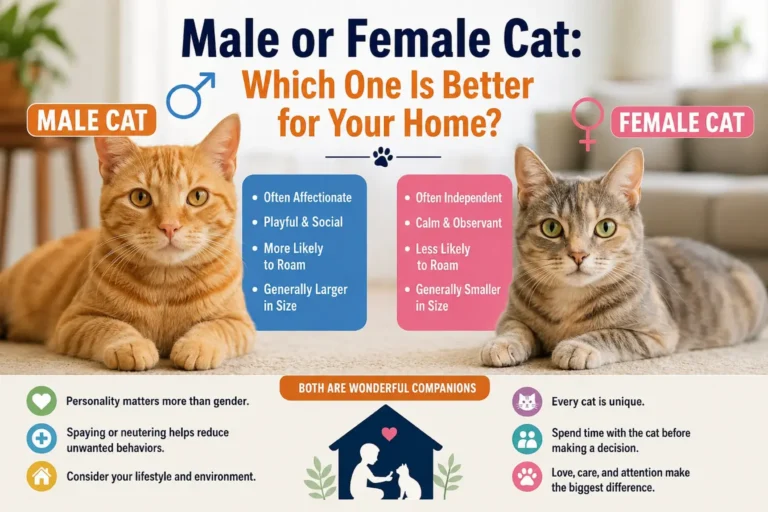
Male or Female Cat is one of the first questions many people ask before adopting a kitten. Choosing the right cat can affect your daily life, pet care routine, and overall experience.
Both male and female cats make wonderful pets. However, they may show different behaviors, personalities, and habits. These differences often depend on age, breed, training, and whether the cat is neutered or spayed.
Many new pet owners wonder if male cats are friendlier or if female cats are more independent. The answer is not always simple. Every cat has its own unique personality.
In this guide, you will learn the key differences between male and female cats. You will also discover helpful tips, common mistakes, and expert insights to help you make the best choice.
Quick Summary Box
- Male and female cats can both be loving pets.
- Male cats often appear more social and affectionate.
- Female cats may seem more independent.
- Personality varies from cat to cat.
- Spaying and neutering reduce many behavior differences.
- Lifestyle matters more than gender alone.
- Choose a cat based on temperament, not only sex.
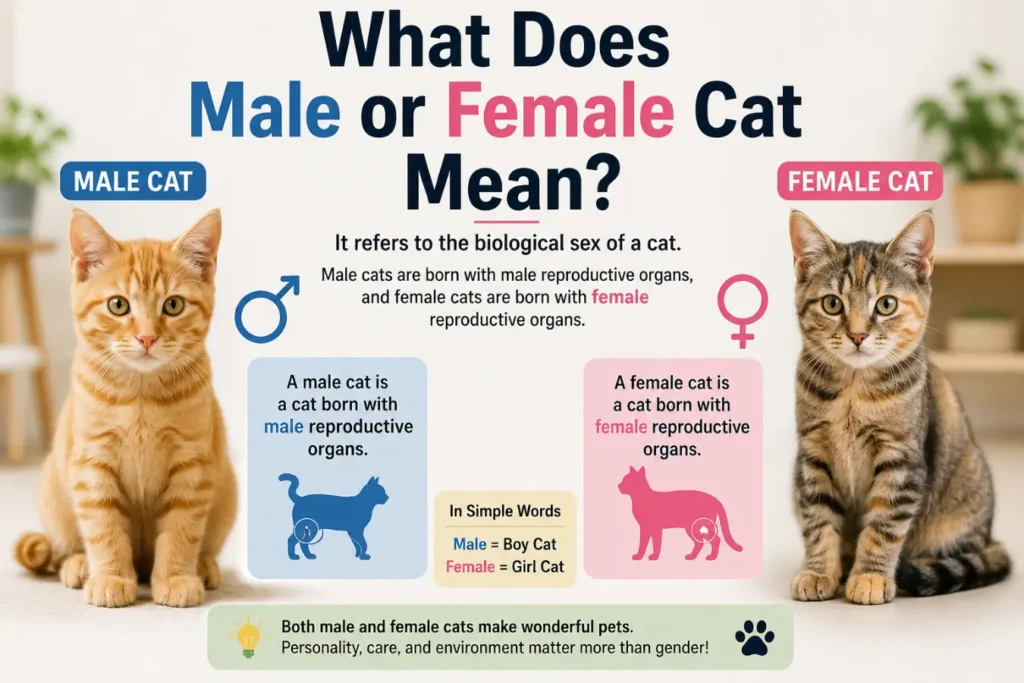
What Does Male or Female Cat Mean?
A male cat is a cat born with male reproductive organs.
A female cat is a cat born with female reproductive organs.
The term male or female cat refers to the biological sex of a cat. Many people compare the two when deciding which pet to adopt.
Why Do People Compare Male and Female Cats?
People often want to know:
- Which cat is friendlier?
- Which cat is easier to train?
- Which cat requires less maintenance?
- Which cat gets along better with children?
While gender can influence behavior, personality remains the most important factor.
Male vs Female Cat: Quick Comparison Table
| Feature | Male Cat | Female Cat |
|---|---|---|
| Personality | Often social and playful | Often independent and calm |
| Affection Level | Usually very affectionate | Affection varies by individual |
| Territory Marking | More common if not neutered | Less common |
| Roaming Behavior | More likely if not neutered | Usually stays closer to home |
| Interaction with Humans | Often seeks attention | May choose when to interact |
| Compatibility with Other Cats | Usually friendly when neutered | Can be selective |
| Size | Generally larger | Usually smaller |
| Energy Level | Often active and playful | Moderate to high |
Personality Differences Between Male and Female Cats
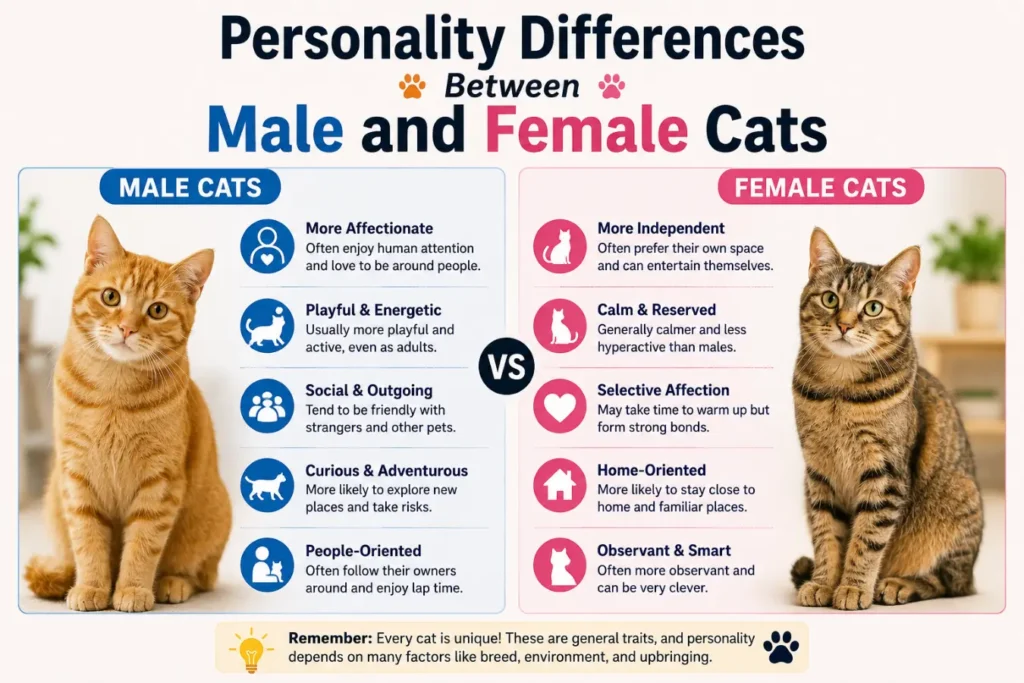
Many cat owners notice personality differences between male and female cats.
Male cats often:
- Enjoy human attention
- Follow owners around the house
- Play for longer periods
- Bond with multiple family members
Female cats often:
- Show independence
- Prefer personal space
- Build strong bonds with one person
- Observe before joining activities
However, these traits are general trends. Individual cats may behave differently.
Are Male Cats More Affectionate?
Many pet owners believe male cats are more affectionate.
Neutered male cats often:
- Sit on laps frequently
- Seek cuddles
- Enjoy close contact
- Follow people around
This does not mean female cats are unfriendly. Many female cats are extremely loving and loyal.
The cat’s upbringing and socialization often matter more than gender.
Are Female Cats Easier to Care For?
Female cats are not necessarily easier to care for.
A spayed female cat usually:
- Has fewer hormone-related behaviors
- Roams less often
- Marks territory less frequently
However, both male and female cats need:
- Proper nutrition
- Veterinary care
- Exercise
- Mental stimulation
- Grooming
Care requirements remain very similar.
Behavior Differences in Daily Life
Daily behavior often influences adoption decisions.
Male Cat Behavior
- More likely to explore
- Enjoys active play
- Often seeks attention
- May spray urine if not neutered
Female Cat Behavior
- May prefer quiet spaces
- Often watches before acting
- Can be protective of territory
- May become vocal during heat cycles if not spayed
Spaying and neutering greatly reduce these behaviors.
Which Cat Is Better for Families?
Both genders can fit well into family life.
Male cats often:
- Play well with children
- Enjoy social environments
- Adapt quickly to visitors
Female cats often:
- Stay calm in structured homes
- Form strong family bonds
- Enjoy predictable routines
Families should focus on the cat’s temperament rather than gender alone.
Male or Female Cat for First-Time Owners
First-time owners can succeed with either gender.
Consider:
- Age of the cat
- Health status
- Personality
- Activity level
- Social behavior
A friendly and well-socialized cat usually makes the best choice for beginners.
Real-Life Examples
Example 1: Active Family
A family with children adopts a neutered male cat.
The cat enjoys games, greets visitors, and spends time with everyone.
Example 2: Quiet Apartment Owner
A professional living alone adopts a spayed female cat.
The cat enjoys peaceful surroundings and forms a strong bond with its owner.
Example 3: Multi-Cat Household
Two neutered male cats often coexist peacefully when introduced properly.
Gender matters less than proper socialization.
Common Mistakes When Choosing Between a Male or Female Cat
1. Choosing Only by Gender
Personality matters more than sex.
2. Ignoring Spaying or Neutering
Hormones influence behavior significantly.
3. Forgetting Breed Differences
Breed traits can outweigh gender differences.
4. Skipping Temperament Assessment
Always spend time with the cat before adoption.
5. Believing Every Stereotype
Not every male cat is cuddly. Not every female cat is independent.
Tips for Choosing the Right Cat
Meet the Cat First
Observe behavior before making a decision.
Ask About Socialization
Well-socialized cats adapt more easily.
Consider Your Lifestyle
Active homes may suit playful cats.
Quiet homes may suit calm cats.
Choose a Healthy Cat
Health often affects behavior and quality of life.
Prioritize Temperament
A good personality match leads to a happier relationship.
Synonyms and Related Keywords
These related terms help people understand the topic better:
- Male cat vs female cat
- Difference between male and female cats
- Cat gender comparison
- Male kitten or female kitten
- Best cat gender
- Male cat personality
- Female cat personality
- Cat behavior differences
- Choosing a cat
- Pet adoption guide
How Spaying and Neutering Affect Behavior
Spaying and neutering change many behaviors linked to hormones.
Benefits include:
- Reduced spraying
- Less roaming
- Fewer territorial disputes
- Lower risk of unwanted litters
- Improved household harmony
After surgery, personality differences often become less noticeable.
Expert Insights: Why This Choice Matters
Animal behavior experts agree on one key point.
Gender alone does not determine a cat’s personality.
Several factors shape behavior:
- Genetics
- Early experiences
- Socialization
- Health
- Environment
Experts recommend evaluating the individual cat rather than relying on stereotypes.
A compatible personality creates a stronger bond than gender alone.
(FAQs)
1. Is a male or female cat better?
Neither is universally better. The best choice depends on personality and lifestyle compatibility.
2. Are male cats friendlier than female cats?
Many male cats appear more social, but individual personality varies greatly.
3. Do female cats become more attached to owners?
Some female cats form very strong bonds with one person.
4. Which cat is easier to train?
Training success depends more on temperament and consistency than gender.
5. Do male cats spray more?
Unneutered male cats are more likely to spray territory.
6. Are female cats calmer?
Some female cats appear calmer, but behavior differs among individuals.
7. Should first-time owners choose a male or female cat?
Choose a friendly, healthy, and socialized cat regardless of gender.
8. Does spaying or neutering change personality?
It reduces hormone-driven behaviors but usually keeps the cat’s core personality intact.
Conclusion
Choosing a Male or Female Cat is an important decision, but gender should not be your only factor. Male cats often appear affectionate and social. Female cats may seem independent and selective. However, every cat has a unique personality.
The biggest influences on behavior include socialization, health, environment, and whether the cat has been spayed or neutered. A well-matched personality creates a stronger relationship than gender alone.
Before adopting, spend time with the cat and observe its behavior. Look for a pet that matches your lifestyle and expectations. In most cases, the perfect companion is not determined by gender but by compatibility. Focus on finding the right individual cat, and you will enjoy many happy years together.