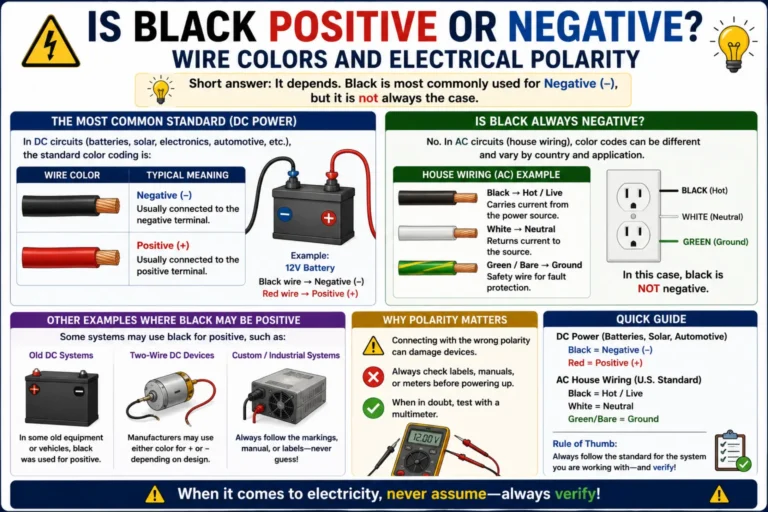
Is black positive or negative? This is a common question when working with electrical wires, batteries, or electronic devices. The answer depends on the wiring system and the country. In many household electrical systems, a black wire is the live (hot) wire, not positive or negative. In many DC systems, however, a black wire usually represents the negative (-) terminal.
Understanding wire colors helps you work safely and avoid costly mistakes. It also makes it easier to install lights, batteries, and electronic equipment correctly. In this guide, you will learn what a black wire means, when it is positive or negative, and how to identify electrical wires with confidence.
Quick Summary
Is Black Positive or Negative?
- A black wire is not always positive or negative.
- In DC circuits, black usually means negative (-).
- In AC household wiring, black usually means the live (hot) wire.
- Wire colors can vary by country and manufacturer.
- Always confirm with a multimeter before making connections.
- Never rely only on wire color for safety.
What Does a Black Wire Mean?
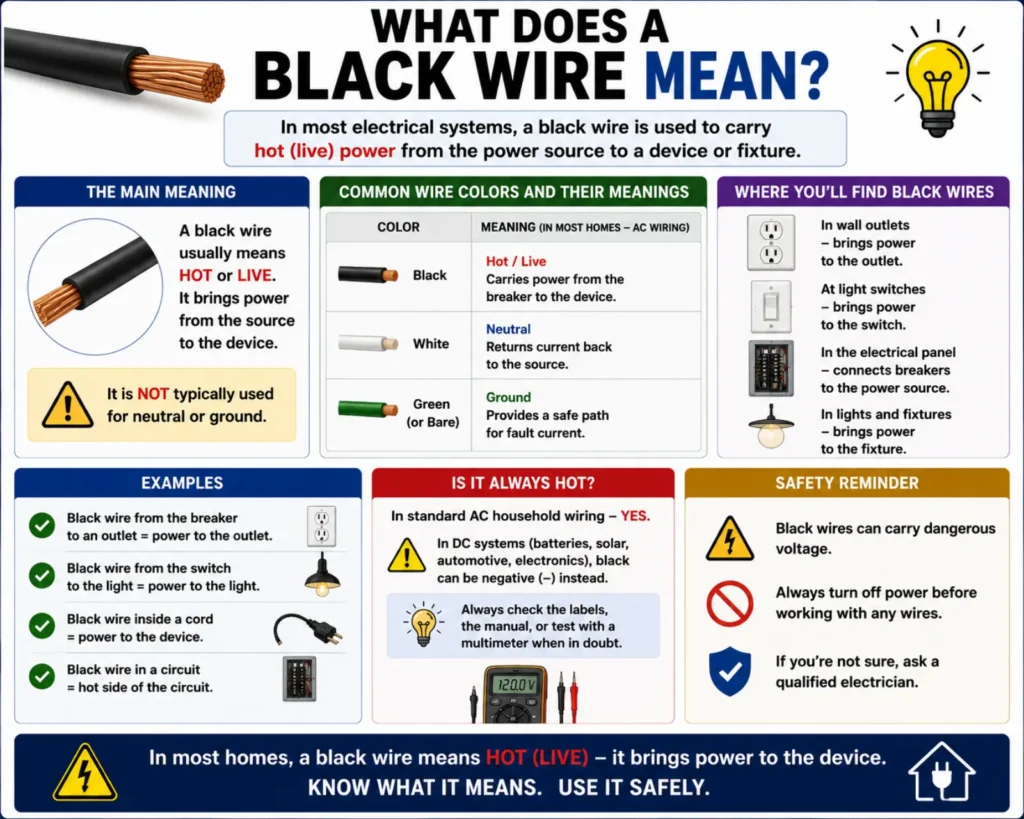
A black wire can have different meanings.
Its purpose depends on the electrical system.
In direct current (DC) systems, black usually represents the negative terminal.
In alternating current (AC) systems, black often carries electrical power.
Because different systems use different standards, you should always verify the wire before touching it.
Is Black Positive or Negative in DC Circuits?
In most DC circuits, the black wire is negative (-).
You can find this color code in many devices.
Examples include:
- Car batteries
- Solar power systems
- Security cameras
- LED lighting
- Portable electronics
The red wire usually carries the positive voltage.
The black wire provides the return path for current.
Common DC Wire Colors
| Wire Color | Function |
|---|---|
| Red | Positive (+) |
| Black | Negative (-) |
| White | Ground or negative in some systems |
| Green | Ground |
Is Black Positive or Negative in AC Wiring?
AC wiring works differently.
Household electrical wiring does not use positive and negative.
Instead, it uses:
- Live (Hot)
- Neutral
- Ground
In many countries, the black wire is the live wire.
The live wire carries electricity from the power source.
Because of this, it can be dangerous to touch.
Typical AC Wire Colors
| Wire Color | Function |
| Black | Live (Hot) |
| White | Neutral |
| Green or Bare Copper | Ground |
Always switch off the power before working on household wiring.
Why Do Wire Colors Matter?
Wire colors help electricians identify wires quickly.
They also reduce mistakes during installation.
Correct wire identification improves safety.
It also protects electrical equipment.
However, color alone is not enough.
Older buildings and custom wiring may use different colors.
Always verify the wire before making any connection.
Black Wire vs Red Wire
Many people confuse black and red wires.
Their meanings depend on the electrical system.
| Feature | Black Wire | Red Wire |
| DC Circuit | Negative (-) | Positive (+) |
| AC Circuit | Live (Hot) | Second Live or Switched Live |
| Battery Connection | Negative Terminal | Positive Terminal |
| Common Use | Return path or live conductor | Power supply |
This comparison shows why knowing the type of circuit is important.
Real-Life Examples
Understanding wire colors becomes easier with practical examples.
Example 1: Car Battery
The black cable connects to the negative battery terminal.
The red cable connects to the positive terminal.
Example 2: LED Strip Lights
Most LED strips use a black wire for the negative connection.
The red wire supplies positive voltage.
Example 3: Home Light Switch
A black wire usually carries live electrical current.
It is not considered positive or negative.
Example 4: Solar Panel System
Many solar installations use black as the negative wire and red as the positive wire.
Always follow the manufacturer’s wiring diagram.

Can You Always Trust Wire Colors?
No.
Wire colors provide useful guidance.
However, they are not guaranteed.
Some manufacturers use different color standards.
Older wiring systems may not follow modern codes.
Repairs and modifications can also change wire colors.
For this reason, electricians use testing tools before making connections.
A multimeter is one of the safest tools for confirming wire polarity and voltage.
Wire Color Standards Around the World
Wire colors are not the same in every country.
Different regions follow different electrical codes. Knowing these standards helps prevent wiring errors.
| Country/Region | Black Wire | White Wire | Green Wire |
|---|---|---|---|
| United States | Live (Hot) in AC, Negative in many DC systems | Neutral | Ground |
| Canada | Live (Hot) | Neutral | Ground |
| United Kingdom | Live (older systems) | Neutral (older systems) | Ground |
| Australia | Live in some older installations | Neutral | Ground |
Always check your local electrical code before working on wiring.
Never assume every country follows the same color system.
Common Mistakes When Identifying Black Wires
Many electrical accidents happen because people misunderstand wire colors.
Avoid these common mistakes.
Mistake 1: Assuming Black Always Means Negative
A black wire is negative in many DC systems.
However, it is usually the live wire in AC household wiring.
Mistake 2: Ignoring the Wiring Diagram
Manufacturers sometimes use custom colors.
Always read the wiring instructions first.
Mistake 3: Skipping Voltage Testing
Never rely only on wire colors.
Test the wire with a multimeter before touching it.
Mistake 4: Confusing AC and DC Systems
AC systems use live, neutral, and ground.
DC systems use positive and negative.
These systems work differently.
Tips for Identifying Electrical Wires Safely
Follow these simple tips before handling any electrical wire.
Turn Off the Power
Disconnect the power source before working on electrical equipment.
Use a Multimeter
Measure voltage and polarity before making connections.
Read the Labels
Many wires have printed markings or labels.
These markings help identify their purpose.
Follow Local Electrical Codes
Every country has electrical safety standards.
Follow the correct code for your location.
Wear Safety Equipment
Use insulated tools and protective gloves whenever possible.
Safety should always come first.
Everyday Uses of Black Wires
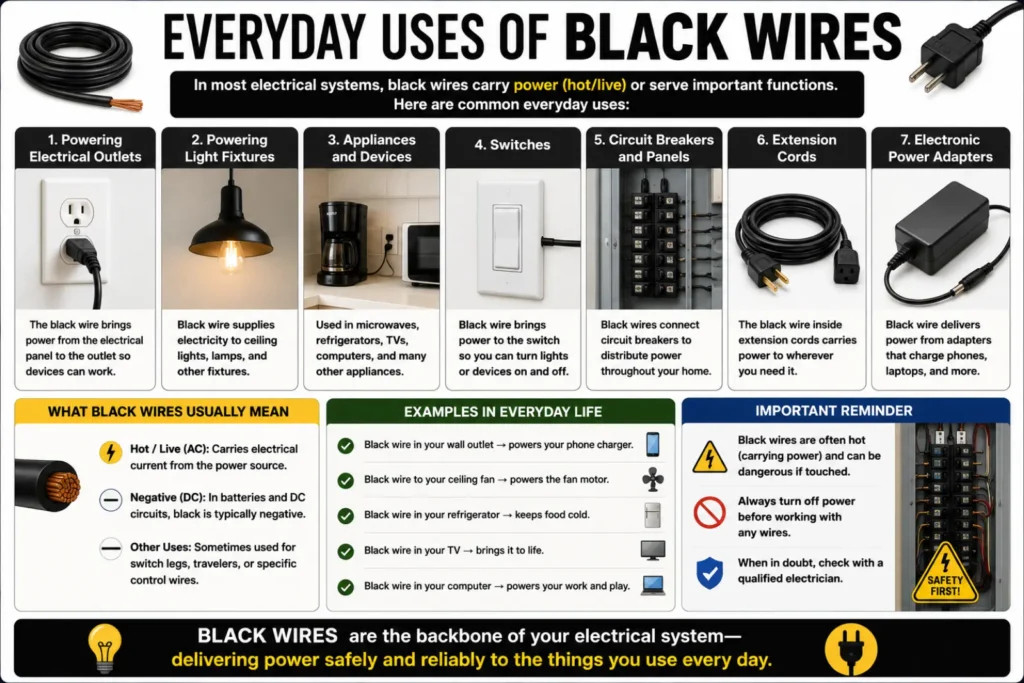
Black wires appear in many common electrical systems.
Here are a few examples.
Home Wiring
Black wires often carry live electrical current to outlets and switches.
Car Electrical Systems
The black cable usually connects to the negative battery terminal.
Solar Power Systems
Many solar systems use black wires for negative connections.
Security Cameras
Most DC-powered cameras use black as the negative wire.
LED Lighting
Black wires commonly connect to the negative side of LED strips and lighting systems.
Understanding these applications helps you identify wires correctly.
Synonyms and Related Search Terms
Using related keywords improves topic coverage and supports SEO.
Here are some useful LSI keywords and semantic variations.
- black wire meaning
- black wire positive or negative
- black wire polarity
- negative wire color
- positive wire color
- electrical wire colors
- DC wire colors
- AC wire colors
- hot wire
- live wire
- neutral wire
- ground wire
- battery cable colors
- electrical polarity
- wiring color code
- red and black wires
- wire identification
- electrical safety
Use these terms naturally throughout your content without keyword stuffing.
Expert Insight
Professional electricians never identify wires by color alone.
Wire colors provide helpful guidance, but they are not a guarantee.
Testing equipment confirms the actual voltage and polarity.
A simple multimeter can prevent electrical shock, damaged equipment, and wiring mistakes.
If you are unsure about any electrical connection, consult a qualified electrician.
Learning wire color standards is an important first step toward working safely with electricity.
Frequently Asked Questions
Is a black wire always negative?
No. In DC systems, black is usually negative. In AC household wiring, black is usually the live wire.
Is the black wire positive on a battery?
No. Most batteries use black for the negative terminal and red for the positive terminal.
What does a black wire mean in house wiring?
In most household AC systems, the black wire carries live electrical current.
Can wire colors change between countries?
Yes. Different countries follow different electrical wiring standards.
Should I trust wire colors alone?
No. Always verify wires using a multimeter or wiring diagram.
Which wire is positive, red or black?
In most DC systems, red is positive and black is negative.
Why do AC wires not use positive and negative?
Alternating current changes direction many times each second. Therefore, AC systems use live, neutral, and ground instead of positive and negative.
What tool checks wire polarity?
A digital multimeter is the most common tool for checking voltage and polarity.
Conclusion
The answer to “is black positive or negative” depends on the type of electrical system. In most DC circuits, such as batteries, LED lights, and automotive wiring, the black wire is the negative (-) wire. In most AC household wiring systems, the black wire is the live (hot) wire and does not represent positive or negative.
Because wiring standards can vary, never rely only on wire colors. Always check the wiring diagram and confirm the wire with a multimeter before making any connection. Understanding these basic rules helps improve electrical safety, protects your equipment, and gives you greater confidence when working with electrical systems.