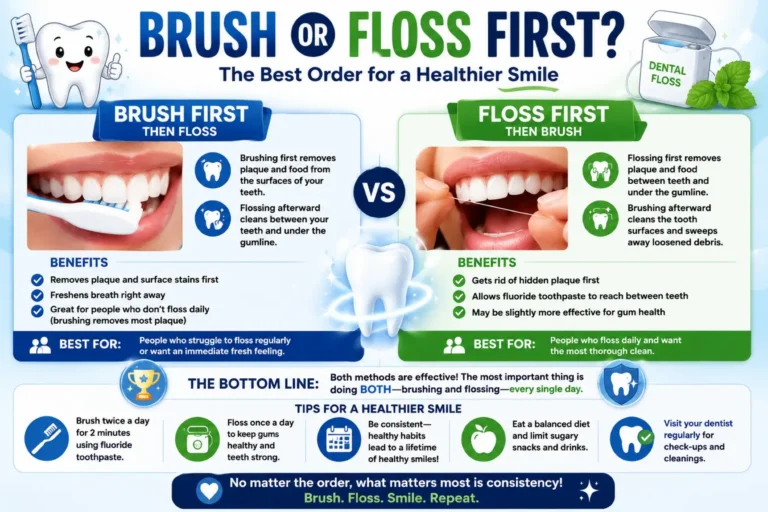
Brush or floss first? Many people ask this question during their daily dental routine. Both brushing and flossing keep your teeth and gums healthy. However, the order may affect how well you clean your mouth. Dentists often recommend flossing before brushing because it removes trapped food and plaque. Brushing afterward helps fluoride reach more tooth surfaces. Still, the most important step is doing both every day. Good oral care lowers the risk of cavities, gum disease, and bad breath. This guide explains the best order in simple words. You will also learn the benefits, common mistakes, expert tips, and easy ways to build a healthy routine for a brighter smile.
Quick Summary Box
- Flossing before brushing is often the better choice.
- Floss removes plaque and food between teeth.
- Brushing cleans tooth surfaces and adds fluoride.
- Doing both every day matters most.
- Healthy habits help prevent cavities and gum disease.
- Use gentle brushing and proper flossing techniques.
- Visit your dentist for regular checkups.
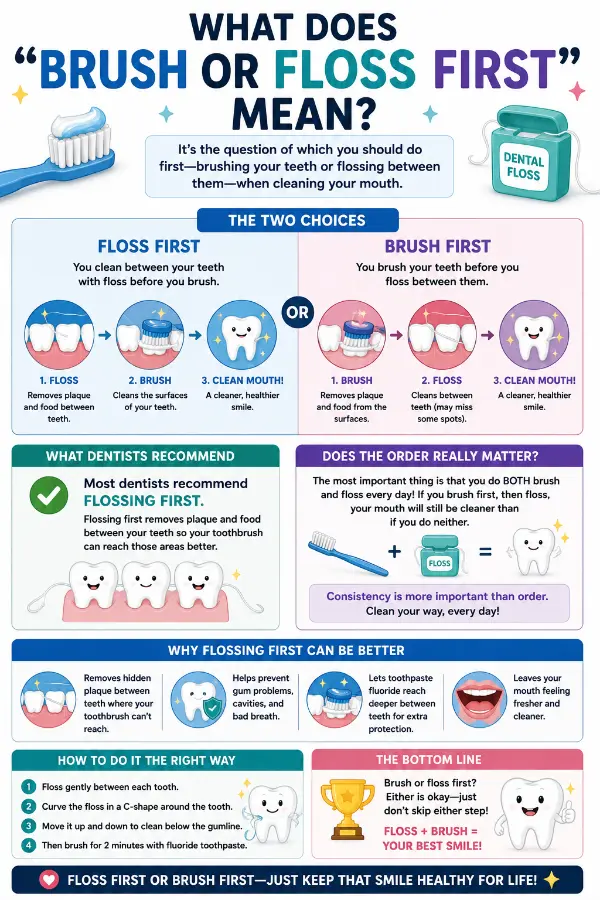
What Does “Brush or Floss First” Mean?
The phrase asks which dental step should come first.
You have two choices.
- Brush first, then floss.
- Floss first, then brush.
Both methods clean your teeth.
However, flossing first may help brushing work better.
Why Does the Order Matter?
The order affects how well you remove plaque.
Floss reaches places that a toothbrush cannot.
It loosens food particles between your teeth.
Brushing afterward removes those particles.
It also leaves fluoride on cleaner tooth surfaces.
This may improve overall oral hygiene.
Should You Brush or Floss First?
Many dental professionals suggest flossing first.
Floss removes plaque from tight spaces.
Brushing then cleans the rest of your mouth.
This routine may leave your teeth cleaner.
It also supports healthy gums.
Still, brushing first is better than skipping floss completely.
Consistency matters more than perfection.
How Flossing Works
Floss slides between your teeth.
It removes plaque before it hardens.
It also removes trapped food.
This helps lower the risk of gum disease.
Daily flossing keeps your gums healthier.
It also reduces bad breath.
How Brushing Works
Brushing cleans the front, back, and top of your teeth.
It removes plaque from visible surfaces.
Fluoride toothpaste strengthens tooth enamel.
Brushing also freshens your breath.
Dentists recommend brushing for two minutes.
Brush twice each day.
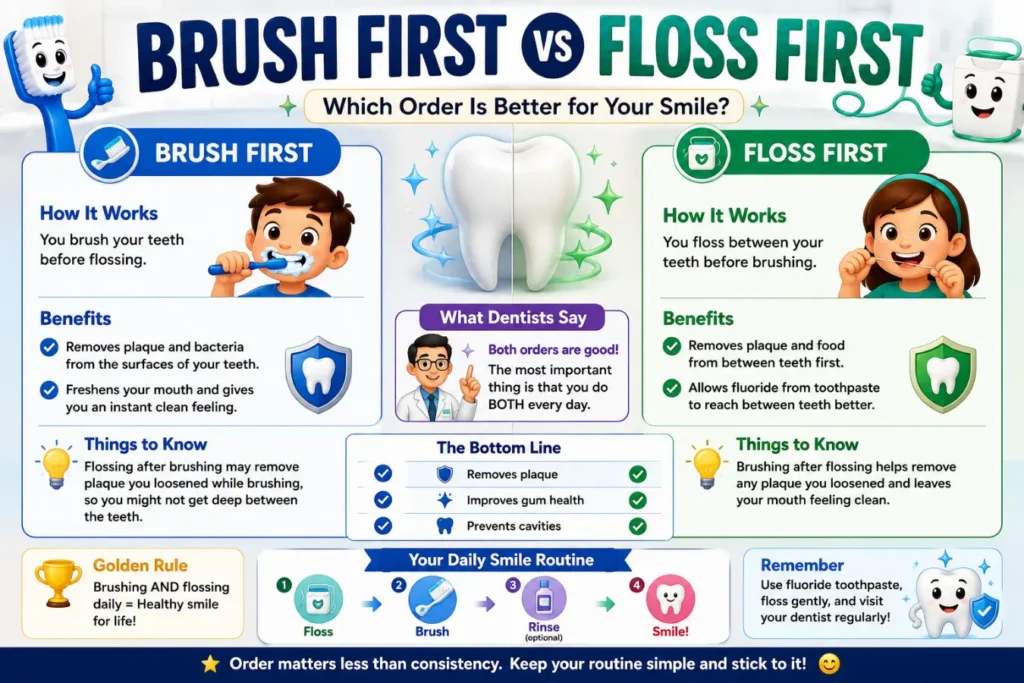
Brush First vs Floss First
Here is a simple comparison.
| Feature | Brush First | Floss First |
|---|---|---|
| Removes surface plaque | ✔ | ✔ |
| Removes food between teeth | After brushing | Before brushing |
| Helps fluoride reach teeth | Less effective | More effective |
| Recommended by many dentists | Sometimes | Yes |
| Overall cleaning | Good | Better |
Key takeaway: Flossing first may improve the overall cleaning process, but doing both every day is the real goal.
Benefits of Flossing Before Brushing
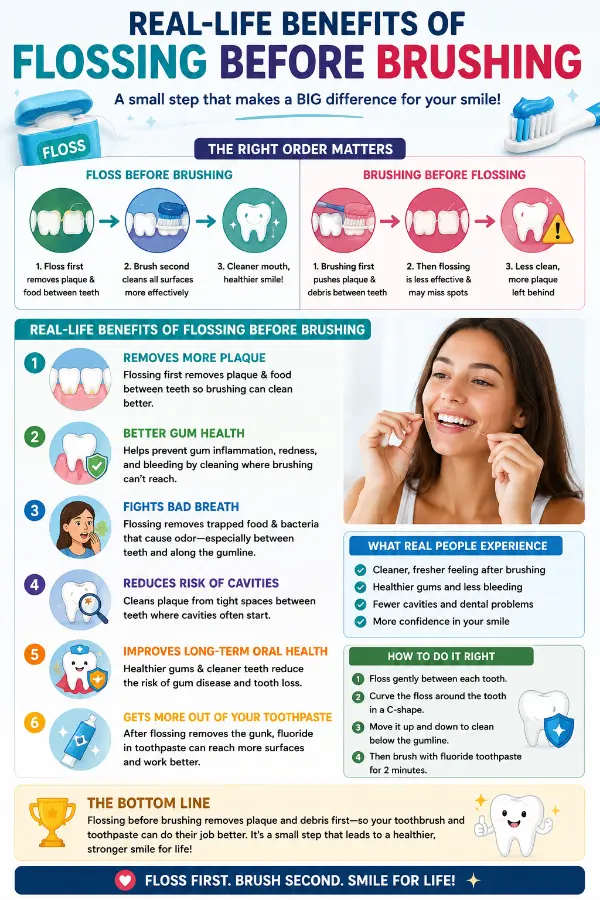
Flossing first offers several benefits.
- Removes trapped food.
- Loosens plaque.
- Helps fluoride reach more surfaces.
- Supports healthier gums.
- Reduces the risk of cavities.
- Leaves your mouth feeling cleaner.
These small benefits add up over time.
Real-Life Examples
Example 1
Sarah flosses before brushing every night.
She notices less food between her teeth.
Her gums bleed less after a few weeks.
Example 2
James brushes first but often skips flossing.
His dentist finds plaque between his teeth.
He starts flossing daily and improves his oral health.
Example 3
Emma flosses before brushing after dinner.
Her breath stays fresher until bedtime.
She also notices healthier gums during dental checkups.
Why Dentists Recommend Flossing First
Dentists focus on removing plaque completely.
Floss reaches areas that brushing misses.
Once plaque loosens, brushing clears it away.
Fluoride toothpaste then protects the cleaned teeth.
This simple order supports better oral health.
It may also reduce the risk of gum disease over time.
Common Mistakes People Make
Many people follow an oral care routine. However, small mistakes reduce its benefits.
Avoid these common errors:
- Skipping flossing completely.
- Brushing too hard.
- Using old toothbrushes.
- Flossing too quickly.
- Brushing for less than two minutes.
- Forgetting to brush before bed.
- Reusing dirty floss.
- Not brushing the tongue.
Correcting these habits can improve your oral health.
Tips for Better Brushing and Flossing
Simple habits make a big difference.
Follow these tips:
- Floss before brushing.
- Brush twice every day.
- Use fluoride toothpaste.
- Brush for two full minutes.
- Replace your toothbrush every three months.
- Floss gently to protect your gums.
- Clean your tongue daily.
- Drink plenty of water.
- Visit your dentist every six months.
Healthy habits protect your smile for years.
How to Floss the Right Way
Proper flossing removes more plaque.
Follow these simple steps:
- Use about 18 inches of dental floss.
- Wrap the floss around your fingers.
- Slide it gently between your teeth.
- Curve the floss around each tooth.
- Move it up and down carefully.
- Use a clean section for each tooth.
Never snap the floss into your gums.
Gentle movements work best.
How to Brush the Right Way
Brushing correctly protects your teeth and gums.
Follow these steps:
- Use a soft-bristled toothbrush.
- Apply a pea-sized amount of fluoride toothpaste.
- Hold the brush at a 45-degree angle.
- Brush using small circular motions.
- Clean every tooth surface.
- Brush your tongue.
- Brush for two minutes.
- Rinse your toothbrush after use.
Good brushing removes plaque without damaging your gums.
Daily Oral Care Routine
A simple routine keeps your mouth healthy.
Morning Routine
- Floss your teeth.
- Brush for two minutes.
- Rinse if needed.
Night Routine
- Floss carefully.
- Brush with fluoride toothpaste.
- Avoid eating afterward.
Following the same routine every day builds healthy habits.
Real-Life Benefits of Flossing Before Brushing
Many people notice improvements after changing the order.
For example:
- A student avoids bad breath during school.
- An office worker keeps healthier gums.
- A parent teaches children better brushing habits.
- Older adults reduce plaque buildup.
- People with braces remove trapped food more easily.
Small changes often produce lasting results.
Does It Matter If You Brush First?
Not always.
Brushing first still cleans your teeth.
It removes plaque from easy-to-reach areas.
However, brushing first may leave some loosened plaque between your teeth.
That is why many dentists recommend flossing first.
The most important habit is brushing and flossing every day.
Brush or Floss First for Children
Children should learn good habits early.
Parents can help by:
- Showing proper flossing.
- Supervising brushing.
- Using child-friendly toothpaste.
- Making brushing fun.
- Creating a daily routine.
Healthy habits started in childhood often last a lifetime.
Brush or Floss First With Braces
People with braces need extra care.
Food easily gets trapped around brackets and wires.
Floss first to remove trapped food.
Then brush carefully around every bracket.
Special orthodontic floss or floss threaders can make cleaning easier.
Good cleaning reduces the risk of cavities and gum problems during orthodontic treatment.
Brush or Floss First With Sensitive Gums
Sensitive gums need gentle care.
Choose a soft toothbrush.
Floss slowly and carefully.
Do not press too hard while brushing.
If bleeding continues after several weeks of daily flossing, visit your dentist.
Healthy gums usually bleed less as plaque decreases.
(FAQs)
1. Should I brush or floss first?
Most dentists recommend flossing before brushing. It removes plaque and food between your teeth, allowing fluoride toothpaste to reach more surfaces.
2. Is it bad to brush before flossing?
No. Brushing first is not harmful. However, flossing first may provide a more thorough clean.
3. Why do dentists recommend flossing first?
Flossing loosens plaque and food particles. Brushing afterward removes them and spreads fluoride more effectively.
4. How often should I floss?
Floss at least once every day. Daily flossing helps prevent cavities and gum disease.
5. Should I floss before brushing at night?
Yes. Flossing before your bedtime brushing helps remove food and plaque that build up during the day.
6. Can flossing replace brushing?
No. Flossing cleans between teeth, while brushing cleans the tooth surfaces. You need both for good oral health.
7. How long should I brush my teeth?
Brush for two full minutes, twice each day, using fluoride toothpaste.
8. What if my gums bleed while flossing?
Mild bleeding is common if you are new to flossing. It often improves after a few days of regular, gentle flossing. If bleeding continues, see your dentist.
Expert Insights
Dental professionals agree that both brushing and flossing are essential.
Research suggests that flossing before brushing may improve plaque removal and help fluoride remain on more tooth surfaces. However, the biggest factor is consistency.
A healthy oral care routine includes:
- Floss once a day.
- Brush twice daily.
- Use fluoride toothpaste.
- Replace your toothbrush every three months.
- Visit your dentist every six months.
These simple habits reduce the risk of cavities, gum disease, and bad breath.
Synonyms and LSI Keywords
Use these related keywords naturally throughout your content.
Primary LSI Keywords
- floss before brushing
- brush before floss
- brushing vs flossing
- oral hygiene routine
- dental care routine
- healthy teeth
- gum health
- plaque removal
- fluoride toothpaste
- daily flossing
Long-Tail Keywords
- should you floss before brushing
- is it better to brush or floss first
- best order to brush and floss
- brushing teeth after flossing
- flossing before brushing benefits
- dentist recommended brushing routine
- proper brushing and flossing order
- oral hygiene tips
Conclusion
So, brush or floss first? Most dental experts recommend flossing before brushing. Floss removes plaque and food from between your teeth. Brushing afterward cleans the remaining surfaces and helps fluoride protect your enamel.
Still, the order is less important than staying consistent. Brushing twice a day and flossing once daily will improve your oral health over time. These simple habits reduce cavities, protect your gums, and keep your breath fresh.
Choose a routine that works for you and stick with it. A few minutes of daily care can help you enjoy a healthier smile for years to come.