Do ants bite or sting? This is a common question people ask after finding a painful red bump on their skin. The answer is simple. Some ants bite, some sting, and some do both. Their defense methods depend on the ant species. Most ants bite to hold onto the skin. Some then sting or spray irritating chemicals.
Knowing the difference helps you treat the injury correctly. It also helps you avoid future encounters. In this guide, you will learn how ants bite or sting, which species cause pain, what symptoms to expect, and when to seek medical help. We also share prevention tips and common mistakes. Everything is explained in simple language for easy understanding.
Quick Summary Box
- Some ants bite, while others sting.
- Fire ants both bite and sting.
- Carpenter ants bite but do not sting.
- Most ant bites are mild and heal quickly.
- Ant stings can cause burning pain.
- Allergic reactions need immediate medical care.
- Clean the affected area after a bite or sting.
- Prevention is the best protection.
What Does It Mean When Ants Bite or Sting?
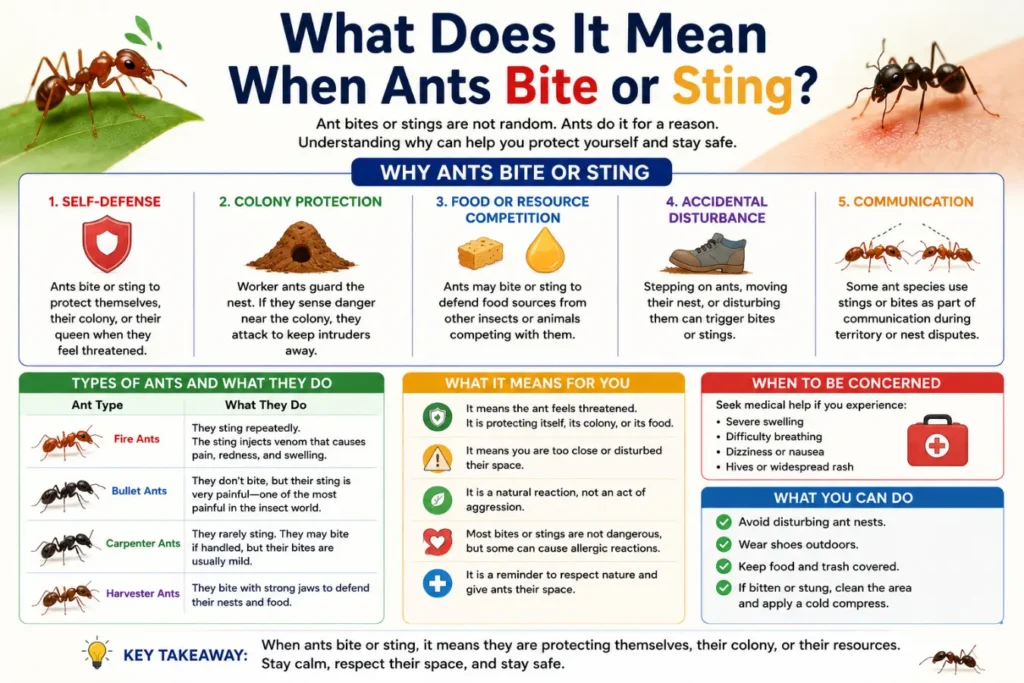
Ants protect themselves when they feel threatened.
A bite happens when an ant uses its jaws to pinch your skin.
A sting happens when an ant injects venom through a stinger.
Some ants can only bite.
Some ants can both bite and sting.
Understanding this difference helps identify the insect responsible.
Do All Ants Bite or Sting?
No.
Not every ant species behaves the same way.
Here are a few examples.
- Carpenter ants bite.
- Fire ants bite and sting.
- Bullet ants bite and sting.
- Black garden ants usually bite lightly.
- Harvester ants sting.
Most household ants rarely harm people unless disturbed.
How Do Ant Bites Work?
An ant bite uses powerful jaws called mandibles.
The ant grabs your skin tightly.
Some ants simply release after biting.
Others continue holding the skin while preparing to sting.
The bite alone usually causes mild pain.
Larger ants may leave a noticeable mark.
How Do Ant Stings Work?
Some ants have a venom-filled stinger.
The ant bites first to stay attached.
It then bends its body.
Next, it injects venom into the skin.
This venom causes burning, itching, and swelling.
Fire ants often sting several times in a circle.
Why Do Ants Bite or Sting People?
Ants do not attack without a reason.
They usually react to danger.
Common reasons include:
- Protecting their nest
- Defending food
- Feeling trapped
- Being stepped on
- Getting caught inside clothing
Most encounters happen by accident.
Which Ant Species Bite or Sting?
Different ants behave differently.
Fire Ants
- Bite and sting
- Cause burning pain
- Leave white pustules
Carpenter Ants
- Bite only
- Large jaws
- Painful pinch
Bullet Ants
- Bite and sting
- Extremely painful venom
- Found in tropical forests
Harvester Ants
- Powerful sting
- Venom can be painful
Black Garden Ants
- Mild bite
- Rarely dangerous
Real-Life Examples
Example 1
A child steps on a fire ant mound.
Within seconds, several ants bite and sting.
Pain starts immediately.
Small white blisters appear later.
Example 2
Someone moves old wood.
A carpenter ant bites their finger.
The bite hurts but fades after a few hours.
Example 3
A gardener touches an ant nest.
Several ants crawl onto the arm.
They bite to protect their colony.
Symptoms of Ant Bites and Stings
Most reactions stay mild.
Common symptoms include:
- Sharp pain
- Burning feeling
- Red skin
- Swelling
- Itching
- Small bumps
Some fire ant stings create pus-filled blisters.
These usually heal within one week.
People with allergies may develop:
- Trouble breathing
- Swollen lips
- Swollen throat
- Dizziness
- Hives
Seek emergency medical care if these symptoms appear.
Ant Bite vs Ant Sting: What’s the Difference?
Although people use the terms interchangeably, an ant bite and an ant sting are not the same.
| Feature | Ant Bite | Ant Sting |
|---|---|---|
| How it happens | The ant pinches the skin with its jaws | The ant injects venom with a stinger |
| Pain level | Mild to moderate | Moderate to severe |
| Venom | No | Yes |
| Common symptoms | Redness, swelling, soreness | Burning, itching, swelling, blisters |
| Common species | Carpenter ants, black ants | Fire ants, harvester ants, bullet ants |
| Healing time | A few hours to several days | Several days to one week |
Key takeaway: A bite uses jaws, while a sting uses venom. Fire ants are unusual because they often do both.
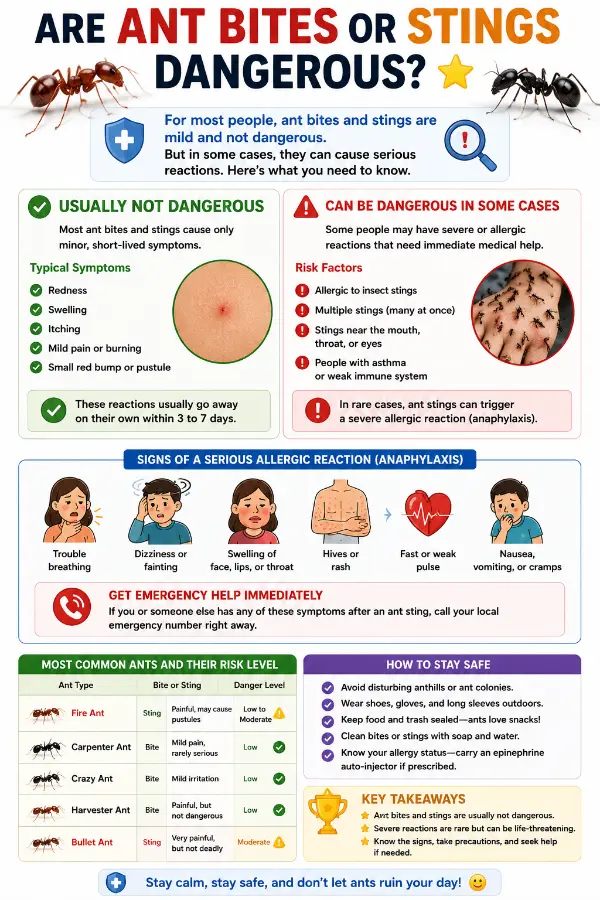
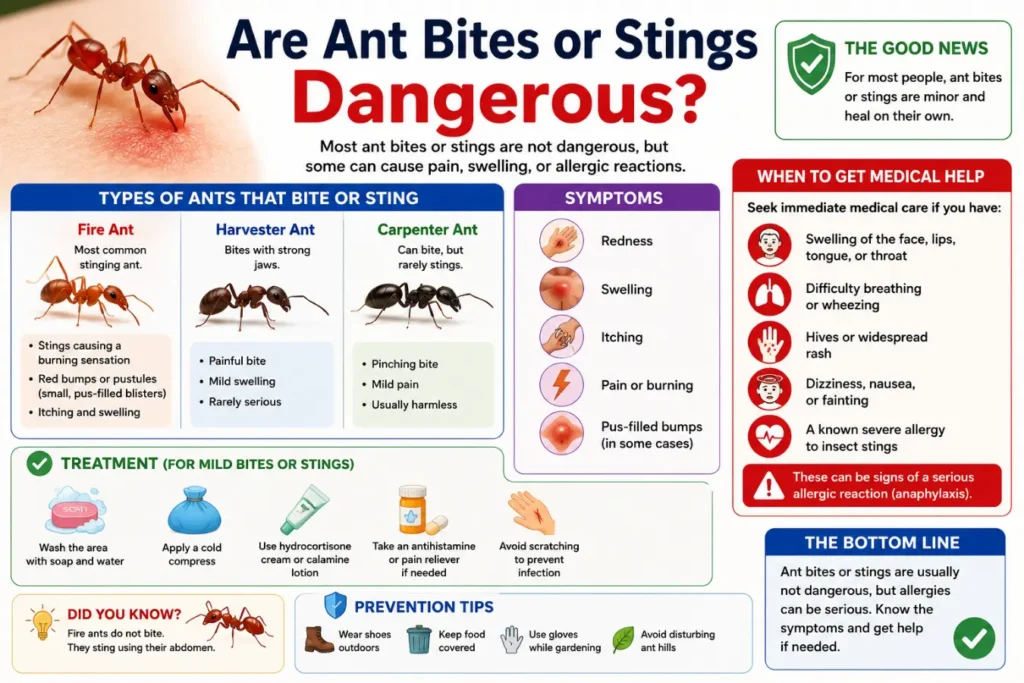
Are Ant Bites or Stings Dangerous?
Most ant bites and stings are not dangerous.
They usually cause:
- Mild pain
- Redness
- Swelling
- Itching
However, some people have allergic reactions.
Watch for these warning signs:
- Trouble breathing
- Swollen face or throat
- Fast heartbeat
- Severe dizziness
- Widespread hives
Seek emergency medical care immediately if these symptoms appear.
How to Treat an Ant Bite or Sting
Most cases improve with simple home care.
Step 1: Wash the Area
Use soap and clean water.
This removes dirt and lowers the risk of infection.
Step 2: Apply a Cold Compress
Place an ice pack in a cloth.
Use it for 10 to 15 minutes.
This reduces swelling and pain.
Step 3: Avoid Scratching
Scratching damages the skin.
It can lead to infection.
Step 4: Use Anti-Itch Cream
Hydrocortisone cream or calamine lotion can reduce itching.
Step 5: Monitor Symptoms
Seek medical help if swelling becomes severe or symptoms spread.
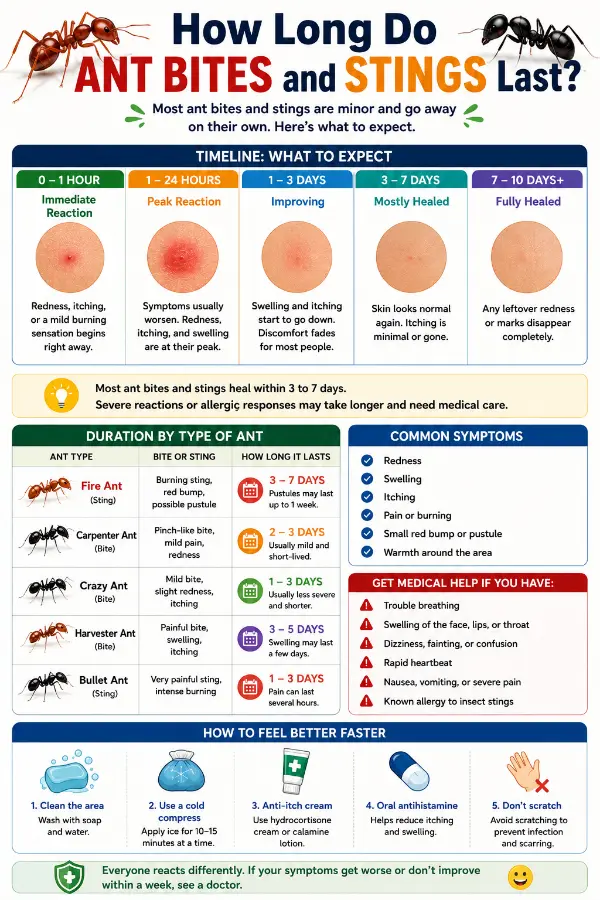
How Long Do Ant Bites and Stings Last?
Recovery depends on the ant species.
Typical healing times include:
- Mild ant bite: 1–3 days
- Mild ant sting: 3–7 days
- Fire ant blister: Up to 10 days
- Severe allergic reaction: Immediate medical treatment required
Most people recover without complications.
How to Prevent Ant Bites and Stings
Prevention is easier than treatment.
Follow these simple tips:
- Wear closed shoes outdoors.
- Use gloves while gardening.
- Avoid disturbing ant nests.
- Keep food sealed indoors.
- Clean crumbs quickly.
- Seal cracks around your home.
- Keep trash bins tightly closed.
- Use pest control if ants become a problem.
These habits reduce your risk of ant encounters.
Common Mistakes People Make
Many people make small mistakes after an ant bite or sting.
Avoid these common errors:
- Scratching the bite
- Popping fire ant blisters
- Ignoring allergic symptoms
- Walking barefoot near ant hills
- Delaying treatment
- Using dirty hands to touch the wound
Simple first aid often prevents bigger problems.
Ant Bites and Stings in Daily Life
Ant encounters happen more often than many people realize.
Common situations include:
- Gardening
- Hiking
- Camping
- Yard work
- Children’s playgrounds
- Picnics
- Walking barefoot on grass
For example, someone mowing the lawn may accidentally disturb a fire ant mound. Within seconds, several ants may bite and sting.
A camper collecting firewood may receive a carpenter ant bite after moving a rotten log.
Knowing how ants behave helps you avoid painful surprises.
Tips and Tricks to Stay Safe Around Ants
Use these practical tips every day.
- Check the ground before sitting outdoors.
- Wear socks and closed shoes.
- Shake out shoes left outside.
- Inspect firewood before carrying it.
- Teach children not to disturb ant nests.
- Store sugary foods in sealed containers.
- Remove standing food after outdoor meals.
- Keep your yard free of large ant mounds.
Small precautions can prevent painful bites and stings.
FAQs
1. Do all ants bite or sting?
No. Some ants only bite. Others both bite and sting. Fire ants are the best-known example of ants that do both.
2. Which ant has the most painful sting?
The bullet ant has one of the most painful insect stings in the world. Its sting causes intense pain that may last for many hours.
3. Can ant bites spread disease?
Most ants do not spread diseases through bites or stings. However, scratching the area can lead to a skin infection.
4. Why do fire ants sting multiple times?
Fire ants bite first to hold onto your skin. They then rotate their bodies and sting several times in a circle.
5. How long do ant bites and stings last?
Most mild reactions improve within a few hours. Fire ant stings may take several days to heal completely.
6. Should I pop a fire ant blister?
No. Leave the blister alone. Popping it increases the risk of infection and slows healing.
7. When should I see a doctor?
Get medical help if you have severe swelling, trouble breathing, signs of infection, or a reaction that worsens after two days.
8. How can I prevent ant bites and stings?
Wear closed shoes outdoors, avoid disturbing ant nests, use gloves when gardening, and keep food sealed to discourage ants.
Expert Insights
Understanding whether ants bite or sting helps you respond correctly. Many people treat every painful ant encounter the same way, but different ant species behave differently.
Health experts recommend washing the affected area with soap and water as soon as possible. Applying a cold compress helps reduce pain and swelling. Avoid scratching because broken skin can become infected.
If you have a history of severe allergic reactions to insect stings, carry emergency medication as prescribed by your healthcare provider and seek medical care immediately after a serious reaction.
Knowing the common ant species in your area also helps you stay safe during outdoor activities.
Synonyms and LSI Keywords
Use these related keywords naturally throughout your content for better semantic SEO:
- ant bite
- ant sting
- fire ant sting
- carpenter ant bite
- insect bite vs insect sting
- ant venom
- why do ants bite
- why do ants sting
- are ant bites dangerous
- how to treat ant bites
- swollen ant bite
- itchy ant bite
- fire ant bite symptoms
- ant sting treatment
- painful ant sting
- insect allergy
- ant infestation
- venomous ants
Conclusion
So, do ants bite or sting? The answer depends on the species. Some ants only bite using their strong jaws. Others, like fire ants, bite first and then sting with venom. Most bites and stings cause mild pain, redness, swelling, and itching. These symptoms often improve within a few days with simple home care.
The best protection is prevention. Wear protective clothing when working outdoors. Avoid disturbing ant nests, and keep your home clean to reduce ant activity. If you notice severe swelling, trouble breathing, or signs of an allergic reaction, seek medical care immediately.
Understanding how different ants defend themselves helps you stay safe and respond quickly. With the right knowledge, you can enjoy outdoor activities without worrying about unexpected ant encounters.