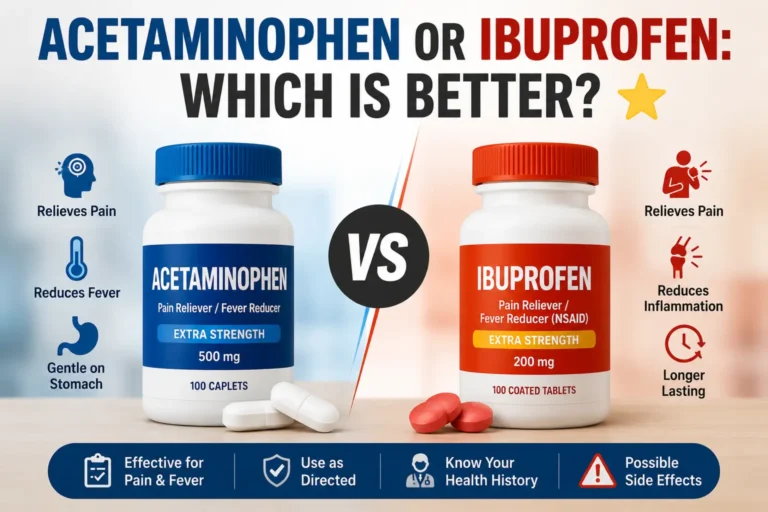
Acetaminophen or ibuprofen is a common question when you need relief from pain or fever. Both medicines help you feel better. However, they work in different ways. Choosing the right one depends on your symptoms and health.
Many people use these medicines without knowing the differences. That can lead to poor results or even side effects. Understanding when to use each medicine can help you stay safe.
In this guide, you will learn what acetaminophen and ibuprofen are. You will also discover how they compare, when to use them, and common mistakes to avoid. By the end, you will know which option fits your needs.
Quick Summary
- Acetaminophen reduces pain and fever.
- Ibuprofen reduces pain, fever, and inflammation.
- Acetaminophen is usually gentler on the stomach.
- Ibuprofen works better for swelling and inflammation.
- Both medicines should be used exactly as directed.
- Never exceed the recommended daily dose.
- Talk to your healthcare provider if you have liver, kidney, stomach, or heart conditions.
What Is Acetaminophen or Ibuprofen?
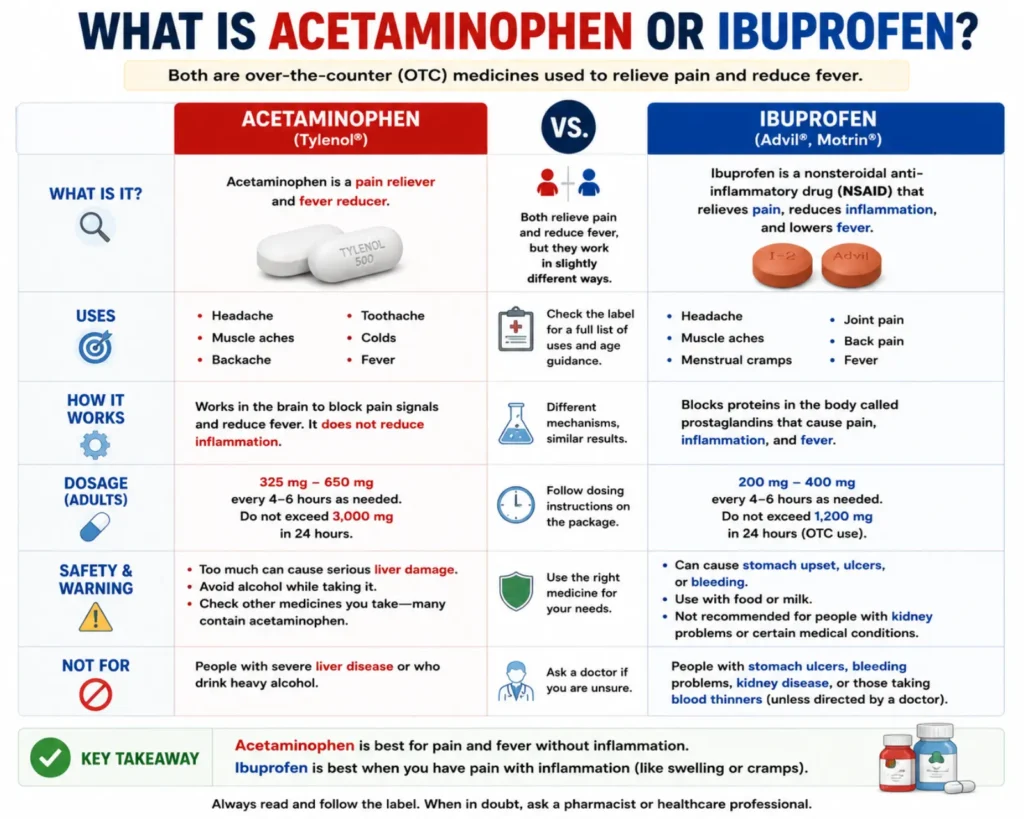
Acetaminophen and ibuprofen are over-the-counter pain relievers.
Both help reduce pain and fever. However, they work differently inside the body.
Acetaminophen mainly blocks pain signals and lowers body temperature.
Ibuprofen belongs to a group called NSAIDs (nonsteroidal anti-inflammatory drugs). It reduces pain by lowering inflammation.
Although both medicines treat similar symptoms, they are not always interchangeable.
Understanding Acetaminophen in Simple Words
Acetaminophen helps reduce:
- Headaches
- Fever
- Toothaches
- Minor muscle pain
- Back pain
- Cold and flu discomfort
It does not reduce inflammation.
Many people choose acetaminophen because it causes fewer stomach problems than NSAIDs.
Understanding Ibuprofen in Simple Words
Ibuprofen helps reduce:
- Pain
- Fever
- Swelling
- Inflammation
Doctors often recommend it for:
- Sprains
- Arthritis
- Sports injuries
- Menstrual cramps
- Dental pain
Because it fights inflammation, ibuprofen often works better when swelling causes the pain.
Acetaminophen or Ibuprofen: Comparison Table
| Feature | Acetaminophen | Ibuprofen |
|---|---|---|
| Reduces pain | ✅ Yes | ✅ Yes |
| Reduces fever | ✅ Yes | ✅ Yes |
| Reduces inflammation | ❌ No | ✅ Yes |
| Helps swelling | ❌ No | ✅ Yes |
| Gentler on stomach | ✅ Usually | ❌ May irritate stomach |
| May affect liver | ✅ High doses | Rare |
| May affect kidneys | Less common | ✅ Can affect kidneys |
| Good for arthritis | Limited | ✅ Better |
| Good for headaches | ✅ Yes | ✅ Yes |
| Available over the counter | ✅ Yes | ✅ Yes |
When Should You Choose Acetaminophen?
Acetaminophen is often the better choice when you have:
- Fever
- Mild headaches
- Tooth pain
- Cold symptoms
- Minor aches
- Sensitive stomach
It may also be preferred for people who cannot take NSAIDs because of stomach irritation. However, it is not appropriate for everyone. People with liver disease or heavy alcohol use should seek medical advice before taking it.
When Should You Choose Ibuprofen?
Ibuprofen works best when inflammation causes pain.
Common examples include:
- Twisted ankle
- Muscle strain
- Arthritis pain
- Swollen joints
- Menstrual cramps
- Sports injuries
Because ibuprofen reduces swelling, it often provides better relief in these situations.
Real-Life Examples
Example 1: Fever
Sarah has a fever from the flu.
Acetaminophen helps lower her temperature quickly.
Example 2: Sprained Ankle
John twists his ankle while running.
His ankle becomes swollen.
Ibuprofen helps reduce both pain and swelling.
Example 3: Toothache
Emma has a mild toothache.
Either medicine may help temporarily. However, she still needs dental care.
Example 4: Arthritis
Mike has swollen knee joints.
Ibuprofen usually provides better relief because it targets inflammation.

Common Mistakes People Make
Many people misuse pain relievers.
Avoid these common mistakes.
Taking Too Much
More medicine does not mean better results.
Too much acetaminophen can damage the liver.
Too much ibuprofen can increase the risk of stomach bleeding, kidney problems, or heart issues.
Mixing Medicines Without Advice
Some medicines already contain acetaminophen.
Always check labels before taking another product.
Using for Too Many Days
Long-term pain needs medical evaluation.
Do not rely on pain medicine every day without professional guidance.
Ignoring Health Conditions
People with liver disease, kidney disease, stomach ulcers, or certain heart conditions should ask a healthcare professional before using these medicines.
Tips for Safe Use
Follow these simple tips.
- Read the label every time.
- Follow the recommended dose.
- Drink enough water.
- Avoid alcohol when taking acetaminophen.
- Take ibuprofen with food if it upsets your stomach.
- Keep medicines away from children.
- Ask your doctor before combining medicines.
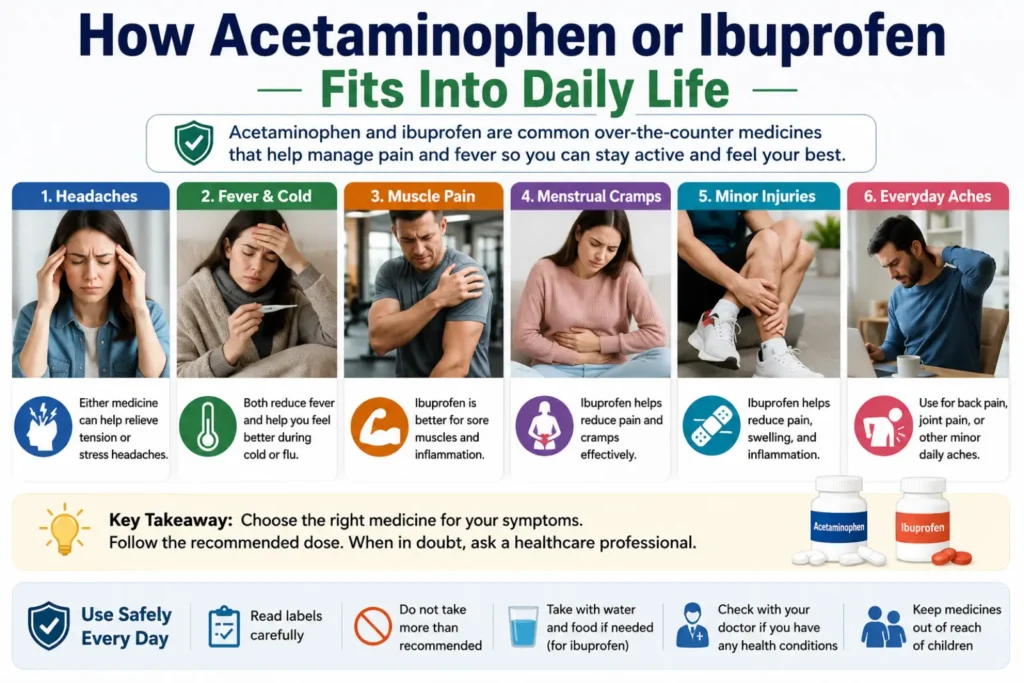
How Acetaminophen or Ibuprofen Fits Into Daily Life
Many people keep one or both medicines at home.
They are commonly used for:
- Headaches after work
- Fever during cold season
- Minor sports injuries
- Back pain
- Tooth pain
- Menstrual cramps
- Muscle soreness after exercise
Choosing the correct medicine can improve comfort while reducing unnecessary risks.
Synonyms and Related Keywords
Use these related terms naturally when searching for more information.
Synonyms
- Pain reliever
- Fever reducer
- OTC pain medicine
- Over-the-counter pain medication
- Pain relief medicine
Related Search Terms
- acetaminophen vs ibuprofen
- difference between acetaminophen and ibuprofen
- which is better acetaminophen or ibuprofen
- acetaminophen for fever
- ibuprofen for inflammation
- safest pain reliever
- pain medicine comparison
- OTC fever medicine
- anti-inflammatory medicine
- best medicine for headache
Expert Insights
Healthcare professionals recommend choosing the medicine based on the cause of your pain.
Inflammation usually responds better to ibuprofen.
Simple fever or mild pain often responds well to acetaminophen.
Experts also stress the importance of following dosing instructions. Taking more than recommended increases the risk of serious side effects without improving pain relief.
If pain lasts several days, gets worse, or keeps returning, seek medical advice instead of continuing self-treatment.
(FAQs)
Is acetaminophen or ibuprofen better for fever?
Both reduce fever effectively. Either may be appropriate when used as directed.
Which medicine works better for swelling?
Ibuprofen works better because it reduces inflammation.
Can I take acetaminophen and ibuprofen together?
Sometimes healthcare professionals recommend alternating or combining them in specific situations. Only do this if you understand the correct dosing schedule or have medical guidance.
Which medicine is easier on the stomach?
Acetaminophen is usually gentler on the stomach.
Is ibuprofen safe every day?
Daily use without medical supervision is not recommended because it may increase the risk of stomach, kidney, or heart problems.
Which is better for headaches?
Both medicines can help. The better choice depends on the cause of the headache and your medical history.
Can children take acetaminophen or ibuprofen?
Both are used in children, but the correct medicine and dose depend on the child’s age and weight. Always follow the product label or your pediatrician’s advice.
Which medicine acts faster?
Both usually begin working within about 30 to 60 minutes, although the exact timing varies by person and formulation.
Conclusion
Choosing acetaminophen or ibuprofen becomes much easier when you understand how each medicine works. Both relieve pain and reduce fever, but ibuprofen also treats inflammation. That makes it a better option for swollen injuries and arthritis, while acetaminophen often works well for fever and mild pain and is generally easier on the stomach.
Always use the lowest effective dose and follow the directions on the label. Consider your age, health conditions, and any other medicines you take before making a choice. If your pain is severe, lasts for several days, or keeps returning, consult a healthcare professional. Using the right medicine safely can help you recover faster while reducing the risk of unwanted side effects.