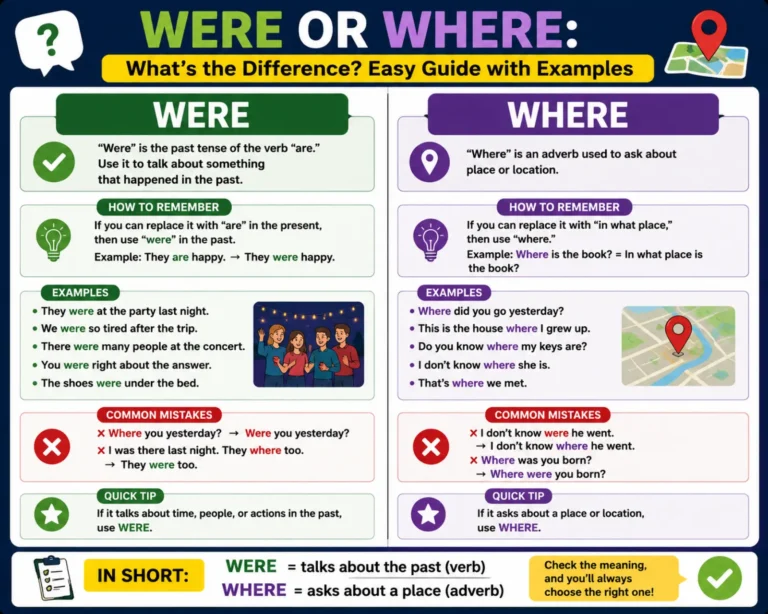
Were or where are two English words that many people confuse. They look similar, but they have different meanings and uses. Using the wrong word can change the meaning of a sentence. Luckily, learning the difference is easy.
Were is a past tense form of the verb to be. Where asks about a place or location. Once you know their roles, you can use them correctly every time.
This guide explains the meanings of were and where in simple English. You will also find examples, comparison tables, and easy tips. By the end, you will know exactly when to use each word in writing and conversation.
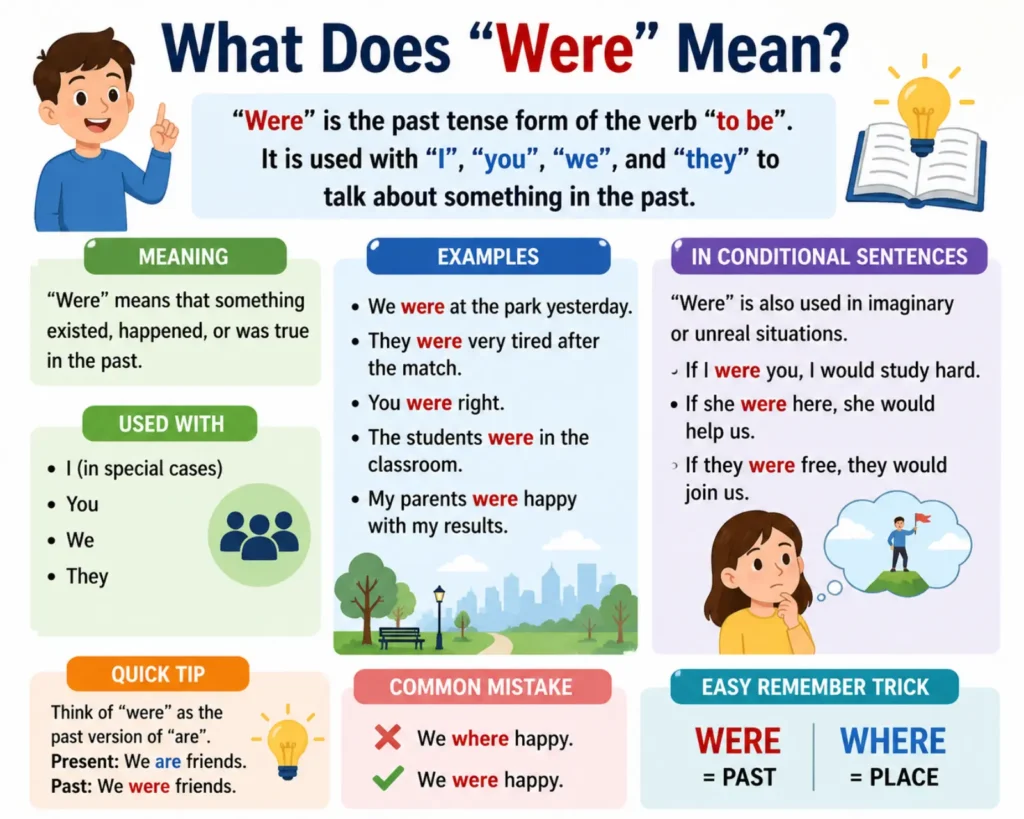
What Does “Were” Mean?
Were is the past tense form of the verb to be.
It is used with plural subjects and with you.
Examples
- They were happy.
- We were late.
- You were correct.
- The students were excited.
You can also use were in conditional sentences.
Example
- If I were rich, I would travel the world.
What Does “Where” Mean?
Where refers to a place or location.
It usually asks questions about locations.
Examples
- Where do you live?
- Where is my book?
- Where are they going?
- I know where she works.
You can also use where to connect two parts of a sentence.
Example
- This is the house where I grew up.
Were vs Where: Comparison Table
| Feature | Were | Where |
|---|---|---|
| Part of Speech | Verb | Adverb, conjunction |
| Meaning | Past tense of “to be” | Refers to a place or location |
| Purpose | Describes a past state | Asks or tells about a place |
| Example | We were tired. | Where are you? |
| Easy Memory Tip | Think “past.” | Think “place.” |
When Should You Use “Were”?
Use were when talking about the past.
It works with plural subjects and you.
Common Uses
1. Past Actions
- They were at school yesterday.
- We were busy all day.
2. Past Descriptions
- The flowers were beautiful.
- The roads were empty.
3. Conditional Sentences
- If I were you, I would study more.
- If she were here, she could help.
These sentences describe situations that are imagined or unlikely.
When Should You Use “Where”?
Use where whenever you talk about a place.
It often begins questions.
Examples
- Where is the bus stop?
- Where did you buy that shirt?
- Where can I park?
It also joins ideas.
Example
- This is the park where we met.
In every example, where refers to a location.
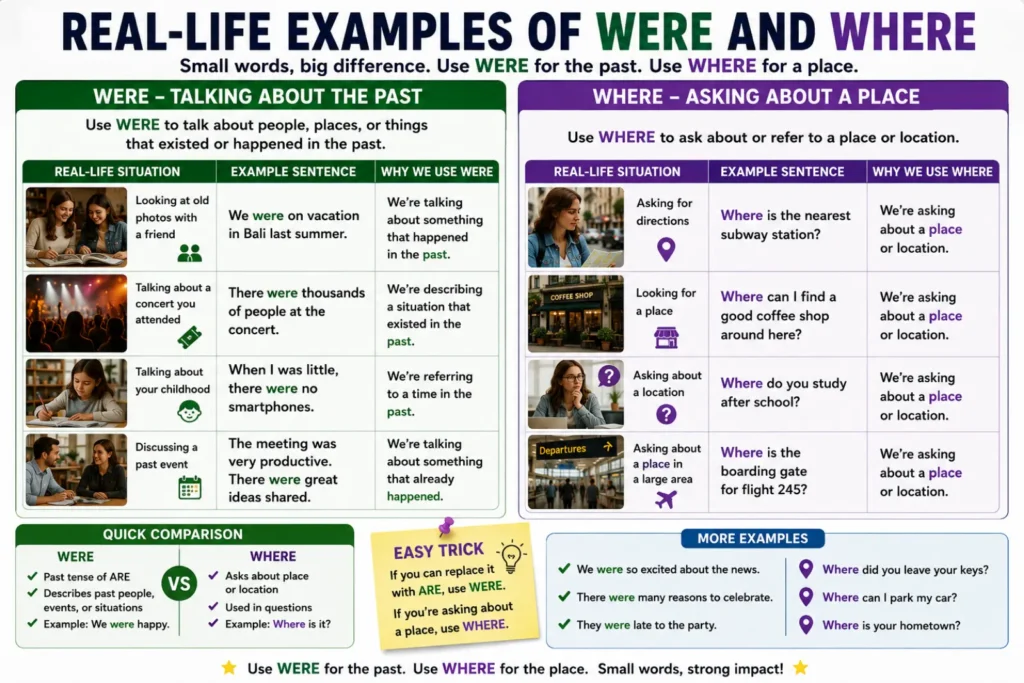
Real-Life Examples of Were and Where
Here are everyday sentences that show the correct use.
Using “Were”
- We were at the library.
- They were my classmates.
- The children were playing outside.
- You were very kind.
Using “Where”
- Where is your phone?
- Where did you go yesterday?
- Where can I find fresh fruit?
- Tell me where you parked the car.
Reading examples helps you remember the difference more easily.
Why Do People Confuse Were and Where?
These words sound very similar.
That makes them easy to mix up.
However, their meanings are completely different.
Here are the main reasons people confuse them.
- Similar pronunciation
- Similar spelling
- Fast typing
- Autocorrect mistakes
- Learning English as a second language
The easiest way to avoid mistakes is to ask yourself one question.
Are you talking about the past or a place?
If the answer is past, use were.
If the answer is place, use where.
Common Mistakes When Using Were and Where
Many English learners confuse were and where because they look and sound alike. However, they have different meanings.
Here are some common mistakes.
Mistake 1: Using “Where” Instead of “Were”
❌ We where happy yesterday.
✅ We were happy yesterday.
The sentence talks about the past, so were is correct.
Mistake 2: Using “Were” Instead of “Where”
❌ Were is my backpack?
✅ Where is my backpack?
The sentence asks about a location, so where is correct.
Mistake 3: Forgetting the Meaning
Always remember this simple rule.
- Were = Past
- Where = Place
This trick helps you choose the correct word quickly.
Easy Tips to Remember the Difference
You do not need to memorize grammar rules. These simple tricks work well.
Think About Time
If the sentence talks about the past, use were.
Example:
- They were late.
Think About Place
If the sentence asks about a location, use where.
Example:
- Where do you live?
Use Keyword Clues
Look for words like yesterday, last week, or before.
These words often need were.
Look for words like home, school, park, or city.
These words often need where.
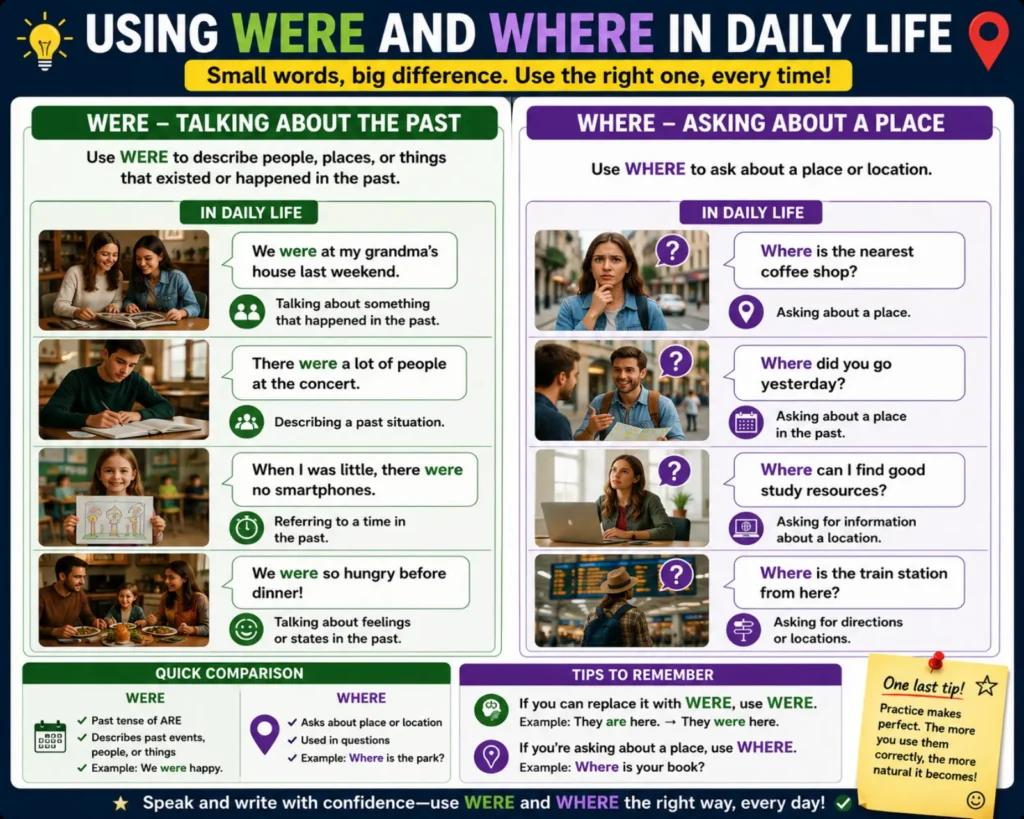
Using Were and Where in Daily Life
You will hear these words every day.
Here are some common situations.
At School
- Where is the classroom?
- We were in science class.
At Work
- Where is the meeting room?
- They were busy this morning.
While Traveling
- Where is the train station?
- We were in London last week.
At Home
- Where are my keys?
- They were on the table.
These examples show how often these words appear in daily conversations.
Synonyms and Related Keywords
Using related words helps improve your vocabulary and supports SEO.
Synonyms for “Were”
- existed
- happened
- stayed
- remained
- became
Related Words for “Where”
- location
- place
- position
- destination
- area
- spot
LSI Keywords
- were vs where
- difference between were and where
- when to use were
- when to use where
- grammar mistakes
- English grammar rules
- homophones in English
- confusing English words
- grammar examples
- English writing tips
These related terms help readers understand the topic better.
Expert Insight
Grammar becomes easier when you focus on meaning instead of spelling.
Professional writers first ask what they want to say.
If they describe a past situation, they choose were.
If they ask about a place, they choose where.
Reading English books and writing short sentences every day can improve your grammar naturally.
Small daily practice builds strong writing skills over time.
Frequently Asked Questions
What is the difference between were and where?
Were is the past tense of to be. Where refers to a place or location.
Is “were” a verb?
Yes. Were is a verb and the past tense form of to be.
Is “where” a question word?
Yes. Where is commonly used to ask about places or locations.
Can “where” be used in the middle of a sentence?
Yes.
Example:
- This is the town where I was born.
Why do people confuse were and where?
They have similar spelling and pronunciation, but they have different meanings.
How can I remember the difference?
Remember this simple rule.
- Were = Past
- Where = Place
Is “if I were you” grammatically correct?
Yes.
It is the correct expression for giving advice or talking about imaginary situations.
Are were and where homophones?
They are near-homophones. Their pronunciation is very similar, which causes confusion for many learners.
Conclusion
Understanding were or where is easier than many people think. The key is to remember their meanings. Were is the past tense of the verb to be, while where refers to a place or location. Although the words look and sound similar, they serve different purposes in English grammar.
Before choosing one, ask yourself a simple question. Are you talking about a past event or asking about a place? If it is about the past, use were. If it is about a location, use where. With regular reading and writing practice, you will use both words correctly and confidently in everyday conversations and formal writing.