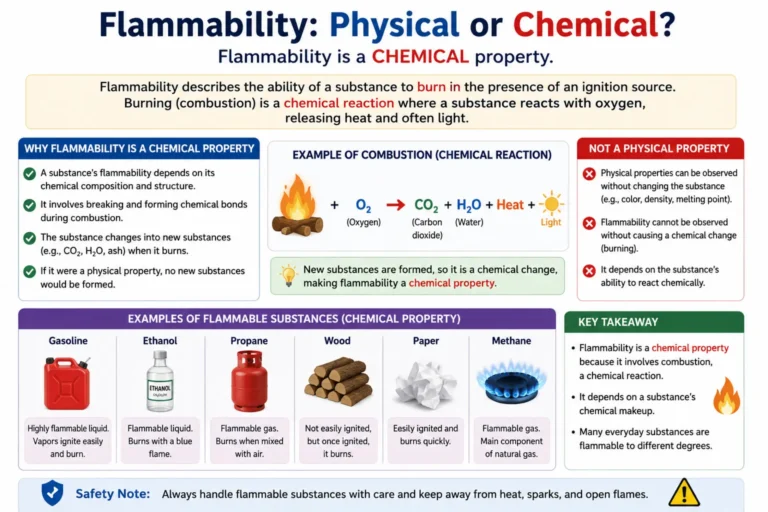
Flammability physical or chemical is a common question in science classes. The simple answer is that flammability is a chemical property. It describes how easily a substance burns when it reacts with oxygen. During burning, the substance changes into new materials. This permanent change makes flammability a chemical property instead of a physical one.
Understanding this concept helps students learn the difference between physical and chemical properties. It also makes chemistry easier to understand in daily life. In this guide, you will discover what flammability means, why it is a chemical property, and how it differs from physical properties. You will also see real-life examples, easy comparisons, and helpful tips for remembering the answer.
Quick Summary
Is Flammability Physical or Chemical?
- Flammability is a chemical property.
- It describes how easily a substance burns.
- Burning creates new substances.
- A chemical reaction occurs during combustion.
- Physical properties do not create new substances.
- Wood, paper, and gasoline are flammable materials.
- Water and glass are not flammable.
What Is Flammability?
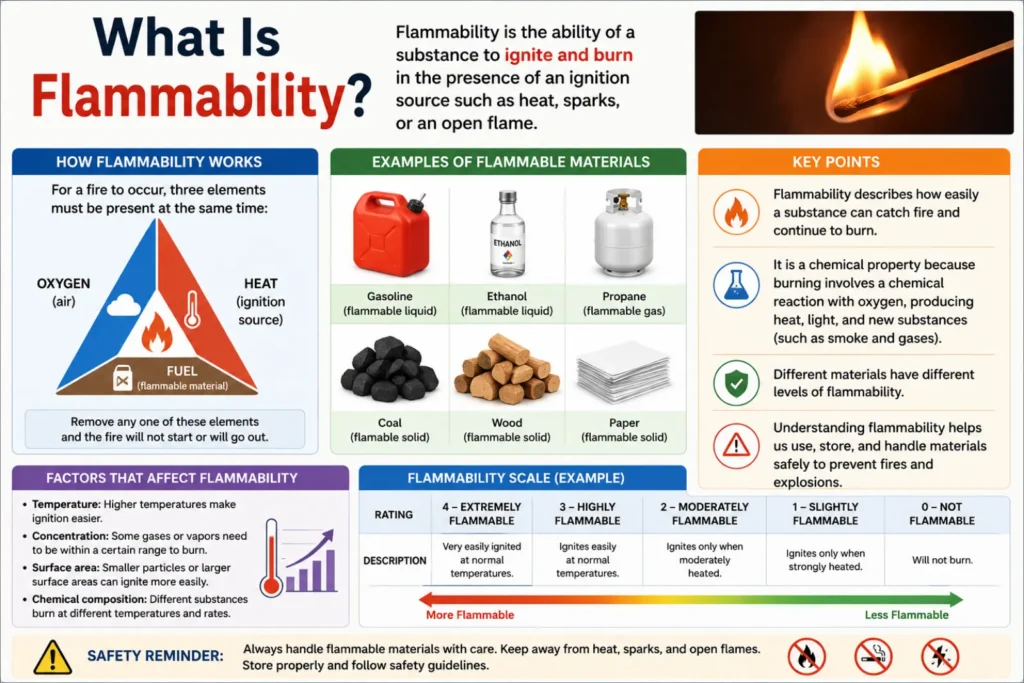
Flammability is the ability of a material to catch fire and burn.
A flammable substance reacts with oxygen when enough heat is present.
This reaction releases heat and light.
Scientists call this process combustion.
Common flammable materials include:
- Wood
- Paper
- Gasoline
- Natural gas
- Ethanol
Some materials do not burn easily.
For example:
- Water
- Glass
- Sand
- Concrete
What Is a Chemical Property?
A chemical property describes how a substance behaves during a chemical reaction.
You cannot observe a chemical property without changing the substance.
Examples of chemical properties include:
- Flammability
- Reactivity with acids
- Rusting
- Toxicity
- Corrosion
Chemical properties help scientists predict how substances behave under different conditions.
Why Is Flammability a Chemical Property?
Flammability involves a chemical reaction.
When a substance burns, it combines with oxygen.
This process creates completely new substances.
For example, burning wood produces:
- Ash
- Carbon dioxide
- Water vapor
- Smoke
The original wood cannot return to its previous form.
Because new substances form, burning is a chemical change.
Therefore, flammability is a chemical property.
Simple Rule
If a property requires a chemical reaction to observe it, it is a chemical property.
How Does Combustion Work?
Combustion is the chemical reaction responsible for burning.
Three things are needed for combustion.
The Fire Triangle
- Fuel
- Oxygen
- Heat
When these three elements come together, combustion begins.
The reaction releases energy as heat and light.
If one part of the fire triangle is removed, the fire stops.
This is why firefighters cool fires with water or remove oxygen using fire extinguishers.
Physical Property vs Chemical Property
Students often confuse physical and chemical properties.
The easiest way to tell them apart is to ask one question.
Does the substance become a new substance?
If the answer is yes, the property is chemical.
If the answer is no, the property is physical.
Examples of Physical Properties
- Color
- Density
- Melting point
- Boiling point
- Mass
- Shape
- Hardness
These properties do not change the identity of the substance.
Examples of Chemical Properties
- Flammability
- Rusting
- Reactivity
- Corrosion
- Oxidation
These properties involve chemical changes.
Physical vs Chemical Properties Comparison
| Physical Property | Chemical Property |
|---|---|
| No new substance forms | New substances form |
| Easy to observe | Requires a chemical reaction |
| Color | Flammability |
| Density | Rusting |
| Melting point | Corrosion |
| Boiling point | Reactivity with oxygen |
| Shape | Toxicity |
Remember this simple trick.
If the identity changes, the property is chemical.
If the identity stays the same, the property is physical.
Real-Life Examples of Flammability
You can observe flammability in everyday life.
Burning Wood
Wood burns in a fireplace.
It changes into ash, smoke, and gases.
This is a chemical change.
Gasoline in Cars
Gasoline burns inside the engine.
The reaction produces energy that moves the vehicle.
New gases also form.
Cooking Gas
Natural gas burns on a stove.
The flame provides heat for cooking.
Combustion changes the gas into new substances.
Burning Paper
Paper catches fire quickly.
It changes into ash and smoke.
The paper cannot return to its original form.
These examples show why flammability is always considered a chemical property.
Common Mistakes Students Make
Many students mix up physical and chemical properties. These mistakes are common but easy to avoid.
Mistake 1: Thinking Fire Is a Physical Change
Burning is not a physical change.
It creates new substances such as ash, carbon dioxide, and water vapor.
That makes it a chemical change.
Mistake 2: Confusing Melting with Burning
Melting changes only the physical state.
The substance remains the same.
Burning changes the substance into something new.
Mistake 3: Assuming Every Change Is Chemical
Some changes only affect appearance.
Cutting paper, breaking glass, or melting ice are physical changes.
No new substance forms.
Mistake 4: Ignoring New Substances
Always ask one question.
Did a new substance form?
If yes, the change is chemical.
If no, it is physical.
Tips to Identify Physical and Chemical Properties
Use these simple tips to answer science questions correctly.
Tip 1
Look for evidence of a chemical reaction.
Tip 2
Check whether new substances appear.
Tip 3
Remember that burning always involves combustion.
Tip 4
Physical properties can be observed without changing the material.
Tip 5
Chemical properties describe how substances react under certain conditions.
These tips help you answer exam questions with confidence.
Why Understanding Flammability Matters
Flammability is important in many areas of life.
Fire Safety
Knowing which materials burn easily helps prevent fires.
Home Safety
Families store gasoline, paint, and cleaning products away from heat.
Manufacturing
Factories use safety rules when handling flammable chemicals.
Transportation
Vehicles carrying fuel follow strict safety standards.
Science Education
Learning about flammability builds a strong understanding of chemistry.
Everyday Examples of Physical and Chemical Properties
The table below compares common examples.
| Material or Event | Physical or Chemical? | Reason |
|---|---|---|
| Ice melting | Physical | Only the state changes. |
| Water boiling | Physical | No new substance forms. |
| Wood burning | Chemical | Ash and gases form. |
| Iron rusting | Chemical | Iron changes into rust. |
| Sugar dissolving | Physical | Sugar remains the same substance. |
| Paper burning | Chemical | New substances appear. |
| Cutting aluminum foil | Physical | Shape changes only. |
This comparison makes the difference easier to remember.
Synonyms and Related Keywords
Using related terms improves topical relevance and helps readers understand the subject.
Common LSI keywords include:
- chemical property
- physical property
- combustion
- burning
- fire reaction
- oxidation
- chemical change
- physical change
- combustible materials
- flammable substances
- fire safety
- properties of matter
- reactivity with oxygen
- science properties
- chemistry basics
Use these naturally throughout your content instead of repeating the main keyword too often.
Expert Insight
Chemists classify properties based on whether the substance changes into something new.
Flammability always requires a chemical reaction.
That is why it belongs to the group of chemical properties.
Understanding this concept also helps students learn oxidation, combustion, corrosion, and chemical reactions more easily.
If you remember that burning creates new substances, you can correctly answer similar questions in school and competitive exams.
Frequently Asked Questions
Is flammability a physical or chemical property?
Flammability is a chemical property because burning creates new substances.
Why is flammability considered a chemical property?
It involves a reaction with oxygen that changes the substance into different materials.
Is burning a physical or chemical change?
Burning is a chemical change because new substances form.
What is the difference between a physical and chemical property?
A physical property can be observed without changing a substance. A chemical property describes how a substance reacts to form new substances.
Is melting flammable materials a chemical change?
No. Melting is a physical change because the substance remains the same.
Is rusting a chemical property?
Yes. Rusting involves a chemical reaction that forms iron oxide.
What are examples of flammable materials?
Wood, paper, gasoline, ethanol, propane, and natural gas are common flammable materials.
Can water burn?
No. Water is not flammable because it does not undergo combustion.
Conclusion
The answer to “flammability physical or chemical” is clear. Flammability is a chemical property because it describes how a substance reacts with oxygen during combustion. This reaction creates new substances, making it a chemical change rather than a physical one.
Understanding the difference between physical and chemical properties makes chemistry much easier. Physical properties describe a substance without changing its identity, while chemical properties explain how it behaves during a reaction. By remembering that burning always forms new substances, you can quickly identify flammability as a chemical property and answer similar science questions with confidence.