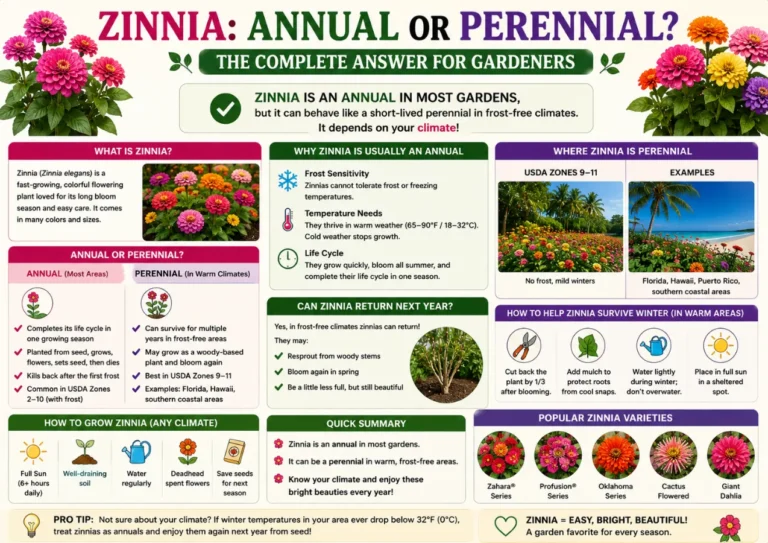
Zinnia annual or perennial? The simple answer is that most garden zinnias are annual flowers. They grow, bloom, produce seeds, and die within one growing season. However, some zinnia species can behave as perennials in warm climates. This difference often confuses new gardeners. It also depends on the zinnia species you grow. The popular Zinnia elegans is an annual plant. Many common garden varieties also follow this life cycle.
So, do zinnias come back every year? Usually, they do not come back from the same roots. However, they can return through dropped seeds. Some species can also live for several years. This guide explains the difference in simple terms. You will learn how zinnias grow, survive winter, and return each year.
Quick Summary: Is Zinnia Annual or Perennial?
- Most garden zinnias are annual flowers.
- Zinnia elegans is an annual species.
- Annual zinnias usually complete their life cycle in one season.
- Zinnias can produce seeds that grow the following year.
- Some zinnia species can grow as perennials.
- Zinnia grandiflora can be annual or perennial.
- Cold weather usually kills common garden zinnias.
- Zinnias grow best in warm weather and full sun.
- Saving seeds can help you grow zinnias again.
- Your climate and zinnia species determine how the plant returns.
What Does Annual Mean?
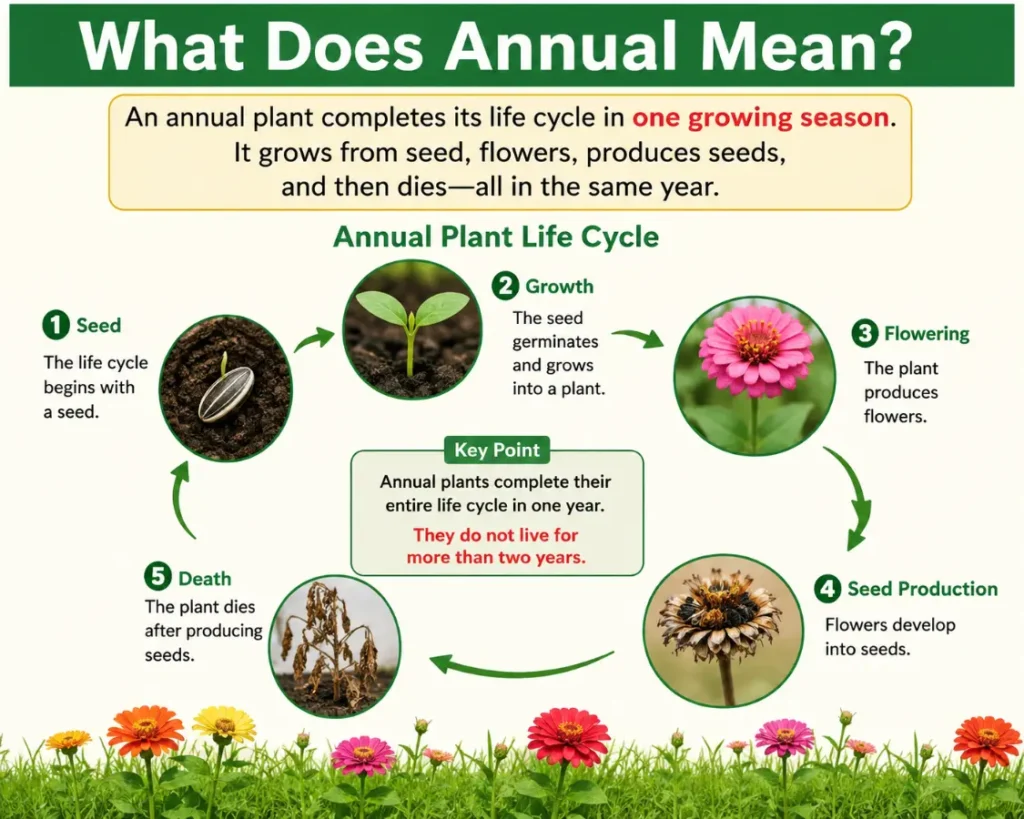
An annual plant completes its life cycle in one growing season.
It starts from a seed and grows into a mature plant. It then flowers and produces new seeds. After that, the original plant dies.
Common garden zinnias follow this pattern.
For example, Zinnia elegans grows during the warm season. It flowers from summer until frost in suitable climates. Missouri Botanical Garden lists it as an annual.
This does not mean you can never see zinnias again. Their seeds can remain in the garden. Those seeds may sprout during the next warm season.
What Does Perennial Mean?
A perennial plant can live for more than two years.
It usually survives the winter and grows again from the same root system.
Perennial plants may become dormant during cold or dry periods. They then begin new growth when conditions improve.
Some zinnia species have perennial growth habits.
For example, Zinnia grandiflora can be annual or perennial. North Carolina State Extension describes it as a water-wise plant that can have either life cycle.
Therefore, the word “zinnia” does not always mean annual.
Are Common Zinnias Annual or Perennial?
Most common garden zinnias are annuals.
This includes many popular varieties grown for colorful summer flowers. Zinnia elegans is one of the best-known examples.
These plants usually grow quickly during warm weather. They flower heavily and produce seeds. Frost then ends their normal growing season.
Many modern zinnia cultivars also remain annuals. For example, Missouri Botanical Garden lists Zinnia marylandica cultivars as annuals.
So, if you buy ordinary zinnia seeds for your flower garden, treat them as annuals.
Why Do People Think Zinnias Are Perennials?
Zinnias can sometimes appear to return every year.
The main reason is self-seeding.
A mature zinnia produces many seeds after flowering. Some seeds fall onto the soil. Others may spread through wind, animals, or garden activity.
If those seeds survive, they can sprout the following spring.
The new plants are not the same old plant returning. They are new plants growing from seed.
This creates the appearance of a perennial zinnia.
Simple example
Imagine you plant zinnias in May.
They bloom during summer. You leave some flowers on the plant. Those flowers produce seeds.
The plant dies after frost.
The following spring, new zinnia seedlings appear.
Your zinnias seem to have returned. In reality, new plants grew from old seeds.
Zinnia Annual vs Perennial: Key Differences
| Feature | Annual Zinnia | Perennial Zinnia |
|---|---|---|
| Life span | Usually one season | Several years |
| Winter survival | Usually poor | Better in suitable climates |
| Returns from roots | Usually no | Yes |
| Returns from seeds | Often possible | Also possible |
| Common garden type | Very common | Less common |
| Example | Zinnia elegans | Zinnia grandiflora |
| Main use | Beds, borders, containers | Rock gardens, borders, dry sites |
| Cold tolerance | Limited | Depends on species |
The biggest difference is how the plant survives.
An annual zinnia must start again from seed. A perennial species can survive and grow again from established plant tissue.
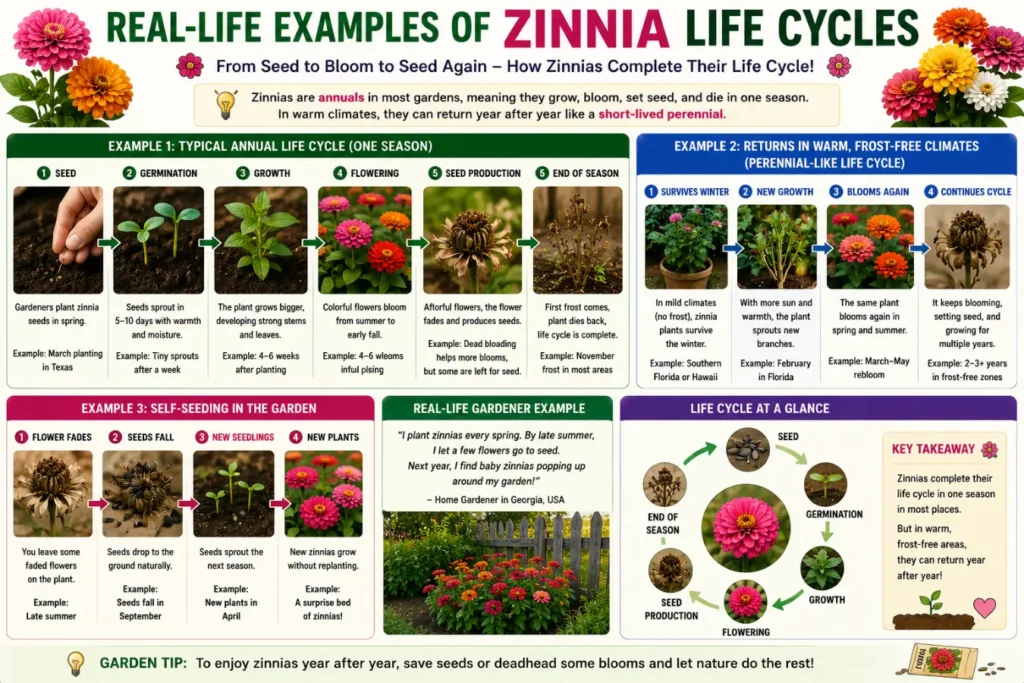
Real-Life Examples of Zinnia Life Cycles
Understanding real garden situations makes this topic easier.
Example 1: Cold climate
You plant common zinnias in spring.
They flower all summer. The first hard frost arrives in autumn.
The plants die.
You must plant new seeds next year.
This is a normal annual life cycle.
Example 2: Warm climate
You grow zinnias in a warm region.
The plants may continue growing longer. Some seeds may also germinate naturally.
You may see new zinnias without planting them.
However, this does not automatically mean your original plant became perennial.
Example 3: Self-seeding garden
You allow some flowers to mature fully.
The flowers drop seeds onto the soil.
Some seeds survive winter.
New seedlings appear the following year.
This is called self-seeding or reseeding.
Example 4: Zinnia grandiflora
You grow Zinnia grandiflora in a suitable region.
This species can grow as a perennial. It can spread through rhizomes and survive difficult conditions.
North Carolina State Extension describes it as useful for rock gardens, borders, slopes, and pollinator gardens.
Do Zinnias Come Back Every Year?
Most zinnias do not come back from the same plant every year.
However, they may return through seeds.
This distinction matters.
If your zinnia dies after frost, the plant itself has not survived. New seedlings may still appear later.
You can encourage this process by leaving some flowers on the plant.
Avoid removing every spent flower if you want natural reseeding.
However, self-seeding depends on your weather, soil, and growing conditions.
Can Zinnias Survive Winter?
Common garden zinnias usually do not survive freezing winter conditions.
They prefer warm growing conditions and full sun.
Frost can damage or kill the plants.
That is why gardeners usually grow common zinnias as warm-season annuals.
If you live in a warm climate, your growing season may last longer. Some species may also survive for multiple years.
Always check the exact species before assuming your zinnia is perennial.
How to Make Zinnias Return Next Year
You cannot turn a normal annual zinnia into a true perennial.
However, you can grow new plants from its seeds.
Follow these simple steps:
- Choose several healthy zinnia plants.
- Allow some flowers to stay on the plant.
- Let those flowers mature fully.
- Wait until the flower heads become dry.
- Collect mature seeds.
- Store them in a cool, dry place.
- Plant them after the danger of frost passes.
You can also allow seeds to fall naturally.
This method works well for gardeners who want zinnias every year without buying new seed.
Best Growing Conditions for Zinnias
Zinnias grow best when you give them the right conditions.
Full sun
Choose a location with plenty of direct sunlight.
Full sun helps zinnias produce strong growth and abundant flowers. Missouri Botanical Garden recommends full sun for Zinnia elegans.
Well-drained soil
Zinnias dislike constantly wet soil.
Use soil that drains excess water well.
Good drainage also helps reduce root problems.
Good air movement
Leave enough space between plants.
Good airflow can reduce fungal disease problems. This matters because common zinnias can develop powdery mildew and leaf diseases.
Regular moisture
Water plants when the soil needs it.
Avoid keeping the soil constantly soggy.
Once established, some zinnia types can handle short dry periods.
Common Mistakes Gardeners Make
Mistake 1: Calling every zinnia perennial
The zinnia genus contains different species.
Most popular garden zinnias are annuals. Some species have different life cycles.
Always check the botanical name.
Mistake 2: Assuming new seedlings are old plants
New seedlings may come from dropped seeds.
The original annual plant may have already died.
Mistake 3: Removing every spent flower
Deadheading helps keep plants attractive and can encourage more flowers.
However, removing every flower prevents many seeds from developing.
Leave a few flowers if you want seeds.
Mistake 4: Planting too early
Zinnias prefer warm conditions.
Cold soil can slow germination and growth.
Wait until suitable warm conditions arrive.
Mistake 5: Keeping soil too wet
Wet soil can create root problems.
Use well-drained soil and avoid excessive watering.
Zinnia Care Tips and Tricks
Use these simple tips for healthier zinnias:
- Give zinnias plenty of sunlight.
- Use well-drained soil.
- Avoid overcrowding plants.
- Water deeply when needed.
- Remove diseased leaves quickly.
- Deadhead flowers for continued blooms.
- Leave a few flowers for seed production.
- Collect seeds from healthy plants.
- Grow disease-resistant varieties when possible.
- Plant new seeds after cold weather passes.
Missouri Botanical Garden also recommends good air circulation and disease-resistant varieties in hot, humid conditions.
How Zinnias Fit Into Everyday Gardening
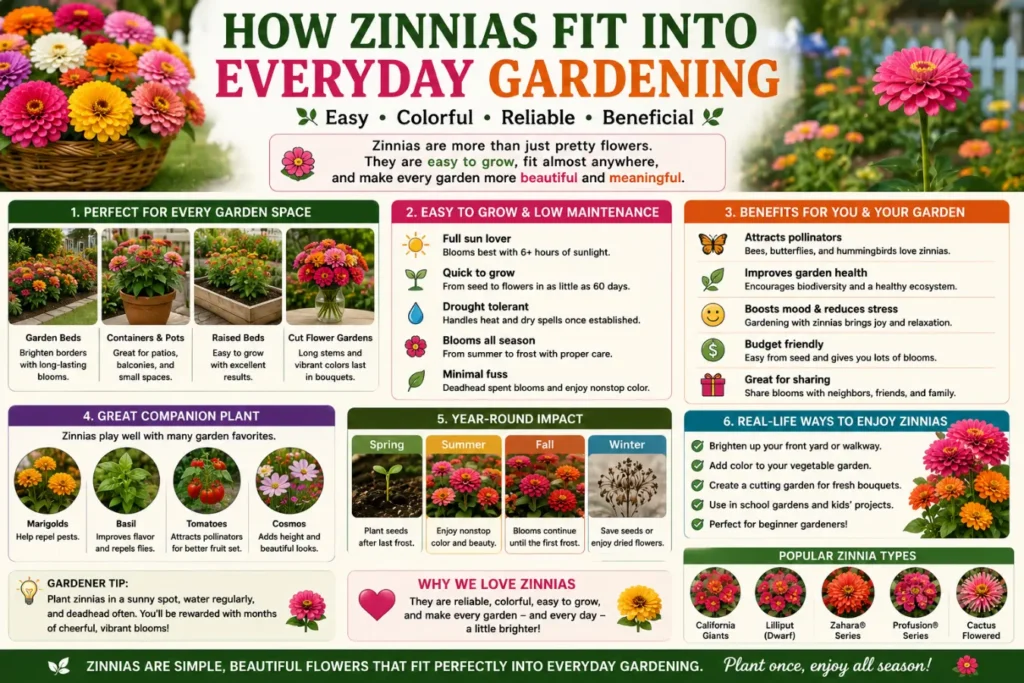
Zinnias work well in many garden settings.
You can grow them in flower beds, borders, containers, and cutting gardens.
They also make excellent pollinator plants.
For example, University of Minnesota Extension notes that zinnias can attract bees and other pollinators.
Their bright flowers also make useful cut flowers.
You can grow tall varieties behind shorter plants. Smaller types work well along paths and borders.
Some zinnia species also suit dry or challenging garden locations.
Zinnia grandiflora, for example, handles heat, wind, and rocky or sandy conditions well.
Zinnia Synonyms and LSI Keywords
Use these related terms when researching or writing about zinnias:
- zinnia annual or perennial
- are zinnias annuals or perennials
- do zinnias come back every year
- zinnia life cycle
- zinnia plant lifespan
- annual zinnia flowers
- perennial zinnia varieties
- Zinnia elegans
- Zinnia grandiflora
- zinnia seeds
- zinnia self-seeding
- zinnia winter care
- zinnia growing season
- zinnia flower care
- how to grow zinnias
- zinnia cold tolerance
- zinnia garden flowers
- zinnia pollinator plant
These terms support the main topic without repeating the primary keyword too often.
Expert Insights: What Gardeners Should Know
The most important point is to identify the species.
“Zinnia” describes a genus, not one single plant.
Most familiar garden zinnias belong to species that gardeners grow as annuals. Zinnia elegans is a clear example.
However, Zinnia grandiflora shows why the answer is not always absolute. Extension guidance lists it as both annual and perennial.
Climate also matters.
A plant may act differently in different environments. Cold winters can end annual zinnias. Warm conditions can extend growth and help some species survive.
For accurate identification, check the plant’s botanical name on the seed packet or plant label.
Frequently Asked Questions
Are zinnias annual or perennial?
Most zinnias grown in home gardens are annuals. However, some species can grow as perennials in suitable climates.
Do zinnias come back every year?
Most common zinnias do not return from the same roots. They can return through self-seeding when mature seeds fall into suitable soil.
Will zinnias survive winter?
Most common garden zinnias cannot survive freezing winter conditions. They usually die after frost.
Is Zinnia elegans an annual or perennial?
Zinnia elegans is an annual plant. It normally grows, flowers, produces seeds, and finishes its life cycle within one growing season.
Is Zinnia grandiflora a perennial?
It can be. Zinnia grandiflora has both annual and perennial growth habits. Suitable climate and growing conditions affect its survival.
Can zinnias reseed themselves?
Yes. Zinnias can produce seeds that fall into the garden. Those seeds may grow into new plants the next season.
Should I cut back zinnias in winter?
Common annual zinnias usually die after frost. Remove dead plants and save seeds if you want to grow them again.
How can I get zinnias every year?
Save seeds from healthy flowers or allow some flowers to self-seed. Plant new seeds after the cold season ends.
Conclusion: Is Zinnia Annual or Perennial?
So, is zinnia annual or perennial? Most common garden zinnias are annuals. Zinnia elegans, one of the most popular garden species, is an annual plant.
That means the plant usually completes its life cycle within one growing season. Frost often ends the plant. However, its seeds can produce new plants the following year.
Some zinnia species differ. Zinnia grandiflora can grow as an annual or perennial under suitable conditions.
Therefore, always check the species before deciding how to care for your zinnia.
The easiest rule is simple: treat most garden zinnias as annuals, but check the species for exceptions.
With plenty of sun, good drainage, and warm weather, zinnias can provide months of bright garden color.