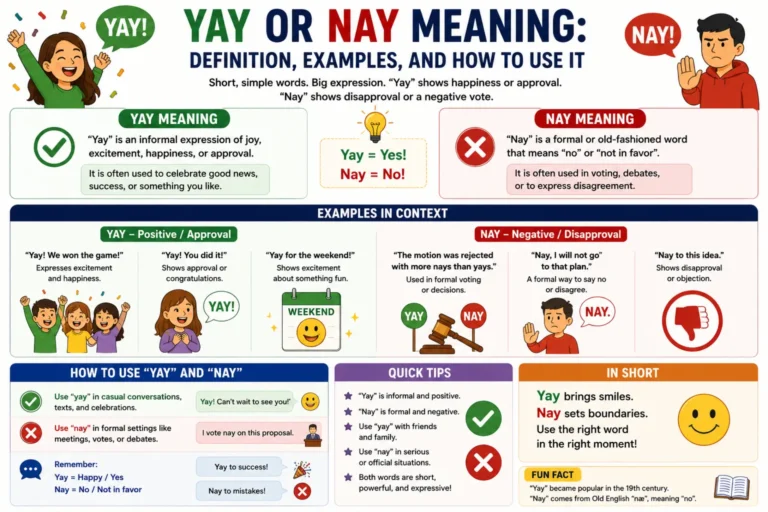
Yay or nay meaning is a simple way to ask if someone agrees or disagrees. It often means “yes or no” in casual English. People use it when they want a quick opinion or decision. You may hear it in conversations, online posts, meetings, and polls. The phrase sounds friendly and informal. It can also make a question feel more fun and direct. For example, someone may ask, “New logo design: yay or nay?” They want others to approve or reject the idea. The word “yay” shows approval, while “nay” shows disapproval. However, “yay” and “nay” can have slightly different uses. This guide explains the phrase in simple English. You will learn its meaning, examples, synonyms, common mistakes, and everyday uses.
Quick Summary: Yay or Nay Meaning
- Yay means yes, approval, or support.
- Nay means no, rejection, or disagreement.
- Yay or nay means “yes or no” or “approve or reject.”
- The phrase usually sounds casual and conversational.
- People often use it when they want a quick opinion.
- “Yay” can also express excitement or happiness.
- “Nay” can sound more formal or old-fashioned when used alone.
- The phrase appears often in social media, chats, polls, and casual discussions.
What Does “Yay or Nay” Mean?
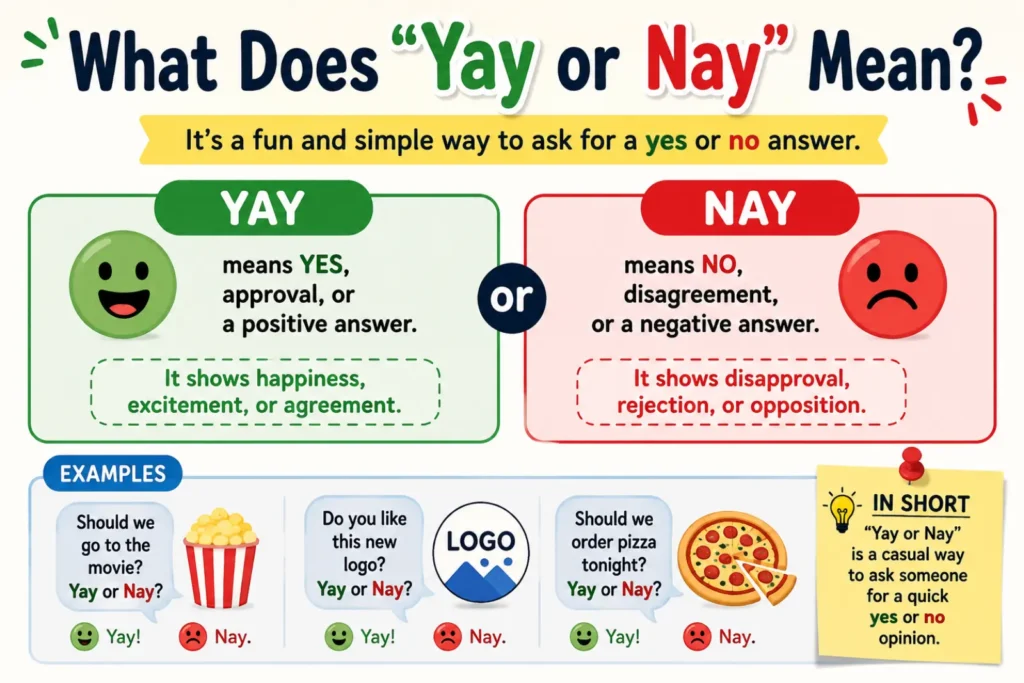
“Yay or nay” means “yes or no” or “approve or reject.”
People use this phrase when they want someone to make a quick choice.
For example:
“Should we order pizza tonight? Yay or nay?”
Here, “yay” means yes, and “nay” means no.
The phrase does not usually need a long explanation. It asks for a simple opinion.
You may also see it written as “yay or nay?”
The meaning stays the same.
However, context matters. “Yay” can also show excitement.
For example:
“Yay! We won the game!”
In this sentence, “yay” does not mean “yes.” It shows happiness.
Yay Meaning Explained in Simple Words
Yay is an informal word that shows happiness, excitement, approval, or agreement.
Think of “yay” as a cheerful version of “yes.”
Examples include:
- “Yay! We are going to the park.”
- “New school club? Yay!”
- “Yay, I finally finished my project.”
- “Is the new plan a yay or a nay?”
The exact meaning depends on the sentence.
When someone says “yay!” by itself, they usually express excitement.
When someone asks “yay or nay?”, “yay” usually means approval.
Is “Yay” the Same as “Yes”?
Not always.
“Yes” can sound neutral or direct.
“Yay” often sounds more cheerful and informal.
For example:
- Yes: “Do you want to join us?”
- Yay: “Yay! Let’s go!”
So, “yay” can mean yes in some situations. Yet it also carries a feeling of excitement.
Nay Meaning Explained in Simple Words
Nay means no, disagreement, rejection, or opposition.
It often appears in the phrase “yay or nay.”
For example:
“New school rule: yay or nay?”
A “nay” means the person does not support the rule.
“Nay” can sound more formal or old-fashioned than “no.”
You may hear it in voting or formal discussions.
For example:
“All those in favor, say yay. Those opposed, say nay.”
In everyday conversation, most people simply say “no.”
Therefore, “nay” can sound playful when used in casual speech.
Yay or Nay Meaning in Everyday English
The phrase works as a quick way to ask for an opinion.
People often use it when they do not need a detailed answer.
Consider these examples:
Food choice:
“Pineapple on pizza, yay or nay?”
The speaker wants to know whether you like the idea.
Clothing choice:
“Denim jackets this year, yay or nay?”
The speaker asks whether you approve of the style.
Weekend plan:
“Movie night on Saturday, yay or nay?”
The speaker wants a quick decision.
School project:
“Should we use this topic for our project, yay or nay?”
The speaker asks for approval.
In each case, “yay” means approval and “nay” means rejection.
Real-Life Examples of “Yay or Nay”
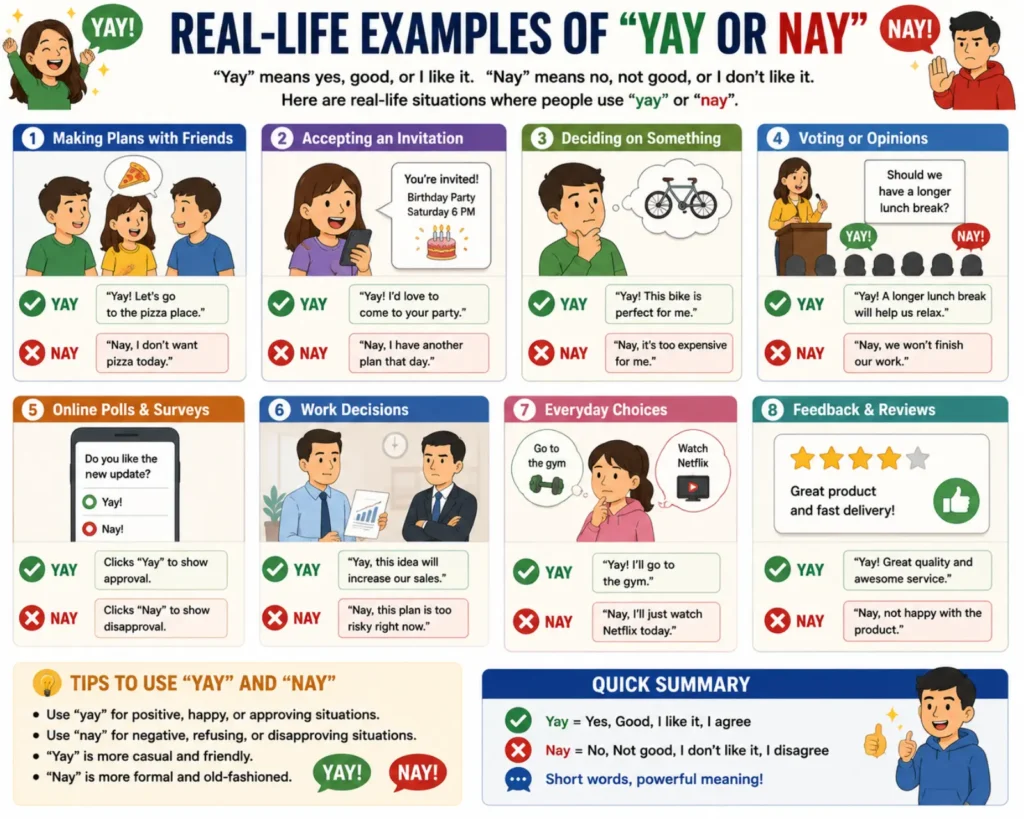
Here are several natural examples.
Example 1: Friends
“Beach trip this weekend. Yay or nay?”
Meaning: Do you want to go?
Example 2: Social Media
“Rate this new hairstyle. Yay or nay?”
Meaning: Do you like it?
Example 3: Food
“Chocolate ice cream after dinner. Yay or nay?”
Meaning: Should we have chocolate ice cream?
Example 4: Work
“Should we move the meeting to Friday? Yay or nay?”
Meaning: Do you agree with moving the meeting?
Example 5: School
“Should our group choose this presentation topic? Yay or nay?”
Meaning: Do you approve of the topic?
Example 6: Shopping
“Should I buy this backpack? Yay or nay?”
Meaning: Do you think buying it is a good idea?
These examples show how flexible the phrase can be.
Yay vs. Nay: What Is the Difference?
| Word | Basic meaning | Common use | Tone |
|---|---|---|---|
| Yay | Yes, approval, excitement | Agreement or happiness | Casual and cheerful |
| Nay | No, rejection, disagreement | Disagreement or voting | Casual, formal, or old-fashioned |
| Yes | Agreement | General situations | Neutral |
| No | Disagreement | General situations | Neutral |
The main difference is simple.
Yay shows approval. Nay shows disapproval.
However, “yay” can also express excitement.
“Nay” usually does not express emotion by itself.
Yay or Nay vs. Yes or No
Both phrases can ask for a simple decision.
However, they have different tones.
“Yes or no?” sounds neutral and direct.
“Yay or nay?” sounds more casual and playful.
Compare these examples:
“Do you agree with this plan, yes or no?”
This sounds direct.
“New plan for Friday, yay or nay?”
This sounds more relaxed.
Use “yes or no” in formal writing when clarity matters.
Use “yay or nay” in casual conversations, polls, messages, and social media.
Common Mistakes With “Yay or Nay”
People sometimes confuse “yay,” “yea,” and “yeah.”
These words do not always mean the same thing.
1. Confusing “Yay” and “Yeah”
Yay expresses excitement or approval.
Yeah is an informal form of “yes.”
Example:
“Yay! We have a holiday tomorrow.”
This shows excitement.
“Yeah, I agree.”
This simply shows agreement.
2. Confusing “Yay” and “Yea”
Yea can mean yes or indicate an affirmative vote.
Yay usually expresses excitement or approval.
In everyday conversation, “yay” is much more common for the cheerful meaning.
3. Using “Nay” in Every Formal Situation
“Nay” does not automatically make writing formal.
It can sound playful or old-fashioned.
In many professional situations, “no” or “against” sounds clearer.
4. Thinking “Yay” Always Means “Yes”
“Yay!” can simply show happiness.
For example:
“Yay! School is finished!”
It does not necessarily answer a yes-or-no question.
How to Use “Yay or Nay” Correctly
Follow these simple tips.
Keep It Casual
“Yay or nay?” works best in relaxed settings.
Use it with friends, classmates, online audiences, or informal groups.
Give Enough Context
A short question works better when people know what they are judging.
Instead of:
“Yay or nay?”
Try:
“New team logo: yay or nay?”
The second version makes the question clearer.
Use It for Quick Decisions
The phrase works well when you want a simple reaction.
For detailed feedback, ask a more specific question.
For example:
“What do you think about the new design?”
This invites more useful answers.
Match the Tone
Use “yay or nay” when a friendly tone fits the situation.
Avoid it when a formal business document needs a neutral style.
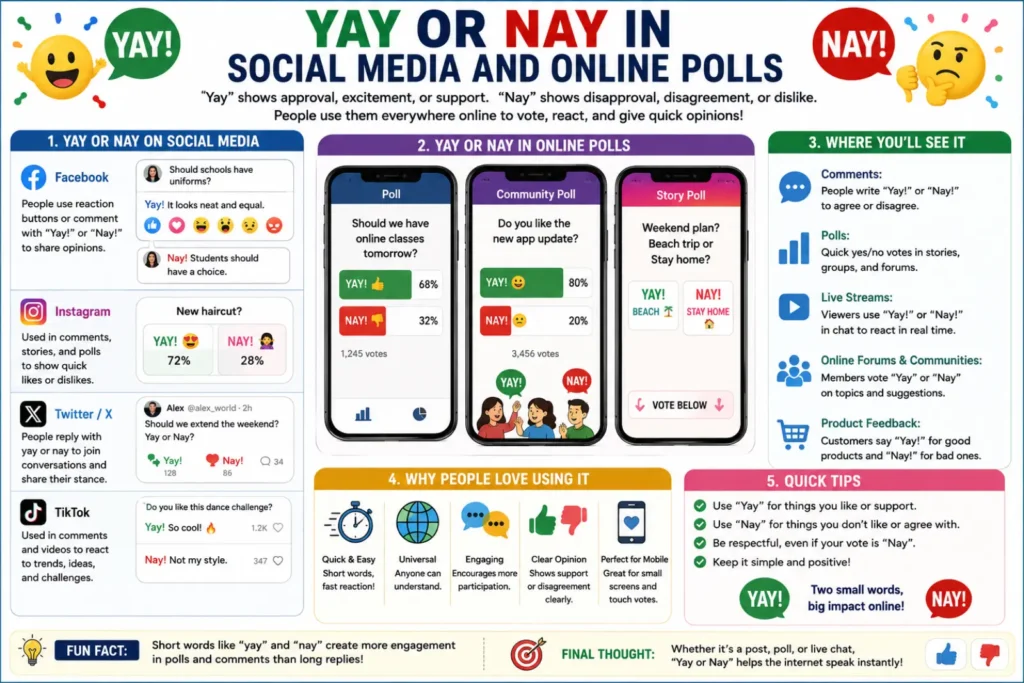
Yay or Nay in Social Media and Online Polls
The phrase works especially well online.
Social media users often want quick reactions.
For example:
“New profile picture: yay or nay?”
Or:
“This color combination: yay or nay?”
Polls can also use the phrase.
Possible options include:
- Yay
- Nay
The short format makes the question easy to understand.
It can also encourage people to respond.
However, a clear question still matters. Readers should know exactly what they are voting on.
Yay or Nay in Voting
“Nay” has another important use.
In voting, yay can mean an affirmative vote, while nay means a negative vote.
You may hear phrases such as:
- “All in favor, say yay.”
- “Those opposed, say nay.”
In formal voting, the terms yea and nay may also appear.
The exact terms depend on the organization and its voting rules.
This use differs slightly from casual speech.
In casual speech, “yay” often sounds cheerful.
In voting, it can simply indicate support.
Synonyms and Related Terms
Several words can express similar ideas.
Synonyms for “Yay”
- Yes
- Sure
- Absolutely
- Agreed
- Definitely
- I approve
- Sounds good
- Go for it
- Great idea
Synonyms for “Nay”
- No
- Nope
- Not really
- I disagree
- I object
- I do not approve
- Not a good idea
- I would pass
Related Search Terms
People may also search for:
- yay meaning
- nay meaning
- yay or nay definition
- yay or nay meaning in English
- what does yay or nay mean
- yay vs nay
- yay meaning in texting
- nay meaning in voting
- yay or nay examples
- yay or nay synonym
- difference between yay and yea
- difference between yay and yeah
These terms all connect to the same basic language topic.
Expert Insights: Why This Phrase Matters
“Yay or nay” looks simple, but context changes its meaning and tone.
Language experts often focus on usage, audience, and context when explaining informal expressions.
The phrase works because it creates a clear two-choice structure.
It also feels less serious than “approve or reject.”
That makes it useful for casual discussions and online content.
For SEO content, explain the phrase directly before adding examples.
This approach helps readers find the answer quickly.
Short definitions also work well for featured snippet opportunities.
A strong language guide should also explain related terms.
That includes “yea,” “yeah,” “yes,” and “no.”
These comparisons answer common follow-up questions.
They also help readers avoid common language mistakes.
When Should You Use “Yay or Nay”?
Use “yay or nay” when you want a quick, informal opinion.
Good situations include:
- Chatting with friends
- Creating social media polls
- Asking for casual feedback
- Choosing between simple options
- Discussing plans
- Asking for approval
- Starting a lighthearted conversation
Avoid it when you need very formal language.
For example, a legal document would normally use clearer terms.
A professional report may also prefer “approve” and “reject.”
The best choice depends on your audience.
FAQs About Yay or Nay Meaning
What does “yay or nay” mean?
“Yay or nay” means “yes or no” or “approve or reject.” It usually asks for a quick opinion.
Is “yay” the same as “yes”?
Not exactly. “Yay” can mean approval, but it can also express happiness or excitement.
What does “nay” mean?
“Nay” means no, disagreement, rejection, or opposition. It can sound formal or old-fashioned.
Is “yay or nay” formal or informal?
“Yay or nay” is usually informal. It works well in casual conversations, chats, polls, and social media.
What is the difference between yay and yea?
“Yay” usually expresses excitement or approval. “Yea” can mean yes or an affirmative vote.
What is the difference between yay and yeah?
“Yay” often shows excitement. “Yeah” is an informal way to say yes.
Can I use “yay or nay” in a work conversation?
Yes, if the conversation is informal. For formal communication, “approve or reject” may sound more professional.
What is another way to say “yay or nay”?
You can say “yes or no,” “agree or disagree,” “approve or reject,” or “good idea or bad idea.
Conclusion
The yay or nay meaning is simple: it usually means “yes or no” or “approve or reject.” “Yay” shows approval or excitement. “Nay” shows disagreement or rejection. The phrase usually sounds casual, friendly, and direct. People commonly use it in chats, social media, polls, and everyday conversations. Context can change the exact meaning. “Yay!” may express happiness, while “yay or nay?” asks for an opinion. You should also remember the difference between “yay,” “yea,” and “yeah.” Use “yay or nay” when a relaxed tone fits your audience. For formal writing, choose clearer terms such as “approve or reject.” The simple takeaway is easy: yay means approval, nay means disapproval, and “yay or nay” asks you to choose.Introduction.