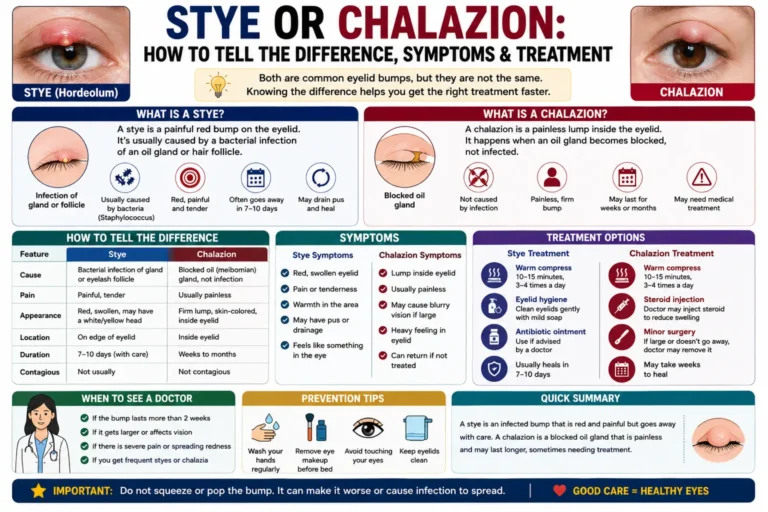
Stye or chalazion can both cause a lump on your eyelid. They can look similar, but they have different causes. A stye usually feels painful and tender. A chalazion usually feels firm and causes little or no pain. A stye often comes from an infection near an eyelash. A chalazion usually comes from a blocked oil gland.
Most cases are not serious and improve with simple care. However, some eyelid lumps need medical attention. Knowing the difference can help you choose safe next steps. This guide explains the signs, causes, treatments, and warning signs. It also covers common mistakes and prevention tips. If your symptoms are severe or affect your vision, contact a healthcare professional.
Quick Summary
- A stye is usually a painful, red eyelid lump.
- A chalazion is usually a firm, less painful eyelid lump.
- Styes often involve an infection near an eyelash.
- Chalazia usually develop when an eyelid oil gland becomes blocked.
- Warm compresses can help both conditions.
- Do not squeeze, pop, or pierce an eyelid lump.
- Avoid eye makeup and contact lenses while the area heals.
- Seek medical advice if symptoms worsen, spread, or affect your vision.
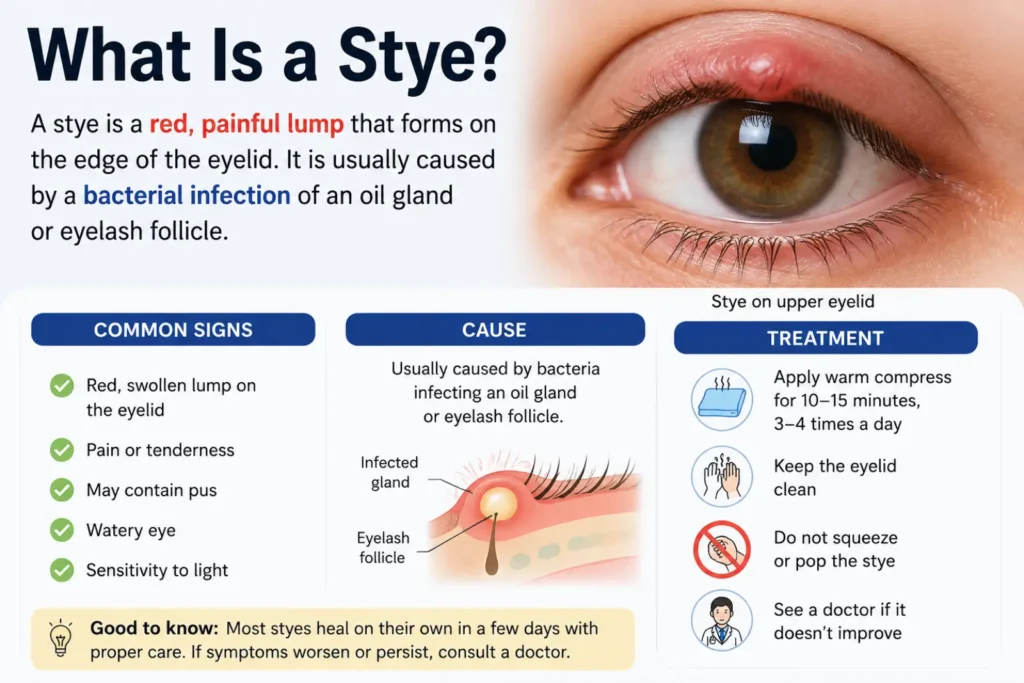
What Is a Stye?
A stye is a small, painful lump on or near the eyelid. It often looks like a pimple. Styes can develop near the base of an eyelash or inside the eyelid.
Bacteria often cause styes. The infection can affect an eyelash follicle or nearby gland. The eyelid may become red, swollen, sore, and watery.
Most styes improve on their own. A warm compress may help ease discomfort and support natural drainage.
What Is a Chalazion?
A chalazion is a swollen lump caused by a blocked oil gland in the eyelid. It often feels firm and does not hurt much.
A chalazion can become red or tender as it grows. A larger chalazion may press against the eye and affect vision.
Unlike a typical stye, a chalazion does not usually start as an infection. Instead, trapped oil causes inflammation inside the eyelid.
Stye or Chalazion: What Is the Difference?
The easiest clue is pain.
A stye usually hurts and feels tender. A chalazion usually feels like a firm, painless bump.
| Feature | Stye | Chalazion |
|---|---|---|
| Main cause | Often bacterial infection | Blocked oil gland |
| Pain | Usually painful | Usually little or no pain |
| Appearance | Red, swollen lump | Firm eyelid bump |
| Location | Often near eyelashes | Often farther back in the eyelid |
| Pus | May develop | Usually not present |
| Swelling | Common | Can occur |
| Vision | Usually unaffected | Large lumps may blur vision |
| Usual care | Warm compresses and hygiene | Warm compresses and hygiene |
The two conditions can sometimes look alike. A healthcare professional can confirm the diagnosis when needed.
How Can You Tell Which One You Have?
Look at three simple clues: pain, location, and appearance.
A painful red lump near the eyelashes is more likely to be a stye. A firm lump deeper inside the eyelid is more likely to be a chalazion.
Still, symptoms can overlap. Do not rely on appearance alone when symptoms are unusual or severe.
For example, a teenager may notice a tender bump after rubbing their eye. That could fit a stye. Another person may notice a firm bump that slowly grows without much pain. That pattern may fit a chalazion.
Stye or Chalazion Symptoms
Common stye symptoms
- Pain or tenderness
- A red or discolored lump
- Eyelid swelling
- Watery eyes
- A pimple-like appearance
- Possible discharge or a yellow spot
Common chalazion symptoms
- A firm eyelid lump
- Little or no pain
- Local swelling
- Tenderness if the lump becomes inflamed
- Blurred vision if the lump becomes large
These symptoms can vary between people.
What Causes a Stye or Chalazion?
Styes commonly result from bacterial infection around an eyelash or eyelid gland. Poor eyelid hygiene can increase the chance of infection. Existing eyelid inflammation can also increase the risk.
Chalazia usually develop when an oil gland becomes blocked. The trapped oil then causes local inflammation.
Some people get these eyelid lumps repeatedly. Conditions such as blepharitis can increase the risk of both problems.
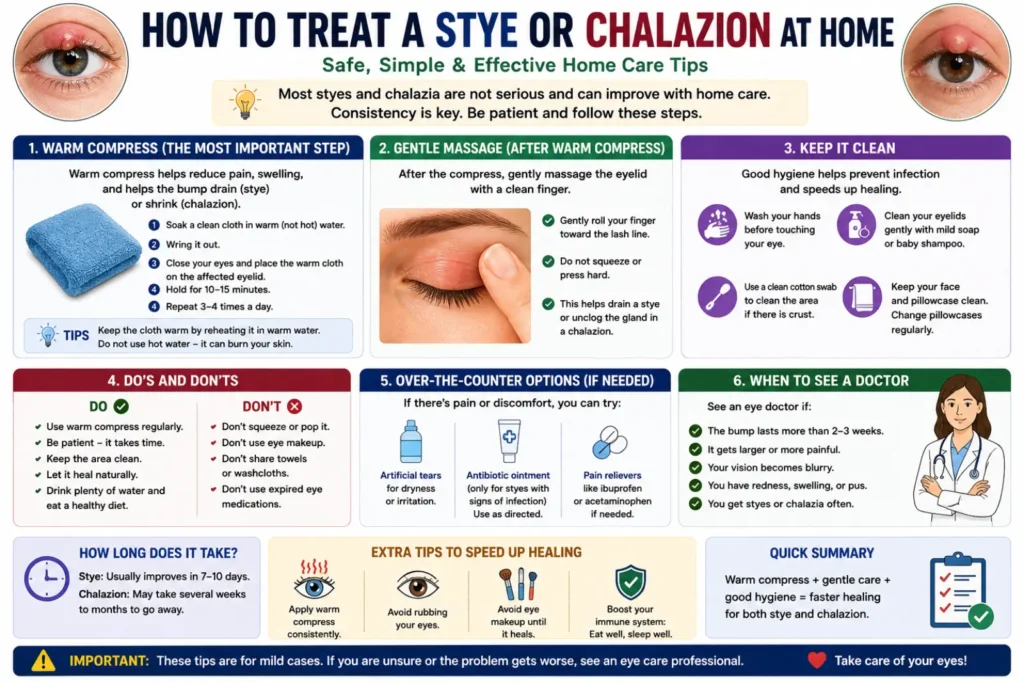
How to Treat a Stye or Chalazion at Home
Warm compresses are a common first step for both conditions.
Use a clean cloth with warm water. Place it gently over the closed eyelid for about 5 to 10 minutes. You can repeat this several times during the day.
Keep your hands and eyelids clean. Avoid rubbing the affected eye.
Do not try to pop or squeeze the lump. Squeezing a stye can spread infection.
If you wear contact lenses, consider leaving them out until the eye heals. Avoid eye makeup during this period as well.
When Should You See a Doctor?
Most simple styes are harmless. However, certain symptoms need professional attention.
Seek medical advice if the lump does not improve, becomes very painful, or keeps returning. You should also seek care if swelling spreads around the eye.
Vision changes deserve prompt attention. Significant swelling, pus from the eye, or spreading redness also needs medical assessment.
A healthcare professional can examine the eyelid and decide whether further treatment is needed. Persistent cases may sometimes need specialist treatment.
Common Mistakes to Avoid
1. Squeezing the lump
Do not pop a stye or chalazion. This can worsen irritation or spread infection.
2. Rubbing your eye
Rubbing can increase irritation. It can also transfer bacteria to the eyelid.
3. Sharing towels
Avoid sharing towels or face cloths when you have an eye infection.
4. Wearing eye makeup
Give the eyelid time to heal. Avoid eye makeup until symptoms improve.
5. Wearing contact lenses during symptoms
Contact lenses can become contaminated. Follow advice from your eye-care professional.
6. Assuming every eyelid lump is a stye
Other conditions can cause eyelid swelling. Persistent or unusual lumps deserve professional evaluation.
Tips to Help Prevent Styes and Chalazia
Good eyelid hygiene can reduce the chance of repeated problems.
Wash your hands before touching your eyes. Keep your eyelids clean. Remove eye makeup before sleeping. Do not share cosmetics or towels.
If you use contact lenses, wash your hands before handling them. Follow the cleaning instructions given by your eye-care professional.
People with recurring eyelid inflammation may also need advice about managing blepharitis.
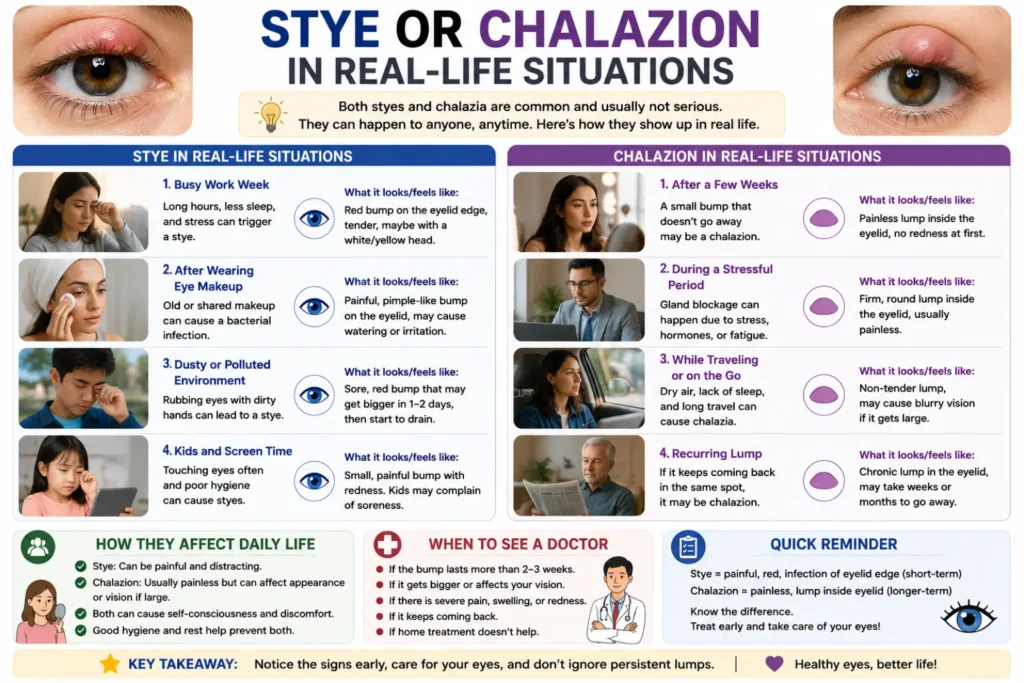
Stye or Chalazion in Real-Life Situations
Example 1: A painful eyelid bump
A student notices a red, tender bump near the eyelashes. The eyelid feels sore when touched.
This pattern is more consistent with a stye.
Example 2: A firm lump without pain
Someone notices a small, firm bump inside the upper eyelid. It does not hurt.
This pattern is more consistent with a chalazion.
Example 3: A large eyelid lump
Someone develops a larger lump that begins affecting vision.
They should seek professional eye care. A large chalazion can sometimes press against the eye.
These examples show typical patterns. They do not replace a medical examination.
Stye and Chalazion Synonyms and Related Terms
People may search for these conditions using different words.
Stye-related terms
- Stye
- Sty
- Hordeolum
- Eyelid infection
- Painful eyelid bump
- Pimple on eyelid
Chalazion-related terms
- Chalazion
- Meibomian cyst
- Blocked eyelid gland
- Eyelid oil gland blockage
- Painless eyelid lump
Related search terms
- stye or chalazion
- stye vs chalazion
- difference between stye and chalazion
- chalazion vs stye
- stye symptoms
- chalazion symptoms
- how to treat a stye
- how to treat a chalazion
- painful eyelid bump
- painless eyelid lump
Expert Insights: Why the Difference Matters
The key difference is the underlying cause.
A stye usually involves infection and causes pain. A chalazion usually involves a blocked oil gland and causes little pain.
That difference helps explain why the bumps look and feel different.
However, symptoms can overlap. Some styes can develop inside the eyelid. A chalazion can also become tender or red.
For that reason, persistent, severe, or vision-affecting symptoms should receive professional assessment.
Frequently Asked Questions
Is a stye or chalazion more painful?
A stye is usually more painful. A chalazion is usually painless or only mildly tender.
Can a stye turn into a chalazion?
A chalazion can develop after an internal stye. The two conditions can sometimes overlap.
Can I pop a stye?
No. Do not squeeze or pop a stye. This may spread the infection.
Does a chalazion go away by itself?
Many chalazia improve with time and simple care. Some can take weeks or longer to disappear.
Can warm compresses help a stye?
Yes. Warm compresses can ease discomfort and help the stye drain naturally.
Can a chalazion affect vision?
Yes. A large chalazion can press against the eye and cause blurry vision.
Should I wear contact lenses with a stye?
It is best to avoid contact lenses while the stye heals. Follow advice from your eye-care professional.
When should I get medical help?
Seek medical advice if symptoms become severe, spread, persist, or affect your vision.
Conclusion
Knowing the difference between a stye or chalazion can make an eyelid lump less confusing. A stye usually causes pain, redness, and swelling. A chalazion usually causes a firm lump with little or no pain.
Both conditions often improve with simple eyelid care. Warm compresses can provide relief and support healing. Avoid squeezing the lump, rubbing your eye, or using eye makeup while symptoms continue.
Most cases do not cause serious problems. Still, persistent symptoms, spreading redness, severe swelling, or vision changes need professional attention. When in doubt, ask a healthcare professional to examine your eye.