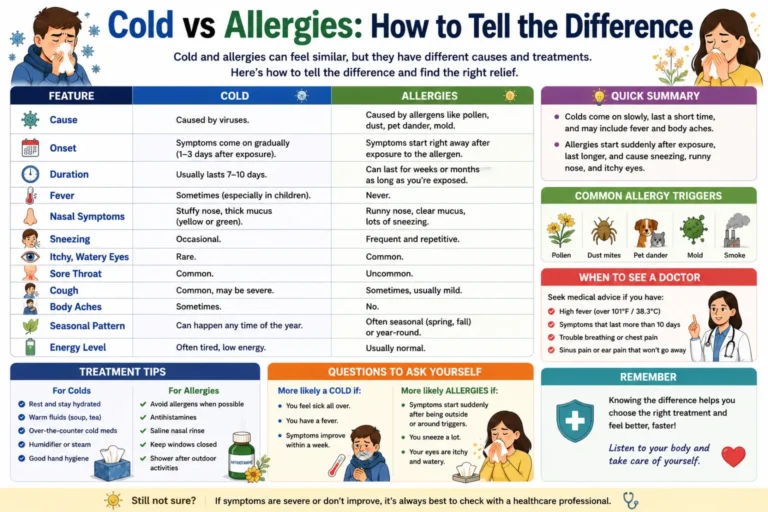
Cold vs allergies can be hard to tell because both can cause sneezing, congestion, and a runny nose. However, they have different causes and patterns. A cold comes from a virus. Allergies happen when your immune system reacts to an allergen, such as pollen or dust.
The timing of your symptoms can also offer useful clues. Cold symptoms often develop after exposure to a virus. Allergy symptoms can appear soon after exposure to a trigger.
Itchy eyes often point toward allergies. Fever, body aches, or a sore throat can point toward a cold. Still, symptoms can overlap.
This guide explains cold vs allergies in simple terms. You will learn the key differences, common symptoms, and helpful everyday tips.
Quick Summary
- A cold comes from a virus.
- Allergies come from an immune response to allergens.
- Both can cause sneezing and a runny or blocked nose.
- Itchy, watery eyes are more common with allergies.
- Fever and body aches are more suggestive of a cold.
- Cold symptoms usually improve within days.
- Allergy symptoms can continue while you face the trigger.
What Is a Common Cold?
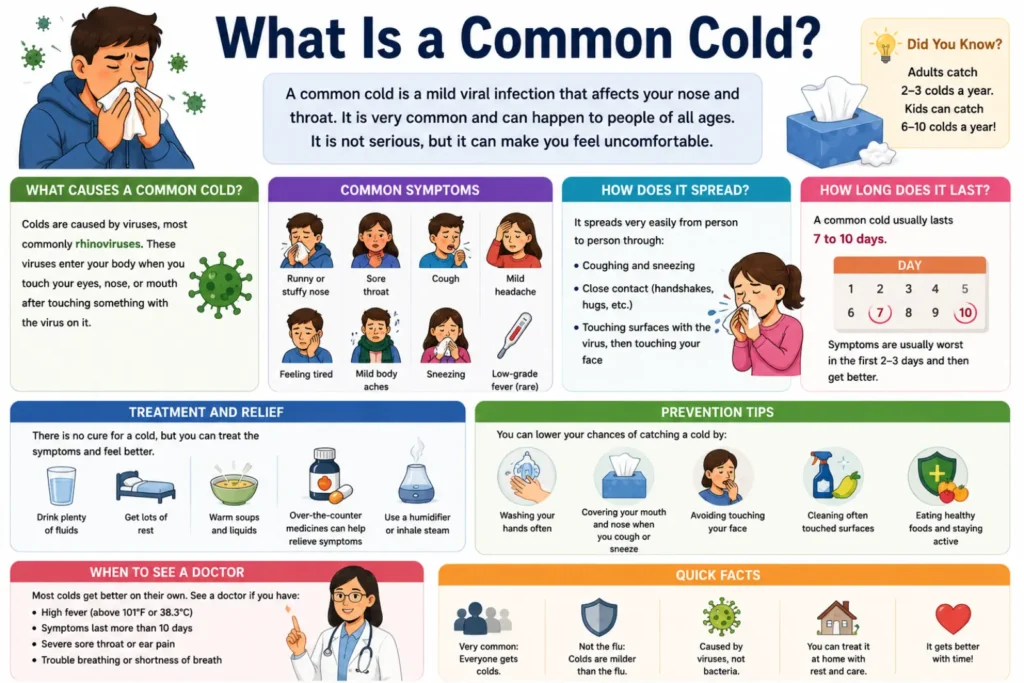
A common cold is a viral infection of the upper respiratory tract. Many viruses can cause colds. Rhinoviruses are the most common cause.
A cold can spread between people through respiratory droplets and close contact. Touching contaminated objects can also spread some cold viruses.
Common cold symptoms include:
- Runny nose
- Stuffy nose
- Sneezing
- Sore throat
- Cough
- Mild fever in some cases
- Tiredness
- Body aches
Most common colds improve without specific treatment. Rest, fluids, and simple symptom care can help you feel better.
What Are Allergies?
Allergies happen when the immune system reacts to a normally harmless substance. These substances are called allergens.
Common allergy triggers include:
- Pollen
- Dust mites
- Mold
- Pet allergens
- Cockroach allergens
Seasonal allergies often involve pollen from trees, grasses, or weeds. Indoor allergies can continue throughout the year.
Allergic rhinitis can cause sneezing, congestion, a runny nose, and itchy eyes. It can also cause an itchy nose, throat, or roof of the mouth.
Cold vs Allergies: The Main Differences
The biggest difference is the cause.
A cold results from a viral infection. Allergies result from an immune response to an allergen.
The symptom pattern can also help.
| Symptom | Common Cold | Allergies |
|---|---|---|
| Sneezing | Common | Common |
| Runny nose | Common | Common |
| Stuffy nose | Common | Common |
| Itchy eyes | Less common | Very common |
| Watery eyes | Less common | Common |
| Sore throat | Common | Less common |
| Cough | Common | Sometimes |
| Fever | Sometimes | Usually absent |
| Body aches | Can occur | Not typical |
| Symptoms after allergen exposure | Not typical | Common |
| Symptoms lasting weeks | Less typical | Possible |
No single symptom can always tell you the answer. Look at the full pattern instead.
Cold vs Allergies Symptoms: What Should You Look For?
1. Itchy Eyes
Itchy, watery eyes strongly suggest allergies. Allergy symptoms often affect both the nose and eyes.
A cold can cause eye symptoms, but they are usually less prominent.
2. Fever
A fever can happen with a cold. Seasonal allergies do not usually cause a fever.
So, fever may make a viral infection more likely.
3. Body Aches
Body aches can occur during a cold. They are not a typical allergy symptom.
However, body aches can also occur with other infections. Do not use this symptom alone to identify the cause.
4. Sore Throat
A sore throat is common with colds. It can happen with allergies, too, especially when mucus drains down the throat.
Still, a sore throat generally fits a cold better than seasonal allergies.
5. Symptom Timing
Timing provides another useful clue.
Allergy symptoms can appear after exposure to a trigger. They may continue while that exposure continues.
Cold symptoms usually follow exposure to a virus and then improve as the infection clears.
How Long Do Colds and Allergies Last?
A common cold usually gets better within about one to two weeks. A cough can sometimes last longer.
Allergy symptoms can last much longer.
For example, seasonal allergies may continue during periods of high pollen exposure. Year-round allergies may continue when an indoor trigger remains present.
This creates an important clue:
Short-term illness often fits a cold. Repeated or ongoing symptoms may suggest allergies.
However, repeated infections can also happen. A healthcare professional can help when symptoms remain unclear.
Real-Life Examples of Cold vs Allergies
Example 1: Sudden Symptoms
You wake up with a sore throat, stuffy nose, cough, and tiredness.
These symptoms may fit a common cold.
Example 2: Springtime Sneezing
You spend time outdoors and develop sneezing, itchy eyes, and a runny nose.
That pattern may fit seasonal allergies.
Example 3: Symptoms Around Pets
You notice sneezing and itchy eyes whenever you spend time around a particular animal.
That pattern may suggest an animal-related allergy. Pet allergens can trigger sneezing, nasal symptoms, and itchy or watery eyes.
Example 4: Ongoing Symptoms
Your nose stays congested for weeks. Symptoms become worse around dust or other indoor triggers.
That pattern may suggest an indoor allergy.
These examples are clues, not diagnoses.
Common Mistakes When Comparing a Cold and Allergies
Mistake 1: Assuming Every Runny Nose Means a Cold
A runny nose can happen with both conditions.
Look for other symptoms before deciding.
Mistake 2: Ignoring Itchy Eyes
Itchy, watery eyes can provide an important allergy clue.
Mistake 3: Assuming Seasonal Symptoms Are Always Colds
Symptoms that return around the same season may relate to pollen exposure.
Mistake 4: Treating Every Symptom the Same Way
Colds and allergies have different causes. Their management can therefore differ.
Mistake 5: Ignoring Symptoms That Persist
Ongoing symptoms deserve attention, especially when they affect sleep, school, or daily activities.
Tips for Telling a Cold From Allergies
Use these simple questions:
- Do you have a fever?
- Are your eyes itchy or watery?
- Do symptoms appear after a specific exposure?
- Do you have body aches?
- How long have symptoms lasted?
- Do symptoms return during a particular season?
- Has anyone around you been sick?
No question gives a diagnosis by itself. Together, these clues can make the difference easier to understand.
Managing Cold Symptoms in Daily Life
Most common colds improve with time.
Helpful self-care can include:
- Getting enough rest
- Drinking plenty of fluids
- Using saline nasal rinses
- Keeping the air comfortably humid
- Following medicine directions carefully
There is no cure that removes the common cold instantly. Antibiotics do not treat viruses.
If symptoms become severe, worsen, or do not improve, talk with a healthcare professional.
Managing Allergy Symptoms in Daily Life
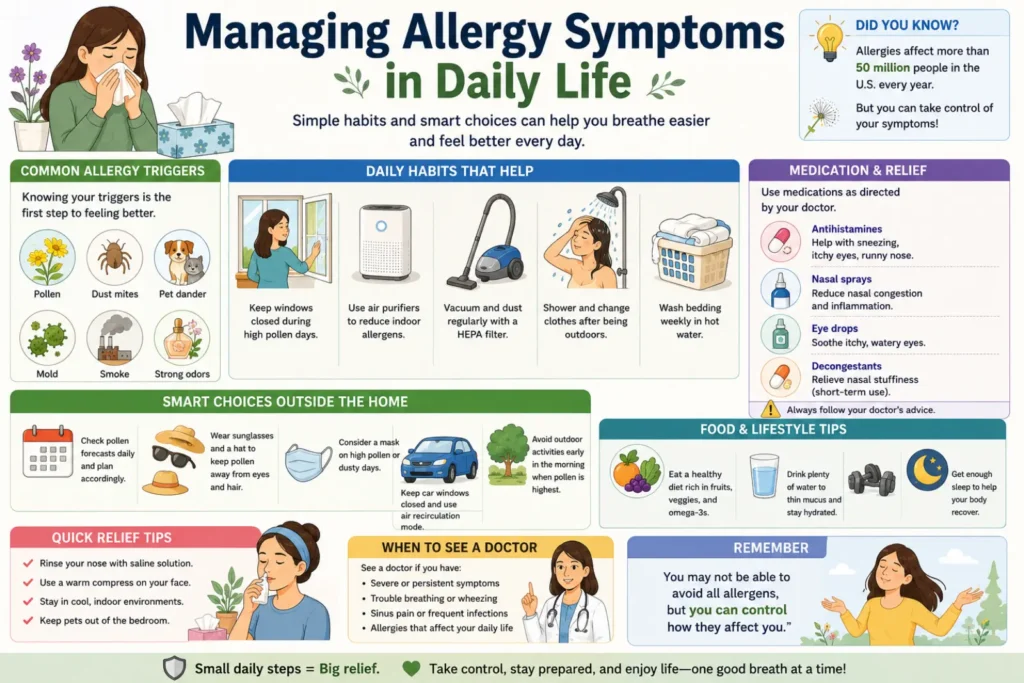
The first step is understanding your triggers.
Common triggers include pollen, dust mites, mold, and pet allergens.
You can reduce exposure where practical. For seasonal allergies, checking pollen levels may help you plan outdoor activities.
Healthcare professionals may recommend treatments such as antihistamines or nasal sprays. The right option depends on your symptoms and individual needs.
Cold vs Allergies: Synonyms and Related Search Terms
People use several phrases when searching for this topic.
Useful semantic keywords include:
- cold or allergies
- allergies or a cold
- cold vs allergy symptoms
- allergy symptoms vs cold symptoms
- how to tell a cold from allergies
- is it a cold or allergies
- seasonal allergies vs cold
- common cold symptoms
- allergy symptoms
- itchy eyes and runny nose
- sneezing and congestion
- allergy or viral infection
- cold symptoms that look like allergies
These terms can support topical relevance without repeating the primary keyword unnaturally.
Expert Insights
Understanding cold vs allergies can help you respond to symptoms more appropriately.
The cause matters because a cold involves a viral infection. Allergies involve an immune response to allergens.
Experts also consider the pattern of symptoms.
For example, itchy eyes and symptoms linked to pollen exposure may suggest allergies. Fever and body aches may fit an infection better.
Still, symptoms can overlap with other illnesses. COVID-19 and influenza can also cause symptoms that resemble a cold.
When symptoms are severe, unusual, persistent, or worsening, seek professional medical advice.
When Should You Talk to a Healthcare Professional?
Consider speaking with a healthcare professional when symptoms do not improve or keep returning.
You should also seek advice when symptoms interfere with daily activities, sleep, school, or normal routines.
For allergies, professional evaluation may help identify triggers when symptoms remain difficult to control. Allergy specialists can help assess symptoms and possible allergens.
Seek urgent medical help for serious breathing problems or signs of a severe allergic reaction.
Frequently Asked Questions
Is it a cold or allergies if I keep sneezing?
Both can cause sneezing. Itchy eyes and symptoms linked to specific triggers make allergies more likely.
Can allergies cause a cough?
Yes. Allergies can sometimes cause coughing. However, cough is also common with colds.
Do allergies cause a fever?
Seasonal allergies usually do not cause a fever. A fever may point toward an infection instead.
Are itchy eyes a sign of allergies?
Yes. Itchy, watery eyes are a common allergy symptom and can help distinguish allergies from a cold.
How long does a cold usually last?
Most common colds improve within about one to two weeks. Some symptoms, especially cough, can last longer.
Can allergies last for weeks?
Yes. Allergy symptoms can continue while you remain exposed to an allergen. Seasonal allergies may last for weeks or longer.
Can you have allergies and a cold together?
Yes. Having allergy symptoms does not prevent you from getting a viral infection. A healthcare professional can help when symptoms overlap.
When should I get checked?
Get medical advice if symptoms persist, worsen, become difficult to manage, or affect your daily life. Seek urgent care for serious breathing problems or severe allergic reactions.
Conclusion
Knowing the difference between a cold vs allergies can make confusing symptoms easier to understand. Both conditions can cause sneezing, congestion, and a runny nose. However, their causes differ.
A cold comes from a virus. Allergies happen when your immune system reacts to an allergen.
Look at the overall symptom pattern. Itchy, watery eyes and trigger-related symptoms often suggest allergies. Fever, sore throat, and body aches may fit a cold better.
Duration also matters. Colds usually improve within days or weeks. Allergy symptoms can continue while exposure continues.
The key takeaway is simple: look at the cause, symptoms, timing, and duration together. When you are unsure or symptoms become concerning, talk with a healthcare professional.