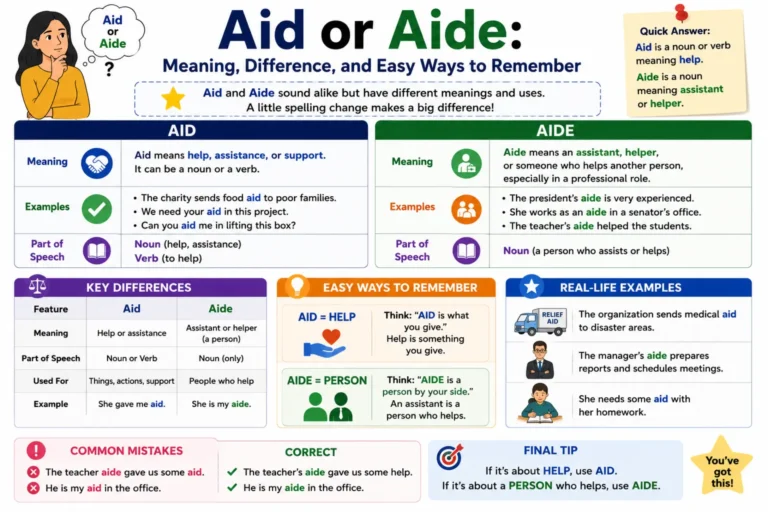
Aid or aide can confuse many English learners and writers. Both words sound the same, but they have different meanings. Aid usually means help, support, or assistance. Aide usually means a person who helps someone else. Knowing the difference helps you write clearly and avoid common spelling mistakes. This guide explains aid vs aide in simple English. You will learn their meanings, pronunciation, examples, synonyms, and correct usage. You will also see a simple comparison table. By the end, you will know exactly when to use aid and when to use aide. This small spelling difference can improve your emails, essays, reports, and everyday writing. Let’s make the difference simple and easy to remember.
Quick Summary
- Aid means help, support, or assistance.
- Aid can also mean something that helps you.
- Aide means a person who helps another person.
- Both words usually sound the same.
- Use aid for help or assistance.
- Use aide for a helper or assistant.
- Example: “The charity provided aid.”
- Example: “The senator spoke with an aide.”
- Remember: Aide is a person. Aid is help.
What Does “Aid” Mean?
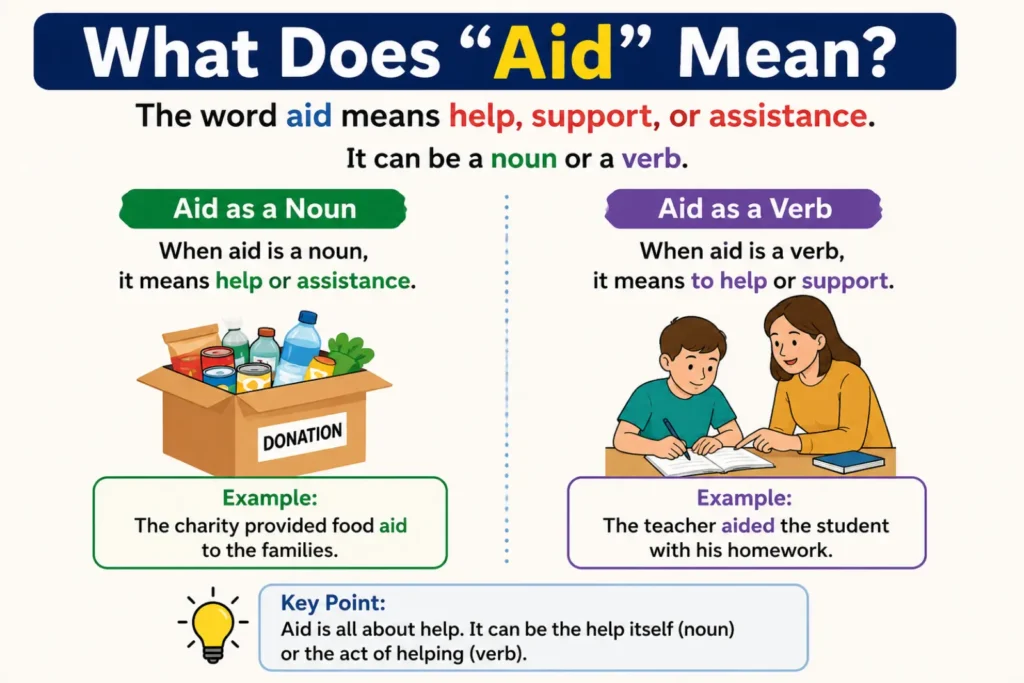
The word aid means help or support. It can work as a noun or a verb.
As a noun, aid means assistance.
Example:
The family received financial aid.
Here, aid means financial help.
As a verb, aid means to help someone.
Example:
The teacher aided the student.
Here, aided means helped.
The word aid often appears in formal writing. You may see it in news reports, education, healthcare, and international development.
What Does “Aide” Mean?
The word aide means a person who helps another person.
It often describes an assistant or helper.
Example:
The manager asked an aide to prepare the documents.
The aide is a person who provides help.
You may see aide in political, medical, educational, and professional settings.
Examples:
- A presidential aide
- A teacher’s aide
- A medical aide
- A personal aide
- A congressional aide
The key point stays simple. An aide is a person.
Aid or Aide: What Is the Difference?
The main difference involves the meaning.
Aid means help or assistance.
Aide means a person who provides help.
Both words sound alike. Therefore, context helps you choose the correct spelling.
Compare these sentences:
- The country sent aid after the disaster.
- The president spoke with an aide.
The first sentence describes help.
The second sentence describes a person.
Easy Memory Trick
Remember this simple rule:
Aide = Assistant
Both words begin with A and describe a person who helps.
You can also remember:
Aid = Assistance
The word aid has no extra e.
Aid vs Aide Comparison Table
| Word | Meaning | Part of Speech | Example |
|---|---|---|---|
| Aid | Help or assistance | Noun or verb | The group provided aid. |
| Aide | A person who helps | Noun | The aide organized the meeting. |
This table gives the fastest answer to the question: What is the difference between aid and aide?
How to Use “Aid” in a Sentence
Use aid when you mean help, support, or assistance.
Examples of “Aid” as a Noun
- The charity provided food aid.
- The patient needed medical aid.
- Students can apply for financial aid.
- The rescue team arrived to provide aid.
- The country received emergency aid.
Examples of “Aid” as a Verb
- The new system can aid workers.
- The medicine may aid recovery.
- The program aids students with their studies.
- Volunteers aided the local community.
The meaning stays connected to help.
How to Use “Aide” in a Sentence
Use aide when you mean a person who helps someone.
Examples of “Aide”
- The teacher’s aide helped the children.
- The politician spoke with an aide.
- A medical aide assisted the patient.
- The executive asked an aide to arrange the meeting.
- The school hired a classroom aide.
In each example, aide refers to a person.
Real-Life Examples of Aid and Aide
Real-life situations can make the difference easier to understand.
Example 1: Disaster Relief
A charity may provide aid after an earthquake.
The organization sent emergency aid.
Here, aid means help.
A charity worker may also act as an aide.
The director’s aide coordinated the relief effort.
Here, aide means a person.
Example 2: School
A student may receive financial aid.
Maria received financial aid for college.
A classroom helper may work as a teacher’s aide.
The teacher’s aide helped students with their work.
Example 3: Politics
A government may send foreign aid.
The country provided aid to communities affected by flooding.
A politician may have an aide.
The senator’s aide prepared the briefing notes.
Example 4: Healthcare
A patient may receive medical aid.
The injured person needed immediate aid.
A healthcare worker may serve as an aide.
The nursing aide helped the patient.
Common Mistakes With Aid and Aide
Many writers confuse these words because they sound the same.
Mistake 1: Using “Aide” for Help
Incorrect:
The charity provided food aide.
Correct:
The charity provided food aid.
Food aid means food assistance.
Mistake 2: Using “Aid” for a Person
Incorrect:
The president asked an aid to join the meeting.
Correct:
The president asked an aide to join the meeting.
An aide is a person.
Mistake 3: Confusing “Aide” With “Aid”
Incorrect:
The teacher’s aid helped the students.
Correct:
The teacher’s aide helped the students.
The helper is an aide.
Mistake 4: Forgetting the Context
Do not choose the spelling by sound alone.
Instead, ask one question:
Am I talking about help or a person?
Use aid for help.
Use aide for a person.
Tips to Remember the Difference
Here are simple ways to remember aid or aide.
Tip 1: Think “Aide = Assistant”
Both words describe a person who helps.
Tip 2: Think “Aid = Assistance”
Both words describe help or support.
Tip 3: Replace the Word
Try replacing the word with help.
If the sentence still makes sense, use aid.
Example:
The group provided aid.
Replace it:
The group provided help.
The meaning works.
Now try a person:
The aide entered the room.
You cannot replace aide with assistance.
Therefore, aide is correct.
Tip 4: Look at the Word Before It
Words like these often appear with aid:
- Financial aid
- Medical aid
- Emergency aid
- Foreign aid
- Legal aid
- First aid
Words like these often appear with aide:
- Teacher’s aide
- Political aide
- Medical aide
- Personal aide
- Executive aide
Aid and Aide in Daily Life
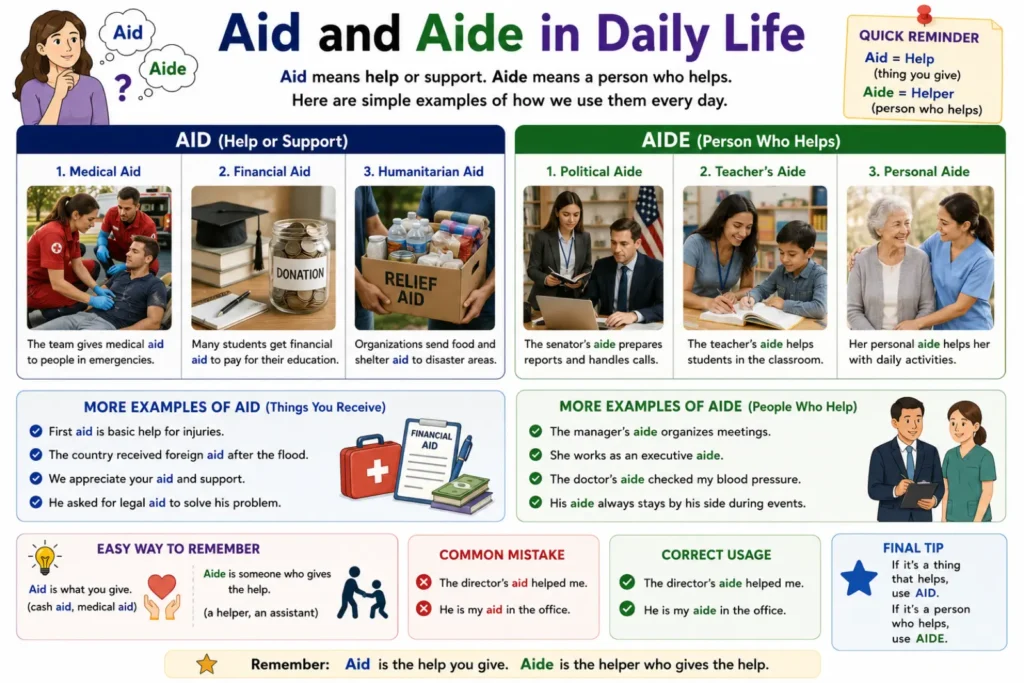
You may see aid and aide in many everyday situations.
Education
- Financial aid helps students pay for education.
- A teacher’s aide helps inside a classroom.
Healthcare
- First aid helps someone during an emergency.
- A medical aide supports patients and healthcare teams.
Government
- Foreign aid supports another country.
- A government aide helps an official.
Business
- Financial aid may support a business or organization.
- An executive aide may help a company leader.
Community Support
- Disaster aid helps affected communities.
- A community aide may assist local residents.
Synonyms and Related Keywords
Understanding related words can improve your vocabulary.
Synonyms for “Aid”
- Help
- Assistance
- Support
- Relief
- Service
- Benefit
- Assistance
- Contribution
Synonyms for “Aide”
- Assistant
- Helper
- Associate
- Attendant
- Support worker
- Staff member
Related SEO Keywords
- aid vs aide
- difference between aid and aide
- aid meaning
- aide meaning
- aid definition
- aide definition
- aid or aide grammar
- how to use aid in a sentence
- how to use aide in a sentence
- aid and aide examples
- aid vs aide examples
- is aid and aide the same
- aid or aide correct spelling
Expert Insight
The difference between aid and aide looks small. However, spelling changes meaning.
Clear word choice improves trust and readability. It also helps readers understand your message quickly.
Professional writers check homophones carefully. These words sound alike but have different meanings.
A strong writing habit can help:
Check the meaning before checking the spelling.
If you mean assistance, choose aid.
If you mean a helper, choose aide.
This simple method works in emails, essays, business writing, and online content.
Frequently Asked Questions
Is “aid” and “aide” the same?
No. Aid means help or assistance. Aide means a person who helps.
Is a teacher’s helper called an aid or aide?
The correct word is usually aide.
Example:
The teacher’s aide helped the students.
What is an example of aid?
The charity provided emergency aid.
Here, aid means help.
What is an example of aide?
The politician spoke with an aide.
Here, aide means an assistant.
Is “first aid” spelled aid or aide?
The correct spelling is first aid.
It means emergency medical help.
Is financial aid spelled aid or aide?
The correct spelling is financial aid.
It means financial assistance.
How can I remember aid and aide?
Remember this rule:
Aid means assistance. Aide means assistant.
Do aid and aide sound the same?
Yes. In most standard English, they are homophones.
They sound alike but have different meanings and spellings.
Conclusion
The difference between aid or aide becomes easy when you focus on meaning. Aid means help, assistance, or support. Aide means a person who helps someone else. Both words sound the same, so spelling creates the difference. Use aid in phrases like financial aid, medical aid, and first aid. Use aide for phrases like teacher’s aide, political aide, and medical aide. When you feel unsure, ask one simple question: Am I talking about help or a helper? If you mean help, choose aid. If you mean a person, choose aide. This simple rule will help you use both words correctly in everyday writing.