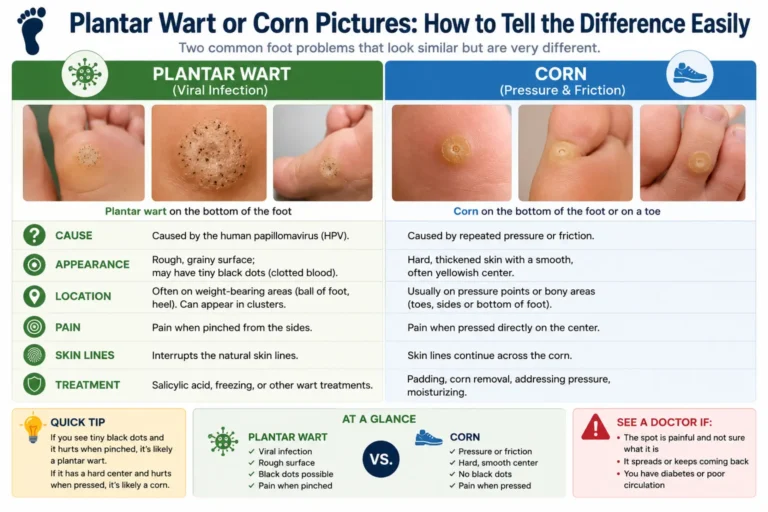
Plantar wart or corn pictures can help you spot the difference between these two common foot problems. At first, they may look almost the same. However, they have different causes and need different treatments.
A plantar wart is caused by a virus. A corn develops because of repeated pressure or friction on the skin. Knowing the difference can help you choose the right treatment and avoid unnecessary pain.
In this guide, you will learn how to identify plantar warts and corns by their appearance. We will compare their symptoms, causes, and treatments using simple language. By the end, you will know what to look for and when to seek medical advice.
Quick Summary Box
- Plantar wart: A rough skin growth caused by the human papillomavirus (HPV).
- Corn: A thick, hard layer of skin caused by pressure or friction.
- Plantar warts often have tiny black dots.
- Corns usually have a hard center without black dots.
- Warts can spread to other areas of the foot.
- Corns do not spread because they are not caused by a virus.
- Looking at clear pictures can help you compare both conditions.
- A doctor can confirm the diagnosis if you are unsure.
What Is a Plantar Wart
A plantar wart is a small growth that appears on the sole of the foot. It develops when the human papillomavirus (HPV) enters the skin through tiny cuts or cracks.
Unlike common warts, plantar warts grow inward because your body weight pushes them into the foot. This makes them painful while walking or standing.
Common Signs of a Plantar Wart
- Rough, grainy surface
- Tiny black dots inside the wart
- Thick skin around the affected area
- Pain when squeezing the wart from the sides
- Broken skin lines over the wart
Plantar warts may appear alone or in small groups called mosaic warts.
What Is a Corn?
A corn is a thick, hardened patch of skin that forms because of constant pressure or rubbing. It is your body’s way of protecting the skin from damage.
Corns often develop on areas that experience repeated friction, such as the toes, the ball of the foot, or the side of the foot.
Unlike plantar warts, corns are not caused by a virus and cannot spread to other people.
Common Signs of a Corn
- Hard, thick center
- Smooth or shiny surface
- Yellow or white color
- Pain when pressing directly on the corn
- Normal skin lines continue across the corn
Most corns improve after reducing pressure on the affected area.
Plantar Wart or Corn Pictures: Key Differences
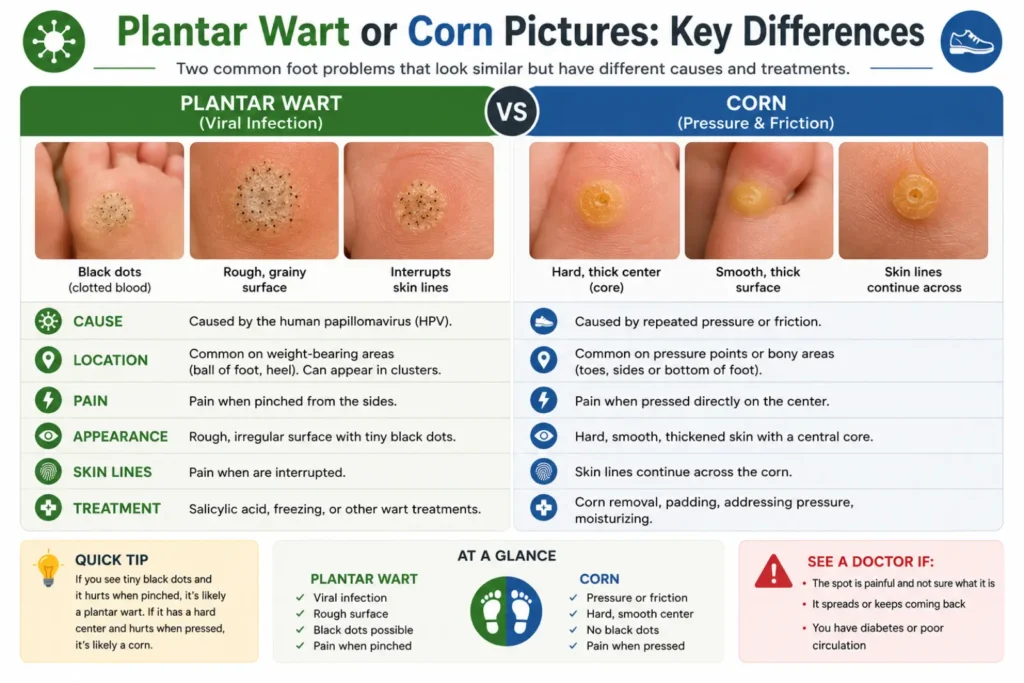
Looking at plantar wart or corn pictures is one of the easiest ways to compare these conditions. Although both can appear on the bottom of the foot, several visual clues make them different.
| Feature | Plantar Wart | Corn |
|---|---|---|
| Cause | HPV infection | Pressure or friction |
| Black dots | Usually present | Usually absent |
| Skin lines | Broken | Continue normally |
| Center | Rough tissue | Hard core |
| Pain | Hurts when squeezed | Hurts with direct pressure |
| Spread | Can spread | Does not spread |
| Contagious | Yes | No |
Featured Snippet Answer
Plantar wart or corn pictures usually show that plantar warts have tiny black dots, rough surfaces, and interrupted skin lines. Corns have a hard center, smooth surface, and normal skin lines. Warts hurt when squeezed from the sides, while corns hurt when pressed directly.
Why Do They Look So Similar?
Many people confuse plantar warts with corns because both develop on weight-bearing areas of the foot.
Walking and standing press both conditions into the skin. As a result, they often appear flat instead of raised.
Both can also become covered with thick layers of skin. This makes it harder to identify them without careful observation.
Checking for black dots, skin lines, and the type of pain usually helps you tell them apart.
Real-Life Examples
Understanding real situations makes identification easier.
Example 1: A Plantar Wart
James enjoys swimming every week. He often walks barefoot around public pool areas.
A few weeks later, he notices a rough bump on his heel. It contains tiny black dots and hurts when squeezed from the sides.
His doctor confirms it is a plantar wart.
Example 2: A Corn
Emily wears narrow shoes every day at work.
After several months, she develops a hard, painful spot on her little toe.
The thick skin has a firm center and no black dots. Her podiatrist diagnoses it as a corn caused by shoe pressure.
These examples show why identifying the cause is important before starting treatment.
How to Identify Them at Home
You can perform a simple visual check before seeking treatment. However, avoid cutting or digging into the skin.
Instead, examine these signs carefully.
Look for These Features
- Tiny black dots
- Thick hard center
- Interrupted skin lines
- Pain location
- Surface texture
- Whether the bump spreads over time
If you notice black dots and rough skin, the growth is more likely to be a plantar wart.
If the skin has a smooth hard center with no black dots, it is more likely to be a corn.
Remember that home identification is not always accurate. Visit a healthcare provider if you remain unsure.
Common Mistakes People Make
Many people treat the wrong condition because plantar warts and corns look alike.
Avoid these common mistakes:
- Assuming every hard bump is a corn.
- Ignoring tiny black dots.
- Using corn medicine on a wart.
- Cutting the growth with sharp tools.
- Wearing tight shoes after treatment.
- Waiting too long to seek medical advice.
Correct identification helps you choose the best treatment and prevents further discomfort.
Best Treatment Options
The right treatment depends on whether you have a plantar wart or a corn. Treating the wrong condition may delay healing.
Treatment for Plantar Warts
Plantar warts often disappear on their own, but treatment can speed up recovery.
Common treatments include:
- Salicylic acid products
- Cryotherapy (freezing the wart)
- Prescription creams
- Laser treatment
- Minor surgical removal for stubborn warts
Avoid picking or cutting a wart because it can spread the virus.
Treatment for Corns
Most corns improve once you remove the pressure that caused them.
Helpful treatments include:
- Wearing comfortable shoes
- Using cushioned corn pads
- Moisturizing dry skin
- Gently filing thick skin after soaking your feet
- Using custom shoe inserts if needed
If a corn remains painful, see a healthcare provider.
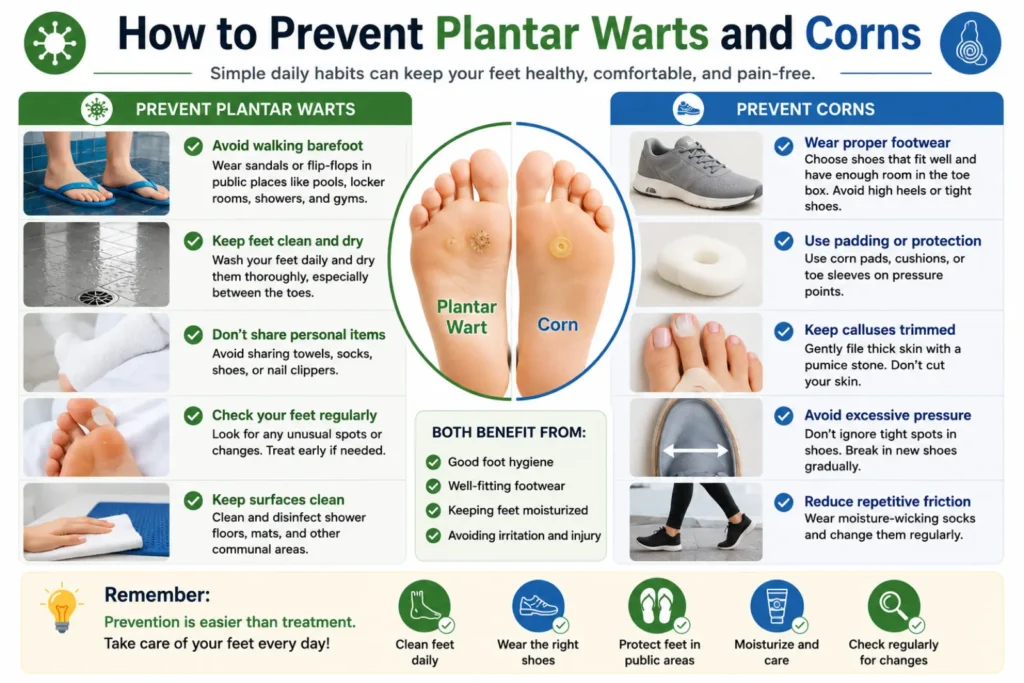
How to Prevent Plantar Warts and Corns
Healthy foot care can reduce your risk of both conditions.
Tips to Prevent Plantar Warts
- Wear flip-flops in public showers and pools.
- Keep your feet clean and dry.
- Avoid sharing socks or towels.
- Cover cuts or blisters on your feet.
- Wash your hands after touching a wart.
Tips to Prevent Corns
- Wear shoes that fit properly.
- Choose socks with extra cushioning.
- Avoid shoes that rub against your toes.
- Use protective pads if you have pressure points.
- Replace worn-out shoes regularly.
Simple daily habits can protect your feet from future problems.
Daily Foot Care Tips
Healthy feet start with a simple routine.
Follow these easy tips every day:
- Wash your feet with mild soap.
- Dry carefully between your toes.
- Moisturize dry skin.
- Trim toenails straight across.
- Check your feet for new bumps or thick skin.
- Wear clean socks each day.
- Rotate your shoes to reduce moisture.
These habits help prevent infections, corns, and other foot problems.
Synonyms and Related Keywords
Using related search terms helps readers and improves SEO.
Here are common LSI keywords for this topic:
- Plantar wart images
- Corn on foot pictures
- Wart vs corn photos
- Foot wart symptoms
- Plantar wart identification
- Corn vs callus
- Hard skin on foot
- HPV foot wart
- Heel wart pictures
- Foot skin growth
- Difference between wart and corn
- Painful bump on sole
- Foot lesion pictures
- Plantar wart treatment
- Corn removal guide
These keywords fit naturally throughout the article without overusing the main keyword.
Expert Insights
Many people mistake a plantar wart for a corn because both develop on pressure points of the foot.
As foot specialists explain, the cause is the biggest difference. A plantar wart develops from an HPV infection, while a corn forms because of repeated pressure or friction.
Looking at plantar wart or corn pictures can help you understand these differences. However, pictures cannot replace a professional diagnosis.
If you have diabetes, poor circulation, or a weakened immune system, avoid self-treatment. Seek medical advice as soon as you notice a new foot growth.
Early diagnosis often leads to faster treatment and fewer complications.
When Should You See a Doctor?
Some foot problems need medical care.
Contact a healthcare provider if:
- The growth becomes very painful.
- It bleeds often.
- You notice swelling or pus.
- Home treatment does not work.
- The bump spreads to other areas.
- You have diabetes or poor circulation.
- You are not sure whether it is a wart or a corn.
Getting the correct diagnosis helps you receive the right treatment.
Frequently Asked Questions
1. How can I tell the difference between a plantar wart and a corn?
A plantar wart usually has tiny black dots and broken skin lines. A corn has a hard center and normal skin lines.
2. Do plantar warts always have black dots?
Most plantar warts contain tiny black dots. These are small clotted blood vessels.
3. Are corns contagious?
No. Corns are caused by pressure or friction and cannot spread to other people.
4. Can I treat a plantar wart at home?
Many people use over-the-counter salicylic acid products. However, stubborn or painful warts may need medical treatment.
5. Why does my foot bump hurt when I walk?
Both plantar warts and corns can cause pain because they develop on weight-bearing parts of the foot.
6. Can wearing tight shoes cause plantar warts?
No. Tight shoes cause corns, not plantar warts. Plantar warts develop after infection with HPV.
7. Should I remove a corn myself?
Do not cut a corn at home. Instead, reduce pressure on the area and seek medical advice if the pain continues.
Conclusion
Understanding plantar wart or corn pictures makes it easier to identify these common foot conditions. Although they often look similar, their causes, symptoms, and treatments are very different. Plantar warts result from an HPV infection, while corns develop because of repeated pressure or friction. Look for signs such as black dots, skin lines, and the location of pain to help tell them apart. Pictures can provide useful guidance, but they cannot replace a medical diagnosis. If your foot growth becomes painful, spreads, or does not improve with home care, consult a healthcare professional. With proper foot care and early treatment, you can protect your feet, reduce discomfort, and prevent future problems.