Burnt out or burned out is a common question for English learners and native speakers alike. Both phrases are correct. However, the preferred form depends on where you live and the style guide you follow.
Many people also use these words to describe mental or physical exhaustion. Others use them to describe something damaged by fire. This can make the choice confusing.
In this guide, you will learn the difference between burnt out and burned out in simple words. You will also see real-life examples, common mistakes, expert tips, and easy ways to remember which one to use. By the end, you will know exactly when each phrase fits your writing.
Quick Summary Box
- Burned out and burnt out are both correct.
- Burned out is more common in American English.
- Burnt out is more common in British English.
- Both phrases can describe extreme tiredness or damage caused by fire.
- Choose the version that matches your audience and writing style.
- Stay consistent throughout your article or document.
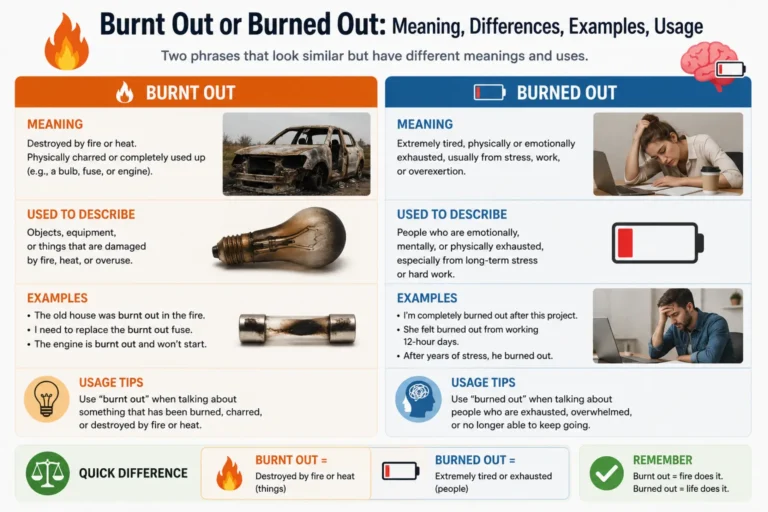
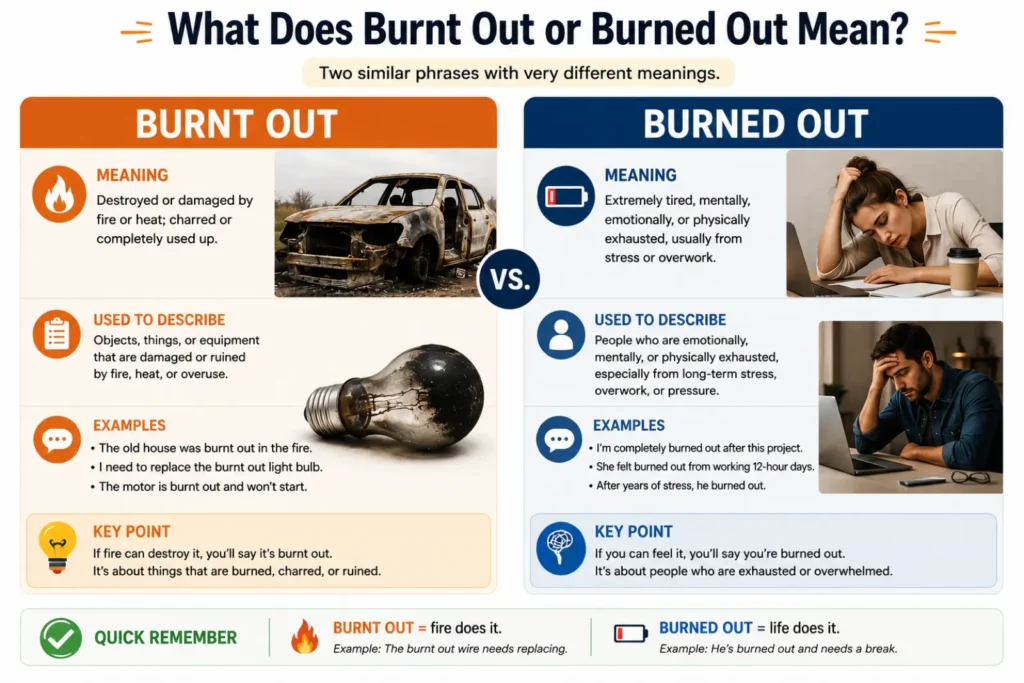
What Does Burnt Out or Burned Out Mean?
Burnt out or burned out describes a state where something has stopped working because of heat or has become completely exhausted.
The phrase has two common meanings.
1. Physical Meaning
Something has been damaged or destroyed by fire or heat.
Examples:
- The light bulb burned out.
- The building was burnt out after the fire.
- The engine burned out because it overheated.
2. Emotional Meaning
A person feels mentally, emotionally, or physically exhausted after long periods of stress.
Examples:
- She feels burned out after working every weekend.
- Many teachers become burnt out during busy school terms.
Burnt Out vs Burned Out: What’s the Difference?
The main difference is the type of English you use.
| Feature | Burned Out | Burnt Out |
|---|---|---|
| English style | American English | British English |
| Meaning | Same | Same |
| Modern usage | More common in the US | More common in the UK, Australia, and New Zealand |
| Accepted in formal writing | Yes | Yes |
| Preferred by AP Style | Yes | Usually no |
Simple Rule
- Writing for an American audience? Use burned out.
- Writing for a British audience? Use burnt out.
The meaning stays the same.
Why Do People Get Burned Out?
Burnout does not happen overnight.
It develops after long periods of stress without enough rest.
Common causes include:
- Long working hours
- Too much responsibility
- Lack of sleep
- Constant pressure
- Poor work-life balance
- Emotional stress
- Caring for others without breaks
Over time, energy levels drop. Motivation also decreases.
Real-Life Examples of Burnt Out or Burned Out
Here are common situations.
At Work
David worked 70 hours every week. After several months, he felt burned out and needed time off.
At School
Emma studied every night without breaks. She became burnt out before her exams.
Parenting
New parents often feel burned out because they sleep very little.
Sports
Athletes can become burnt out when they train too hard without recovery.
Technology
The computer’s power supply burned out after the power surge.
Burnt Out or Burned Out in Everyday Conversations
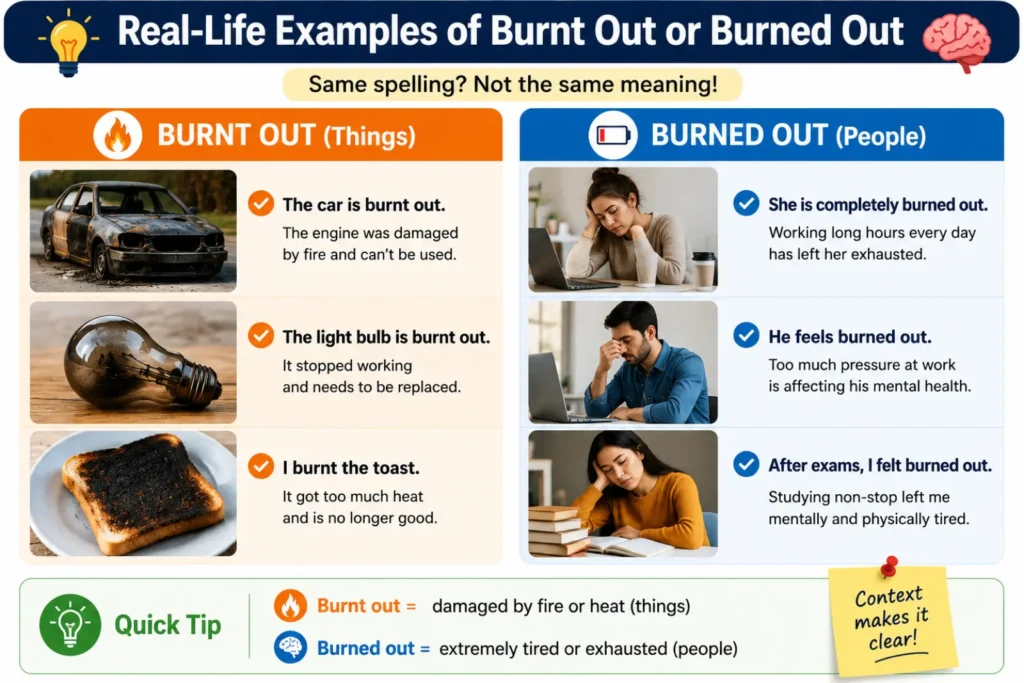
People use these expressions every day.
Examples include:
- I feel burned out after this project.
- She’s completely burnt out.
- The motor burned out yesterday.
- The old factory is burnt out.
- My laptop charger burned out.
- He looked burnt out after the busy season.
These examples sound natural in daily speech.
Common Mistakes People Make
Many writers confuse these phrases.
Avoid these common errors.
Mistake 1: Thinking One Is Wrong
Both are correct.
The difference is regional.
Mistake 2: Mixing Styles
Don’t switch between burned out and burnt out in the same article.
Choose one version.
Mistake 3: Confusing Burnout With Being Tired
Feeling tired after one long day is not always burnout.
Burnout usually develops over time.
Mistake 4: Using Burnt in American Business Writing
Most American publications prefer burned instead of burnt.
Tips to Remember the Difference
These simple tips make the choice easy.
- American English usually prefers burned.
- British English often prefers burnt.
- Check your audience before writing.
- Follow your company’s style guide.
- Stay consistent from beginning to end.
Consistency improves professionalism.
Synonyms and Related Keywords
Using related words naturally improves SEO and readability.
Synonyms
- Exhausted
- Drained
- Worn out
- Overworked
- Fatigued
- Emotionally exhausted
- Mentally exhausted
- Overwhelmed
Related Search Terms
- burnout meaning
- signs of burnout
- work burnout
- employee burnout
- burnout symptoms
- mental exhaustion
- burnout recovery
- emotional exhaustion
- occupational burnout
- burnout at work
Long-Tail Keywords
- burnt out vs burned out
- is burnt out correct
- burned out meaning
- how to recover from burnout
- difference between burnt and burned
- burnout symptoms at work
- when to use burnt or burned
How Burnout Affects Daily Life
Burnout affects more than work.
It can impact many areas.
Physical Health
People often feel tired all the time.
Mental Health
Stress becomes harder to manage.
Relationships
Patience decreases.
Communication suffers.
Productivity
Work quality often drops.
Simple tasks become difficult.
Personal Happiness
Many people lose motivation for activities they once enjoyed.
Recognizing burnout early helps prevent bigger problems.
Expert Insights
Language experts agree that burned and burnt are both standard English.
The preferred choice depends on regional usage.
Health experts also recognize burnout as a serious issue. Long-term stress can reduce focus, motivation, and overall well-being.
Good writing also considers the audience.
If your readers are mainly in the United States, use burned out consistently.
If your audience is in the United Kingdom or Australia, burnt out may feel more natural.
Choosing the correct version improves clarity and trust.
Featured Snippet: Burnt Out or Burned Out
Both “burnt out” and “burned out” are correct. “Burned out” is the preferred spelling in American English, while “burnt out” is more common in British English. Both phrases describe damage caused by fire or extreme physical, mental, or emotional exhaustion.
Frequently Asked Questions
Is burnt out grammatically correct?
Yes.
It is correct, especially in British English.
Is burned out correct in American English?
Yes.
It is the preferred form in American English.
Do burnt out and burned out mean the same thing?
Yes.
Both have the same meaning.
Only the regional spelling changes.
Can burnout happen to students?
Yes.
Students can experience burnout from long periods of stress and heavy workloads.
Is burnout the same as stress?
No.
Stress is often temporary.
Burnout develops after long-term stress.
Which spelling should I use for SEO?
Use the spelling your target audience searches most often.
For American audiences, burned out usually performs better.
For British audiences, burnt out may be the better choice.
Can machines burn out?
Yes.
Electrical devices, motors, and light bulbs can burn out after overheating or extended use.
conclusion
Choosing between burnt out or burned out is easier than many people think. Both expressions are correct and carry the same meaning. The biggest difference is regional preference. Burned out is the standard choice in American English, while burnt out appears more often in British English. Whether you are describing emotional exhaustion or damage caused by fire, the meaning stays the same. The most important rule is consistency. Pick the version that matches your audience and use it throughout your writing. Doing so improves clarity, professionalism, and reader trust. Understanding this small language difference helps you write with more confidence and communicate more effectively.