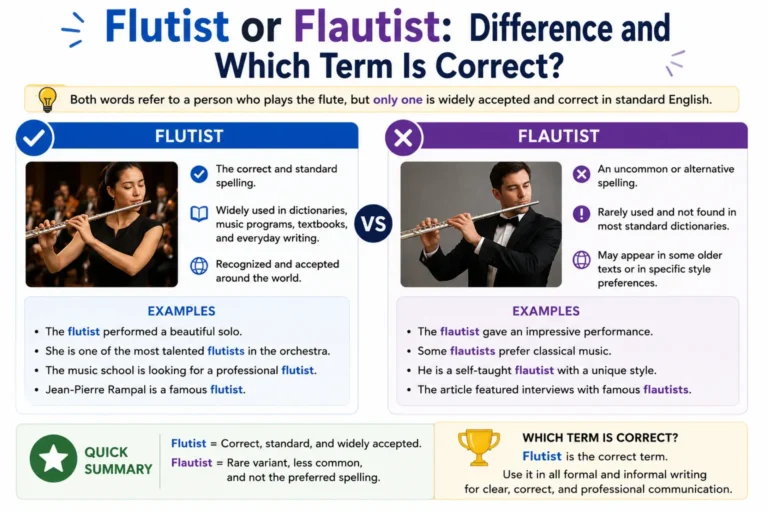
Flutist or flautist is a common question among music students, teachers, and performers. Both words describe a person who plays the flute. However, people often wonder if one term is more correct than the other. The good news is that both words are correct. The choice usually depends on location, tradition, and personal preference.
Understanding the difference helps you use the right word in conversations, school assignments, music programs, and professional writing. In this guide, you will learn the meaning of both terms, their history, common usage, and when to choose each one. The explanations use simple language and real-life examples, making the topic easy for everyone to understand.
Quick Summary
Flutist or Flautist: Quick Answer
- Both flutist and flautist are correct.
- Both words mean a person who plays the flute.
- Flutist is more common in the United States.
- Flautist is often used in the United Kingdom and some other countries.
- Neither word is grammatically wrong.
- Choose the term that fits your audience or style guide.
What Does Flutist or Flautist Mean?
A flutist or flautist is a musician who plays the flute.
The flute belongs to the woodwind family of musical instruments.
People who play the flute perform in:
- School bands
- Orchestras
- Concert bands
- Jazz groups
- Military bands
- Solo performances
Whether someone says flutist or flautist, they are talking about the same type of musician.
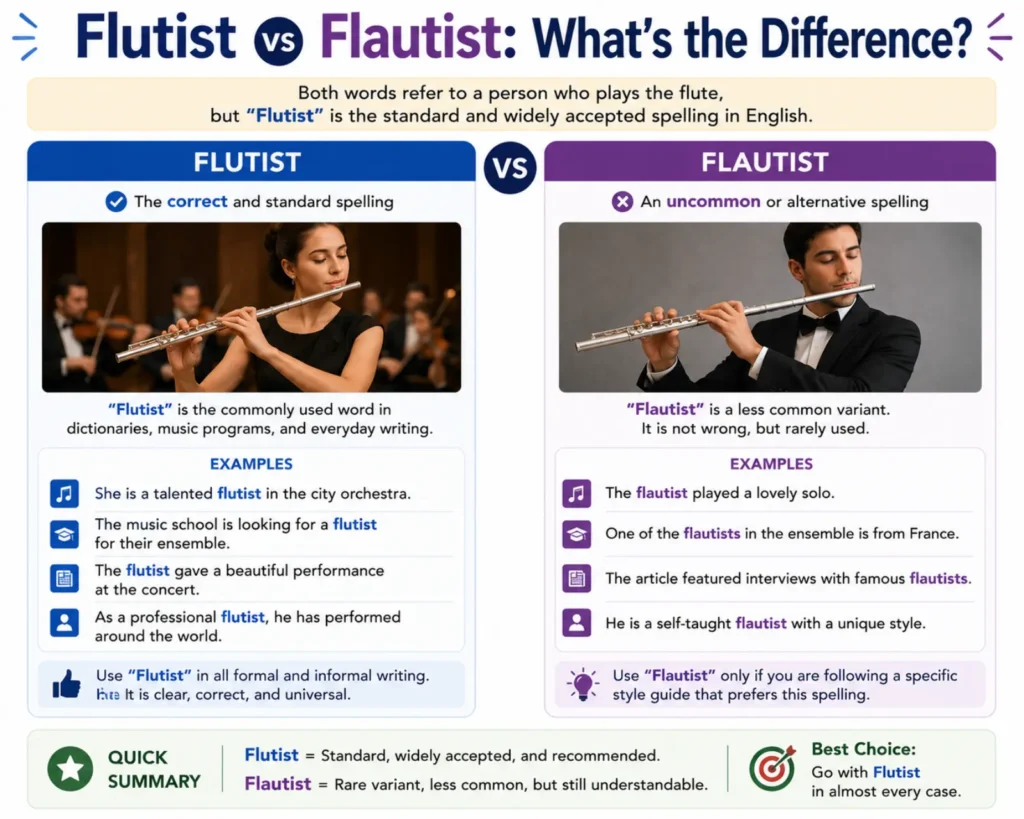
Flutist vs Flautist: What’s the Difference?
The main difference is the word people choose to use.
The meaning stays exactly the same.
| Feature | Flutist | Flautist |
|---|---|---|
| Meaning | Person who plays the flute | Person who plays the flute |
| American English | More common | Less common |
| British English | Common | More common |
| Formal Music Writing | Accepted | Often preferred |
| Correct Usage | Yes | Yes |
Neither word is better.
Your location and audience usually determine which one sounds more natural.
Why Are There Two Different Words?
English often has two words with the same meaning.
These words come from different language traditions.
The word flutist comes directly from the English word flute.
The word flautist comes from the Italian word flauto, which means flute.
Many classical music terms have Italian origins.
That is one reason why some musicians and orchestras still prefer flautist.
Which Term Is More Common?
Both words appear in books, websites, and music publications.
However, flutist is more common worldwide, especially in American English.
Flautist appears more often in:
- British publications
- Classical music programs
- Professional orchestra biographies
- Music conservatories
If you write for an international audience, flutist is usually the safer choice because more readers recognize it.
When Should You Use “Flutist”?
Use flutist in everyday writing.
It works well for:
- School assignments
- Blog articles
- News reports
- Social media posts
- General conversations
- Music lessons
Most American dictionaries list flutist as the primary word.
Many music teachers also prefer it because students recognize it more easily.
When Should You Use “Flautist”?
Use flautist when writing for audiences familiar with British English or classical music.
You may see it in:
- Orchestra programs
- Classical music magazines
- Music history books
- Conservatory websites
- Professional musician biographies
Many classically trained musicians like the traditional sound of flautist.
However, the meaning never changes.
Real-Life Examples
Here are examples of both words in everyday sentences.
Examples Using “Flutist”
- My sister is a talented flutist in her school band.
- The flutist performed a beautiful solo during the concert.
- She hopes to become a professional flutist one day.
Examples Using “Flautist”
- The orchestra welcomed a new flautist this season.
- The famous flautist performed works by Mozart.
- The concert featured an award-winning flautist from London.
All of these sentences are correct.
The only difference is the preferred style of English.

Is One More Professional Than the Other?
No.
Professional musicians use both words.
You will find flutist in music schools, orchestras, competitions, and educational websites.
You will also find flautist in many respected music organizations and concert programs.
The professionalism comes from the musician, not the word they choose.
Because of this, you can confidently use either term.
Common Mistakes People Make
Many people misunderstand the words flutist and flautist. Here are the most common mistakes to avoid.
Mistake 1: Thinking One Word Is Wrong
Both words are correct.
You can use either one depending on your audience.
Mistake 2: Believing They Describe Different Musicians
A flutist and a flautist play the same instrument.
There is no difference in skill or training.
Mistake 3: Ignoring Your Audience
American readers often expect flutist.
British readers may prefer flautist.
Choose the term that feels natural for your readers.
Mistake 4: Mixing Styles in One Article
Stay consistent.
If you start with flutist, keep using it throughout your article unless you are explaining the difference.
Tips for Choosing the Right Word
Choosing the correct word is simple when you follow a few guidelines.
Use “Flutist” When:
- Writing for American readers
- Creating blog posts
- Writing school assignments
- Publishing online content
- Targeting a global audience
Use “Flautist” When:
- Writing in British English
- Preparing orchestra programs
- Writing about classical music
- Following a publication’s style guide
When in doubt, flutist is usually the more familiar choice.
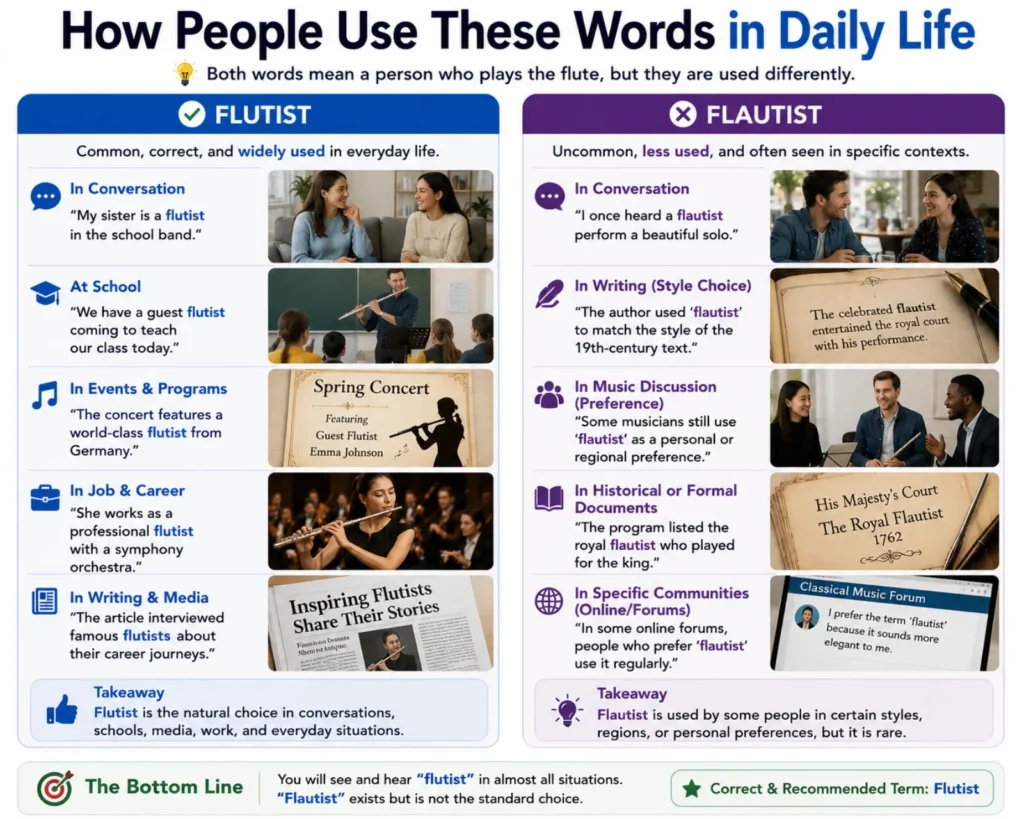
How People Use These Words in Daily Life
Both terms appear in many everyday situations.
You may hear them in:
- Music classrooms
- School concerts
- Orchestra rehearsals
- Music competitions
- Online music forums
- Concert reviews
For example, a teacher might say:
“Our best flutist will perform at the recital.”
A concert program in London might say:
“Guest flautist Jane Smith will perform tonight.”
Both sentences describe the same role.
Synonyms and Related Terms (LSI Keywords)
Using related keywords naturally helps improve SEO and topic relevance.
Here are useful LSI and semantic keywords:
- flute player
- flute musician
- professional flutist
- professional flautist
- orchestral flutist
- classical flautist
- woodwind musician
- flute performer
- flute artist
- concert flutist
- flute soloist
- flute player meaning
- woodwind instrument player
- flute performer career
- music terminology
Use these terms naturally throughout your content.
Avoid repeating the primary keyword too often.
Why This Difference Matters
Knowing the difference helps you communicate more clearly.
It also shows respect for your audience’s language preferences.
students, using the correct term improves writing assignments.
For musicians, it creates a professional impression.
For bloggers and website owners, choosing the right keyword can improve search visibility.
Small language choices often make a big difference.
Expert Insight
Professional musicians agree that both words are correct.
The choice depends more on regional language than musical knowledge.
Many American orchestras use flutist in biographies.
Many British orchestras prefer flautist.
If you write educational or SEO content, consistency is more important than choosing one word over the other.
Search engines also recognize both terms as closely related.
Including both naturally helps your content cover the topic more completely.
Frequently Asked Questions
Is flutist or flautist correct?
Both words are correct. They both mean a person who plays the flute.
Which is more common, flutist or flautist?
Flutist is more common in American English. Flautist is more common in British English and some classical music settings.
Is there a difference between a flutist and a flautist?
No. Both terms describe the same musician.
Why do some musicians say flautist?
The word comes from the Italian word flauto. Many classical music traditions use Italian musical terms.
Which word should I use in my writing?
Use flutist for American or international audiences. Use flautist when writing in British English or for classical music publications.
Do dictionaries accept both words?
Yes. Major English dictionaries recognize both flutist and flautist as correct.
Is flautist more formal?
Some people consider flautist slightly more formal because of its classical music background. However, both words are equally acceptable.
Can I use both words in the same article?
Yes, but only when explaining the difference. Otherwise, choose one term and stay consistent.
Conclusion
The answer to “flutist or flautist” is simple. Both words are correct and describe someone who plays the flute. The main difference lies in regional language and writing style. Flutist is more common in American English and online content, while flautist appears more often in British English and classical music circles.
When choosing between the two, think about your audience and remain consistent throughout your writing. Neither term is more accurate than the other. Understanding this small language difference helps you write more clearly and confidently. Whether you say flutist or flautist, readers will understand that you are referring to a skilled flute player.