Signer or signor is a common comparison that confuses many English learners and writers. These two words look similar, but they have very different meanings. Using the wrong one can change the meaning of your sentence. Fortunately, the difference is easy to understand.
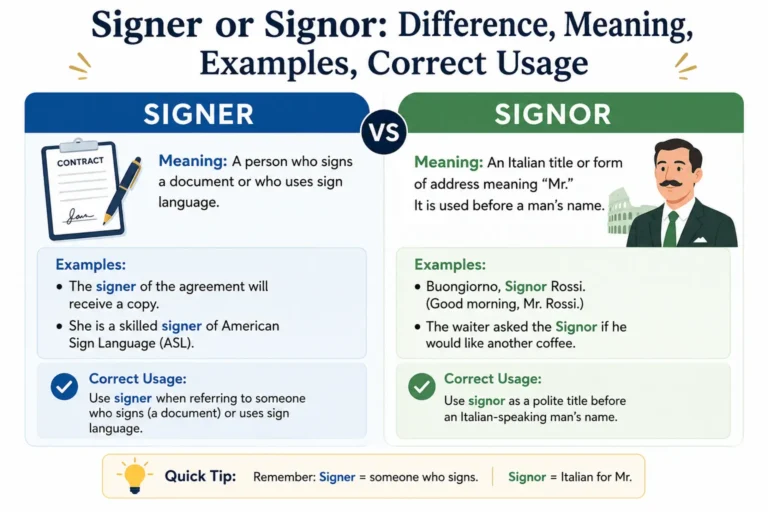
A signer is a person who signs a document or agreement. A Signor is an Italian title that means “Mr.” or “Sir.” The words have different origins, uses, and pronunciations. In this guide, you will learn when to use each word, how to remember the difference, and why choosing the correct term matters. Simple explanations and real-life examples will help you avoid mistakes and improve your writing.
Quick Summary
Signer or Signor: Which One Is Correct?
- Signer is a person who signs a document.
- Signor is an Italian title for a man.
- The words have different meanings.
- They are not interchangeable.
- Use signer in legal or official documents.
- Use Signor when addressing an Italian man politely.
What Does “Signer” Mean?
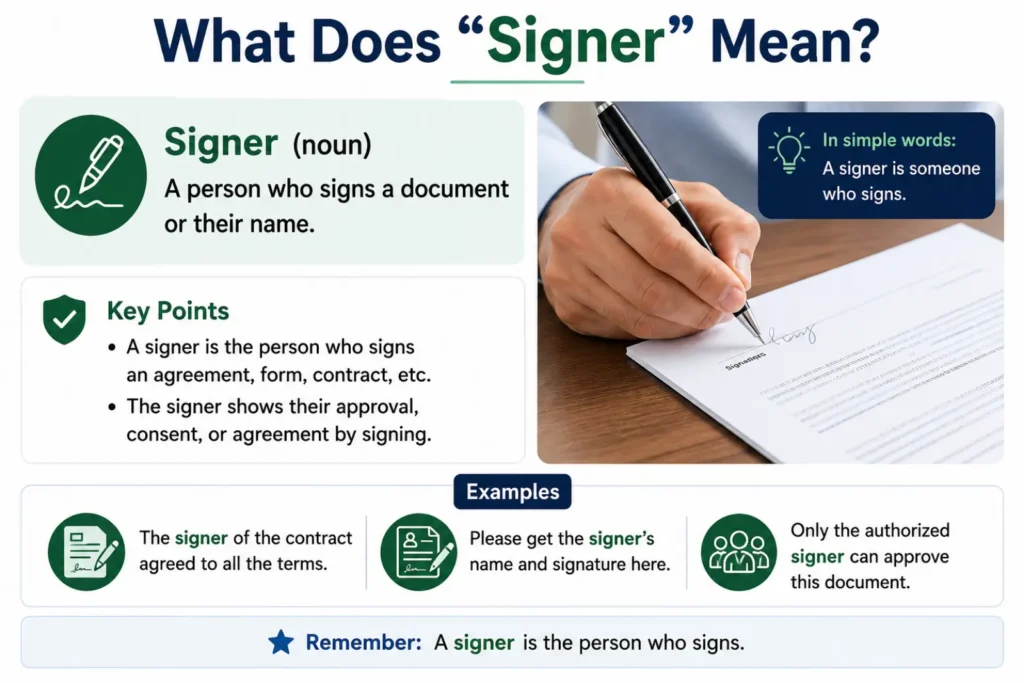
A signer is a person who writes their signature on a document.
The signature shows approval, agreement, or permission.
People become signers when they sign:
- Contracts
- Legal documents
- Petitions
- Forms
- Business agreements
- Official letters
Example Sentences
- Every signer must provide valid identification.
- The final signer approved the contract.
- Each signer received a copy of the agreement.
- The bank verified the signer’s signature.
In legal and business writing, signer is a common and important word.
What Does “Signor” Mean?
Signor is an Italian word.
It is a polite title used before a man’s last name.
In English, it has the same meaning as Mr. or Sir.
Example Sentences
- Signor Rossi welcomed the visitors.
- Thank you, Signor Bianchi.
- The waiter greeted Signor Conti politely.
- Signor Ferrari arrived early for the meeting.
Outside Italian language and culture, this title appears less often.
Signer vs Signor: What’s the Difference?
Although the words look almost identical, they belong to different languages.
One relates to signatures.
The other relates to respectful titles.
Quick Comparison
| Feature | Signer | Signor |
|---|---|---|
| Meaning | Person who signs a document | Italian title for a man |
| Language | English | Italian |
| Used For | Contracts, forms, legal papers | Names and greetings |
| Part of Speech | Noun | Honorific title |
| Example | Contract signer | Signor Rossi |
The meanings never overlap.
Always choose the word that matches the context.
Why Do People Confuse Signer and Signor?
The confusion happens for several reasons.
They Look Similar
Both words begin with sign-.
Only the ending changes.
They Sound Similar
In fast speech, the words can sound alike.
Many learners miss the small pronunciation difference.
Spell Check Does Not Always Help
Both words are correct English spellings.
Grammar tools may not detect the wrong choice if the sentence still makes sense.
Similar Context
Both words often appear in formal writing.
This makes the confusion even more common.
How to Pronounce Signer and Signor
Correct pronunciation helps you remember the difference.
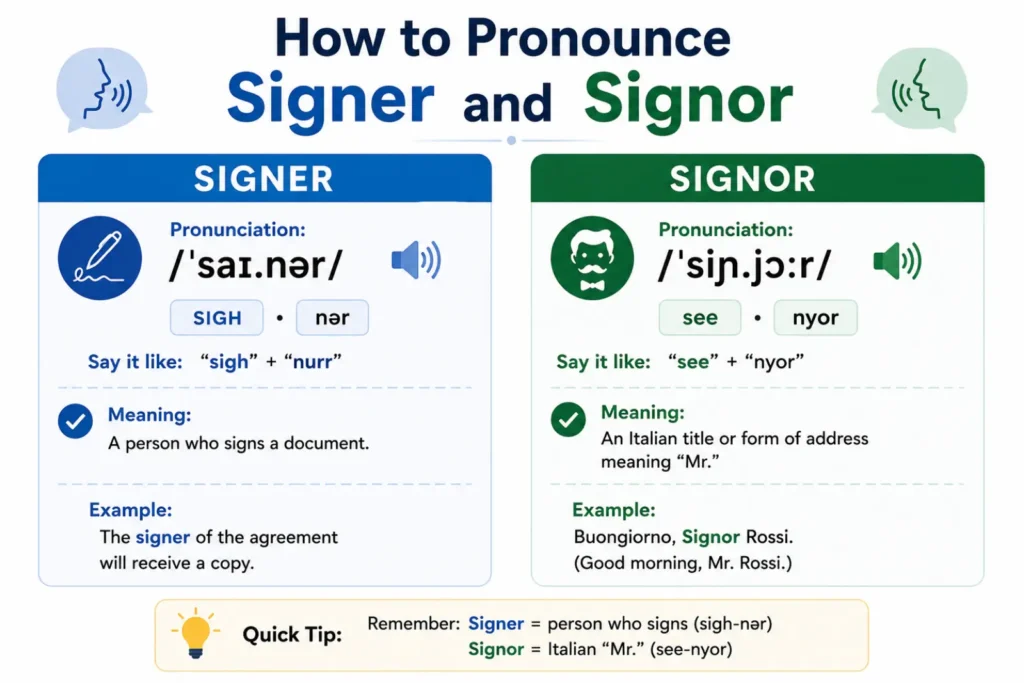
Signer
Pronunciation:
SYE-ner
It rhymes with minor.
Meaning:
A person who signs something.
Signor
Pronunciation:
Seen-YOR
The second syllable receives more emphasis.
Meaning:
An Italian title similar to “Mr.”
Listening to native speakers can help you hear the difference more clearly.
Real-Life Examples
Understanding real situations makes the meanings easier to remember.
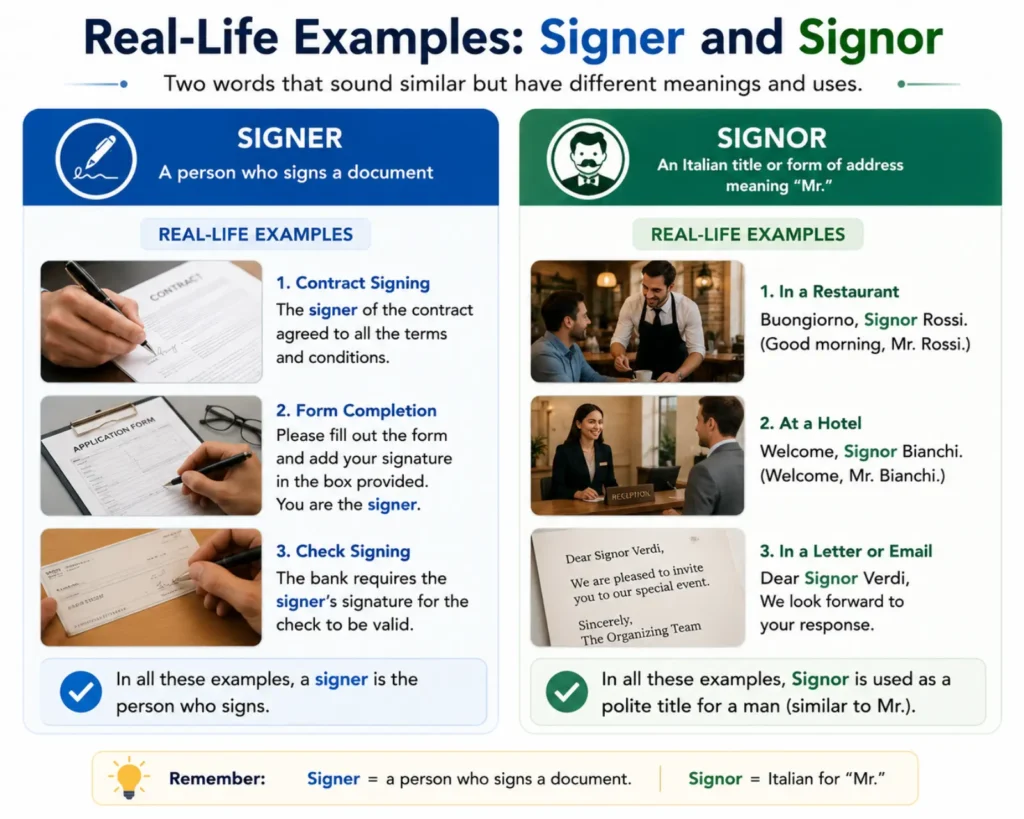
Example 1: Legal Agreement
A company prepares a business contract.
Each signer must review the document before signing.
Correct:
“The final signer approved the agreement.”
Incorrect:
“The final Signor approved the agreement.”
Example 2: Visiting Italy
You travel to Rome.
A hotel employee introduces the owner.
Correct:
“Please meet Signor Romano.”
Incorrect:
“Please meet signer Romano.”
Example 3: Bank Documents
A bank requires signatures from every account holder.
Each signer must present identification.
The word Signor would not fit this situation.
Example 4: Italian Restaurant
A waiter greets a customer politely.
“Good evening, Signor Moretti.”
This use follows Italian etiquette.
When Should You Use “Signer”?
Choose signer whenever someone signs an official document.
Common situations include:
- Employment contracts
- Rental agreements
- Insurance forms
- Mortgage papers
- Government documents
- School permission slips
- Business partnerships
- Legal affidavits
If the person writes a signature, signer is the correct word.
When Should You Use “Signor”?
Use Signor only as a respectful Italian title.
Common situations include:
- Italian conversations
- Literature
- Movies
- Travel
- Historical writing
- Formal invitations
- Restaurant greetings
- Cultural discussions
Remember that Signor is a title, not a job or role.
It always refers to a man.
Detailed Comparison Table: Signer vs Signor
The table below highlights the main differences between these two words.
| Feature | Signer | Signor |
|---|---|---|
| Meaning | A person who signs a document | Italian title for a man |
| Language Origin | English | Italian |
| Pronunciation | SYE-ner | Seen-YOR |
| Used In | Legal, business, and official documents | Italian language and culture |
| Refers To | A person’s role | A respectful title |
| Example | The signer approved the contract. | Signor Rossi greeted the guests. |
This comparison makes it easy to choose the correct word in any situation.
How to Remember the Difference
Simple memory tricks can help you avoid mistakes.
Remember “Signer” with Signature
The word signer comes from the word sign.
If someone signs a paper, they are the signer.
Think:
Sign → Signature → Signer
Remember “Signor” with Italy
The word Signor belongs to the Italian language.
Think about Italy whenever you see this word.
Italy → Signor → Mr.
These simple connections make the difference easier to remember.
Usage in Daily Life
You may see these words in different situations.
Where You Will See “Signer”
- Bank documents
- Employment contracts
- Rental agreements
- Legal papers
- Government forms
- School permission slips
- Business contracts
Where You Will See “Signor”
- Italian restaurants
- Travel guides
- Italian novels
- Historical books
- Movies set in Italy
- Formal greetings
- Italian business meetings
Knowing the setting helps you choose the correct word.
Common Mistakes to Avoid
Many writers make these simple mistakes.
Mistake 1: Using Signor Instead of Signer
Incorrect:
“The Signor signed the agreement.”
Correct:
“The signer signed the agreement.”
Mistake 2: Using Signer as a Title
Incorrect:
“Signer Rossi welcomed everyone.”
Correct:
“Signor Rossi welcomed everyone.”
Mistake 3: Assuming They Mean the Same Thing
The words look similar.
However, they have different meanings and different uses.
Never replace one with the other.
Tips to Choose the Correct Word
Use these quick tips whenever you write.
- Ask yourself whether someone is signing a document.
- If yes, use signer.
- Ask whether you are addressing an Italian man politely.
- If yes, use Signor.
- Check the context before choosing the word.
- Read the sentence aloud to confirm it sounds correct.
These simple habits improve your writing accuracy.
Synonyms and Related Keywords
Using related terms improves topical SEO and helps readers understand the subject.
Synonyms for Signer
- signature holder
- contract signer
- document signer
- authorized signer
- signing party
- signatory
Related Terms for Signor
- Mr.
- Sir
- gentleman
- Italian title
- courtesy title
- honorific
LSI Keywords
- signer meaning
- signor meaning
- signer vs signor
- signor pronunciation
- signatory
- Italian honorific
- legal signer
- official signature
- contract signer
- formal title
- Italian greeting
- English vocabulary
- commonly confused words
- grammar guide
Use these naturally throughout your content without repeating the main keyword too often.
Expert Insight
Understanding small word differences improves both writing and communication.
Professional writers always consider the meaning and context before choosing similar words.
Although signer and Signor differ by only one letter, they belong to different languages and serve different purposes.
Learning commonly confused words also improves grammar, vocabulary, and reading comprehension.
For students, professionals, and English learners, mastering these differences builds confidence in everyday communication.
Frequently Asked Questions
Is signer the same as Signor?
No. A signer signs documents. Signor is an Italian title that means “Mr.” or “Sir.”
What does signer mean?
A signer is a person who signs a contract, form, agreement, or other official document.
What does Signor mean?
Signor is a respectful Italian title used before a man’s surname.
Can I use signer as a title?
No. Signer is a noun, not a title.
Is Signor an English word?
Signor comes from Italian, but English speakers sometimes use it when referring to Italian people or settings.
What is the female version of Signor?
The female equivalent is Signora.
When should I use signer?
Use signer whenever someone signs a document or legal agreement.
Why do people confuse signer and Signor?
They have similar spelling and pronunciation, but they have completely different meanings.
Conclusion
The difference between signer or Signor is simple once you understand each word’s purpose. A signer is someone who signs a document, contract, or agreement. Signor is an Italian title that means “Mr.” or “Sir.” Although the words look alike, they belong to different languages and should never replace one another.
When writing, always consider the context. If the sentence involves signatures or legal documents, use signer. If you are addressing an Italian man respectfully, use Signor. Learning this distinction will improve your grammar, strengthen your vocabulary, and help you communicate more clearly in both formal and everyday situations.