
Does humidity rise or fall? This is a common question. Many people think humidity always rises because warm air rises. Others believe it falls like cold air. The truth is more interesting.
Humidity does not simply rise or fall on its own. Instead, it moves with the air around it. Air temperature, pressure, and airflow all affect humidity.
Understanding humidity helps you stay comfortable. It also protects your home from mold, dry air, and moisture damage.
In this guide, you will learn how humidity behaves. You will also discover why humidity changes during the day and inside your home. By the end, you will know exactly what makes humidity rise, fall, or stay the same.
Quick Summary
- Humidity does not naturally rise or fall.
- Moist air moves with the surrounding air.
- Warm air usually rises and carries moisture upward.
- Cold air sinks and may contain less moisture.
- Relative humidity changes as temperature changes.
- Ventilation affects indoor humidity.
- Weather systems also influence humidity levels.
What Is Humidity?
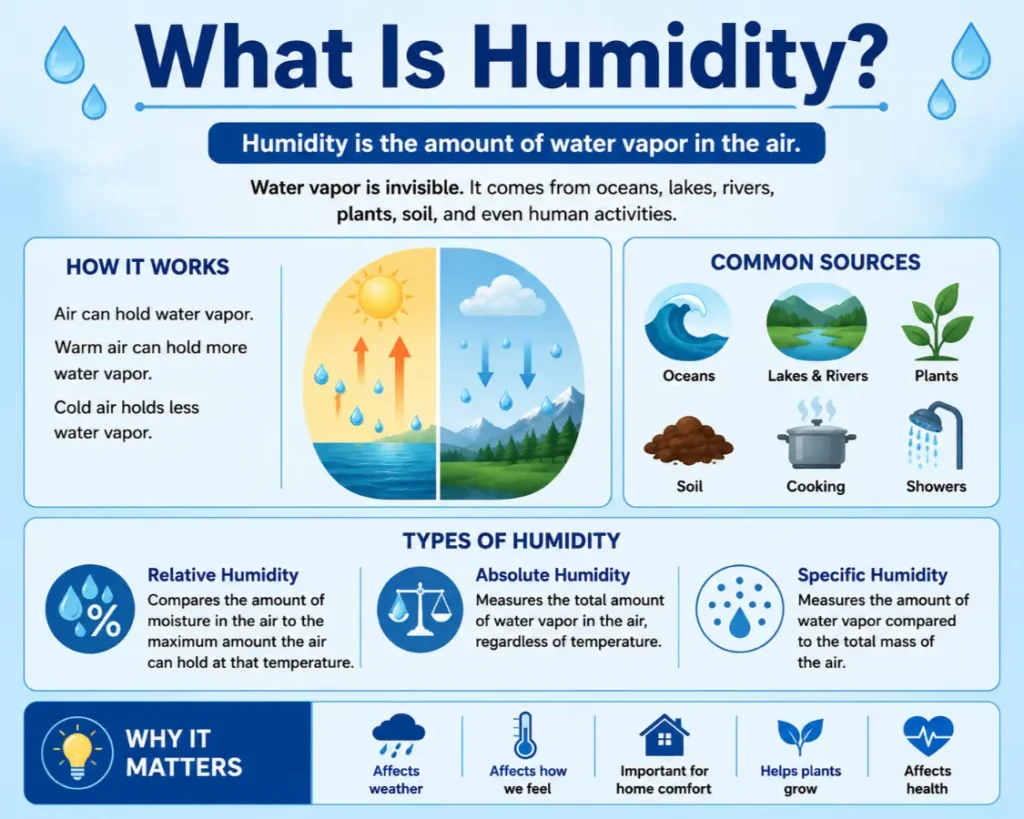
Humidity is the amount of water vapor in the air.
Water vapor is an invisible gas. It comes from oceans, lakes, rivers, plants, and even your breathing.
Humidity tells us how much moisture the air holds.
There are three common ways to measure humidity.
Absolute Humidity
Absolute humidity measures the total amount of water vapor in the air.
It stays the same unless water enters or leaves the air.
Relative Humidity
Relative humidity compares the moisture in the air with the maximum amount it can hold.
This is the value shown in most weather reports.
Specific Humidity
Specific humidity measures water vapor compared to the total air mass.
Meteorologists often use this measurement.
Does Humidity Rise or Fall?
The short answer is:
Humidity does not naturally rise or fall. It moves with the air.
This is the simplest explanation.
When warm air rises, it carries water vapor with it.
When cool air sinks, the moisture inside that air also moves downward.
Humidity itself does not decide where to go.
Instead, it follows air movement.
Think about steam from a hot shower.
The warm, moist air rises toward the ceiling.
Later, it cools down.
Then the moisture may condense into tiny water droplets.
Featured Snippet Answer
Does humidity rise or fall?
Humidity does not naturally rise or fall by itself. Water vapor moves wherever the surrounding air moves. Warm air usually rises and carries moisture upward. Cooler air sinks and carries its moisture downward. Temperature, air pressure, and airflow all affect humidity.
Why Do People Think Humidity Always Rises?
Many people confuse humidity with heat.
Warm air rises.
Warm air often contains more water vapor.
Because of this, people believe humidity always rises.
That is only partly true.
Warm air rises because it is less dense.
The moisture inside that air rises with it.
If the air cools, the water vapor may condense.
Then liquid water forms on windows or ceilings.
So humidity does not rise alone.
The air carries it.
How Warm Air Affects Humidity
Warm air can hold much more water vapor than cold air.
That is why summer often feels humid.
Here is a simple example.
Imagine two empty buckets.
One bucket is large.
The other is small.
The large bucket can hold more water.
Warm air works like the larger bucket.
Cold air works like the smaller one.
As warm air rises, it can transport more moisture into higher parts of the atmosphere.
This process plays a major role in cloud formation and rainfall.
How Cold Air Changes Humidity
Cold air cannot hold as much moisture.
When warm, moist air cools down, relative humidity increases.
Eventually, the air reaches its dew point.
At that point, water vapor changes into liquid water.
This creates:
- Dew
- Fog
- Frost
- Clouds
- Rain
That is why mornings often feel damp.
The overnight cooling raises the relative humidity.
Relative Humidity vs Absolute Humidity
Many people confuse these two terms.
Here is the difference.
| Feature | Relative Humidity | Absolute Humidity |
|---|---|---|
| Depends on temperature | Yes | No |
| Changes during the day | Yes | Rarely |
| Used in weather forecasts | Yes | Less often |
| Shows comfort level | Yes | No |
| Easy for homeowners | Yes | Less common |
Relative humidity changes even when the amount of water vapor stays the same.
That surprises many people.
What Makes Humidity Increase?
Several factors increase humidity.
Evaporation
Water changes into vapor.
Lakes, oceans, and rivers constantly add moisture.
Rain
Rain leaves moisture on the ground.
Some of that water evaporates.
Plants
Plants release water vapor.
This process is called transpiration.
Cooking
Boiling water adds moisture indoors.
Showers
Hot showers create steam.
Steam quickly raises indoor humidity.
Humidifiers
Humidifiers intentionally add moisture to dry indoor air.
What Makes Humidity Decrease?
Humidity also drops for several reasons.
These include:
- Air conditioning
- Cold winter air
- Heating systems
- Good ventilation
- Dehumidifiers
- Dry weather
- Strong winds
Each removes moisture or replaces humid air with drier air.
Does Humidity Rise Upstairs?
Many homeowners ask this question.
The answer is often yes—but not because humidity rises by itself.
Warm air naturally moves upward.
That warm air carries moisture.
As a result, upstairs rooms may feel warmer and more humid.
However, every home is different.
Good ventilation can reduce this effect.
Air conditioning also helps keep humidity balanced throughout the house.
Real-Life Examples
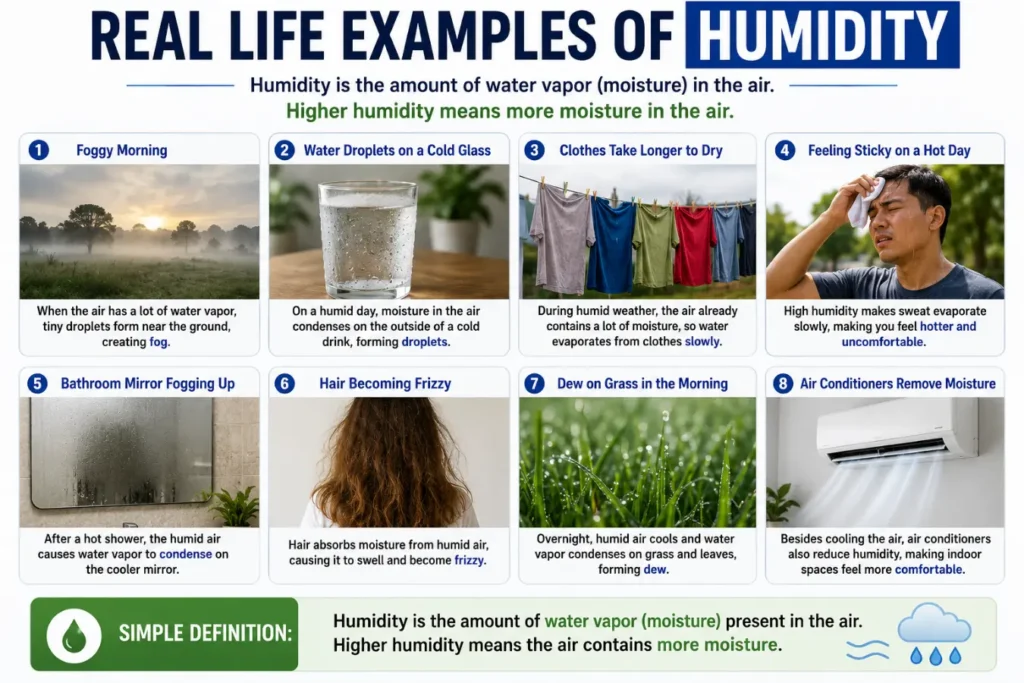
Example 1: Bathroom
After a hot shower, steam rises.
The ceiling becomes wet first.
This happens because warm, moist air rises.
Example 2: Basement
Basements often feel damp.
Cool air settles there.
Moisture may condense on cool walls.
Example 3: Summer Afternoon
The air feels sticky.
Warm temperatures allow the air to hold more moisture.
Relative humidity may still change throughout the day.
Example 4: Winter Home
Indoor heating dries the air.
Your skin feels dry.
Static electricity increases.
Indoor humidity becomes very low.
Comparison Table: Does Humidity Rise or Fall?
| Situation | What Happens to the Air? | What Happens to Humidity? |
|---|---|---|
| Warm air rises | Air moves upward | Moisture rises with the air |
| Cold air sinks | Air moves downward | Moisture moves downward with the air |
| Hot shower | Warm, moist air rises | Humidity increases near the ceiling |
| Air conditioner runs | Air cools and dries | Indoor humidity decreases |
| Dehumidifier works | Moisture is removed | Relative humidity drops |
| Windy weather | Air mixes together | Humidity spreads more evenly |
Key takeaway: Humidity follows the movement of air. It does not rise or fall by itself.
Common Mistakes About Humidity
Many people misunderstand how humidity works.
Mistake 1: Humidity Always Rises
This is false.
Warm air rises, but humidity only moves with that air.
Mistake 2: Cold Air Has No Moisture
Cold air still contains water vapor.
It simply holds less than warm air.
Mistake 3: High Humidity Means Rain
High humidity increases the chance of rain.
However, rain does not always happen.
Mistake 4: Air Conditioners Only Cool Air
Air conditioners also remove moisture.
That is why rooms feel less sticky.
Mistake 5: Humidity Is the Same Everywhere
Humidity changes by location, season, and weather.
Indoor humidity also differs from outdoor humidity.
Tips to Control Indoor Humidity
Keeping humidity at the right level improves comfort and protects your home.
Here are some simple tips.
- Keep indoor humidity between 30% and 50%.
- Use a dehumidifier in damp rooms.
- Run exhaust fans in bathrooms.
- Use the kitchen vent while cooking.
- Fix water leaks quickly.
- Open windows when outdoor air is dry.
- Clean air filters regularly.
- Use a hygrometer to measure humidity.
These habits help prevent mold, mildew, and moisture damage.
Why Humidity Matters in Daily Life
Humidity affects more than comfort.
It influences your health, home, and even your energy bills.
Health
Very dry air can dry your skin and throat.
Very humid air can make breathing harder.
Home
Too much moisture can lead to mold.
Wood floors and furniture may also swell.
Sleep
Balanced humidity improves sleeping comfort.
Dry air can cause irritation.
Gardening
Plants grow better with proper humidity.
Different plants need different moisture levels.
Electronics
High humidity may damage electronic devices over time.
Proper indoor humidity helps protect them.
Synonyms and Related Terms
Using related terms helps readers understand the topic better.
Here are common synonyms and LSI keywords.
Synonyms
- Air moisture
- Moisture level
- Atmospheric moisture
- Water vapor
- Moist air
Related Search Terms
- Does humidity go up or down?
- How does humidity move?
- Does moisture rise with heat?
- Why is upstairs more humid?
- Relative humidity explained
- What causes high humidity?
- How to reduce indoor humidity
- Does warm air hold more moisture?
- Humidity vs moisture
- Indoor humidity levels
Expert Insights
Meteorologists study humidity because it influences weather, clouds, and rainfall.
HVAC professionals monitor humidity to improve indoor comfort.
Home inspectors check humidity when looking for mold and moisture damage.
The important lesson is simple.
Humidity follows air movement.
It does not have its own direction.
Understanding this helps homeowners, gardeners, travelers, and anyone interested in weather.
Small changes in humidity can affect comfort, health, and building materials.
Monitoring humidity also helps reduce energy costs and prevent expensive repairs.
Frequently Asked Questions
Does humidity always rise?
No.
Humidity moves wherever the surrounding air moves.
Warm air often rises, carrying moisture with it.
Why does my upstairs feel more humid?
Warm air naturally rises.
It carries moisture upward.
Poor ventilation can make the upper floor feel more humid.
Does cold air have humidity?
Yes.
Cold air contains water vapor.
However, it cannot hold as much moisture as warm air.
Can humidity fall to the ground?
Humidity moves with sinking air.
It does not fall like rain unless water vapor condenses into liquid droplets.
Does humidity increase at night?
Often, yes.
Nighttime temperatures drop.
Relative humidity rises because cooler air holds less moisture.
Is high humidity bad?
Very high humidity can encourage mold growth.
It can also make people feel hotter than the actual temperature.
What indoor humidity is best?
Most experts recommend keeping indoor humidity between 30% and 50%.
This range is comfortable for most people.
How can I measure humidity?
Use a digital hygrometer.
Many thermostats also display indoor humidity.
conclusion
So, does humidity rise or fall? The simple answer is that humidity does not move on its own. Instead, it travels with the surrounding air. Warm air usually rises and carries moisture upward, while cooler air sinks and carries its moisture downward. Temperature, airflow, and weather conditions all affect how humidity behaves.
Understanding this basic concept helps you make better decisions at home and outdoors. You can improve indoor comfort, prevent mold, and better understand weather forecasts. Whether you are managing humidity in your house or learning about the atmosphere, knowing how moisture moves makes the topic much easier to understand. The next time someone asks, “Does humidity rise or fall?” you’ll know that humidity follows the movement of air—not a fixed direction.