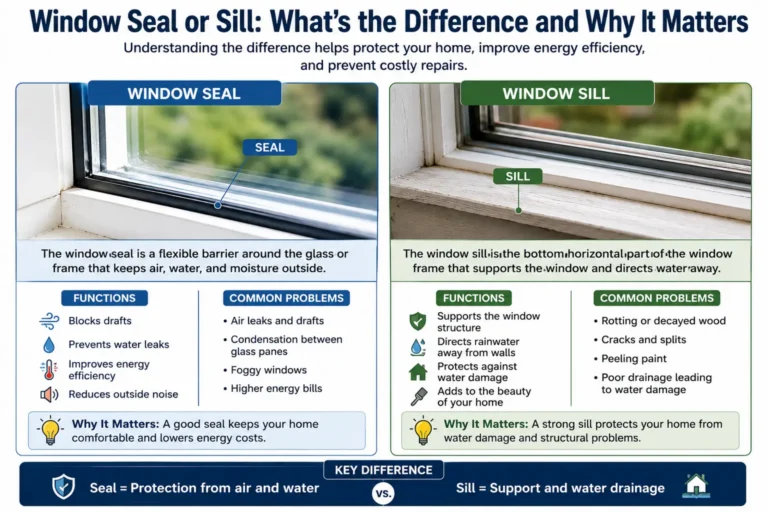
When people hear the phrase window seal or sill, they often think the terms mean the same thing. However, they refer to different parts of a window. Each part plays an important role in protecting your home.
A window seal helps keep air, water, and moisture outside. A window sill forms the bottom part of the window frame and supports the structure. Understanding the difference can help you spot problems early and avoid costly repairs.
In this guide, you will learn what a window seal and window sill are, how they work, and why they matter. You will also discover common issues, maintenance tips, and expert advice to keep your windows in great condition.
Quick Summary Box
- A window seal blocks air, water, and moisture.
- A window sill is the bottom horizontal part of a window.
- Both help protect your home from weather damage.
- Damaged seals can cause drafts and higher energy bills.
- Damaged sills can lead to water damage and rot.
- Regular inspections help prevent expensive repairs.
- Understanding the difference improves home maintenance.
What Is a Window Seal?
A window seal is a barrier around the glass or frame. It prevents outside air and moisture from entering your home.
Modern windows often contain insulated glass units. These units use seals to keep insulating gas trapped between glass panes.
Without a proper seal, windows lose energy efficiency.
Main Functions of a Window Seal
- Prevent air leaks
- Block moisture intrusion
- Improve energy efficiency
- Reduce outside noise
- Maintain indoor comfort
What Is a Window Sill?
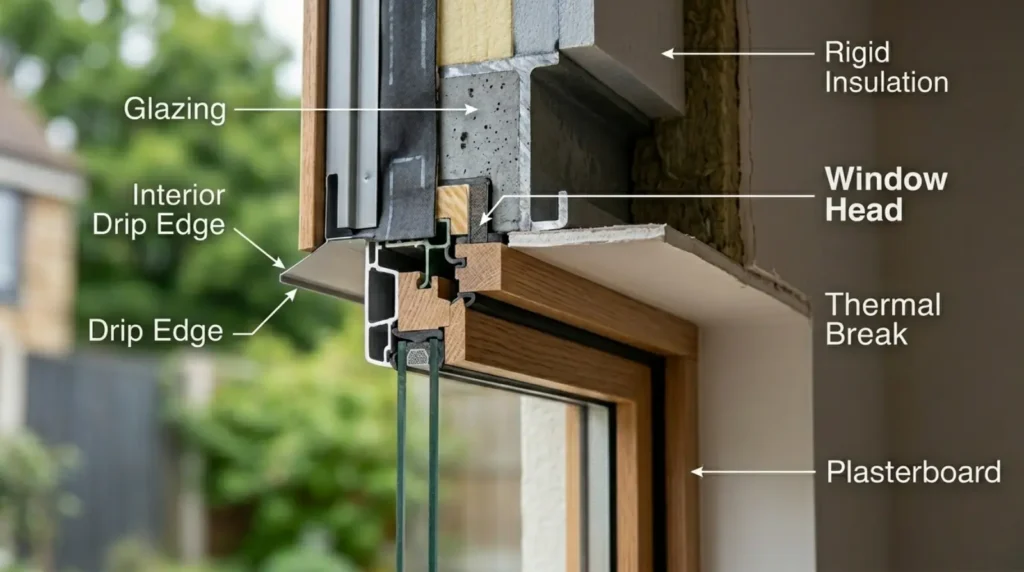
A window sill is the flat, horizontal surface at the bottom of a window.
It sits inside or outside the window opening. The sill supports the window structure and directs water away from the wall.
Window sills can be made from:
- Wood
- Stone
- Vinyl
- Aluminum
- Composite materials
A strong sill helps prevent water damage around the window.
Window Seal or Sill: Key Differences
Many homeowners confuse these two components.
The easiest way to remember them is:
- The seal keeps things out.
- The sill supports the window.
Comparison Table
| Feature | Window Seal | Window Sill |
|---|---|---|
| Purpose | Prevents air and water leaks | Supports window structure |
| Location | Around glass or frame | Bottom horizontal section |
| Main Material | Rubber, silicone, foam | Wood, stone, vinyl, metal |
| Common Problems | Air leaks, condensation | Rot, cracks, water damage |
| Maintenance | Inspect for gaps | Check for damage and drainage |
| Impact on Energy Efficiency | Very high | Moderate |
Why Window Seals Matter
A damaged seal affects your home’s comfort.
When seals fail, outside air enters your house. This can make rooms hotter in summer and colder in winter.
Failed seals may also cause:
- Foggy windows
- Condensation between panes
- Higher utility bills
- Moisture damage
Good seals help maintain indoor temperature and lower energy costs.
Why Window Sills Matter
Window sills do more than hold decorative items.
They help move rainwater away from the building. This protects walls and foundations from moisture.
A damaged sill can lead to:
- Wood rot
- Mold growth
- Structural damage
- Peeling paint
Proper maintenance keeps the sill working effectively.
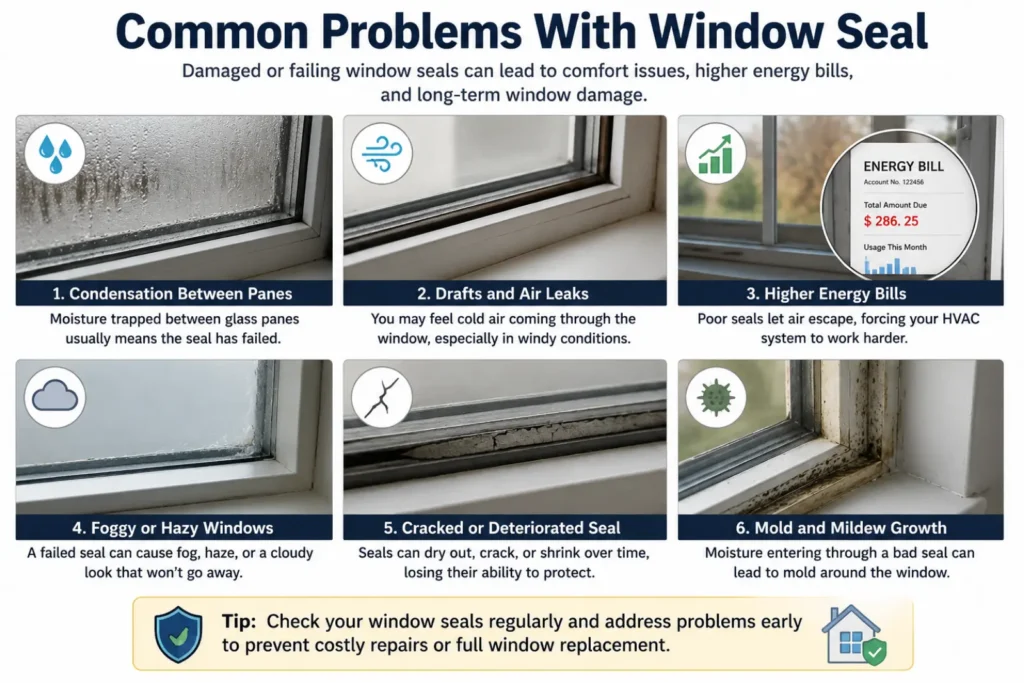
Common Signs of a Failed Window Seal
Window seal problems often appear gradually.
Watch for these warning signs:
Condensation Between Glass Panes
Moisture trapped between panes usually indicates seal failure.
Drafts Near Windows
Air entering around the window often points to damaged seals.
Rising Energy Bills
Poor insulation forces heating and cooling systems to work harder.
Distorted Window Appearance
Some windows develop a hazy or foggy look after seal failure.
r .
Common Problems With Window Sills
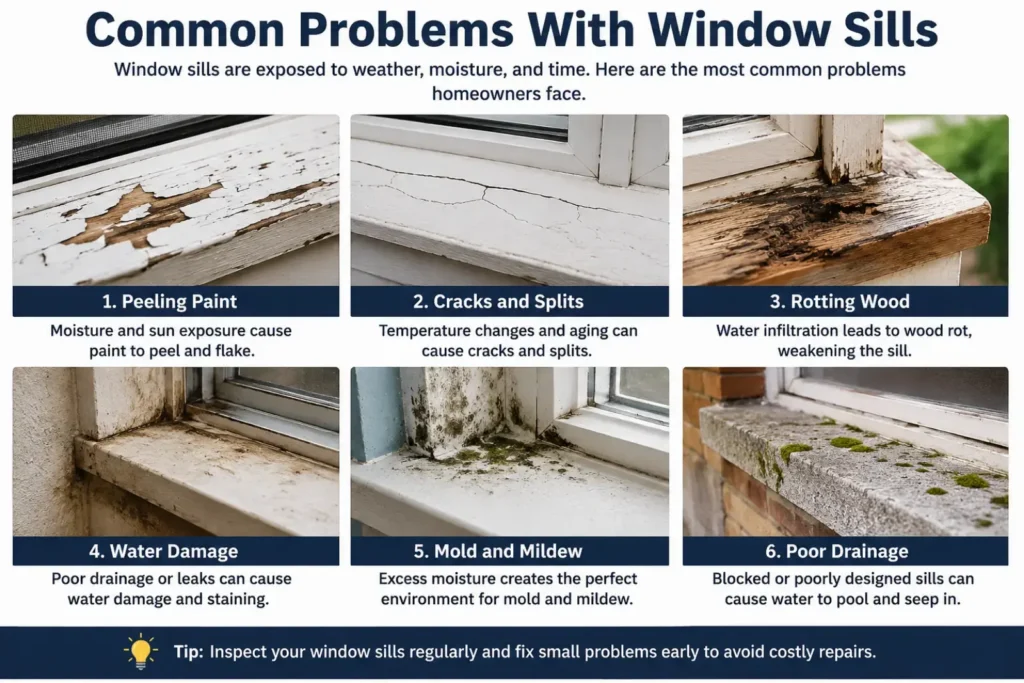
Window sills face constant exposure to weather.
Common issues include:
Rotting Wood
Water exposure can weaken wooden sills over time.
Cracks and Splits
Temperature changes may cause materials to expand and contract.
Mold and Mildew
Excess moisture encourages fungal growth.
Peeling Paint
Water damage often causes paint to separate from the surface.
Regular inspections help catch these problems early.
Real-Life Examples of Window Seal and Sill Issues
Example 1: Failed Window Seal
A homeowner noticed fog between double-pane windows. The seal had failed, allowing moisture inside.
The solution involved replacing the insulated glass unit.
Example 2: Rotten Window Sill
Heavy rainfall caused water damage to an exterior wooden sill.
The homeowner replaced the damaged section and improved drainage.
Example 3: Drafty Living Room
Cold air entered through gaps around the window frame.
New weather seals restored comfort and reduced heating costs.
How to Maintain Window Seals
Routine maintenance extends seal life.
Follow these simple tips:
Inspect Annually
Look for cracks, gaps, or signs of wear.
Clean Carefully
Remove dirt without damaging seal materials.
Address Damage Quickly
Small problems often become larger issues.
Check for Moisture
Condensation may signal developing seal failure.
Consistent care helps maintain energy efficiency.
How to Maintain Window Sills
Window sills also need attention.
Remove Standing Water
Dry wet areas quickly after storms.
Repaint When Needed
Fresh paint protects wooden surfaces.
Seal Cracks Promptly
Prevent moisture from entering damaged areas.
Keep Drainage Paths Clear
Water should flow away from the window.
Simple maintenance can add years to a sill’s lifespan.
Common Mistakes Homeowners Make
Many people overlook basic window care.
Avoid these mistakes:
- Ignoring condensation between panes
- Delaying repairs
- Blocking drainage channels
- Using harsh cleaning products
- Forgetting seasonal inspections
Small maintenance tasks often prevent major repairs.
Synonyms and Related Terms
People often search using different terms.
Related Keywords
- Window gasket
- Window weather seal
- Window frame seal
- Exterior window sill
- Interior window sill
- Window ledge
- Double-pane window seal
- Window insulation seal
- Window trim
- Window frame components
Using these terms can help homeowners research window issues more effectively.
Everyday Uses of Window Seals and Sills
These window parts affect daily life more than many people realize.
Comfort
Seals help maintain indoor temperatures.
Energy Savings
Good insulation lowers utility costs.
Protection
Sills direct water away from walls.
Appearance
Well-maintained windows improve curb appeal.
Property Value
Healthy windows contribute to home value.
Their impact extends beyond basic window function.
Expert Insights: Why Understanding Window Components Matters
Home improvement professionals stress the importance of window maintenance.
A failed seal can increase energy loss. A damaged sill can allow water intrusion.
Regular inspections help identify issues before they become expensive repairs.
Experts recommend checking windows at least once each year. Focus on moisture, cracks, drafts, and visible wear.
Preventive maintenance usually costs far less than major repairs.
Understanding the difference between a window seal and sill helps homeowners make informed decisions.
Frequently Asked Questions
Is a window seal the same as a window sill?
No. A window seal prevents air and moisture leaks. A window sill supports the window structure.
How do I know if my window seal is broken?
Look for condensation between panes, drafts, or higher energy bills.
Can a damaged window sill be repaired?
Yes. Minor damage can often be repaired. Severe damage may require replacement.
How long do window seals last?
Most quality window seals last between 10 and 25 years.
What causes window sill rot?
Water exposure, poor drainage, and lack of maintenance commonly cause rot.
Does a broken window seal require a new window?
Not always. Sometimes only the insulated glass unit needs replacement.
How often should I inspect window sills?
Inspect them at least once per year and after major storms.
Can failed window seals increase energy bills?
Yes. Air leaks reduce insulation and increase heating and cooling costs.
Internal Linking Suggestions
Consider linking this article to:
- Window replacement guide
- Home energy efficiency tips
- How to stop window drafts
- Exterior home maintenance checklist
- Moisture and mold prevention guide
Conclusion
Understanding the difference between a window seal or sill can help protect your home from damage and improve energy efficiency. A window seal keeps air and moisture out, while a window sill supports the window and directs water away from the structure.
Both components play important roles in maintaining comfort, reducing utility costs, and preventing costly repairs. Regular inspections and simple maintenance can extend their lifespan and improve window performance.
If you notice drafts, condensation, cracks, or water damage, address the issue quickly. Small repairs today can prevent larger problems tomorrow. By learning how window seals and sills work, homeowners can keep their windows functioning properly for years to come.