
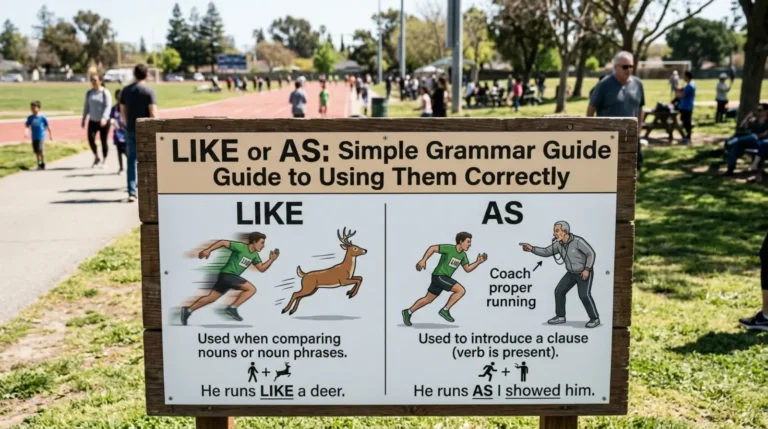
Like or as is a common grammar topic that confuses many English learners. Both words compare things, but they do not work the same way.
Many people use them incorrectly in speaking and writing. However, learning the difference is easier than you may think.
In simple terms, like usually compares nouns or pronouns. As often connects clauses and shows roles, functions, or actions.
Understanding these grammar rules can improve your writing and speaking skills. It can also help you avoid common mistakes in exams, business communication, and daily conversations.
This guide explains everything about like or as in simple English. You will learn meanings, rules, examples, comparisons, mistakes, and expert tips.
Quick Summary Box
- Like compares people, things, or ideas.
- As often connects a complete clause.
- Use like before a noun or pronoun.
- Use as before a subject and verb.
- Like means “similar to.”
- As can mean “in the role of” or “while.”
- Both words help make comparisons.
- Correct usage improves grammar and communication.
What Does Like or As Mean?
Both like and as are words used to make comparisons.
They show how one thing relates to another.
Like
The word like means “similar to.”
Example:
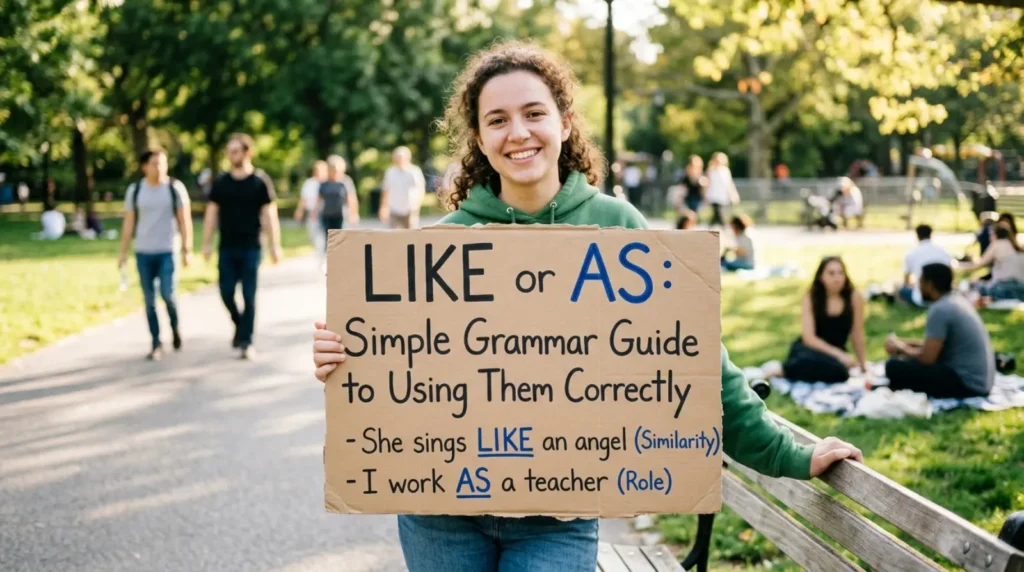
- She sings like a professional singer.
- The clouds look like cotton.
As
The word as often means “in the same way that.”
Example:
- She sings as her mother sings.
- Do as I say.
The key difference is structure.
Like vs As: The Main Difference
Many learners ask:
Should I use like or as?
The answer depends on what comes after the word.
Use Like When
A noun or pronoun follows.
Examples:
- He runs like a cheetah.
- It tastes like chocolate.
Use As When
A clause follows.
Examples:
- He runs as a cheetah runs.
- It tastes as chocolate should taste.
This rule solves most grammar problems involving like and as.
Like or As Comparison Table
| Feature | Like | As |
|---|---|---|
| Main Use | Comparison | Comparison or role |
| Followed By | Noun or pronoun | Clause, subject + verb |
| Meaning | Similar to | In the same way that |
| Formality | More common in speech | More common in formal writing |
| Example | She looks like her sister. | She dances as her sister does |
How to Use Like Correctly
Use like before a noun, pronoun, or noun phrase.
Examples
- He acts like a leader.
- The baby sleeps like an angel.
- This fabric feels like silk.
- They fought like warriors.
Notice that no complete clause follows the word.
Formula
Like + Noun/Pronoun
Examples:
- Like a bird
- Like him
- Like my teacher
This formula helps create quick comparisons.
How to Use As Correctly
Use as when a complete clause follows.
Examples
- Do as I told you.
- She performed as the coach expected.
- They arrived as we planned.
A complete clause contains a subject and a verb.
Formula
As + Subject + Verb
Examples:
- As I said
- As she explained
- As they expected
This structure appears often in formal writing.
Real-Life Examples of Like or As
Understanding real situations makes grammar easier.
1: At School
- She writes like a professional author.
- Write the report as your teacher instructed.
2: At Work
- He works like a machine.
- Complete the task as your manager requested.
3: At Home
- The cake smells like vanilla.
- Arrange the room as we discussed.
These examples show how naturally both words appear in daily communication.

Using Like and As in Everyday Conversations
People often use these words while talking.
Common Sentences
- You look like your father.
- It sounds like rain.
- Do as you wish.
- As I mentioned earlier, the meeting starts at noon.
- He drives like a racing expert.
Native speakers use these patterns frequently.
Learning them improves fluency.
Common Mistakes When Using Like or As
Many writers make simple errors.
Mistake 1
❌ Do like I told you.
✅ Do as I told you.
A complete clause follows, so use as.
Mistake 2
❌ She looks as her mother.
✅ She looks like her mother.
A noun follows, so use like.
Mistake 3
❌ He works like his boss works.
✅ He works as his boss works.
A clause follows, so use as.
Avoiding these mistakes makes your English sound more natural.
Like as a Preposition
The word like usually acts as a preposition.
It connects one thing to another.
Examples
- He swims like a fish.
- She shines like a star.
- The room smells like flowers.
These comparisons help readers create clear mental images.
As as a Conjunction
The word as often acts as a conjunction.
It joins two parts of a sentence.
Examples
- As I expected, the team won.
- Do as your parents advise.
- As she predicted, it rained.
Conjunctions connect ideas and improve sentence flow.
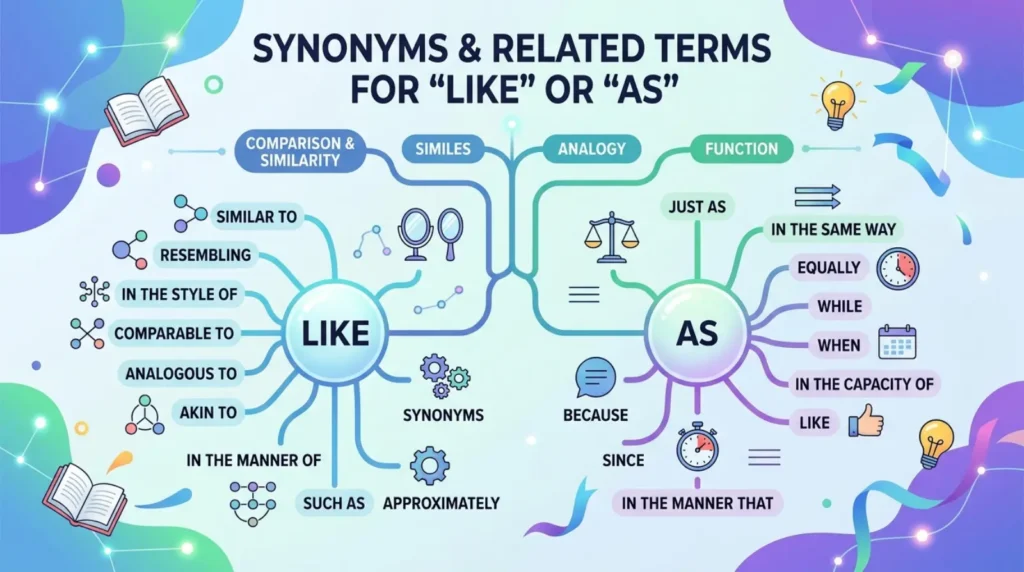
Synonyms and Related Terms for Like or As
Using related words helps improve vocabulary.
Synonyms of Like
- Similar to
- Resembling
- Comparable to
- Much like
- Identical to
Related Uses of As
- In the same way
- While
- Because
- Since
- In the role of
LSI Keywords
- difference between like and as
- grammar rules for like and as
- when to use like
- when to use as
- English comparison words
- like versus as
- grammar comparison examples
- English writing tips
These terms help search engines understand the topic.
Expert Insights: Why Understanding Like or As Matters
Grammar experts stress the importance of precision.
Using like and as correctly improves clarity.
It also strengthens professional writing.
Employers, teachers, and examiners notice grammar accuracy.
Small grammar improvements create a stronger impression.
Good grammar also boosts confidence in communication.
When readers understand your message quickly, your writing becomes more effective.
That is why mastering like or as remains important for both beginners and advanced learners.
Tips and Tricks to Remember the Difference
Try these simple memory tricks.
Tip 1
Think:
Like = Noun
Example:
- Like a hero
Tip 2
Think:
As = Clause
Example:
- As a hero would act
Tip 3
Check what follows the word.
If you see a subject and verb, choose as.
If you see only a noun, choose like.
Tip 4
Read your sentence aloud.
Often, the correct choice sounds more natural.
Like or As in Formal and Informal Writing
Both words appear in different writing styles.
Informal English
People often prefer like.
Example:
- It looks like a good idea.
Formal English
Writers often choose as when grammar requires a clause.
Example:
- Proceed as instructed.
Formal documents usually follow stricter grammar rules.
Therefore, understanding the difference becomes even more important
(FAQs)
Is it correct to say like or as?
Both are correct. The right choice depends on sentence structure.
What is the difference between like and as?
Like compares nouns. As usually introduces a clause or role.
Can like and as mean the same thing?
Sometimes they express similar ideas. However, grammar rules differ.
Is like more informal than as?
Yes. Like appears more often in casual speech.
Can I use as for comparison?
Yes. As compares actions and complete clauses.
Which is correct: Do like I say or do as I say?
“Do as I say” is grammatically correct.
Why do learners confuse like and as?
Both compare things, so their meanings seem similar.
Is this grammar rule important for exams?
Yes. Many English tests include questions about like and as.
Internal Linking Suggestions
Consider linking this article to:
- Parts of Speech Guide
- English Grammar Rules
- Prepositions in English
- Conjunctions Explained
- Common Grammar Mistakes
- Writing Tips for Beginners
These related topics help readers learn more and improve SEO performance.
Conclusion
Understanding like or as is an important step toward better English grammar. Although both words compare things, they serve different purposes. Use like before a noun or pronoun. Use as before a complete clause or when describing a role.
The rule is simple, but it makes a big difference in writing and speaking. With practice, choosing the correct word becomes natural. Remember the easy formula: Like + noun and As + clause.
When you apply these rules consistently, your communication becomes clearer and more professional. Keep reviewing examples and using them in daily conversations. Soon, using like or as correctly will become a habit.

