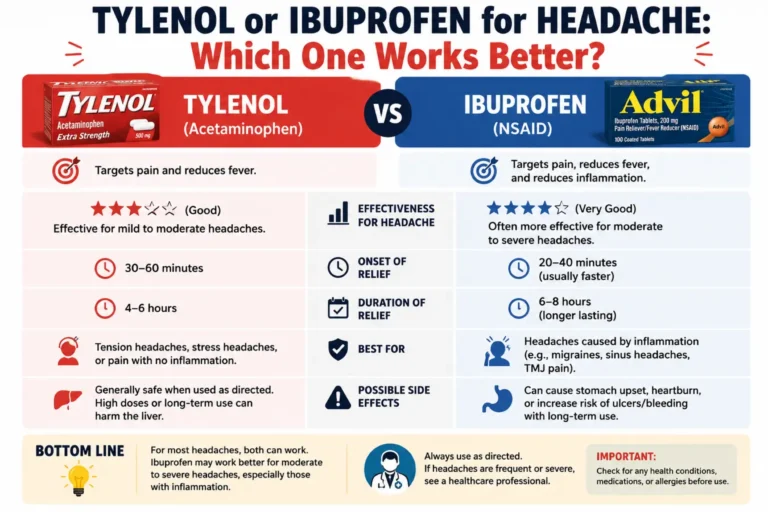
Tylenol or ibuprofen for headache is a common question for people looking for fast pain relief. Both medicines can reduce headache pain, but they work in different ways. Choosing the right one depends on the type of headache, your health, and other factors.
Many people reach for a pain reliever without knowing which option is best. While both medicines are available over the counter, they are not always interchangeable. Understanding their differences can help you make a safer and more effective choice.
This guide explains how Tylenol and ibuprofen work, their benefits, possible side effects, and when each medicine may be the better choice. You will also find comparison tables, real-life examples, expert tips, and answers to common questions.
Quick Summary Box
- Tylenol contains acetaminophen and relieves pain and fever.
- Ibuprofen is a nonsteroidal anti-inflammatory drug (NSAID).
- Tylenol works well for many mild to moderate headaches.
- Ibuprofen may work better for headaches caused by inflammation.
- Both medicines can treat headaches, but they have different risks.
- Always follow the recommended dosage on the label.
- Talk to your healthcare provider if headaches occur often or become severe.
What Is Tylenol?
Tylenol is a popular over-the-counter pain reliever. Its active ingredient is acetaminophen.
It helps reduce pain and fever. However, it does not reduce inflammation like ibuprofen.
How Tylenol Works
Tylenol changes how the brain senses pain. It also lowers body temperature during a fever.
Doctors often recommend Tylenol for mild to moderate pain.
Common Uses of Tylenol
- Headaches
- Tension headaches
- Fever
- Toothaches
- Muscle aches
- Back pain
- Minor arthritis pain
Benefits of Tylenol
- Gentle on the stomach for many people.
- Safe for most people when used as directed.
- Suitable for people who cannot take NSAIDs.
- Often recommended during pregnancy only when advised by a healthcare professional.
Possible Side Effects
Tylenol is generally safe when taken correctly. However, taking too much can seriously damage the liver.
Never exceed the maximum daily dose listed on the medicine label or recommended by your healthcare provider.
What Is Ibuprofen?
Ibuprofen is another common over-the-counter pain medicine. It belongs to a group of drugs called nonsteroidal anti-inflammatory drugs (NSAIDs).
Unlike Tylenol, ibuprofen reduces inflammation as well as pain and fever.
How Ibuprofen Works
Ibuprofen blocks substances in the body that cause pain, swelling, and inflammation.
Because of this, it may provide better relief for some types of headaches.
Common Uses of Ibuprofen
- Headaches
- Migraines
- Sinus headaches
- Muscle pain
- Joint pain
- Menstrual cramps
- Fever
- Sports injuries
Benefits of Ibuprofen
- Reduces inflammation.
- Works well for many migraine sufferers.
- Helps relieve swelling and pain together.
- Often lasts several hours.
Possible Side Effects
Ibuprofen can cause stomach irritation in some people.
Long-term or frequent use may increase the risk of stomach ulcers, bleeding, kidney problems, or cardiovascular events in some individuals, especially at higher doses or in people with certain health conditions.
Always follow the dosage instructions and speak with a healthcare provider if you need frequent pain relief.
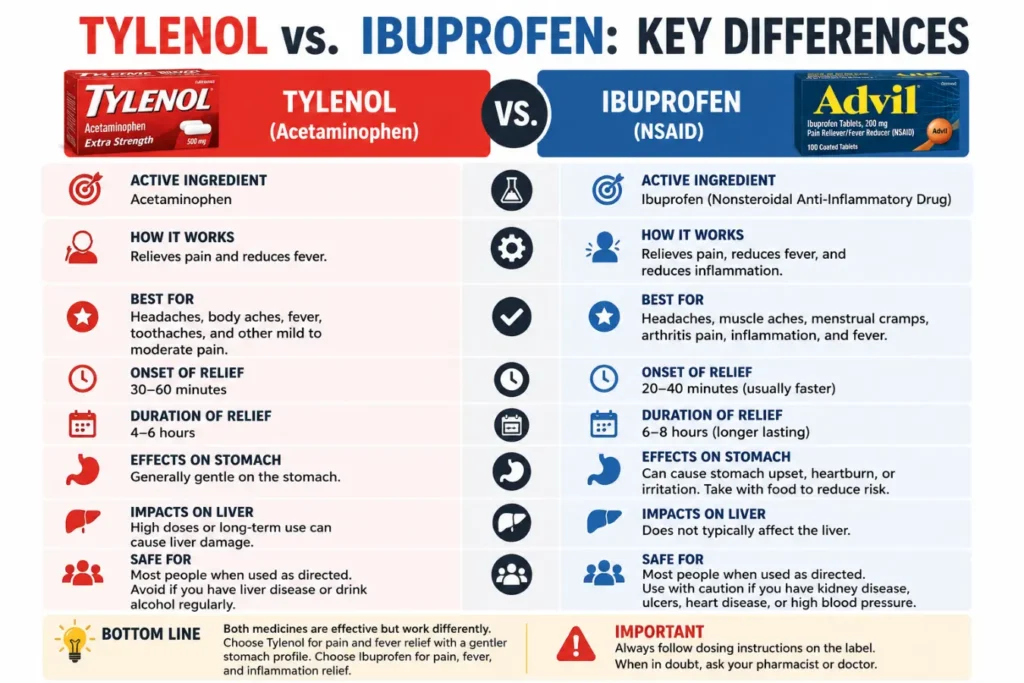
Tylenol vs. Ibuprofen: Key Differences
Although both medicines relieve headaches, they work differently.
| Feature | Tylenol (Acetaminophen) | Ibuprofen |
|---|---|---|
| Drug Type | Pain reliever and fever reducer | NSAID (anti-inflammatory drug) |
| Reduces Pain | Yes | Yes |
| Reduces Fever | Yes | Yes |
| Reduces Inflammation | No | Yes |
| Common Uses | Headaches, fever, mild pain | Headaches, inflammation, migraines, muscle pain |
| Stomach Irritation | Less common | More common |
| Liver Risk | Yes, if taken above recommended doses | Lower than Tylenol |
| Kidney Risk | Lower when used as directed | May increase with frequent or high-dose use |
| Available Over the Counter | Yes | Yes |
Tylenol or Ibuprofen for Headache: Which One Should You Choose?
The answer depends on the type of headache and your personal health.
Tylenol May Be Better If:
- You have a mild tension headache.
- You have a sensitive stomach.
- Your healthcare provider advises you to avoid NSAIDs.
- You need pain relief without reducing inflammation.
Ibuprofen May Be Better If:
- Your headache involves inflammation.
- You have a migraine and your healthcare provider recommends an NSAID.
- You also have muscle pain or swelling.
- You need an anti-inflammatory medicine.
The best choice is not the same for everyone. If you have liver disease, kidney disease, stomach ulcers, heart disease, or take other medicines, ask your healthcare provider which option is safest for you.
Types of Headaches and the Best Pain Relief
Different headaches respond differently to pain medicine.
| Headache Type | Tylenol | Ibuprofen |
| Tension Headache | ✓ Often effective | ✓ Often effective |
| Migraine | ✓ May help some people | ✓ Often effective for many people |
| Sinus Headache | May help pain | Often helps pain and inflammation |
| Fever-Related Headache | ✓ Good choice | ✓ Good choice |
| Muscle Tension Headache | May help | Often helpful if inflammation contributes |
The type of headache is just one factor. Age, medical conditions, allergies, and other medicines also matter when choosing a pain reliever.
When Should You Choose Tylenol?
Tylenol is a good choice for many people with mild to moderate headaches. It works by reducing pain and fever, but it does not reduce inflammation.
Doctors often recommend Tylenol for people who cannot take NSAIDs, such as ibuprofen. It may also be suitable for people with sensitive stomachs because it is less likely to cause stomach irritation.
Tylenol May Be the Better Choice If:
- You have a mild tension headache.
- You have a fever along with your headache.
- You have a sensitive stomach.
- Your healthcare provider advises you to avoid NSAIDs.
- You need occasional pain relief.
Real-Life Example
Sarah has a mild headache after working on her computer all day. She has a history of stomach irritation. She chooses Tylenol because it relieves her headache without increasing the chance of stomach discomfort.
When Should You Choose Ibuprofen?
Ibuprofen works differently because it reduces pain, fever, and inflammation. This makes it a good option for headaches linked to swelling or inflammation.
Many people also use ibuprofen for migraines, sinus headaches, and headaches caused by muscle tension.
Ibuprofen May Be the Better Choice If:
- You have a migraine.
- You have a sinus headache.
- Your headache comes with muscle pain.
- You also have inflammation or swelling.
- Your healthcare provider recommends an NSAID.
Real-Life Example
James develops a headache during a sinus infection. His face feels swollen, and his forehead hurts. His doctor recommends ibuprofen because it can help reduce both pain and inflammation.
Tylenol or Ibuprofen for Different Types of Headaches
Not every headache is the same. Understanding the cause can help you choose the right medicine.
Tension Headaches
Tension headaches are the most common type.
They often cause:
- Pressure around the forehead
- Tight neck muscles
- Mild to moderate pain
Both Tylenol and ibuprofen can help relieve tension headaches.
Migraines
Migraines usually cause:
- Severe throbbing pain
- Nausea
- Sensitivity to light
- Sensitivity to sound
Ibuprofen often provides better relief for many people with migraines because it also reduces inflammation. However, some people respond well to Tylenol. If migraines happen often, speak with your healthcare provider about the best treatment plan.
Sinus Headaches
Sinus headaches often occur with:
- Facial pressure
- Nasal congestion
- Sinus inflammation
Ibuprofen may help because it reduces inflammation along with pain.
Fever-Related Headaches
When a fever causes a headache, both medicines can reduce pain and lower body temperature.
The best option depends on your age, medical history, and healthcare provider’s advice.
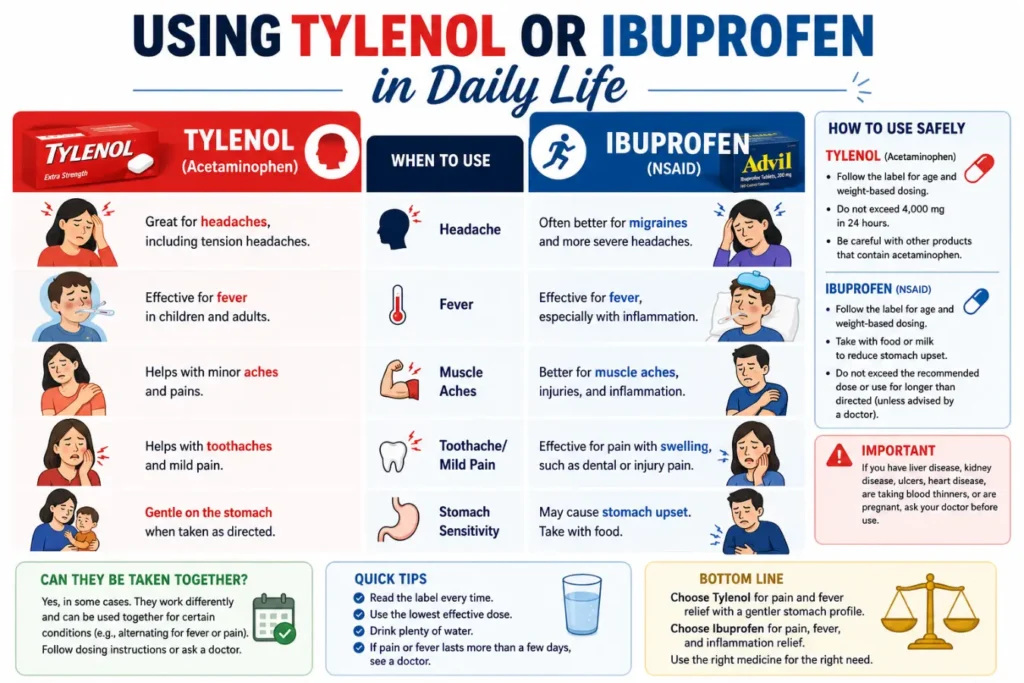
Can You Take Tylenol and Ibuprofen Together?
In some situations, healthcare professionals may recommend alternating or combining Tylenol and ibuprofen for short periods. However, this should only be done according to medical advice or the instructions provided by your healthcare provider.
Taking both medicines incorrectly can increase the risk of side effects or accidental overdose.
Before combining these medicines:
- Read the labels carefully.
- Follow the recommended dosage.
- Keep track of when you take each medicine.
- Ask your doctor or pharmacist if you are unsure.
Never exceed the maximum daily dose for either medicine.
Possible Side Effects
Although both medicines are considered safe when used correctly, they can cause side effects.
Tylenol Side Effects
Possible side effects include:
- Nausea
- Allergic reactions (rare)
- Liver damage from overdose
Taking more than the recommended amount greatly increases the risk of serious liver injury.
Ibuprofen Side Effects
Possible side effects include:
- Stomach pain
- Heartburn
- Upset stomach
- Stomach ulcers with long-term use
- Kidney problems in some people
- Increased risk of bleeding
Taking ibuprofen with food may reduce stomach irritation for some people.
Common Mistakes People Make
Many people make simple mistakes when using pain relievers.
Mistake 1: Taking More Than Recommended
Some people think extra medicine works faster.
This is not true.
Taking too much increases the risk of serious side effects.
Mistake 2: Ignoring the Active Ingredient
Many cold and flu medicines already contain acetaminophen.
Taking Tylenol at the same time can accidentally exceed the safe daily limit.
Always check medicine labels before combining products.
Mistake 3: Using Pain Relievers Too Often
Frequent use of headache medicine may lead to medication-overuse headaches in some people.
If you need pain medicine regularly, talk to your healthcare provider.
Mistake 4: Taking Ibuprofen on an Empty Stomach
Ibuprofen may irritate the stomach.
Many people tolerate it better when taken with food or milk.
Mistake 5: Treating Every Headache the Same Way
Different headaches have different causes.
Choosing the right medicine depends on your symptoms and medical history.
Tips for Safe Headache Relief
These simple habits may help improve headache relief while reducing the need for medication.
- Drink enough water throughout the day.
- Get regular sleep.
- Avoid skipping meals.
- Limit alcohol if it triggers headaches.
- Manage stress with relaxation techniques.
- Take medicines only as directed.
- Keep a headache diary if headaches happen often.
These lifestyle changes can help reduce headache frequency for many people.
Using Tylenol or Ibuprofen in Daily Life
Many people keep one or both medicines at home for occasional headaches.
For example:
At Work
A long day in front of a computer may trigger a tension headache. Taking the appropriate pain reliever, drinking water, and taking a short break may help.
During Travel
Changes in sleep, dehydration, or stress can cause headaches. Keeping an approved pain reliever in your travel bag may be helpful.
At Home
Headaches sometimes occur with colds or the flu. Depending on your symptoms and medical history, Tylenol or ibuprofen may provide relief when used as directed.
If headaches become severe, happen frequently, or come with symptoms such as confusion, weakness, vision changes, high fever, or a sudden “worst headache,” seek medical attention promptly.
Synonyms and Related Search Terms
Using related keywords naturally helps search engines understand your content. These terms also answer more user questions.
Related Search Terms
- acetaminophen vs ibuprofen
- best medicine for headache
- headache pain relief
- Tylenol for migraine
- ibuprofen for migraine
- tension headache treatment
- sinus headache medicine
- OTC headache medicine
- over-the-counter pain relievers
- headache relief options
- NSAIDs for headache
- pain medicine comparison
Long-Tail Keywords
- Is Tylenol or ibuprofen better for headaches?
- Which medicine works faster for headache relief?
- Can I take Tylenol and ibuprofen together?
- Best pain reliever for tension headaches
- Tylenol vs ibuprofen for migraine attacks
- Which headache medicine is safer for daily use?
Expert Insights
Healthcare professionals recommend choosing a headache medicine based on the type of headache and your medical history, not just personal preference.
Tylenol and ibuprofen are both effective when used correctly. However, no single medicine works best for everyone. Age, health conditions, allergies, pregnancy, and other medicines can all affect which option is safer.
Experts also recommend avoiding frequent use of pain relievers. Using headache medicine too often may contribute to medication-overuse headaches in some people.
If headaches become frequent, severe, or interfere with daily life, schedule an appointment with a healthcare provider. They can help identify the underlying cause and recommend the most appropriate treatment.
(FAQs)
1. Is Tylenol or ibuprofen better for headaches?
It depends on the type of headache. Tylenol works well for many mild headaches, while ibuprofen may be more effective when inflammation contributes to the pain.
2. Which medicine works faster?
Both medicines usually begin working within about 30 to 60 minutes for many people. Individual results can vary.
3. Can I take Tylenol and ibuprofen together?
Sometimes healthcare providers recommend alternating or combining them for short periods. Only do this if your doctor or pharmacist says it is appropriate for you, or follow the product instructions carefully.
4. Which medicine is safer for the stomach?
Tylenol is generally less likely to irritate the stomach than ibuprofen.
5. Which medicine is safer for the liver?
Taking Tylenol above the recommended dose can seriously damage the liver. Always stay within the recommended daily limit and avoid combining multiple products that contain acetaminophen.
6. Can children take Tylenol or ibuprofen?
Both medicines have children’s formulations, but the correct dose depends on the child’s age and weight. Always follow the product label or your pediatrician’s advice.
7. When should I see a doctor for a headache?
Seek medical care if your headache is severe, sudden, keeps returning, follows a head injury, or comes with symptoms such as confusion, weakness, vision changes, trouble speaking, or a high fever.
Quick Checklist: Choosing the Right Medicine
Use this checklist before taking any pain reliever.
Identify the type of headache.
Read the medicine label carefully.
Follow the recommended dosage.
Check for allergies or medical conditions.
Avoid mixing medicines without professional advice.
Stay hydrated and get enough rest.
Contact a healthcare provider if headaches become frequent.
Conclusion
Choosing Tylenol or ibuprofen for headache depends on the cause of your pain and your overall health. Both medicines can relieve headaches, but they work in different ways. Tylenol reduces pain and fever, while ibuprofen also reduces inflammation.
There is no single answer that works for everyone. A mild tension headache may respond well to either medicine. A headache linked to inflammation or a migraine may respond better to ibuprofen for some people. If you have stomach problems, liver disease, kidney disease, heart disease, are pregnant, or take other medications, talk with your healthcare provider before choosing a pain reliever.
Always use these medicines exactly as directed on the label. If your headaches become frequent, severe, or unusual, seek medical advice. Treating the cause of the headache is just as important as relieving the pain.