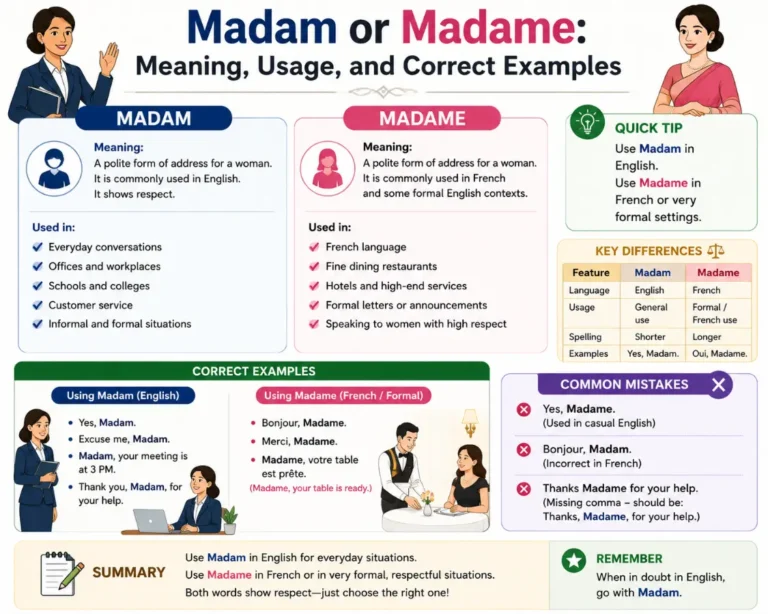
Madam or madame is a common question for people who write emails, letters, or formal messages. Many people see both words and wonder which one is correct. While they look similar, they have different origins and uses.
Understanding the difference helps you sound professional and respectful. It also prevents mistakes in business communication and formal writing.
In this guide, you will learn the meaning of both terms, when to use each one, and common mistakes to avoid. You will also find examples, expert tips, and answers to frequently asked questions.
By the end, you will know exactly whether to use madam or madame in any situation.
Quick Summary Box
- Madam is an English term of respect for a woman.
- Madame is the French version of the same title.
- Both words mean “a respected woman” or “Mrs.”
- Madam is common in English-speaking countries.
- Madame is mainly used in French-speaking regions.
- Use the correct term based on language and context.
- In formal English letters, “Dear Madam” is usually correct.
What Does Madam Mean?
Madam is a polite title used to address a woman respectfully.
People often use it in:
- Business letters
- Customer service
- Formal conversations
- Official communication
Example
- Good morning, Madam.
- Dear Madam,
- Thank you, Madam.
The word shows respect, especially when you do not know the woman’s name.
What Does Madame Mean?
Madame is a French title for an adult woman.
It works much like “Mrs.” or “Madam” in English.
French speakers use it before a woman’s surname.
Examples
- Madame Dupont
- Bonjour, Madame.
- Merci, Madame.
In English writing, “madame” usually appears when referring to French culture, language, or titles.
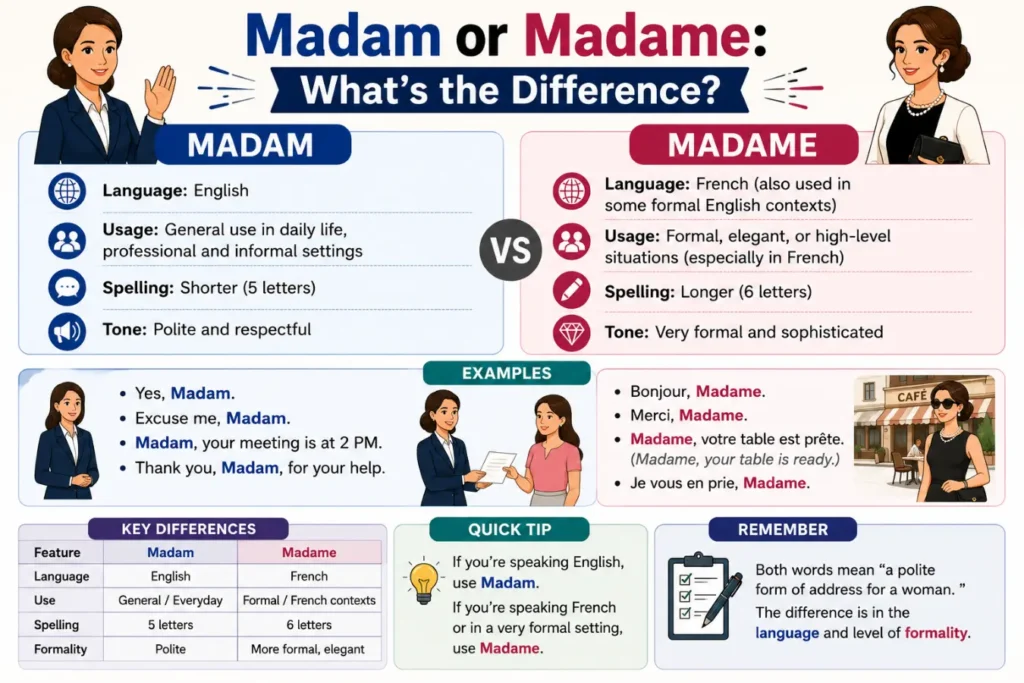
Madam or Madame: What’s the Difference?
Many people think the words are interchangeable. However, the main difference is language.
| Feature | Madam | Madame |
|---|---|---|
| Language | English | French |
| Usage | Formal English communication | French communication |
| Meaning | Respectful title for a woman | Respectful title for a woman |
| Common in | UK, USA, Canada, Australia | France, Belgium, Quebec |
| Business Letters | Very common | Rare unless writing in French |
Simple Rule
- Writing in English? Use Madam.
- Writing in French? Use Madame.
Origin of Madam and Madame
The two words share the same history.
They come from the Old French phrase:
“Ma Dame”
This means:
“My Lady”
Over time:
- English adopted Madam
- French kept Madame
Today, both words still express respect and courtesy.
When Should You Use Madam?
Use Madam in formal English situations.
Common Situations
- Business emails
- Government letters
- Customer support messages
- Formal greetings
Examples
- Dear Madam,
- Excuse me, Madam.
- Thank you for your assistance, Madam.
These uses sound professional and respectful.
When Should You Use Madame?
Use Madame when speaking or writing in French.
Common Situations
- French correspondence
- French business communication
- French cultural references
- Addressing French-speaking women
Examples
- Bonjour, Madame.
- Merci, Madame Martin.
- Madame Curie was a famous scientist.
In English documents, use “Madame” only when referring to French names or titles.
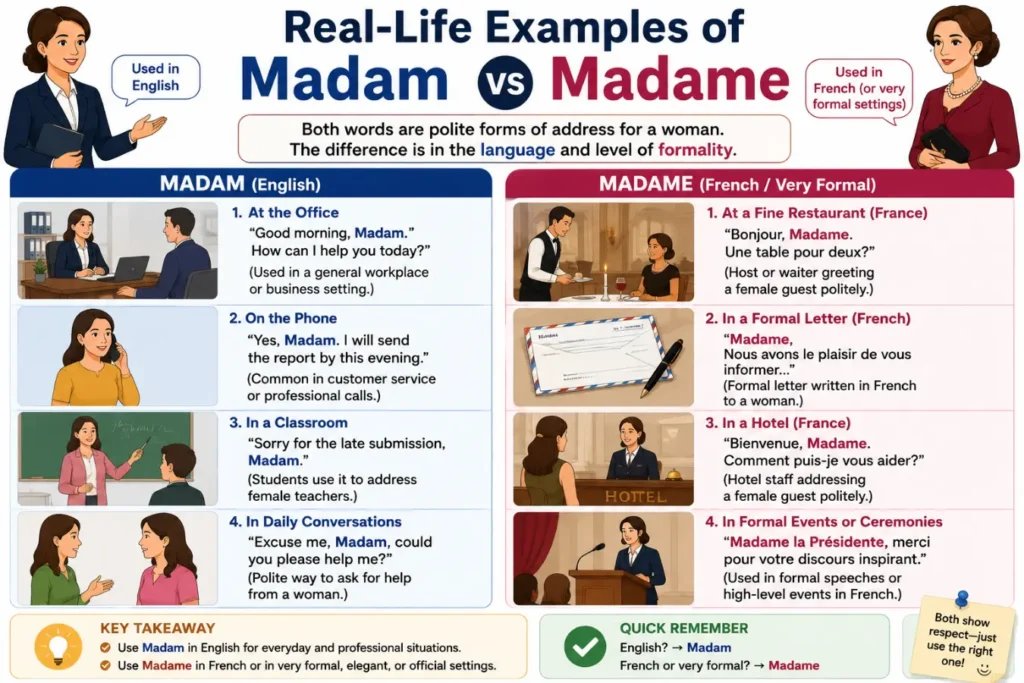
Real-Life Examples of Madam vs Madame
Example 1: Business Email
Correct:
Dear Madam,
Thank you for your inquiry.
Incorrect:
Dear Madame,
(Unless the email is in French.)
Example 2: Travel in France
Correct:
Bonjour, Madame.
This follows French language rules.
Example 3: Customer Service
Correct:
How may I help you, Madam?
This is standard English usage.
Common Mistakes People Make
Many writers confuse these terms.
Mistake 1: Using Madame in English Emails
Incorrect:
Dear Madame,
Correct:
Dear Madam,
Mistake 2: Mixing Languages
Avoid mixing English and French titles in one message.
Mistake 3: Wrong Spelling
People often write:
- Madamee
- Madamme
- Madamh
Always use the correct spelling.
Mistake 4: Overusing Titles
Sometimes using a person’s actual name sounds better.
Example:
Dear Sarah,
instead of
Dear Madam,
when you know the recipient.
How to Use Madam in Professional Communication
Professional communication requires clear and respectful language.
Best Practices
- Use “Dear Madam” when the name is unknown.
- Use the person’s name when available.
- Keep the tone polite.
- Follow formal business standards.
Example
Dear Madam,
I am writing regarding your recent request.
Sincerely,
John Smith
This format remains widely accepted.
Madam in Everyday Life
The word is less common in casual conversations today.
However, you may still hear it in:
- Hotels
- Restaurants
- Airlines
- Government offices
- Luxury services
Examples
- Your table is ready, Madam.
- This way, Madam.
- Thank you, Madam.
The title adds courtesy and professionalism.
Synonyms and Related Terms
Here are some useful alternatives.
Synonyms of Madam
- Ma’am
- Mrs.
- Lady
- Miss
- Ms.
- Gentlewoman
Related Keywords
- Madam meaning
- Madame meaning
- Madam vs Madame
- Dear Madam
- Formal title for women
- French title for women
- Professional greetings
- Business letter salutation
- Respectful terms for women
These terms often appear in related searches.
Expert Insights: Why the Difference Matters
Language reflects professionalism.
Using the correct title helps create a positive first impression.
Business professionals often judge communication quality based on small details. Choosing between madam and madame shows attention to language and cultural context.
Experts recommend:
- Use Madam in English correspondence.
- Use Madame only in French settings.
- Learn cultural conventions before international communication.
Small details can improve credibility and professionalism.
Madam vs Madame in International Business
Global communication requires cultural awareness.
English-Speaking Countries
Use:
- Madam
- Ms.
- Mrs.
French-Speaking Countries
Use:
- Madame
Understanding local customs helps build trust and respect.
This is especially important in:
- International sales
- Customer service
- Corporate communication
- Diplomatic correspondence
Should You Use Dear Madam Today?
Yes, but only in specific situations.
Use it when:
- You do not know the recipient’s name.
- You are writing a formal letter.
- Company guidelines allow traditional greetings.
If you know the person’s name, use it instead.
Better Example
Dear Ms. Johnson,
This feels more personal and professional.
(FAQs)
Is madam the same as madame?
No. Madam is English, while Madame is French. Both express respect.
Which is correct in a formal email?
In English emails, use “Dear Madam” if you do not know the person’s name.
Can I use madame in English?
Yes, but mainly when referring to French names, titles, or culture.
Is madam outdated?
Not completely. It remains common in formal and professional settings.
What is the abbreviation for madam?
The informal spoken form is often “ma’am.”
Is Madame a married title?
Traditionally in French, Madame referred to adult women, especially married women. Today, it is widely used for adult women in general.
What should I use instead of Dear Madam?
If possible, use the person’s name, such as “Dear Ms. Smith.”
Is madam respectful?
Yes. It is a polite and respectful way to address a woman.
Internal Linking Suggestions
Link this article to:
- Formal Email Writing Guide
- Business Letter Format
- Professional Communication Skills
- Common English Grammar Mistakes
- Email Etiquette Tips
These related topics help improve user engagement and SEO.
Conclusion
Understanding madam or madame is simple once you know the difference. Both terms show respect, but they belong to different languages. Madam is the preferred choice in English communication, while Madame is used in French contexts.
Choosing the correct title helps you communicate clearly and professionally. It also shows cultural awareness and attention to detail. Whether you are writing a business email, formal letter, or international message, using the right term creates a better impression.
Remember this easy rule: use Madam for English and Madame for French. Following this guideline will help you avoid mistakes and communicate with confidence.