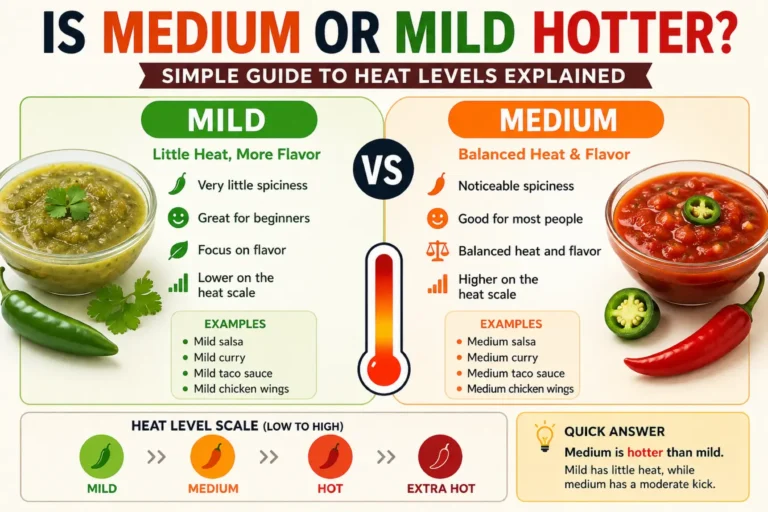
Is medium or mild hotter? The simple answer is yes. Medium is usually hotter than mild.
Many people see these heat labels on sauces, salsa, curries, chips, and restaurant menus. However, the difference can confuse customers. Some foods labeled mild still feel spicy, while some medium options seem less hot than expected.
Understanding spice levels helps you choose foods you will enjoy. It also prevents surprises when ordering meals or buying packaged products.
In this guide, you’ll learn what mild and medium mean, how they compare, and when each level works best. You’ll also see real-life examples, common mistakes, and expert tips for choosing the right heat level.
Quick Summary Box
- Medium is generally hotter than mild.
- Mild contains little to no noticeable heat.
- Medium offers a balanced level of spice.
- Restaurants may use different heat scales.
- Heat levels vary by brand and cuisine.
- Mild suits sensitive taste buds.
- Medium suits people who enjoy some spice.
- Always check descriptions when available.
What Does “Mild” Mean?
Mild refers to food with very little heat.
Most people can comfortably eat mild foods without feeling much burn. The flavor often matters more than the spice.
Examples of mild foods include:
- Mild salsa
- Mild curry
- Mild buffalo sauce
- Mild chili
- Mild taco seasoning
Mild products often target people who prefer gentle flavors.
What Does “Medium” Mean?
Medium refers to a moderate level of heat.
It sits between mild and hot on most spice scales.
Medium foods provide noticeable spice without overwhelming most people.
Examples include:
- Medium salsa
- Medium chicken wings
- Medium curry
- Medium hot sauce
- Medium tacos
Many consumers choose medium because it balances flavor and heat.
Is Medium or Mild Hotter?
Yes, medium is hotter than mild.
Most food brands and restaurants follow this heat order:
- Mild
- Medium
- Hot
- Extra Hot
Medium contains more spicy ingredients than mild. These ingredients may include:
- Chili peppers
- Jalapeños
- Cayenne pepper
- Red pepper flakes
- Hot sauces
As a result, medium delivers a stronger spicy sensation.
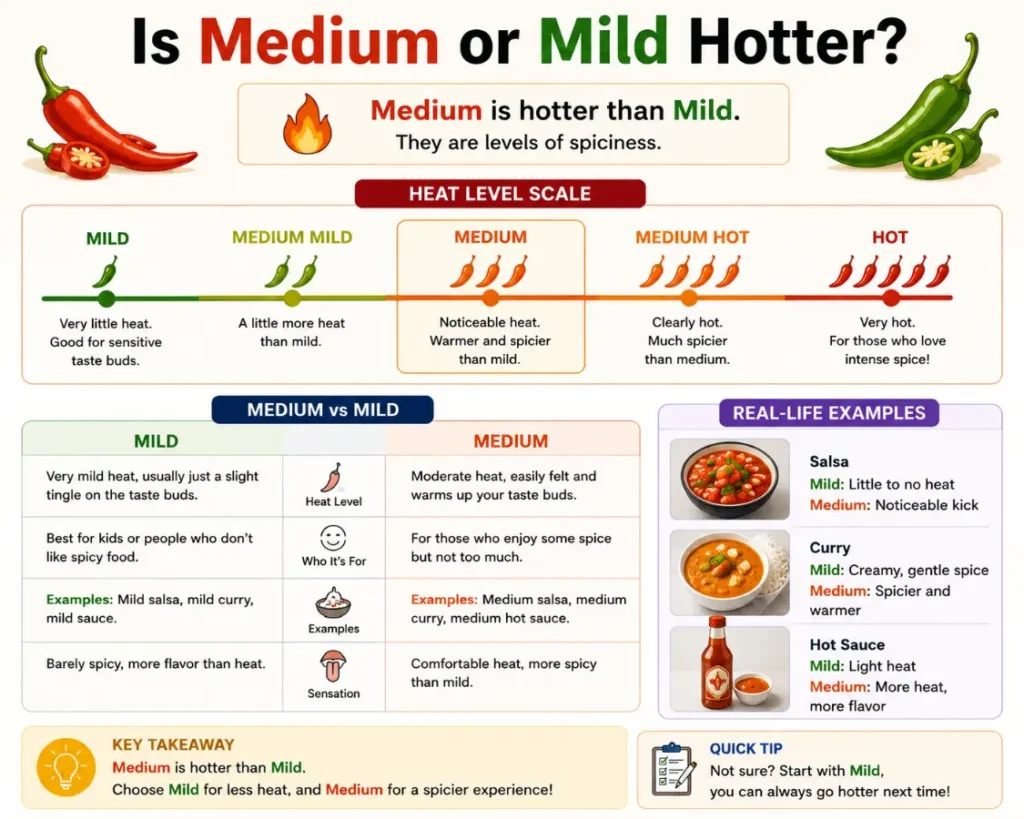
Medium vs Mild: Comparison Table
| Feature | Mild | Medium |
|---|---|---|
| Heat Level | Low | Moderate |
| Spice Intensity | Very light | Noticeable |
| Suitable for Beginners | Yes | Usually |
| Pepper Content | Less | More |
| Flavor Focus | Strong flavor, little heat | Flavor plus spice |
| Child-Friendly | Often | Sometimes |
| Mouth Burn | Minimal | Moderate |
| Common Menu Position | Lowest spice level | Middle spice level |
Why Heat Levels Differ Between Brands
Not every company uses the same spice scale.
One brand’s medium sauce may feel hotter than another brand’s hot sauce.
Several factors affect heat levels:
- Type of peppers used
- Amount of peppers added
- Recipe ingredients
- Regional taste preferences
- Cooking methods
Therefore, labels provide general guidance rather than exact measurements.
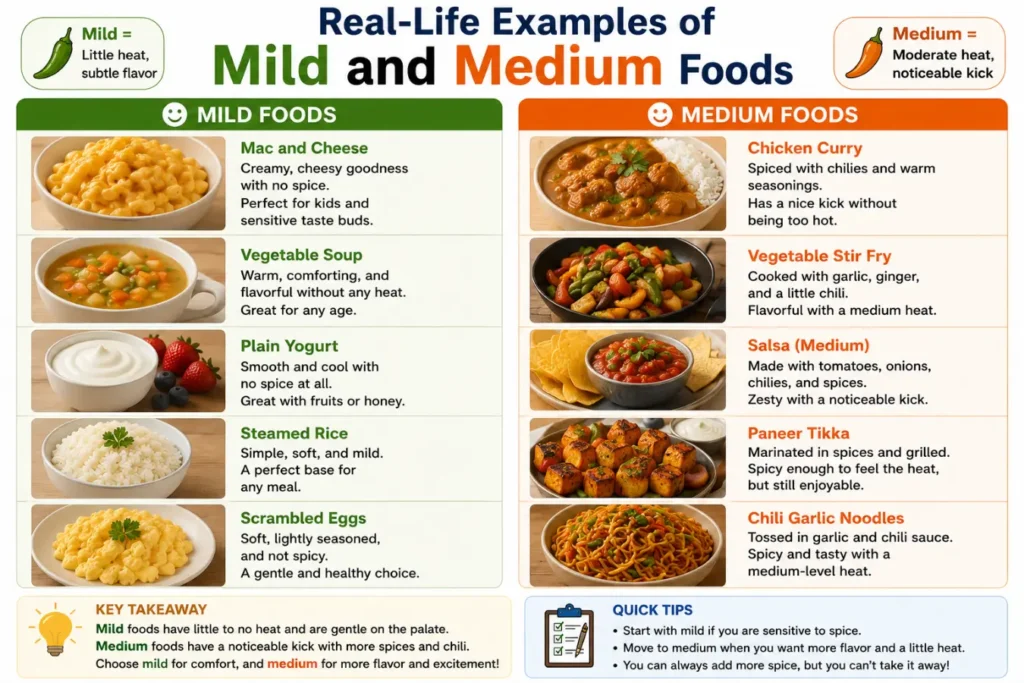
Real-Life Examples of Mild and Medium Foods
Salsa
- Mild salsa contains fewer peppers.
- Medium salsa includes extra chilies for more kick.
Chicken Wings
- Mild wings focus on buttery flavor.
- Medium wings add noticeable heat.
Curry
- Mild curry offers rich spices with little burn.
- Medium curry introduces stronger chili flavors.
Taco Sauce
- Mild sauce delivers flavor without much heat.
- Medium sauce adds a balanced spicy bite.
Understanding the Scoville Scale
The Scoville Scale measures pepper heat.
It uses Scoville Heat Units (SHU).
Here are common pepper examples:
| Pepper | Approximate SHU |
| Bell Pepper | 0 |
| Poblano Pepper | 1,000–2,000 |
| Jalapeño | 2,500–8,000 |
| Serrano | 10,000–23,000 |
| Cayenne | 30,000–50,000 |
Foods labeled medium often contain peppers with higher Scoville ratings than mild products.
When Should You Choose Mild?
Choose mild if:
- You dislike spicy foods.
- You have a sensitive stomach.
- You are introducing children to spicy foods.
- You want flavor without heat.
- You are unsure about spice tolerance.
Mild provides a safer option for most people.
When Should You Choose Medium?
Choose medium if:
- You enjoy some heat.
- You regularly eat spicy foods.
- You want more excitement in meals.
- Mild foods seem bland.
- You want balanced flavor and spice.
Medium often offers the best middle ground.
Common Mistakes People Make
Assuming All Medium Foods Are Equal
Heat levels vary widely.
Always check descriptions and reviews.
Ignoring Cuisine Differences
A medium Indian curry may feel hotter than a medium American sauce.
Confusing Flavor with Heat
Some foods contain strong spices without actual heat.
Ordering Too Hot Too Soon
Start with mild if you’re unsure.
You can always increase spice later.
Tips for Choosing the Right Spice Level
Follow these simple tips:
- Start mild if you’re new to spicy foods.
- Ask restaurants how spicy their medium option is.
- Read ingredient labels.
- Look for pepper types used.
- Try samples when available.
- Increase spice gradually.
These steps help prevent uncomfortable surprises.
How Spice Levels Affect Taste
Heat changes how people experience food.
Mild foods allow ingredients to shine.
Medium foods add excitement without overpowering flavor.
Many chefs prefer moderate heat because it creates balance.
The best choice depends on personal preference.
Synonyms and Related Terms
People often search for similar phrases.
Related keywords include:
- Medium vs mild spice
- Which is hotter medium or mild
- Mild heat level
- Medium spice level
- Spice scale explained
- Mild versus medium sauce
- Medium hot sauce
- Mild hot sauce
- Heat level comparison
- Food spice ratings
Using these terms helps consumers understand spice labels better.
Expert Insights
Food experts generally classify medium as hotter than mild.
However, spice perception varies from person to person.
Factors that influence heat sensitivity include:
- Age
- Diet
- Spice tolerance
- Pepper type
- Serving size
Experts recommend focusing on both flavor and heat. A balanced meal should enhance taste rather than overwhelm it.
Understanding spice levels helps consumers make better food choices and enjoy meals more confidently.
Frequently Asked Questions
Is medium hotter than mild?
Yes. Medium typically contains more spice and heat than mild.
Is mild spicy?
Mild may contain a small amount of spice, but the heat is usually very low.
Which is better, medium or mild?
Neither is better. The best choice depends on your spice preference.
Is medium considered very spicy?
No. Medium usually offers moderate heat rather than intense spice.
Can children eat medium foods?
Some children can. However, mild options are usually safer.
Why does medium feel hotter at some restaurants?
Restaurants use different recipes and pepper levels.
Is medium salsa hotter than mild salsa?
Yes. Medium salsa generally contains more peppers and spice.
What comes after medium on the spice scale?
Hot usually comes after medium.
Conclusion
So, is medium or mild hotter? In almost every case, medium is hotter than mild. Mild foods contain little heat and focus on flavor. Medium foods provide a noticeable spicy kick while remaining comfortable for most people.
Still, spice labels are not universal. Different brands, restaurants, and cuisines may use different standards. That is why reading descriptions and understanding ingredients helps you choose wisely.
If you prefer gentle flavors, choose mild. If you enjoy a bit of heat without going overboard, medium is often the ideal option. Knowing the difference allows you to order confidently and enjoy your meals exactly the way you like them.