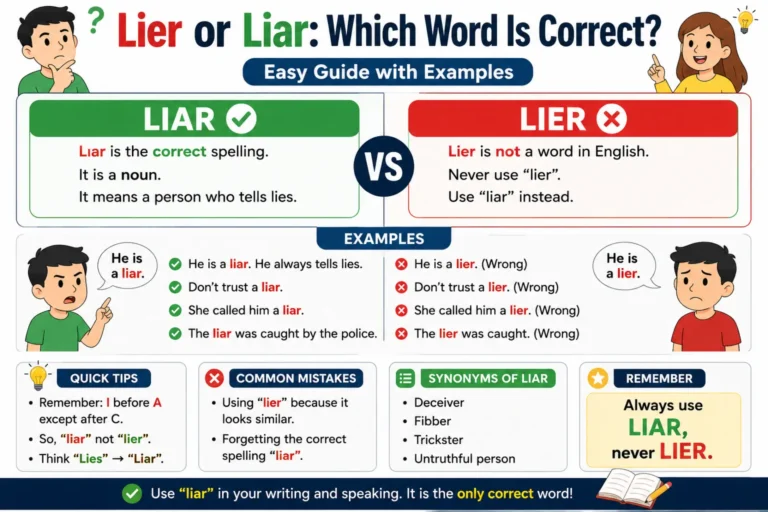
Lier or liar is a common question for English learners and writers. Many people mix up these two spellings. However, only one is correct in modern English.
The word liar means a person who tells lies. The spelling lier is different. It is a real word, but it has another meaning. Because both words look alike, many people use the wrong one.
This guide explains the difference in simple words. You will learn the meaning of each word, see real examples, compare them side by side, and avoid common mistakes. By the end, you will know exactly when to use liar and when lier is the right choice.
Quick Summary
- Liar means a person who tells lies.
- Lier means someone or something that lies down.
- Most people want liar, not lier.
- Liar is much more common in everyday English.
- Use lier only when talking about lying down.
- Remember: A liar tells lies. A lier lies down.
What Does “Liar” Mean?
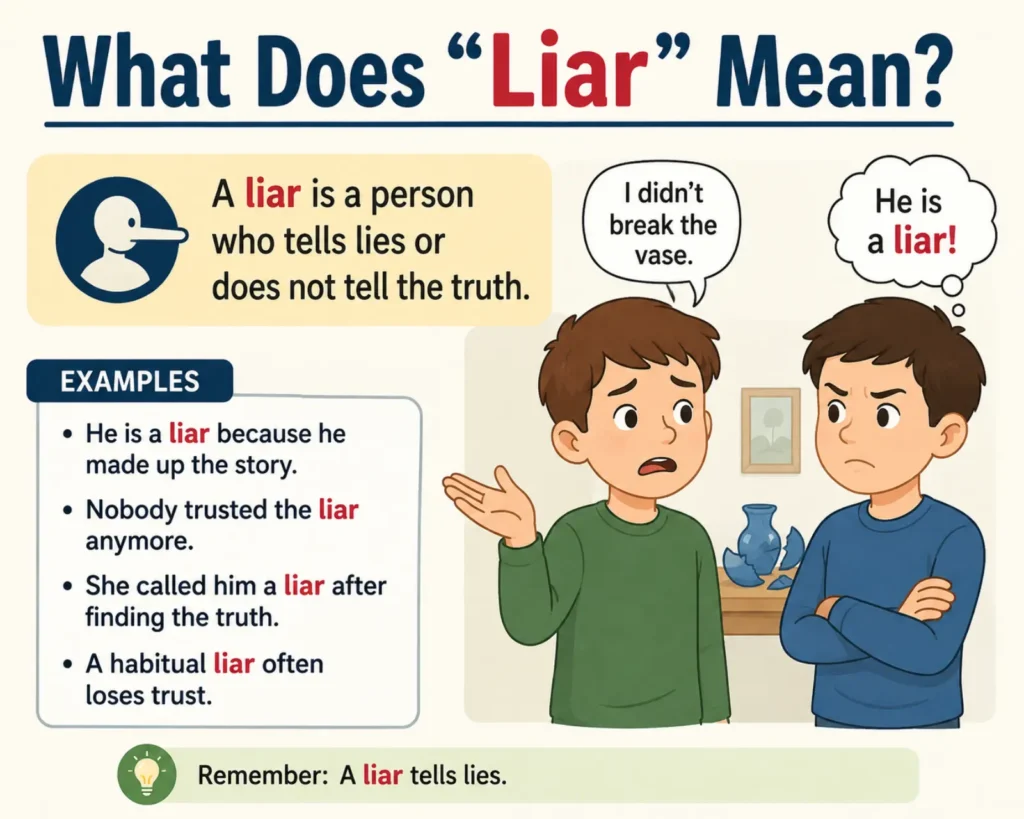
A liar is someone who tells lies or does not tell the truth.
Simple definition
A liar is a person who says things that are not true on purpose.
Examples
- He is a liar because he made up the story.
- Nobody trusted the liar anymore.
- She called him a liar after finding the truth.
- A habitual liar often loses trust.
The word comes from the verb lie, which means to say something false.
What Does “Lier” Mean?
Many people think lier is simply a misspelling of liar. That is not always true.
A lier is someone or something that lies down or remains in a resting position.
Simple definition
A lier is a person or thing that lies down.
This meaning is rare in modern English.
Examples
- The dog was a quiet lier in the shade.
- The book remained a lier on the table.
Most native speakers rarely use this word.
Lier or Liar: What’s the Difference?
Although both words come from the verb lie, they have different meanings.
| Feature | Liar | Lier |
|---|---|---|
| Meaning | Person who tells lies | Person or thing that lies down |
| Related verb | Lie (tell falsehood) | Lie (recline) |
| Common today | Very common | Very rare |
| Used in conversation | Yes | Almost never |
| Correct for dishonest person | ✅ Yes | ❌ No |
Quick rule
- Someone who tells lies = liar
- Someone lying on a bed = lier (rare)
Why Do People Confuse Lier and Liar?
The confusion happens because English has two different verbs spelled lie.
Lie #1
To tell something false.
Example:
- He lied yesterday.
- He is a liar.
Lie #2
To rest or recline.
Example:
- I lie on the sofa.
- A person lying there could be called a lier, although this is uncommon.
Since both verbs share the same spelling, people often choose the wrong noun.
Real-Life Examples of Liar and Lier
Here are simple examples.
Correct use of “liar”
- The child admitted he was a liar.
- Nobody believed the famous liar.
- She exposed the liar during the meeting.
- The detective caught the liar quickly.
Correct use of “lier”
- The cat was a peaceful lier by the fireplace.
- The old blanket remained a quiet lier on the floor.
Notice how rare these examples sound.
Common Mistakes People Make
Many writers make these mistakes.
Mistake 1
❌ He is a lier.
✅ He is a liar.
Mistake 2
❌ She is such a lier.
✅ She is such a liar.
Mistake 3
Using lier because spell check suggests it.
Always think about the meaning first.
Mistake 4
Thinking lier is the modern spelling.
It is not.
Easy Trick to Remember
Here is a simple memory tip.
Liar has the letters “ar.”
Think:
A liar tells false stories.
Another trick:
- Liar = lies
- Lier = lies down
Most of the time, you need liar.
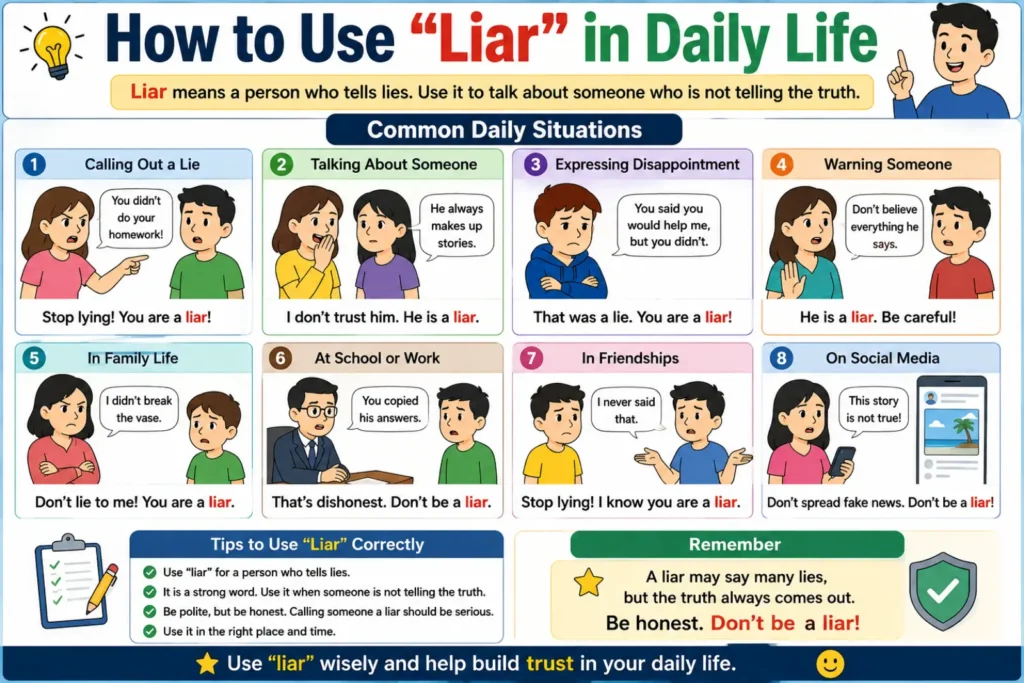
How to Use “Liar” in Daily Life
You may hear liar in many situations.
At school
- Don’t be a liar.
At work
- Nobody wants to hire a liar.
In relationships
- Trust disappears when someone becomes a liar.
In news stories
- Reporters may call someone a liar if they repeatedly make false claims, though this word is often used carefully because it can be considered defamatory if stated as fact without evidence.
The word appears in books, movies, and conversations every day.
Synonyms and Related Words
Using related words improves your vocabulary.
Synonyms for liar
- Deceiver
- Fibber
- Trickster
- Fraud
- Cheat
- Storyteller (in some contexts)
- Dishonest person
Related words
- Lie
- Falsehood
- Dishonest
- Truth
- Honest
- Deception
- Trust
- Mislead
These semantic keywords help readers understand the topic naturally.
Grammar Rules Behind Liar and Lier
English has two different verbs called lie.
Lie meaning “tell an untruth”
- Present: lie
- Past: lied
- Past participle: lied
Noun:
Liar
Lie meaning “rest”
- Present: lie
- Past: lay
- Past participle: lain
Rare noun:
Lier
Knowing the verb helps you choose the correct noun.
When Should You Use “Lier”?
Almost never.
Modern English speakers usually avoid it.
Instead of saying:
- He is a good lier.
People usually say:
- He likes to lie down.
- He is resting.
- He is reclining.
This sounds much more natural.
Expert Insight
Professional editors almost always correct lier to liar when someone means a dishonest person.
This mistake appears in school essays, blog posts, emails, and social media.
Understanding the difference improves your writing. It also makes your content look more professional.
Good writers always choose words based on meaning, not spelling alone.
If you write for websites or businesses, using the correct word builds trust with readers. That trust supports strong writing and better user experience.
Frequently Asked Questions
Is “lier” a real word?
Yes. It is a real word, but it means someone or something that lies down.
Which is correct, lier or liar?
If you mean someone who tells lies, liar is correct.
Why do people spell liar as lier?
They confuse the two verbs spelled lie.
Is “lier” used today?
It exists, but people rarely use it in modern English.
How do you remember the difference?
Remember:
- Liar tells lies.
- Lier lies down.
Is liar a noun?
Yes. Liar is a noun.
Can I use lier in formal writing?
Only if you truly mean someone who lies down. Otherwise, use liar.
Which spelling should students use?
Students almost always need liar.
Conclusion
The debate over lier or liar becomes simple once you know the meanings. A liar is a person who tells lies. A lier is someone or something that lies down, but this word is rare in modern English. Because the spellings look similar, many writers choose the wrong one. The easiest way to remember the difference is this: a liar tells lies, while a lier lies down. In almost every conversation, article, email, or school assignment, liar is the correct choice when talking about dishonesty. Using the right spelling makes your writing clearer and more professional. Keep this simple rule in mind, and you will avoid one of the most common English spelling mistakes.