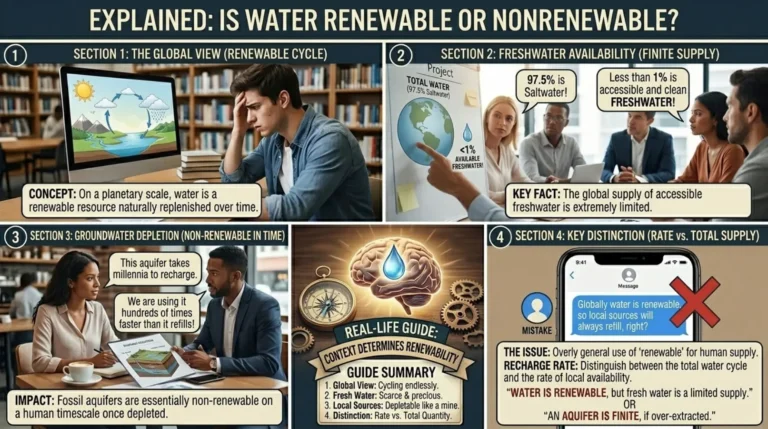
Is water renewable or nonrenewable? This question confuses many people. The simple answer is that water is generally a renewable resource.
Nature constantly recycles water through the water cycle. Rain, evaporation, and condensation help replace water supplies. However, some water sources can become depleted if people use them faster than nature can restore them.
Understanding this topic helps us protect water for future generations. It also explains why water conservation matters.
In this guide, you will learn what makes water renewable, when it can act like a nonrenewable resource, and how water affects daily life.
Quick Summary Box
- Water is mostly a renewable resource.
- The water cycle naturally replenishes water supplies.
- Groundwater can take years or centuries to refill.
- Overuse may create local water shortages.
- Freshwater is limited even though water is abundant.
- Water conservation helps maintain renewable supplies.
What Does “Renewable Resource” Mean?
A renewable resource replaces itself naturally over time.
Examples include:
- Water
- Sunlight
- Wind
- Trees
- Biomass
These resources return through natural processes.
What Does “Nonrenewable Resource” Mean?
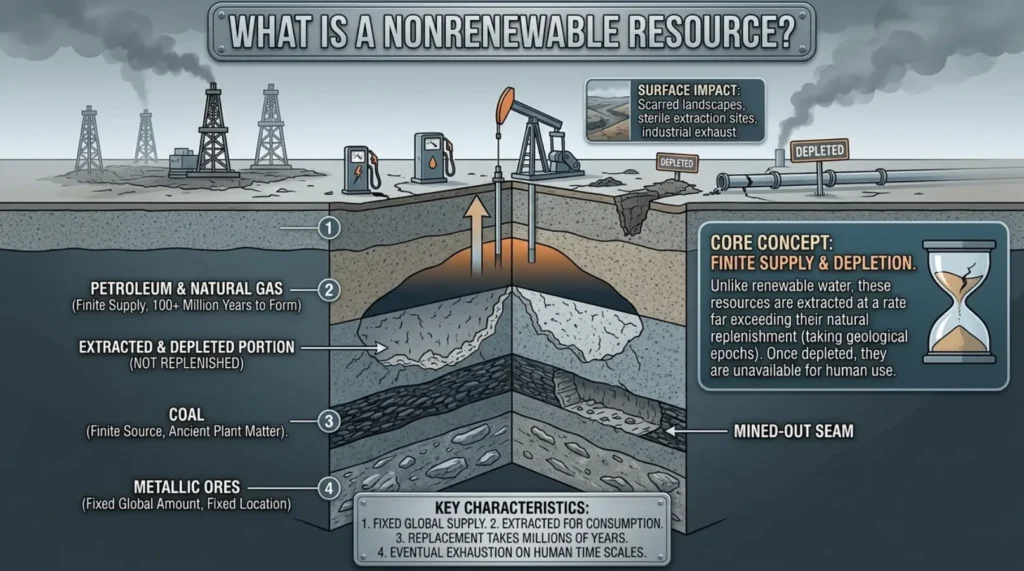
A nonrenewable resource forms very slowly.
Once people use it, replacement takes millions of years.
Examples include:
- Coal
- Oil
- Natural gas
- Uranium
These resources cannot quickly replenish themselves.
Is Water Renewable or Nonrenewable?
Water is generally considered a renewable resource.
The Earth’s water cycle keeps recycling water. Rainfall, rivers, lakes, and oceans continuously move water around the planet.
Therefore, water naturally renews itself.
However, some underground water sources refill very slowly. In those cases, water may behave like a nonrenewable resource.
Short Answer:
Water is renewable, but poor management can make supplies limited.
Why Is Water Considered Renewable?
Water renews because of the hydrologic cycle.
The process includes:
- Evaporation
- Condensation
- Cloud formation
- Rain and snowfall
- Runoff and groundwater recharge
This cycle repeats continuously.
Because of this process, Earth rarely loses water.
Understanding the Water Cycle in Simple Words
The sun heats water.
Water turns into vapor and rises into the atmosphere.
Clouds form as the vapor cools.
Rain returns water to Earth.
Water then flows into rivers, lakes, and oceans.
The cycle starts again.
This natural system keeps water renewable.
Can Water Become Nonrenewable?
Yes, in some situations.
People sometimes pump groundwater faster than nature can replace it.
This problem affects:
- Deep aquifers
- Desert regions
- Areas with drought
If replacement takes hundreds of years, the water behaves like a nonrenewable resource.
Renewable Water vs Nonrenewable Water Comparison Table
| Feature | Renewable Water | Nonrenewable Water |
|---|---|---|
| Replacement speed | Fast | Very slow |
| Source | Rain and water cycle | Ancient groundwater |
| Availability | Continuously replenished | Limited supply |
| Sustainability | High | Low |
| Example | Rivers and lakes | Fossil aquifers |
Real-Life Examples of Renewable Water
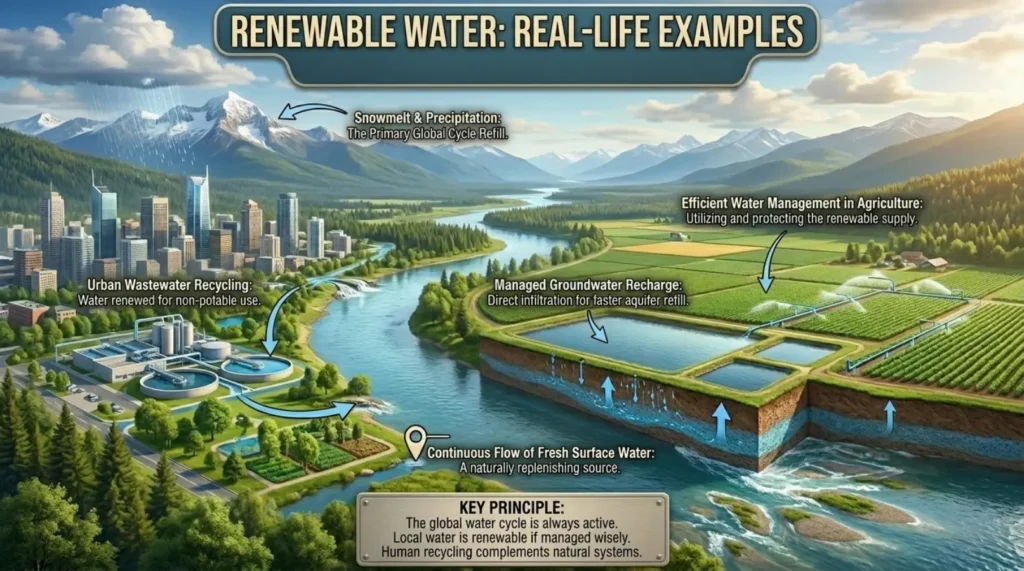
Rainwater
Rain constantly replenishes freshwater supplies.
Rivers
Flowing rivers receive water from rainfall and snowmelt.
Lakes
Many lakes refill naturally through streams and precipitation.
Reservoirs
Reservoirs collect renewable water from rivers and rainfall.
Examples of Water Acting Like a Nonrenewable Resource
Fossil Groundwater
Some underground water formed thousands of years ago.
Desert Aquifers
Dry climates often receive little recharge.
Overused Wells
Heavy pumping can empty groundwater reserves faster than nature replaces them.
Why Freshwater Matters
Most Earth water is salty.
Only a small amount is fresh and usable.
Freshwater supports:
- Drinking water
- Agriculture
- Industry
- Energy production
- Ecosystems
Protecting freshwater helps communities survive.
How Humans Affect Water Resources
Human activities influence water supplies.
Examples include:
- Pollution
- Overuse
- Deforestation
- Climate change
- Population growth
These factors can reduce available freshwater.
Water Conservation in Daily Life
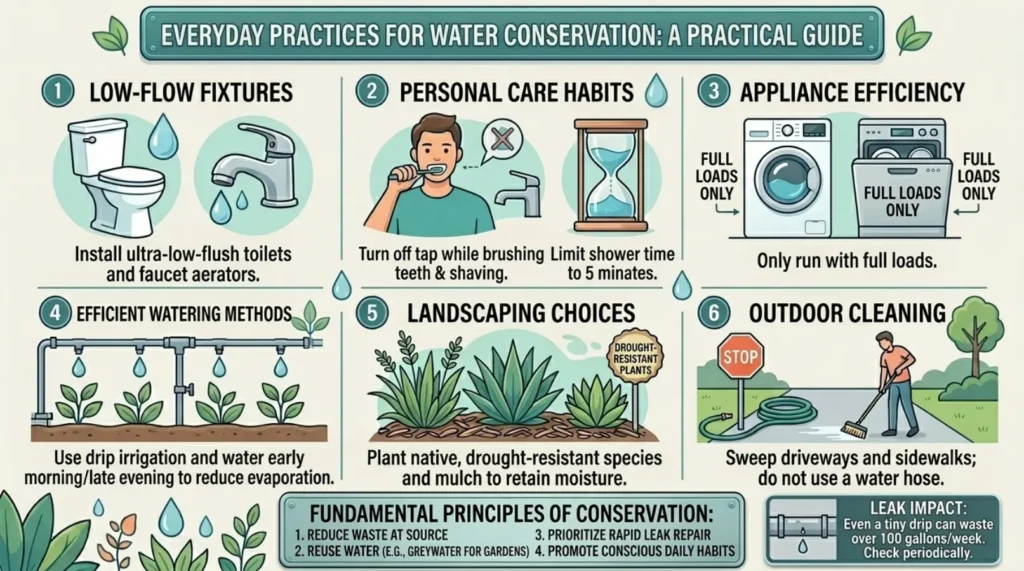
Everyone can help save water.
Simple actions include:
- Turn off running taps.
- Fix leaking pipes.
- Take shorter showers.
- Use water-efficient appliances.
- Collect rainwater for gardens.
Small habits create big results.
Common Mistakes People Make
Mistake 1: Thinking Water Is Unlimited
Water renews itself, but usable freshwater remains limited.
Mistake 2: Assuming Oceans Solve Water Problems
Ocean water contains salt and requires treatment.
Mistake 3: Ignoring Groundwater Depletion
Some underground water sources refill very slowly.
Mistake 4: Believing Water Never Runs Out
Local shortages can happen when demand exceeds supply.
Usage of Water in Daily Life
People use water every day for:
- Drinking
- Cooking
- Cleaning
- Farming
- Manufacturing
- Electricity generation
Water supports nearly every part of modern life.
Synonyms and Related Terms
Related Search Terms
- Is water a renewable resource?
- Renewable and nonrenewable resources
- Water cycle explained
- Freshwater resources
- Groundwater depletion
- Sustainable water use
LSI Keywords
- renewable resources examples
- freshwater conservation
- hydrologic cycle
- water sustainability
- natural resources
- groundwater recharge
Expert Insights
Environmental experts classify water as renewable because of the continuous water cycle.
However, renewable does not mean unlimited.
Proper water management protects future supplies.
Experts recommend:
- Conserving freshwater.
- Preventing pollution.
- Protecting watersheds.
- Using groundwater responsibly.
Sustainable practices help maintain healthy ecosystems.
Frequently Asked Questions
Is water renewable or nonrenewable?
Water is generally renewable because the water cycle continuously replenishes it.
Why is water considered renewable?
Rainfall and natural cycles replace water supplies over time.
Can water ever become nonrenewable?
Yes. Deep groundwater may refill very slowly.
Is groundwater renewable?
Some groundwater is renewable, while fossil aquifers may not replenish quickly.
Why is freshwater limited?
Most Earth water is salty and unsuitable for drinking.
Does climate change affect water resources?
Yes. Climate change can increase droughts and reduce freshwater availability.
Why should people conserve water?
Conservation protects supplies for future generations.
What are examples of renewable resources besides water?
Sunlight, wind, forests, and biomass are renewable resources.
Internal Linking Suggestions
Consider linking this article with:
- Renewable Resources Examples
- What Is the Water Cycle?
- Freshwater vs Saltwater Explained
- Groundwater Facts for Students
- Why Water Conservation Matters
Conclusion
Is water renewable or nonrenewable? In most cases, water is a renewable resource because nature constantly recycles it through the water cycle.
Still, renewable does not mean endless. Freshwater supplies remain limited, and overuse can create shortages. Some underground water sources also refill very slowly.
Understanding how water works helps people make smarter choices. Conserving water protects communities, ecosystems, and future generations.
The key takeaway is simple:
Water is renewable, but responsible use keeps it sustainable.