Is Indigo Blue or Purple? The Answer With Color Science Explained
Is indigo blue or purple? This question has confused people for many years. Some people see indigo as a deep blue color. Others believe it looks more purple. Both views have good reasons. Indigo sits …
Written by: George Hail
Published on:
Is indigo blue or purple? This question has confused people for many years. Some people see indigo as a deep blue color. Others believe it looks more purple. Both views have good reasons.
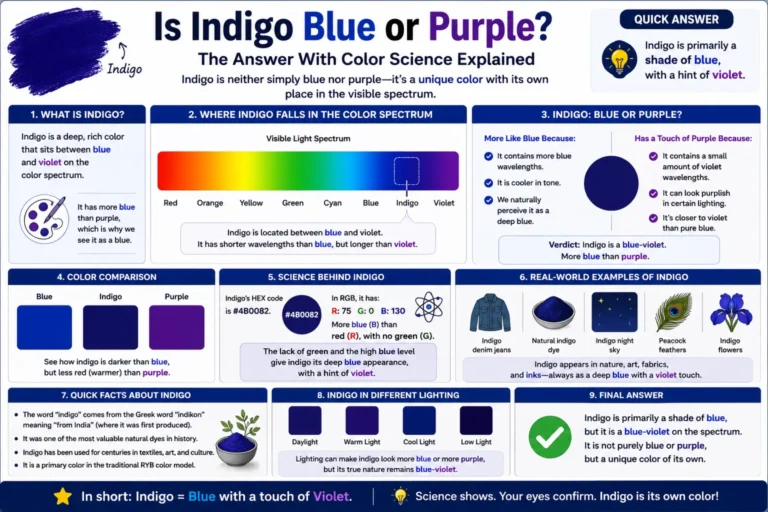
Indigo sits between blue and violet on the visible light spectrum. Because of this, people often disagree about its true color. Different cultures, screens, paints, and lighting also change how indigo appears.
In this guide, you will learn what indigo really is. You will discover why people see it differently. You will also compare indigo with blue, purple, and violet using simple examples. By the end, you will know why the answer is not as simple as it seems.
Quick Summary
Indigo is a color between blue and violet.
Most modern designers describe indigo as a deep blue with violet tones.
Some people classify indigo as purple because of its violet appearance.
Isaac Newton included indigo as one of the seven rainbow colors.
Lighting, materials, and digital screens can change how indigo looks.
Indigo is usually closer to blue than purple in modern color systems.
What Is Indigo?
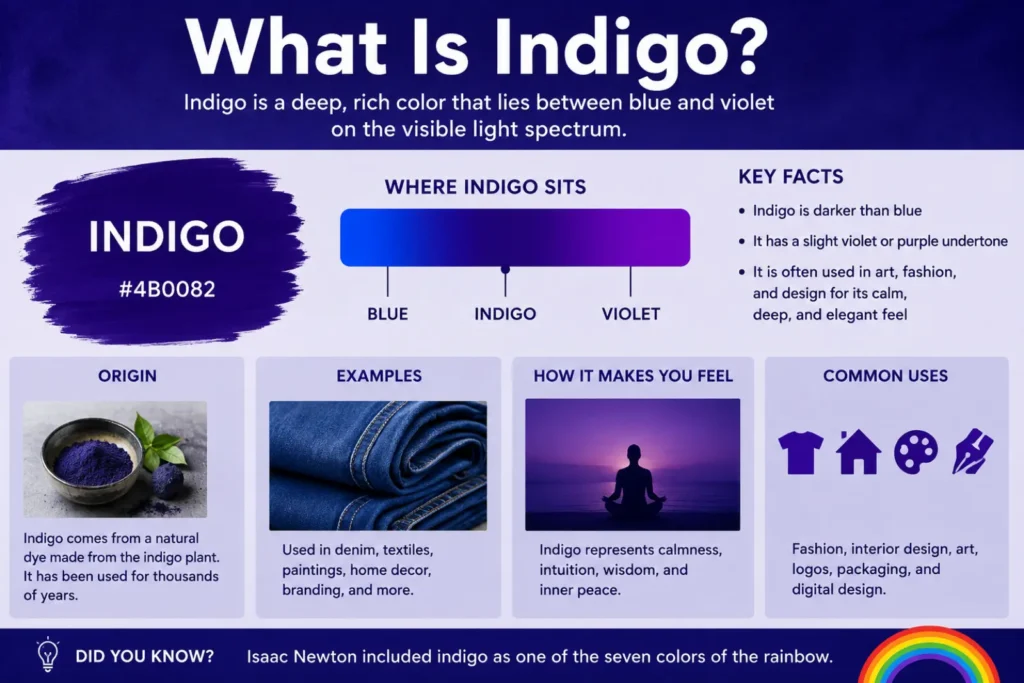
Indigo is a dark and rich color that falls between blue and violet.
It combines the calm feeling of blue with a slight hint of purple. This mix creates a deep, elegant shade that people often use in fashion, art, and design.
The name “indigo” comes from a natural dye. People made this dye from the indigo plant for thousands of years.
Simple Definition
Indigo is a deep blue color with violet or purple undertones that sits between blue and violet on the visible spectrum.
Is Indigo Blue or Purple?
The short answer is:
Indigo is mostly blue, but it has purple or violet tones.
Many color experts classify indigo as a dark blue.
However, artists sometimes describe it as blue-purple because it contains both color families.
So, both answers can be correct depending on the context.
In science, indigo lies between blue and violet.
In design, it usually appears as a deep blue.
In art, it often leans toward purple.
Why Do People Disagree About Indigo?
Several reasons create confusion.
1. Human Eyes See Colors Differently
Every person sees color a little differently.
Some eyes notice more blue.
Others notice more purple.
2. Different Screens
Phone screens, TVs, and computer monitors display colors differently.
The same indigo image may look blue on one screen and purple on another.
3. Lighting
Natural sunlight makes indigo appear brighter.
Indoor lights can make it look darker or more purple.
4. Different Color Systems
Painters, designers, printers, and scientists use different color models.
Each model defines indigo differently.
Indigo vs Blue vs Purple
Feature
Indigo
Blue
Purple
Main Tone
Deep blue with violet
Pure blue
Mix of red and blue
Position
Between blue and violet
Before indigo
After violet in many art systems
Appearance
Dark and rich
Bright to dark
Warm or cool
Common Use
Denim, branding, art
Sky, water, technology
Luxury, creativity, royalty
Closest Family
Blue
Blue
Purple
Quick Takeaway
Indigo belongs closer to blue than purple in most modern color guides.
Where Does Indigo Appear in the Rainbow?
Isaac Newton divided the rainbow into seven colors:
Red
Orange
Yellow
Green
Blue
Indigo
Violet
Today, many scientists simply describe the rainbow as moving from blue directly into violet.
Because of this, some educational materials leave out indigo.
That change adds even more confusion.
Real-Life Examples of Indigo
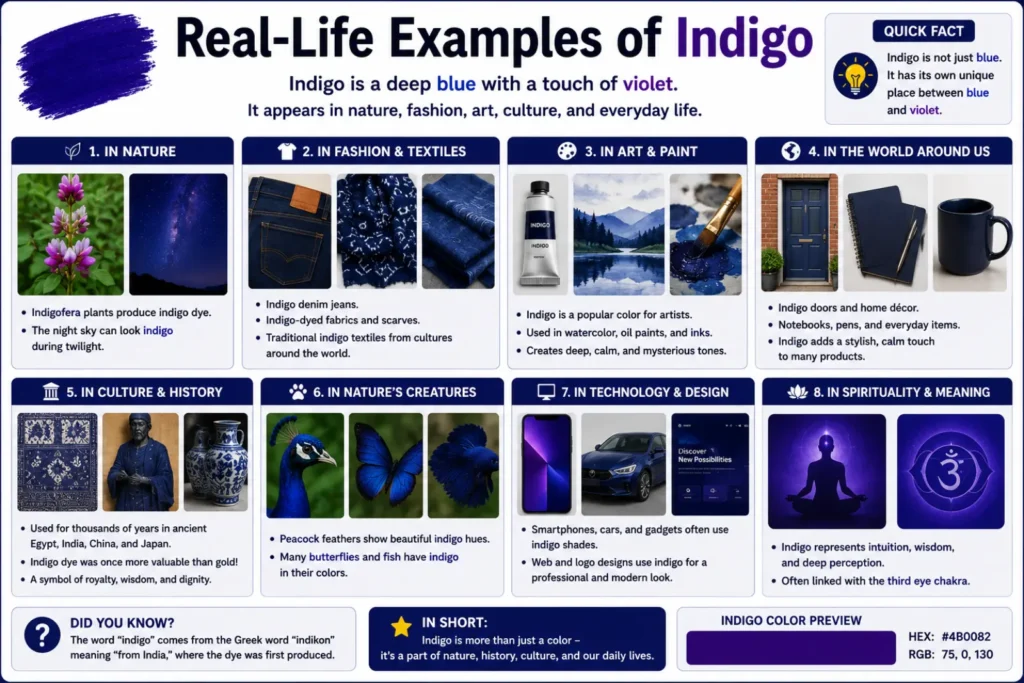
You probably see indigo more often than you think.
Denim Jeans
Classic blue jeans use indigo dye.
The color appears deep blue instead of bright purple.
Night Sky
The sky after sunset often looks indigo.
It appears darker than blue but lighter than black.
Company Branding
Many businesses choose indigo because it feels trustworthy and modern.
Art
Painters use indigo to create shadows and depth.
Indigo in Fashion and Interior Design
Indigo remains one of the most popular deep colors.
Fashion
People wear indigo because it:
Matches many colors
Looks elegant
Works in every season
Feels timeless
Home Design
Interior designers use indigo for:
Accent walls
Sofas
Curtains
Decorative pillows
Artwork
It creates a calm and sophisticated room.
Common Mistakes About Indigo
Many people misunderstand this color.
Mistake 1
Thinking indigo and violet are the same.
They are different colors.
Mistake 2
Believing indigo is always purple.
Most color systems classify it as a dark blue.
Mistake 3
Assuming every screen shows the same indigo.
Display settings affect color accuracy.
Mistake 4
Confusing navy blue with indigo.
Navy contains fewer violet tones.
Tips to Identify Indigo
Use these simple tips.
Look for a deep blue base.
Notice slight violet hints.
Compare it with navy blue.
View it under natural light.
Check color codes if using digital design.
These steps make identification much easier.
Indigo in Daily Life
Indigo appears in many everyday items.
Examples include:
Blue jeans
School uniforms
Ink
Home decorations
Luxury packaging
Book covers
Sports uniforms
Logos
Digital graphics
Most people use indigo without realizing it.
Synonyms and Related Keywords
These related terms help describe indigo.
Synonyms
Deep blue
Blue-violet
Dark blue
Midnight blue
Rich blue
Related Search Terms
Is indigo blue or violet
Indigo color meaning
Indigo vs violet
Indigo vs navy blue
What color is indigo
Indigo color code
Indigo blue shade
Difference between blue and indigo
Indigo color psychology
Indigo in the rainbow
Expert Insight
Color experts generally place indigo closer to blue than purple.
However, perception changes because people see color differently.
Digital displays also affect color accuracy.
Designers often rely on color codes instead of visual judgment. This keeps branding consistent across websites, print materials, and products.
Understanding indigo helps artists, marketers, educators, and designers communicate colors more accurately.
That is why knowing the difference matters.
Frequently Asked Questions
Is indigo blue or purple?
Indigo is mainly blue with violet or purple undertones.
Why does indigo sometimes look purple?
Lighting, screens, and human vision change how people see the color.
Is indigo darker than blue?
Usually, yes. Indigo is deeper and darker than standard blue.
Is indigo part of the rainbow?
Yes. Isaac Newton listed indigo as one of the seven rainbow colors.
What color is closest to indigo?
Deep blue is usually the closest color.
Is indigo the same as navy blue?
No. Navy is darker and has fewer violet tones.
Why do artists call indigo blue-purple?
Artists focus on color mixing. Indigo contains both blue and violet characteristics.
What is the hex code for indigo?
A common digital indigo color is #4B0082, although different shades exist.
Featured Snippet Answer
Is indigo blue or purple?
Indigo is a deep blue color with violet undertones. It sits between blue and violet on the visible light spectrum. Most modern color systems classify indigo as blue, while some artists describe it as blue-purple because it contains elements of both colors.
Conclusion
So, is indigo blue or purple? The best answer is that indigo is primarily a deep blue with noticeable violet tones. Its position between blue and violet explains why opinions differ. Scientists, artists, designers, and everyday people may describe it differently based on their work and how they see color. Modern color systems usually place indigo closer to blue, while art and design often recognize its purple influence. Lighting, screens, and materials can also change its appearance. Understanding these differences helps you identify indigo more accurately in clothing, design, art, and nature. The next time someone asks whether indigo is blue or purple, you can confidently explain that it beautifully combines characteristics of both.
George Hail is a language and content writer passionate about creating simple, clear, and helpful educational content. He specializes in word meanings, comparisons, grammar insights, and easy-to-understand explanations for everyday readers. Through his writing, he helps people improve their understanding of English with practical and reader-friendly content.
George Hail is a language and content writer passionate about creating simple, clear, and helpful educational content. He specializes in word meanings, comparisons, grammar insights, and easy-to-understand explanations for everyday readers. Through his writing, he helps people improve their understanding of English with practical and reader-friendly content.