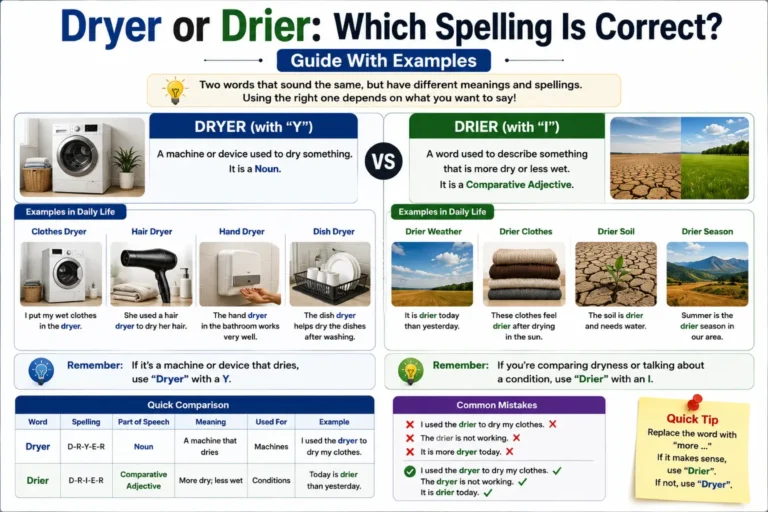
Dryer or drier can look confusing, but the difference is easy to understand. Both words come from the word dry. However, they serve different purposes in a sentence.
Drier usually compares two things. It means “more dry.” For example, “This towel is drier than that one.”
Dryer usually names something that makes things dry. A clothes dryer is a common example.
The spelling can also depend on the meaning you want. That small difference can change your whole sentence.
In this guide, you will learn when to use dryer and drier. You will also see simple examples and common mistakes.
By the end, choosing the right spelling should feel much easier.
Quick Summary: Dryer or Drier?
- Drier usually means “more dry.”
- Dryer usually means something that dries another thing.
- Use drier when comparing dryness.
- Use dryer for machines or objects that dry things.
- “The air is drier today” is correct.
- “I put my clothes in the dryer” is correct.
- Both spellings are real English words.
- The correct choice depends on the meaning.
What Does “Drier” Mean?
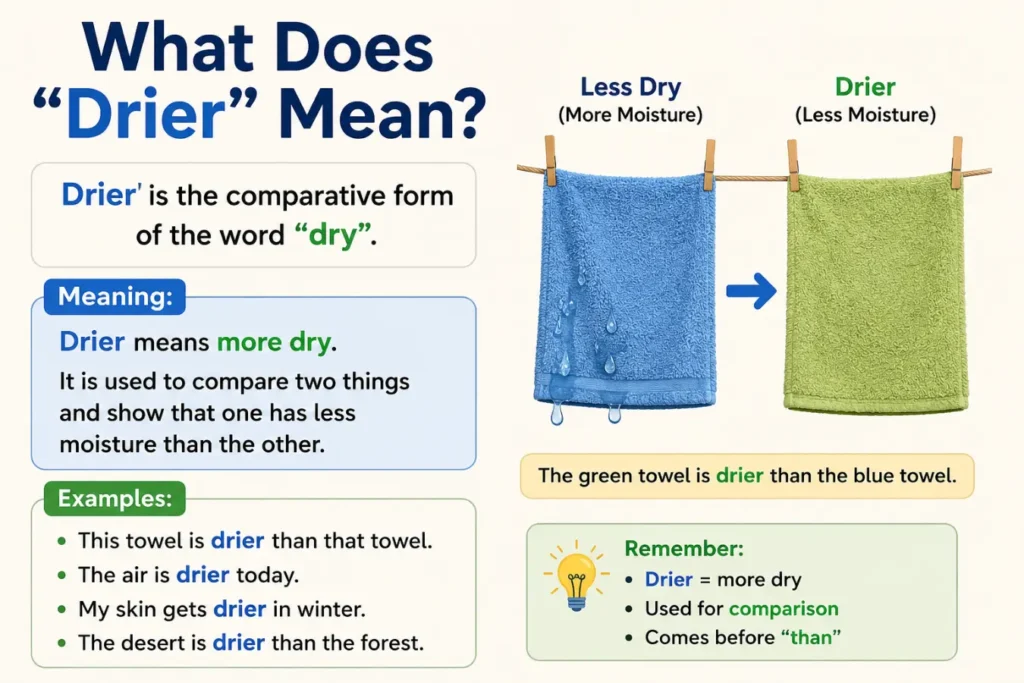
Drier is the comparative form of dry.
It means that something has less moisture than something else.
For example:
- This towel is drier than the other towel.
- The weather feels drier today.
- My skin is drier during winter.
- This room is drier than the kitchen.
Think of drier as “more dry.”
The word usually compares two things.
You can often test the word by adding “than.”
For example:
This shirt is drier than that shirt.
Here, drier describes the shirt’s condition.
It does not describe a machine.
What Does “Dryer” Mean?
Dryer usually refers to something that makes things dry.
A common example is a clothes dryer.
A dryer uses heat, air, or movement to remove moisture from clothes.
For example:
- I put the wet clothes in the dryer.
- The dryer stopped working.
- We bought a new clothes dryer.
- Please clean the dryer filter.
In these sentences, dryer refers to an object.
The object performs the action of drying.
The word can also describe other drying devices.
For example, a hair dryer dries wet hair.
Dryer vs Drier: What Is the Difference?
The easiest way to remember the difference is simple.
Drier describes something. Dryer usually does something.
| Word | Main meaning | Example |
|---|---|---|
| Drier | More dry | This towel is drier. |
| Dryer | Something that dries | The dryer is running. |
| Drier | A comparison | Today is drier than yesterday. |
| Dryer | A drying machine | The clothes are in the dryer. |
This distinction works in most everyday situations.
However, context always matters.
Look at the role of the word in your sentence.
If you compare dryness, choose drier.
If you name a drying device, choose dryer.
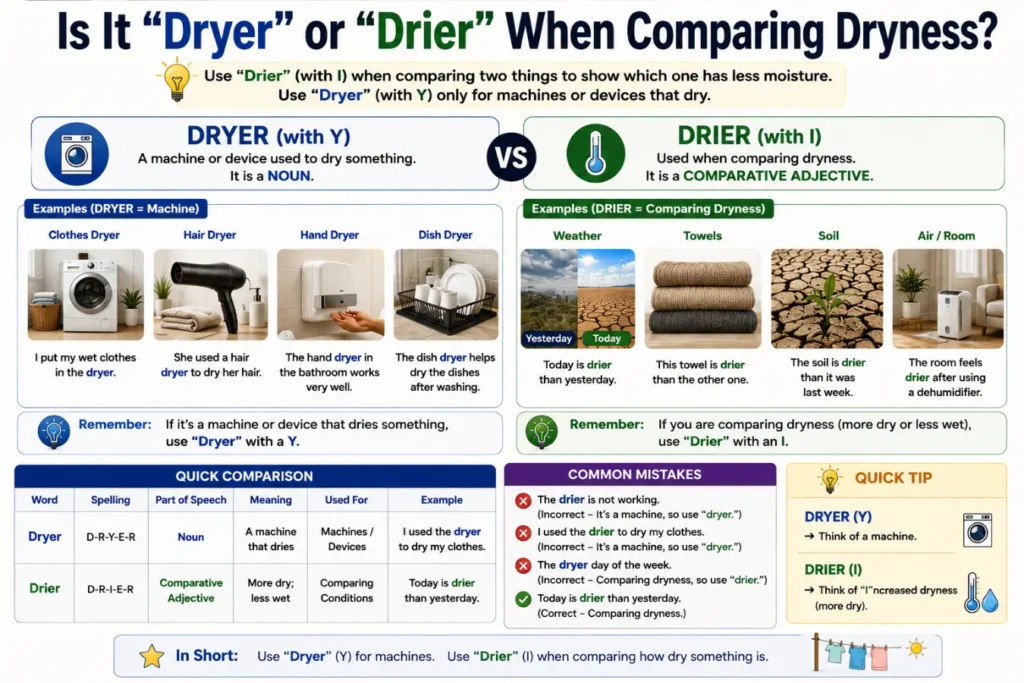
Is It “Dryer” or “Drier” When Comparing Dryness?
Use drier when you compare dryness.
The basic pattern looks like this:
Subject + is/feels + drier + than + comparison
Examples include:
- This towel is drier than that towel.
- The desert is drier than the forest.
- My hands feel drier in winter.
- The second room is drier than the first.
- Today’s air feels drier than yesterday’s.
Here, drier means more dry.
You can replace drier with “more dry” to check the meaning.
For example:
This towel is more dry than that towel.
The sentence sounds less natural, but the meaning stays clear.
Therefore, drier works as the normal comparative form.
When Should You Use “Dryer”?
Use dryer when you mean a thing that dries something.
This use often appears with household appliances.
Common examples include:
- clothes dryer
- hair dryer
- hand dryer
- tumble dryer
- electric dryer
For example:
My clothes are in the dryer.
The dryer does the drying.
You can also use dryer as a noun in other contexts.
For example:
The hand dryer is broken.
Again, the machine performs the drying action.
This makes dryer easy to remember.
Think of the -er ending as a thing that performs an action.
Dryer or Drier: Real-Life Examples
Real-life examples make the difference easier to remember.
Example 1: Clothes
I put my wet clothes in the dryer.
Here, dryer means the machine.
Now compare two clothes items:
This shirt is drier than that shirt.
Here, drier means more dry.
Example 2: Hair
I need to buy a new hair dryer.
The device dries hair.
But:
My hair feels drier after swimming.
Here, drier describes the hair.
Example 3: Weather
The air is drier today.
The sentence compares today’s moisture level with another time.
Therefore, drier is correct.
You would not normally say:
The air is dryer today.
That spelling suggests a drying device.
How to Remember the Difference
Use this simple memory trick:
Drier = more dry.
Dryer = a thing that dries.
Ask yourself one question:
Am I comparing dryness, or am I naming something?
If you compare dryness, use drier.
If you name a drying device, use dryer.
Here are two quick examples:
My clothes are drier now.
This compares their dryness.
My clothes are in the dryer.
This identifies the machine.
You can also remember the phrase:
“The dryer makes clothes drier.”
This sentence uses both words correctly.
Common Mistakes With Dryer and Drier
Many writers confuse these words because they look almost identical.
Here are common mistakes to avoid.
Mistake 1: Using “dryer” for a comparison
Incorrect:
My towel is dryer than yours.
Better:
My towel is drier than yours.
The sentence compares two towels.
Therefore, drier fits better.
Mistake 2: Using “drier” for an appliance
Incorrect:
Put the clothes in the drier.
Better:
Put the clothes in the dryer.
The sentence refers to the machine.
Therefore, dryer is correct.
Mistake 3: Assuming one spelling is always correct
Both words are correct.
Their meanings simply differ.
The context determines the correct spelling.
Mistake 4: Ignoring sentence meaning
Do not choose a word based only on appearance.
Read the entire sentence first.
Then decide what the word means.
Dryer or Drier in American and British English
English spelling can vary between regions.
The word dryer commonly refers to drying machines.
For example:
I need a new clothes dryer.
In British English, tumble dryer is also very common for a clothes-drying machine.
The word drier still works as the comparative form of dry.
For example:
The weather is drier this year.
The key distinction remains useful across English varieties.
However, regional vocabulary can change the name of an appliance.
For example, Americans often say clothes dryer.
British speakers commonly say tumble dryer.
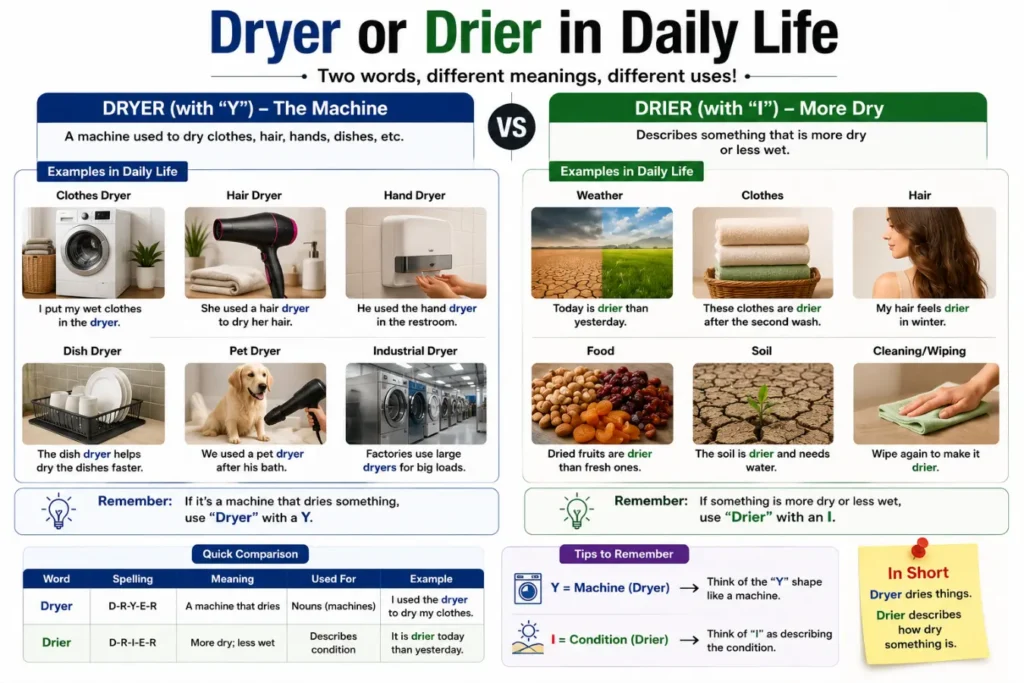
Dryer or Drier in Daily Life
You will see these words in many everyday situations.
At home
The dryer is full of clothes.
In the bathroom
The hand dryer is not working.
In personal care
Where is my hair dryer?
When discussing weather
The air feels drier today.
When discussing clothes
These clothes are drier now.
discussing skin
My skin feels drier in cold weather.
These examples show why context matters.
The spelling changes because the meaning changes.
Synonyms and Related Words
Learning related words can improve your vocabulary and SEO relevance.
Words related to “drier”
- more dry
- less wet
- less moist
- dehydrated
- arid
- moisture-free
Some words have different meanings, so do not treat them as exact replacements.
For example, arid often describes a very dry climate or environment.
Words related to “dryer”
- drying machine
- clothes dryer
- hair dryer
- hand dryer
- tumble dryer
- drying appliance
These terms usually describe equipment that removes moisture.
Using related terms naturally can also help readers understand the topic.
Expert Insights: Why the Difference Matters
Clear word choice improves both communication and credibility.
A spelling mistake can make an otherwise strong sentence confusing.
The difference between dryer and drier also shows how English word endings work.
The ending -er can create a noun for something that performs an action.
For example:
- teach → teacher
- drive → driver
- bake → baker
- dry → dryer
Meanwhile, drier works as a comparative adjective.
It follows the pattern:
dry → drier → driest
This pattern means:
- dry = basic form
- drier = more dry
- driest = most dry
Understanding the word’s grammatical role makes the spelling easier.
Quick Grammar Rule: Dry, Drier, and Driest
The word dry has three common adjective forms.
| Form | Meaning | Example |
| Dry | Normal degree | The towel is dry. |
| Drier | More dry | This towel is drier. |
| Driest | Most dry | This is the driest towel. |
Remember that dryer does not fit this adjective pattern.
Dryer normally works as a noun.
For example:
The dryer is broken.
This distinction provides a simple grammar test.
If you need a comparison, choose drier.
If you need the name of a machine, choose dryer.
Tips and Tricks for Choosing the Right Word
Use these quick checks when writing.
Tip 1: Look for “than”
If your sentence contains than, you may need drier.
This room is drier than the other room.
Tip 2: Look for a machine
If the word names an appliance, use dryer.
The dryer needs cleaning.
Tip 3: Ask what the word does
Does the word describe something?
Use drier for a comparison.
Does the word name something?
Use dryer for a drying device.
Tip 4: Use the memory sentence
Remember:
The dryer makes clothes drier.
This one sentence captures the entire difference.
Frequently Asked Questions About Dryer or Drier
Is “drier” or “dryer” correct?
Both are correct words. Drier means more dry, while dryer usually means something that dries.
Is it “clothes dryer” or “clothes drier”?
Clothes dryer is the standard spelling for the appliance. It refers to a machine that dries clothes.
Is “drier” the comparative form of “dry”?
Yes. Drier is the standard comparative form of dry.
For example:
This towel is drier than that one.
Is “dryer” a real English word?
Yes. Dryer is a standard English noun. It often describes a machine that removes moisture.
Which is correct: “hair dryer” or “hair drier”?
Hair dryer is the common spelling for the appliance. It refers to a device that dries hair.
Why do people confuse dryer and drier?
The words look and sound similar. Both relate to the word dry, but they have different grammatical roles.
How do you remember dryer vs drier?
Remember this sentence: “The dryer makes clothes drier.” The dryer is the machine, and drier means more dry.
What is the difference between dry, drier, and dryer?
Dry describes normal dryness. Drier means more dry. Dryer usually names something that dries.
Conclusion: Dryer or Drier?
Choosing between dryer or drier becomes simple once you understand the meaning.
Use drier when you mean more dry. It usually compares the dryness of two things.
For example:
This towel is drier than the other one.
Use dryer when you mean a thing that dries something. A clothes dryer and hair dryer are common examples.
For example:
The clothes are inside the dryer.
Both words are correct English words. They simply perform different jobs.
The easiest rule is worth remembering:
Drier means more dry. Dryer means something that dries.
When you see either spelling, check the sentence’s meaning first. That quick check will help you choose the right word every time.