
Cat or dog is one of the most common questions people ask before getting a pet. Both animals make wonderful companions. However, they have different needs, personalities, and care requirements.
Choosing the right pet depends on your lifestyle. Some people enjoy active outdoor adventures. Others prefer a calm friend at home. Your schedule, budget, and living space also matter.
This guide explains the differences between cats and dogs in simple words. You will learn about their behavior, care, costs, and daily life. You will also see real-life examples and expert tips.
By the end, you will know whether a cat or dog fits your life best.
Quick Summary Box
- Cat or dog depends on your lifestyle and daily routine.
- Cats are usually more independent.
- Dogs need more time, exercise, and attention.
- Both pets provide love, friendship, and emotional support.
- Consider your budget, home size, and schedule before choosing.
- Both animals need proper food, healthcare, and regular checkups.
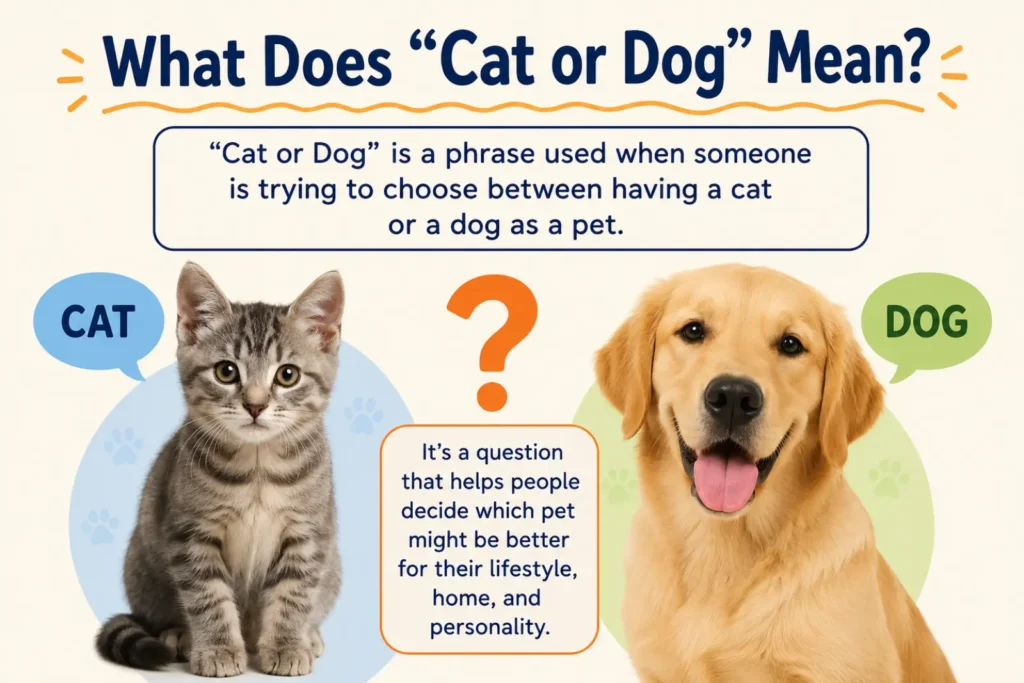
What Does “Cat or Dog” Mean?
The phrase cat or dog refers to choosing between the world’s two most popular pets.
Cats and dogs both offer companionship. However, they behave differently. They also need different levels of care.
People often compare them before adopting a pet.
Why People Compare Cats and Dogs
Many families want a pet. They often wonder which animal fits their lifestyle.
A cat may suit busy people because cats spend more time alone.
A dog may suit active families because dogs enjoy walks, games, and outdoor activities.
Your daily routine should guide your choice.
Cat vs Dog Comparison Table
| Feature | Cat | Dog |
|---|---|---|
| Independence | High | Low |
| Exercise Needs | Low | High |
| Daily Attention | Moderate | High |
| Training | Easier to manage alone | Needs regular training |
| Grooming | Depends on breed | Depends on breed |
| Noise Level | Usually quiet | Can bark often |
| Apartment Friendly | Very good | Depends on breed |
| Travel Needs | Less frequent | More planning required |
| Lifespan | Often 12–20 years | Usually 10–15 years |
| Best For | Busy people | Active families |
Understanding Cat Personalities
Cats are curious and independent animals.
Most cats enjoy quiet spaces. They often sleep many hours each day.
Many cats like affection. However, they usually decide when they want attention.
Cats also clean themselves regularly.
Common cat traits include:
- Independent
- Quiet
- Curious
- Gentle
- Playful
- Clean
Understanding Dog Personalities
Dogs are loyal and social animals.
Most dogs love spending time with people. They often enjoy walks, games, and training.
Dogs usually need more attention than cats.
Many breeds also protect their families.
Common dog traits include:
- Friendly
- Loyal
- Energetic
- Protective
- Playful
- Social
Daily Care Requirements
Both pets need proper care every day.
Cat Care
- Fresh food
- Clean water
- Litter box cleaning
- Playtime
- Veterinary visits
- Scratching posts
Dog Care
- Healthy food
- Fresh water
- Daily walks
- Exercise
- Training
- Grooming
- Veterinary care
Dogs usually require more daily time than cats.
Cost of Owning a Cat or Dog
Owning any pet costs money.
Common expenses include:
- Food
- Toys
- Veterinary care
- Vaccinations
- Grooming
- Pet insurance
- Beds
- Treats
Dogs often cost more because they eat more food and need additional training and exercise equipment.
Always plan your budget before adopting.
Real-Life Examples
Example 1: Busy Professional
Sarah works long hours.
She adopted a cat because it stays comfortable alone for several hours.
The cat enjoys evening playtime when Sarah returns home.
Example 2: Active Family
James has three children.
They adopted a dog because everyone enjoys walking, hiking, and playing outdoors.
The dog became an active family companion.
Benefits of Choosing a Cat
Cats offer many advantages.
Some benefits include:
- Lower daily maintenance
- Quiet behavior
- Good apartment pets
- Independent personality
- Smaller food costs
- Less outdoor exercise
Cats often fit people with busy schedules.
Benefits of Choosing a Dog
Dogs also provide many benefits.
These include:
- Strong companionship
- Excellent exercise partners
- Great family pets
- Easy to train
- Protective nature
- High social interaction
Dogs often encourage healthy daily exercise.
Common Mistakes When Choosing Between a Cat or Dog
Many new owners make avoidable mistakes.
Common mistakes include:
- Choosing only because a pet looks cute.
- Ignoring long-term costs.
- Forgetting daily care needs.
- Not researching breeds.
- Buying without considering work schedules.
- Skipping training and socialization.
- Ignoring veterinary care.
Research before making a decision.
Tips for Choosing the Right Pet
These simple tips help you choose wisely.
- Think about your daily schedule.
- Consider your living space.
- Calculate your monthly budget.
- Meet different animals first.
- Adopt from trusted shelters.
- Research breeds carefully.
- Prepare your home before bringing a pet home.
The right choice depends on your lifestyle.
How Cats and Dogs Improve Daily Life
Pets improve everyday living in many ways.
They can:
- Reduce loneliness.
- Encourage routines.
- Provide emotional support.
- Teach children responsibility.
- Increase happiness.
- Build stronger family bonds.
Both cats and dogs can improve mental well-being when cared for responsibly.

Synonyms and Related Keywords
Synonyms
- Pet choice
- House pet
- Family pet
- Companion animal
- Domestic pet
Related Search Terms
- Cat vs dog
- Should I get a cat or dog
- Best pet for beginners
- Cat or dog for apartments
- Dog or cat for families
- Easy pets to care for
- Choosing your first pet
- Best companion animal
Featured Snippet: Cat or Dog
Cat or dog depends on your lifestyle. Cats are independent and need less daily attention. Dogs are social and require more exercise and interaction. Choose a cat if you prefer a quieter, lower-maintenance pet. Choose a dog if you enjoy outdoor activities and want a highly interactive companion.
Expert Insights
Experts recommend choosing a pet based on lifestyle rather than appearance.
A pet is a long-term commitment.
Before adopting:
- Understand the animal’s needs.
- Plan for veterinary expenses.
- Provide daily enrichment.
- Spend quality time together.
- Consider adoption from a shelter.
Responsible ownership leads to healthier and happier pets.
Frequently Asked Questions
Is a cat easier than a dog?
Yes. Cats usually need less daily attention and exercise.
Which pet costs less?
Cats often cost less because they generally eat less and require fewer daily activities.
Are dogs more loyal than cats?
Dogs usually show loyalty more openly. Cats also form strong bonds with their owners.
Which pet is better for apartments?
Cats usually adapt better to smaller living spaces.
Should beginners get a cat or dog?
Many beginners choose cats because they require less daily maintenance. However, some calm dog breeds also suit first-time owners.
Which pet needs more exercise?
Dogs need regular walks and physical activity. Cats usually exercise indoors through play.
Can cats and dogs live together?
Yes. Many cats and dogs live happily together with proper introductions and patience.
Which pet lives longer?
Many cats live longer than dogs, although lifespan depends on breed, health, and care.
Conclusion
Choosing a cat or dog is a personal decision. There is no single best answer for everyone. Cats offer independence, quiet companionship, and lower daily maintenance. Dogs provide loyalty, energy, and interactive friendship. Think about your schedule, home, budget, and activity level before deciding. A pet can become a beloved family member for many years, so careful planning matters. Whether you choose a cat or a dog, responsible care, regular veterinary visits, healthy food, and plenty of love will help your pet thrive. When your lifestyle matches your pet’s needs, both you and your new companion can enjoy a happy and rewarding life together.