Boujee or Bougie: Difference and Complete Meaning Guide
Boujee or bougie are two popular slang terms that many people use today. You may see them on social media, hear them in songs, or read them in online posts. However, many people wonder if …
Written by: Victoria Hughes
Published on:
Boujee or bougie are two popular slang terms that many people use today. You may see them on social media, hear them in songs, or read them in online posts. However, many people wonder if these words mean the same thing.
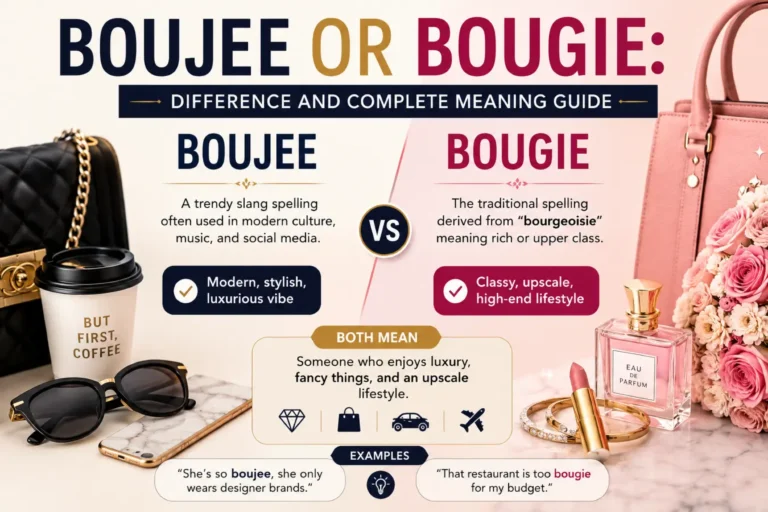
The truth is that boujee and bougie are closely related, but they can carry slightly different meanings depending on the context. Both words describe a lifestyle that appears luxurious, stylish, or expensive.
In this guide, you will learn the meaning of boujee and bougie, their origins, key differences, real-life examples, and how to use them correctly. By the end, you will know exactly which term fits your situation.
Quick Summary Box
Bougie means stylish, fancy, or associated with luxury.
Boujee is a modern slang version of bougie.
Both words describe expensive tastes or upscale lifestyles.
Bougie often refers to appearing wealthy.
Boujee became popular through music and social media.
Many people use the words interchangeably.
Context determines the exact meaning.
What Does Boujee or Bougie Mean?
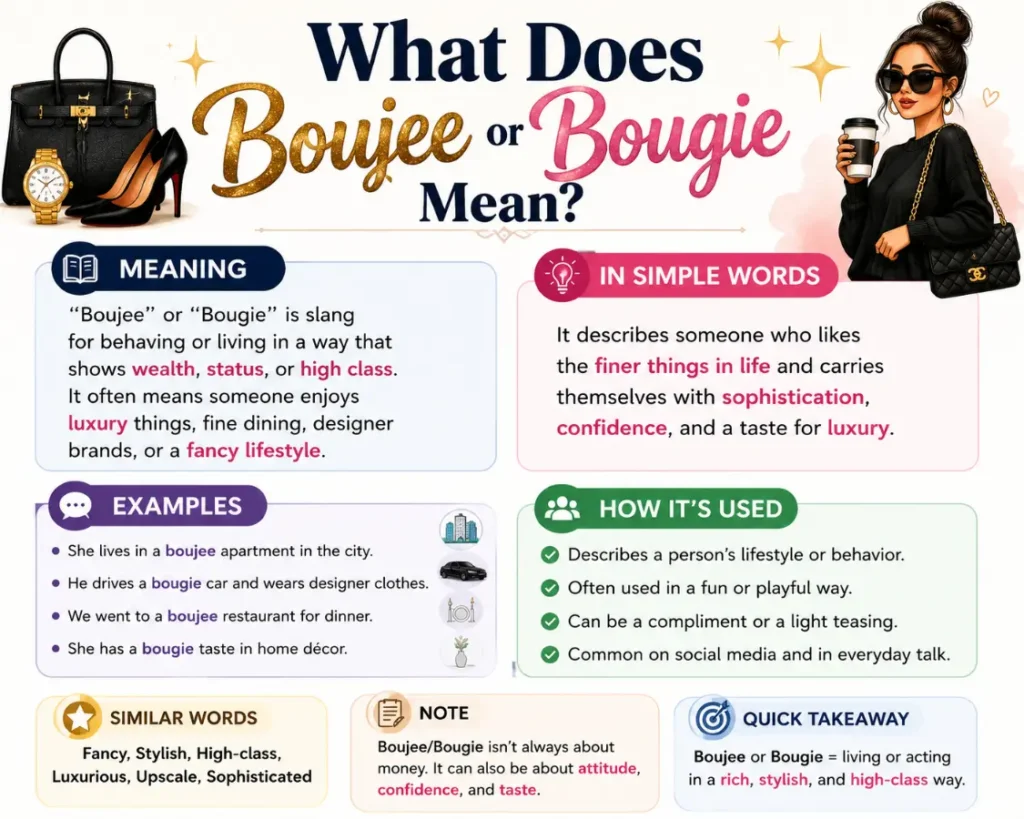
The terms boujee and bougie describe someone who enjoys luxury, fashion, expensive products, or an upscale lifestyle.
People often use these words when talking about:
Designer clothing
Luxury vacations
Expensive restaurants
Premium brands
High-end experiences
Example:
“She only drinks imported coffee and stays at luxury resorts. She’s so bougie.”
The Origin of Bougie and Boujee
The word bougie comes from the French word bourgeoisie. Historically, bourgeoisie referred to the middle and upper social classes.
Over time, people shortened the word to “bougie.” It became slang for someone who enjoys luxury or acts wealthy.
The spelling boujee became popular in modern culture, especially through hip-hop music and social media trends.
Today, both versions appear frequently online.
Boujee vs Bougie: Are They Different?
Many people use the terms interchangeably. However, subtle differences exist.
Feature
Bougie
Boujee
Origin
Derived from bourgeoisie
Modern slang variation
Tone
Can be playful or critical
Often trendy and fashionable
Usage
More traditional slang
Popular in music and social media
Meaning
Fancy or upscale
Luxurious and stylish
Popularity
Common in everyday speech
Common among younger audiences
Simple Answer
Bougie = fancy or upscale.
Boujee = trendy version of bougie.
In most conversations, either word works.
How People Use Boujee or Bougie in Daily Life
People often use these words casually.
Examples:
“This hotel is so bougie.”
“He drives a boujee sports car.”
“That brunch place feels very bougie.”
“She has a boujee fashion style.”
“Their wedding looked incredibly bougie.”
The words usually describe luxury, style, or expensive tastes.
Real-Life Examples of Bougie Behavior
Here are common examples.
Fashion
Buying designer handbags, luxury watches, or premium clothing.
Food
Choosing expensive restaurants or gourmet meals.
Travel
Staying in luxury resorts instead of budget hotels.
Home Decor
Decorating with premium furniture and designer pieces.
Lifestyle
Preferring high-end brands for everyday products.
When Bougie Is a Compliment
Sometimes people use bougie positively.
Examples:
Having refined taste.
Appreciating quality products.
Enjoying elegant experiences.
Living a stylish lifestyle.
In this case, bougie suggests sophistication and good taste.
When Bougie Is Used Negatively
At times, the word carries criticism.
People may use it when someone:
Shows off wealth.
Acts superior to others.
Buys expensive things only for status.
Looks down on simpler choices.
Example:
“He suddenly became bougie after getting a promotion.”
The meaning depends on tone and context.
Common Mistakes People Make
Thinking Boujee and Bougie Are Completely Different
They are very similar. Most people use them the same way.
Assuming the Words Always Mean Rich
Someone can act bougie without being wealthy.
Using Them in Formal Writing
These words are slang. Avoid them in professional documents.
Ignoring Context
The tone can be positive, neutral, or negative.
Synonyms for Boujee or Bougie
Using related terms can improve communication.
Common Synonyms
Fancy
Upscale
Luxurious
High-end
Elegant
Stylish
Sophisticated
Premium
Glamorous
Classy
Related LSI Keywords
Luxury lifestyle
Expensive taste
Rich aesthetic
Designer fashion
Premium living
Upscale culture
Affluent lifestyle
Trendy luxury
High-class lifestyle
Luxury brands
Signs Someone Might Be Considered Bougie
Not everyone agrees on what qualifies as bougie. However, these traits often appear.
Prefers premium brands
Enjoys luxury travel
Loves designer fashion
Chooses upscale restaurants
Follows luxury lifestyle trends
Values aesthetics and presentation
Invests in quality products
These habits alone do not make someone wealthy. They simply reflect certain preferences.
Why Boujee Became So Popular
Several factors increased its popularity.
Social Media
Platforms helped spread the term quickly.
Celebrity Influence
Celebrities often showcase luxury lifestyles.
Music Culture
Popular songs introduced the spelling “boujee” to larger audiences.
Lifestyle Trends
People enjoy sharing travel, fashion, and luxury experiences online.
As a result, the term became part of everyday internet language.
Expert Insight: Why Understanding Boujee or Bougie Matters
Language evolves constantly. Slang words often reveal cultural trends and social values.
Understanding terms like bougie and boujee helps you:
Communicate naturally.
Understand online conversations.
Follow social media trends.
Interpret modern pop culture.
Connect with younger audiences.
From an SEO and content perspective, these terms generate significant search interest because people want quick definitions and usage examples.
How to Use Boujee or Bougie Correctly
Follow these simple tips.
Use Bougie For Everyday Conversation
Example:
“That coffee shop feels really bougie.”
Use Boujee in Trendy or Informal Contexts
Example:
“Her boujee vacation photos look amazing.”
Consider Your Audience
Older audiences may recognize bougie more often.
Younger audiences may prefer boujee.
Keep It Casual
These words fit informal communication best.
(FAQs)
Is boujee the same as bougie?
Yes. Most people use them interchangeably. Boujee is simply a modern spelling variation.
What does bougie mean in slang?
Bougie means fancy, luxurious, stylish, or associated with upscale tastes.
Is bougie a compliment or an insult?
It can be either. Context and tone determine the meaning.
Where did the word bougie come from?
It comes from the French word bourgeoisie, which referred to the middle and upper classes.
Why do people spell it boujee?
The spelling became popular through music, internet culture, and social media.
Can someone be bougie without being rich?
Yes. Bougie often describes preferences and behavior rather than actual wealth.
Is bougie a negative word?
Not always. Many people use it positively to describe style and sophistication.
Which spelling is more popular?
Both are common. Bougie appears more often in traditional slang, while boujee is popular in modern culture.
Conclusion
Understanding boujee or bougie is easier than many people think. Both terms describe a stylish, luxurious, or upscale lifestyle. While bougie comes from the historical word bourgeoisie, boujee is a modern slang variation that gained popularity through music and social media.
In everyday conversations, people often use the words interchangeably. Sometimes they praise someone’s refined taste. Other times they gently criticize excessive luxury or status-seeking behavior.
The key is context. Whether you say bougie or boujee, both words highlight a connection to luxury, fashion, quality, and upscale living. Knowing the difference helps you use the terms confidently and understand modern conversations more easily.
Victoria Hughes is a writer and content researcher passionate about creating clear, helpful, and easy-to-understand content. She specializes in producing informative articles that simplify complex topics for everyday readers. Through thoughtful writing and careful research, she aims to deliver practical and reliable information.
Victoria Hughes is a writer and content researcher passionate about creating clear, helpful, and easy-to-understand content. She specializes in producing informative articles that simplify complex topics for everyday readers. Through thoughtful writing and careful research, she aims to deliver practical and reliable information.