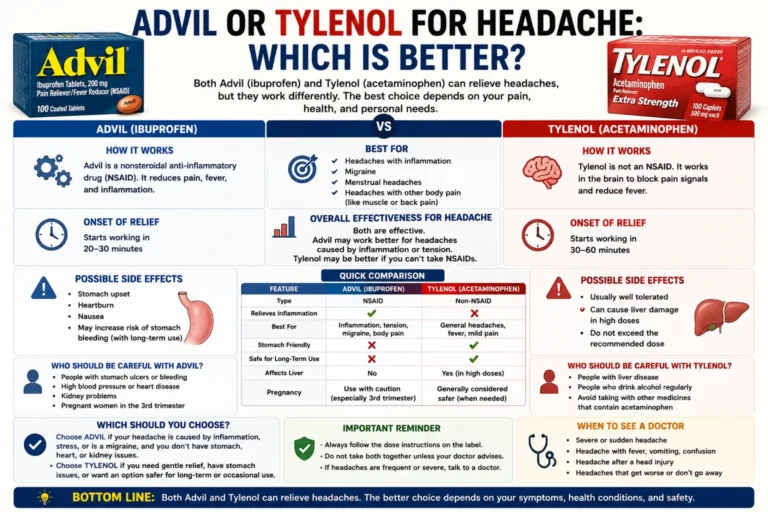
Advil or Tylenol for headache is a common question when head pain starts. Both medicines can relieve mild headaches. However, they contain different active ingredients and work in different ways. Advil contains ibuprofen, while Tylenol contains acetaminophen. Your choice may depend on your age, health, symptoms, and other medicines. It also matters whether inflammation plays a role in the pain. Neither medicine works best for every person or every headache. Simple steps can also help, such as drinking water and resting.
For children and teens, medicine safety needs extra care. The correct product and dose depend on age and sometimes weight. Always follow the package directions or ask a parent, pharmacist, or doctor.
Quick Summary
- Advil contains ibuprofen.
- Tylenol contains acetaminophen.
- Both can help relieve headache pain.
- Ibuprofen can also reduce inflammation.
- Acetaminophen does not work as an anti-inflammatory medicine.
- The safer choice depends on the person and their health.
- Follow the product label for age and dosing instructions.
- Do not combine products that contain the same active ingredient.
- Frequent headaches may need medical advice.
- Seek urgent care for a sudden, severe, or unusual headache.
What Do Advil and Tylenol Mean?
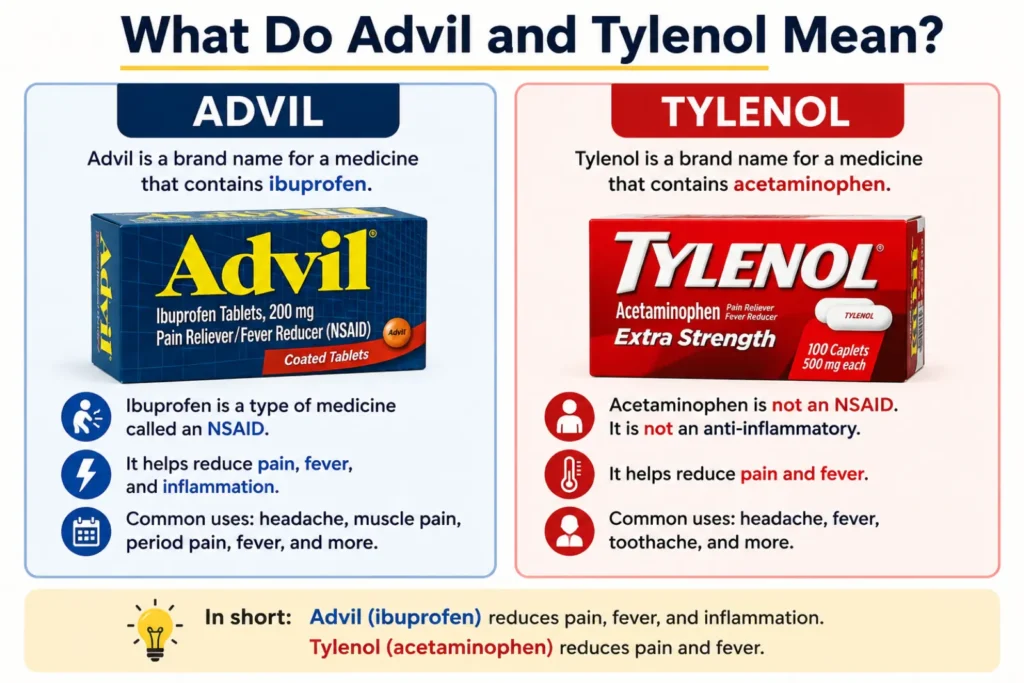
Advil and Tylenol are brand names for common pain-relief medicines.
Advil contains ibuprofen. Ibuprofen belongs to a group called nonsteroidal anti-inflammatory drugs, or NSAIDs. It can reduce pain, fever, and inflammation.
Tylenol contains acetaminophen. It can reduce pain and fever. It does not work like an NSAID.
Both medicines can help with headaches. However, they have different safety considerations.
How Do They Help a Headache?
Headaches can have many causes. Stress, poor sleep, dehydration, skipped meals, illness, and migraines can all cause head pain.
Ibuprofen can reduce substances involved in pain and inflammation. This may make it useful when inflammation contributes to discomfort.
Acetaminophen reduces pain and fever through a different pathway. It does not have the same anti-inflammatory action as ibuprofen.
For mild headaches, either medicine may provide relief when used correctly. The American Academy of Pediatrics lists both acetaminophen and ibuprofen as options for children with mild headaches.
Advil vs. Tylenol for Headache: Comparison Table
| Feature | Advil | Tylenol |
|---|---|---|
| Active ingredient | Ibuprofen | Acetaminophen |
| Medicine type | NSAID | Pain and fever reducer |
| Helps headaches | Yes | Yes |
| Reduces inflammation | Yes | No |
| Reduces fever | Yes | Yes |
| Main safety concerns | Stomach, kidney, dehydration, and some asthma concerns | Liver damage from excessive amounts |
| Food consideration | Often better with food | Can generally be taken with or without food |
| Best choice | Depends on the person | Depends on the person |
Ibuprofen may cause stomach irritation and can be unsuitable for some people. Acetaminophen can cause serious liver harm when too much is taken.
Which Is Better for a Headache?
There is no single winner for everyone.
For some people, ibuprofen may provide stronger relief. It also treats inflammation. However, it may not suit people with certain health problems.
Acetaminophen can also relieve headaches. It may be preferred when an NSAID is not appropriate.
For children and teens, the decision should focus on age, weight, health conditions, and other medicines. A pharmacist, doctor, or parent can help choose safely.
The important point is simple: the best headache medicine depends on the person, not just the headache.
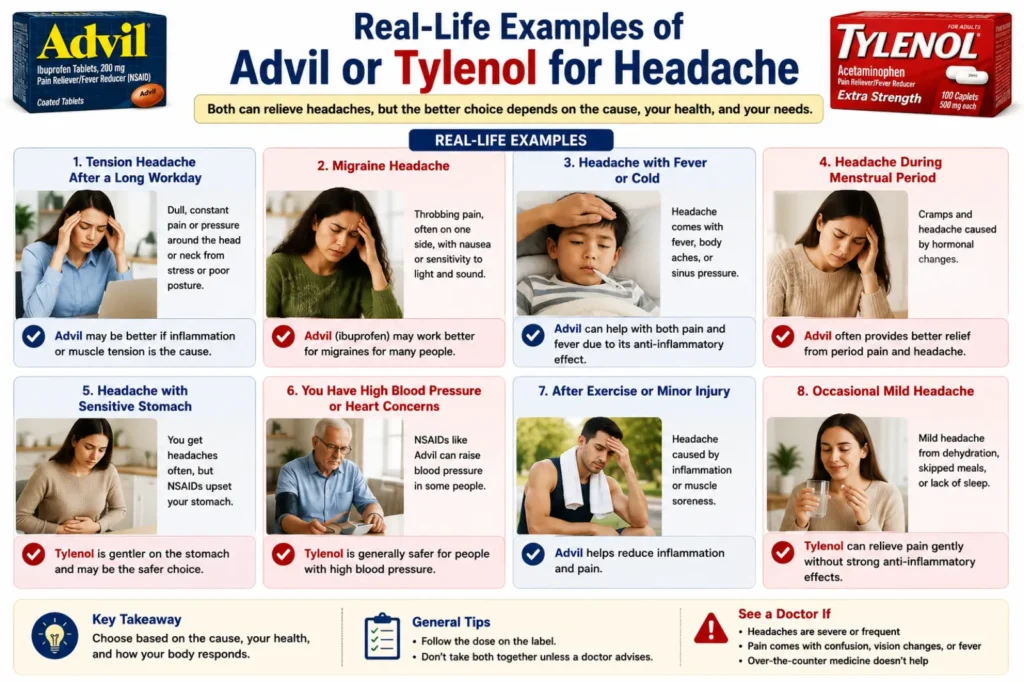
Real-Life Examples
Example 1: A Headache After a Busy School Day
A student develops a mild headache after a long day.
They may first try water, food, rest, and a quiet room. These steps can sometimes ease a simple headache.
If medicine becomes necessary, an age-appropriate pain reliever may help. The product label should guide its use.
Example 2: Headache With a Cold
A headache can happen during a cold or flu illness.
Rest and fluids may help. Pain and fever medicines can also provide relief when used correctly.
Example 3: A Repeated Headache
Someone has headaches several times each week.
Taking pain medicine repeatedly may not solve the underlying problem. Frequent headaches deserve medical advice.
The goal should be to understand the cause, not simply keep treating the pain.
When Might Advil Be a Reasonable Option?
Ibuprofen can help headaches and migraines. It also reduces inflammation.
However, ibuprofen is not suitable for everyone.
Some children should avoid ibuprofen when dehydrated. Certain children with asthma may also need medical advice before using it.
Ibuprofen can also irritate the stomach. Taking it with food can reduce stomach upset in children.
Always check the package instructions for the correct age and dose.
When Might Tylenol Be a Reasonable Option?
Acetaminophen can help reduce headache pain and fever.
It may be an option when ibuprofen is unsuitable. However, acetaminophen has an important safety warning.
Taking too much acetaminophen can cause serious liver damage. Many cold and flu products also contain acetaminophen.
Therefore, always check active ingredients before taking another medicine.
For children, use the correct product and dosing instructions. Do not guess the amount.
Common Mistakes to Avoid
1. Taking More Because the Headache Feels Worse
More medicine does not always mean better relief.
Never exceed the amount listed on the product label.
2. Double-Dosing Acetaminophen
Some cold and flu medicines contain acetaminophen.
Taking them together can accidentally increase the total amount.
3. Using the Wrong Measuring Tool
Liquid medicines need accurate measurement.
For children, use the measuring device supplied with the medicine. Do not use an ordinary kitchen spoon.
4. Taking Ibuprofen While Dehydrated
Dehydration can increase the risks associated with ibuprofen.
Do not use ibuprofen for a dehydrated child without appropriate medical advice.
5. Treating Frequent Headaches Without Finding the Cause
Repeated headaches may have an underlying trigger.
Sleep problems, stress, dehydration, skipped meals, eyesight issues, or migraines may contribute.
A healthcare professional can help identify the cause.
Tips for Managing a Headache Without Medicine
Medicine is not always necessary for a mild headache.
Try these simple steps first:
- Drink water.
- Eat if you skipped a meal.
- Rest in a quiet place.
- Reduce bright light.
- Take a break from screens.
- Relax your neck and shoulders.
- Try a cool cloth on your forehead.
- Get enough regular sleep.
These measures can help some mild headaches.
Keeping a headache diary can also help. Record when headaches happen and possible triggers.
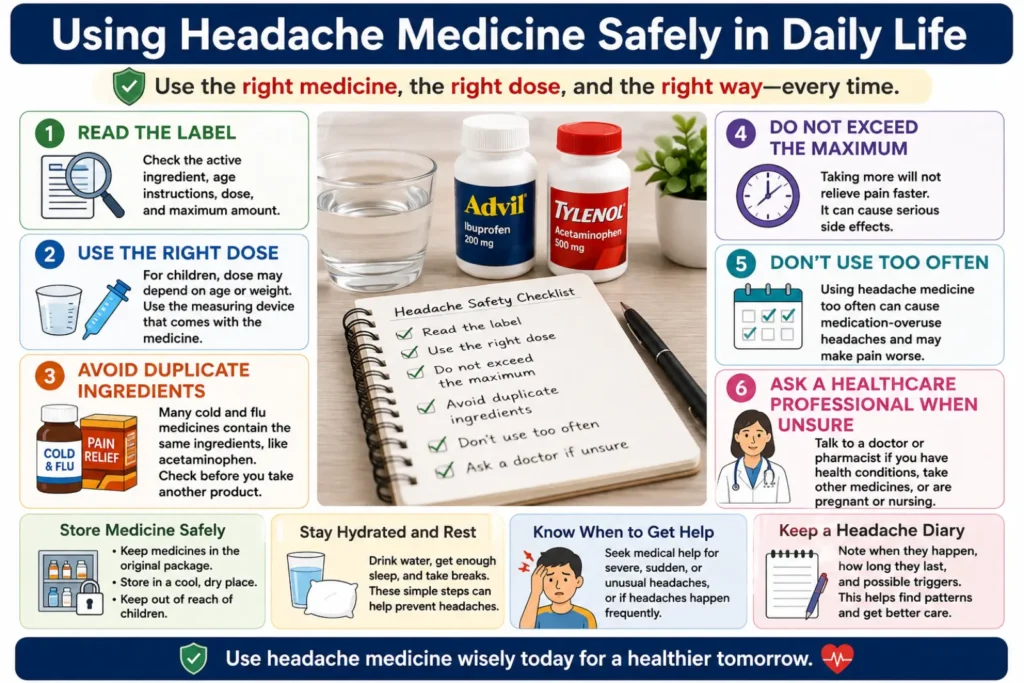
Using Headache Medicine Safely in Daily Life
Safe use starts with reading the label.
Check the active ingredient. Then check the age instructions and maximum amount.
For children and teens, dosing may depend on age and weight. Ask a parent, pharmacist, or doctor when you are unsure.
Do not take multiple products with the same active ingredient.
Also avoid treating headaches with pain medicine too often. Frequent medicine use can sometimes contribute to medication-overuse headaches.
Advil or Tylenol for Migraine?
Both ibuprofen and acetaminophen can be used for some migraine attacks.
The best option can depend on the person’s symptoms and medical history.
Children and teens with recurring migraines should receive guidance from a healthcare professional. Migraine treatment may require more than occasional over-the-counter medicine.
If headaches keep returning, focus on identifying triggers and getting appropriate medical advice.
Advil or Tylenol for Headache With Fever?
Both ibuprofen and acetaminophen can reduce fever and relieve pain.
The right choice depends on age, health, and the reason for the fever.
For children, follow the product instructions carefully. Do not alternate medicines unless a healthcare professional gives specific advice.
A fever with other concerning symptoms may require medical evaluation.
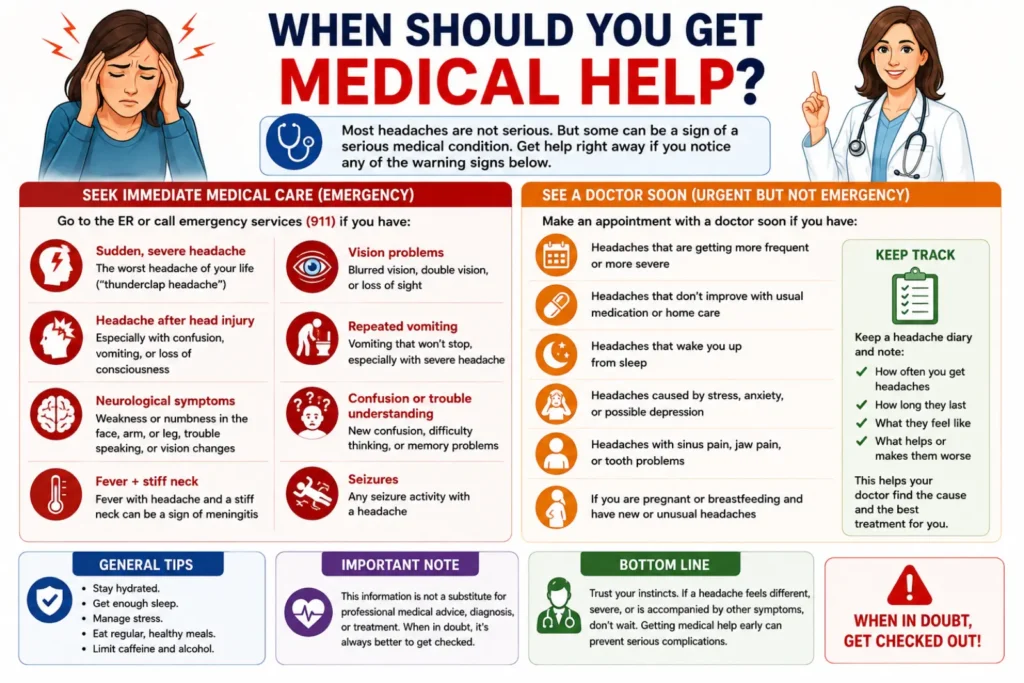
When Should You Get Medical Help?
Most headaches are not caused by serious problems. However, some headaches need medical attention.
Get urgent medical help for a headache that is sudden and extremely severe. Also seek help after a serious head injury.
Medical advice is also important when headaches keep happening, become worse, or last longer than expected.
For children, HealthyChildren.org advises contacting a pediatrician when headaches last more than three days or become frequent.
Do not rely on pain medicine to manage a headache that keeps returning.
Expert Insights: What Matters Most?
A useful headache plan has three parts.
First, identify possible triggers. Sleep, hydration, meals, stress, illness, and screen time can matter.
Second, use medicine safely. Check the active ingredient and follow the label.
Third, watch the pattern. Frequent or changing headaches deserve professional evaluation.
For children and teens, medication choices should consider age and weight. Health conditions also matter.
This approach supports safer care than simply asking which brand works best.
Synonyms and Related Search Terms
People searching for this topic may use different phrases, including:
- Advil vs Tylenol for headache
- ibuprofen vs acetaminophen for headache
- ibuprofen for headache
- acetaminophen for headache
- Tylenol for migraine
- Advil for migraine
- best medicine for headache
- headache pain relief
- ibuprofen or paracetamol for headache
- Tylenol or Advil for fever and headache
- headache medicine for teens
- headache medicine for children
- over-the-counter headache relief
These terms describe closely related search intent.
Frequently Asked Questions
Is Advil or Tylenol better for a headache?
Both can relieve headaches. The better option depends on age, health, symptoms, and other medicines.
Is Advil stronger than Tylenol for headaches?
Not necessarily. Ibuprofen and acetaminophen work differently. Individual response also varies.
Can Tylenol help a headache?
Yes. Acetaminophen can relieve headache pain and fever when used according to its directions.
Can Advil help a migraine?
Yes. Ibuprofen can help some migraine attacks. Recurring migraines may need medical guidance.
Can you take Advil and Tylenol together?
Do not combine or alternate them without checking the product directions or getting advice from a healthcare professional. Children should not receive both at the same time unless instructed by a professional.
What should you take for a headache with a fever?
Both medicines can reduce fever and pain. The appropriate choice depends on the person’s age and health.
How can I stop a mild headache without medicine?
Try water, food, rest, relaxation, less screen time, and a quiet environment.
When should a headache be checked by a doctor?
Seek medical advice when headaches become frequent, worsen, last unusually long, or come with concerning symptoms.
Conclusion
Advil or Tylenol for headache is not a one-size-fits-all question. Both medicines can help relieve headache pain. Advil contains ibuprofen, while Tylenol contains acetaminophen. They also have different safety considerations.
Ibuprofen can reduce inflammation, while acetaminophen mainly targets pain and fever. Your age, health, symptoms, and other medicines all matter.
For children and teens, always follow the product label. Ask a parent, pharmacist, or doctor if you are unsure. Do not exceed the recommended amount. Also check other medicines for duplicate ingredients.
Simple steps can help too. Drink water, eat regular meals, rest, and manage screen time.