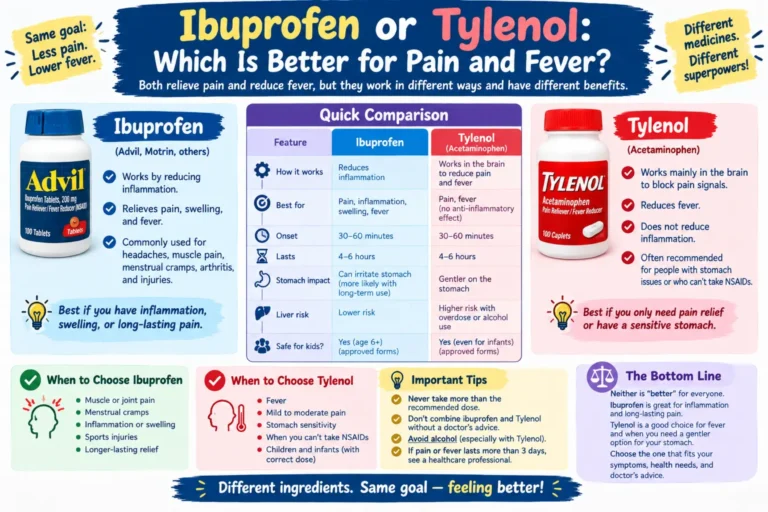
Ibuprofen or Tylenol is a common choice when you have pain or a fever. Both medicines can lower fever and relieve common pain. However, they work in different ways. Ibuprofen is an NSAID, while Tylenol contains acetaminophen.
The better choice depends on your symptoms and health needs. Your age, medical history, other medicines, and pregnancy status also matter. For example, ibuprofen can help with pain linked to inflammation. Tylenol may be useful when an NSAID is not a good choice.
Both medicines can cause harm when used incorrectly. Taking too much Tylenol can seriously damage the liver. Ibuprofen can increase the risk of stomach bleeding and kidney problems in some people.
This guide compares ibuprofen and Tylenol in simple terms. It also covers safety tips, common mistakes, and everyday examples.
Medical note: This article provides general education. It does not replace advice from a doctor or pharmacist.
Quick Summary
- Tylenol is the brand name for acetaminophen in the United States.
- Ibuprofen is an NSAID that can reduce pain, fever, and inflammation.
- Tylenol mainly treats pain and fever.
- Ibuprofen may work better when inflammation causes pain.
- Too much acetaminophen can cause serious liver damage.
- Ibuprofen can cause stomach bleeding and kidney problems in some people.
- Children need the correct dose based on the product and, often, body weight.
- Read every medicine label before taking a pain reliever.
What Do Ibuprofen and Tylenol Mean?
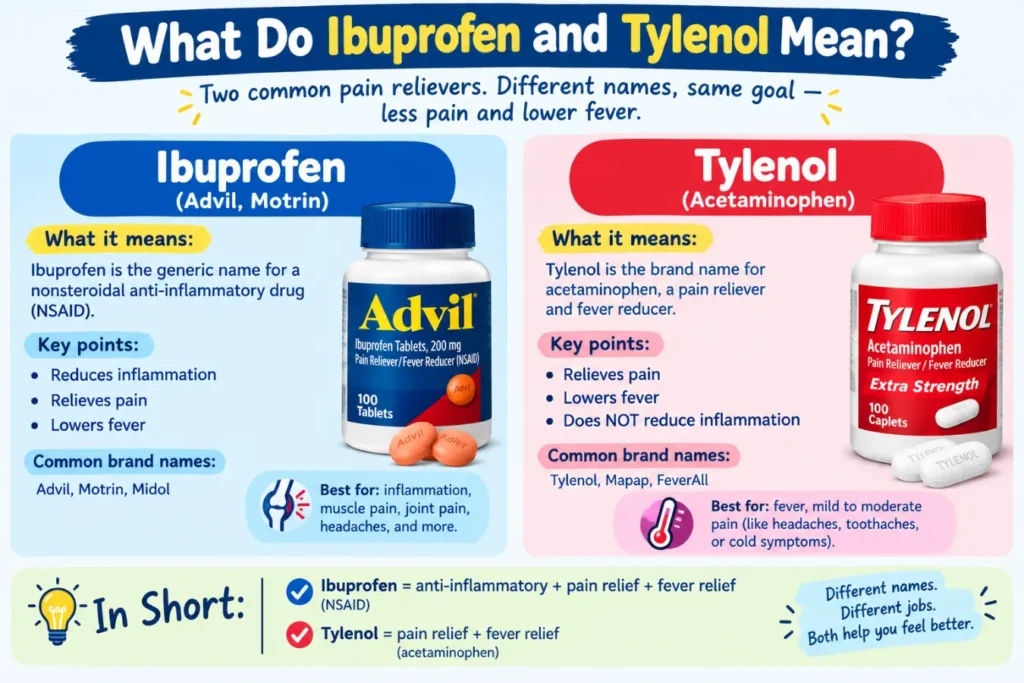
Ibuprofen and Tylenol are common medicines for pain and fever.
Ibuprofen belongs to a group called nonsteroidal anti-inflammatory drugs, or NSAIDs. It reduces substances involved in pain and inflammation.
Tylenol contains acetaminophen. Acetaminophen can temporarily relieve pain and reduce fever. It does not have the same anti-inflammatory effect as ibuprofen.
So, the main difference is simple:
Ibuprofen = pain + fever + inflammation
Tylenol = pain + fever
This does not mean one medicine always works better. The right option depends on the person and the cause of the pain.
Ibuprofen vs Tylenol: What’s the Difference?
| Feature | Ibuprofen | Tylenol |
|---|---|---|
| Active ingredient | Ibuprofen | Acetaminophen |
| Drug type | NSAID | Analgesic and fever reducer |
| Helps pain | Yes | Yes |
| Reduces fever | Yes | Yes |
| Reduces inflammation | Yes | Limited |
| Main safety concern | Stomach and kidney risks | Liver damage from overdose |
| Common uses | Muscle pain, cramps, inflammation | Headache, fever, general pain |
| Brand examples | Advil, Motrin | Tylenol |
| Key caution | NSAID-related risks | Acetaminophen overdose |
Both medicines can be safe when people follow the label. Problems can occur when people take too much or combine products with the same ingredient.
Which Is Better for Pain?
There is no single winner for every type of pain.
Ibuprofen may be helpful when inflammation plays a major role. Examples include some muscle aches, menstrual cramps, and minor injuries.
Tylenol can help with many common pain types. These include headaches, toothaches, sore throats, and body aches.
Your health history also matters.
Someone with certain stomach or kidney problems may need to avoid or limit NSAIDs. Someone with liver disease may need special advice before using acetaminophen.
For ongoing or severe pain, ask a healthcare professional rather than choosing based only on the medicine’s brand.
Which Is Better for Fever?
Both ibuprofen and acetaminophen can reduce fever.
The choice depends on age, health conditions, other medicines, and product directions.
For children, caregivers should use the correct product and dose. Pediatric guidance often uses the child’s weight to determine the appropriate amount.
Never guess a child’s dose from an adult product.
Also check the active ingredient. Different products can contain the same medicine.
This matters because accidental double dosing can happen when people combine cold, flu, and pain medicines.
Ibuprofen or Tylenol for Headache?
Both medicines may help a common headache.
Ibuprofen may be useful when inflammation contributes to the pain. Tylenol can also relieve many common headaches.
However, frequent headaches need more than repeated pain medicine.
Talk with a healthcare professional if headaches happen often, become severe, or change suddenly.
Seek urgent medical care for a sudden, extremely severe headache or a headache with serious neurological symptoms.
Ibuprofen or Tylenol for Muscle Pain?
Ibuprofen may be useful when muscle pain involves inflammation.
Tylenol can also relieve muscle pain. However, it does not work as an anti-inflammatory medicine.
For a minor injury, rest and other supportive care may also help.
If pain becomes severe, lasts longer than expected, or follows a major injury, get medical advice.
Do not keep increasing the medicine dose because the pain has not improved.
Ibuprofen or Tylenol for Children?
Children require extra care with pain and fever medicines.
The correct dose depends on the child’s age, weight, product strength, and medical situation.
The American Academy of Pediatrics advises using the dosing device supplied with liquid medicine. It also recommends avoiding kitchen spoons for measuring liquid medicine.
Ibuprofen should not be given to babies younger than 6 months unless a doctor recommends it.
For acetaminophen, caregivers should follow the product directions and pediatric dosing guidance. Children under 2 years should receive acetaminophen only with appropriate medical guidance.
When unsure, ask a pediatrician or pharmacist.
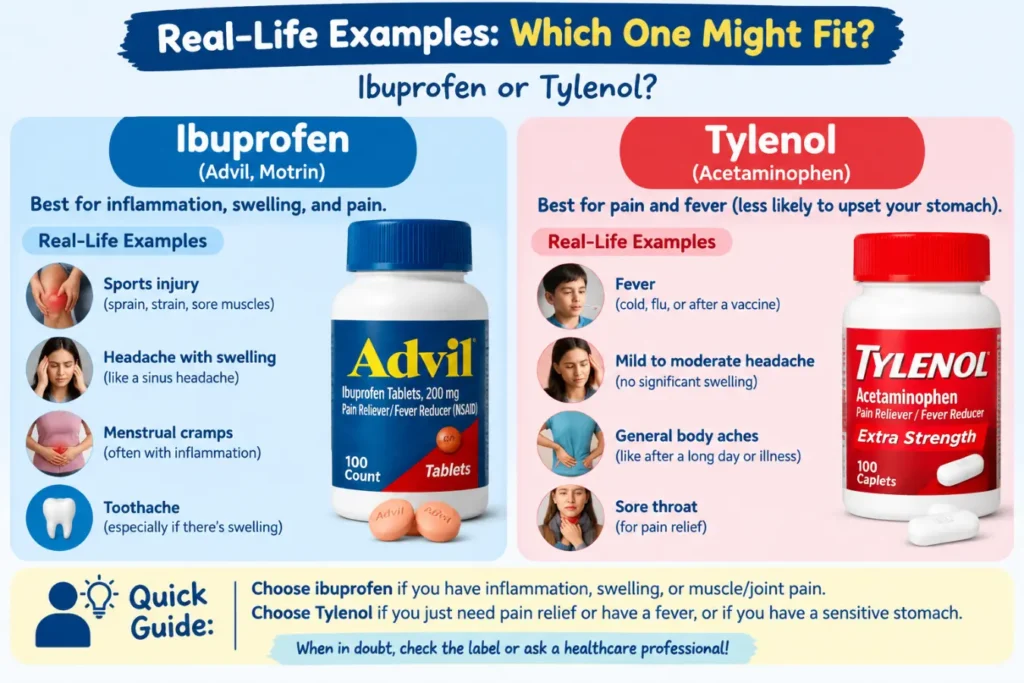
Real-Life Examples: Which One Might Fit?
Example 1: A mild headache
A healthy adult has a mild headache.
Either medicine may provide relief when used according to the label.
Example 2: Menstrual cramps
Ibuprofen may help because menstrual cramps can involve inflammation.
However, personal health conditions still matter.
Example 3: A fever in a child
Parents should choose the correct pediatric product and dose.
They should check the child’s weight and product instructions.
Example 4: Someone with liver disease
Acetaminophen requires extra caution in people with liver disease.
A healthcare professional should guide medicine selection.
Example 5: Someone with stomach bleeding risk
Ibuprofen may not be appropriate for someone with certain stomach problems.
NSAIDs can cause serious stomach bleeding in some people.
These examples show why the “best” medicine can differ from person to person.
Common Mistakes to Avoid
1. Taking too much Tylenol
More medicine does not mean more relief.
Too much acetaminophen can cause severe liver damage.
2. Combining products without checking ingredients
Many cold and flu products contain acetaminophen.
Taking another acetaminophen product at the same time can cause an accidental overdose.
3. Taking several NSAIDs together
Ibuprofen is an NSAID.
Other medicines may also contain NSAIDs.
Taking multiple NSAIDs can increase the risk of side effects.
4. Guessing children’s doses
Children need accurate dosing.
Use the supplied measuring device and follow the product directions.
5. Ignoring medical conditions
Kidney disease, liver disease, stomach problems, heart conditions, and pregnancy can affect medicine choices.
Ask a healthcare professional when these conditions apply.
6. Using pain medicine for too long
Persistent pain can signal an underlying problem.
Do not keep treating recurring symptoms without finding the cause.
Safety Tips for Daily Use
Follow these simple habits when using over-the-counter pain medicine:
- Read the Drug Facts label every time.
- Check the active ingredient.
- Follow the recommended dose.
- Follow the recommended time between doses.
- Do not assume two brands contain different medicines.
- Use the correct measuring device for liquid medicine.
- Ask a pharmacist about medicine interactions.
- Keep medicines away from young children.
- Do not give human pain medicine to pets.
The FDA specifically recommends checking labels because multiple products can contain the same active ingredient.
Also remember that acetaminophen appears in many prescription and nonprescription products.
When Should You Avoid Ibuprofen?
Ibuprofen may not be appropriate for everyone.
NSAIDs can increase the risk of stomach bleeding. The risk can be higher with certain medical conditions and medicines.
People with kidney disease, certain heart conditions, stomach bleeding history, or specific medication use should ask a healthcare professional before using ibuprofen.
Pregnancy also requires special attention.
The FDA recommends avoiding NSAIDs at 20 weeks of pregnancy or later unless a healthcare professional specifically advises their use.
Always check with your doctor or pharmacist when you have a health condition or take prescription medicines.
When Should You Avoid or Limit Tylenol?
Tylenol contains acetaminophen.
The biggest safety concern involves taking too much acetaminophen.
An overdose can cause severe liver damage and can be life-threatening.
People with liver disease should ask a healthcare professional before using it.
Alcohol can also increase concern about liver injury. The FDA warns about severe liver damage with acetaminophen and regular consumption of three or more alcoholic drinks per day.
Always check other medicines for acetaminophen before taking another dose.
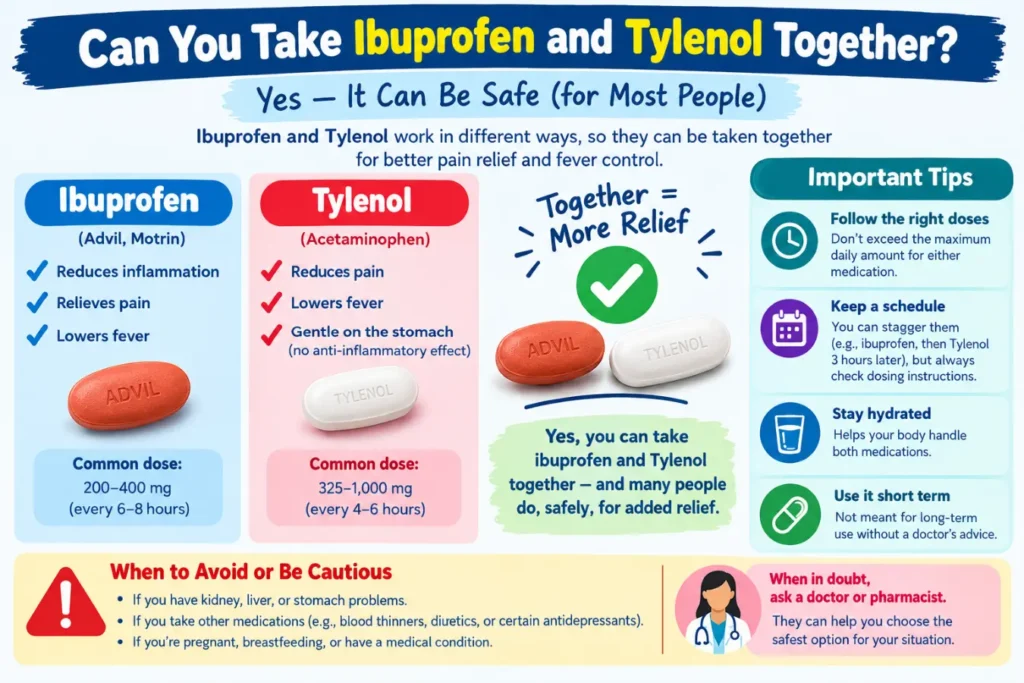
Can You Take Ibuprofen and Tylenol Together?
Sometimes healthcare professionals recommend using both medicines.
However, taking two medicines requires careful attention to dose and timing.
Do not assume that combining them is automatically safe.
You should also check combination products. Some products already contain both acetaminophen and ibuprofen.
If you plan to use both medicines, ask a doctor or pharmacist about the safest schedule for your situation.
This becomes especially important for children, older adults, people with chronic conditions, and anyone taking other medicines.
Ibuprofen and Tylenol Synonyms and Related Search Terms
People use several terms when searching for these medicines.
Ibuprofen-related terms
- Ibuprofen
- NSAID pain reliever
- Anti-inflammatory pain medicine
- Advil
- Motrin
- Ibuprofen fever reducer
- Ibuprofen for pain
Tylenol-related terms
- Tylenol
- Acetaminophen
- Paracetamol
- APAP
- Fever reducer
- Pain reliever
- Acetaminophen for fever
The name paracetamol is commonly used for acetaminophen outside the United States.
These terms can help readers understand why different websites may use different names for the same medicine.
Expert Insights: What Matters Most?
The key question is not simply, “Which medicine is stronger?”
The better question is, “Which medicine is appropriate for this person and this type of pain?”
A safe choice depends on several factors:
- The type of pain: Inflammation may favor an NSAID.
- Medical history: Kidney, stomach, liver, and heart conditions matter.
- Other medicines: Drug interactions can change the risk.
- Age: Children require age-appropriate products and doses.
- Pregnancy: NSAID use needs special attention during pregnancy.
- Duration: Repeated pain may require medical evaluation.
The FDA stresses that these medicines can be safe and effective when used according to directions. Misuse can cause serious injury.
FAQs About Ibuprofen or Tylenol
Is ibuprofen stronger than Tylenol?
Not necessarily. They work differently. Ibuprofen also reduces inflammation, while Tylenol mainly treats pain and fever.
Is Tylenol safer than ibuprofen?
Neither medicine is always safer. Each has different risks. Too much acetaminophen can damage the liver, while ibuprofen can cause stomach and kidney problems in some people.
Which is better for inflammation?
Ibuprofen may be more useful because it is an NSAID and reduces inflammation.
Can I take ibuprofen and Tylenol together?
Sometimes people can use both, but the combination requires careful dosing. Ask a healthcare professional if you are unsure.
Which is better for a fever?
Both can reduce fever. For children, use the correct product and dose based on pediatric guidance.
Can children take ibuprofen?
Some children can take ibuprofen. However, it should not be given to babies under 6 months unless a doctor recommends it.
Can I take Tylenol every day?
Do not use it regularly without checking the label and considering why you need it. Frequent pain may need medical evaluation.
Can I take ibuprofen while pregnant?
NSAIDs need special caution during pregnancy. The FDA recommends avoiding NSAIDs at 20 weeks or later unless a healthcare professional advises them.
Conclusion
Choosing ibuprofen or Tylenol depends on your symptoms and health needs. Both medicines can relieve pain and reduce fever. Ibuprofen also reduces inflammation because it belongs to the NSAID family. Tylenol contains acetaminophen and mainly treats pain and fever.
Neither option works best for everyone. Your medical history, age, other medicines, and pregnancy status can change the safest choice. Always follow the product label and avoid duplicate ingredients.
Remember the biggest safety points. Too much acetaminophen can cause severe liver damage. Ibuprofen can cause stomach bleeding and kidney problems in some people.