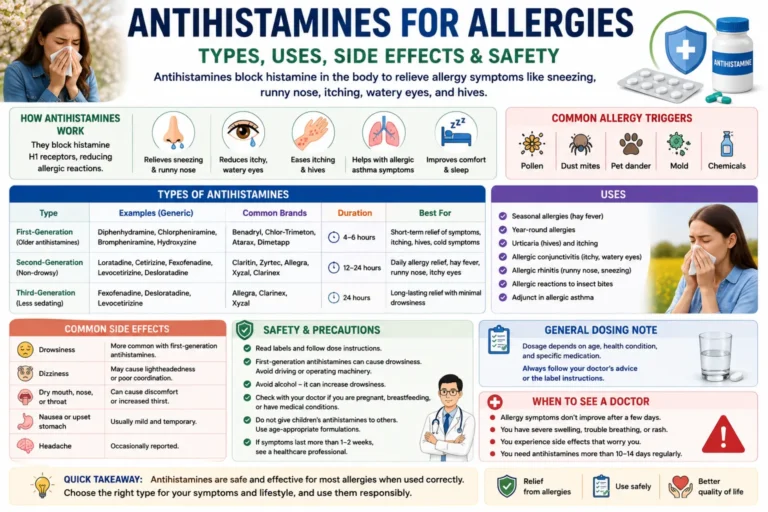
Antihistamines for allergies can help reduce common symptoms like sneezing and itching. They work by blocking the effects of histamine in the body. Histamine plays a key role in many allergic reactions. Common allergy symptoms include a runny nose, itchy eyes, sneezing, and skin itching. Different antihistamines can work for different people. Some can also cause sleepiness or other side effects. Age, health conditions, and other medicines can also affect safety. Therefore, medicine labels matter. Parents and teens should ask a doctor or pharmacist when they have questions. This guide explains antihistamines in simple terms. It also covers common symptoms, safety tips, side effects, and everyday allergy care. It does not replace advice from a qualified healthcare professional.
Quick Summary
- Antihistamines help reduce many allergy symptoms.
- They work by blocking histamine.
- They may help with sneezing, itching, and runny noses.
- Some antihistamines can cause sleepiness.
- Different products have different directions and warnings.
- Always follow the product label.
- Ask a parent, doctor, or pharmacist when unsure.
- Severe allergic reactions need urgent medical care.
What Are Antihistamines?
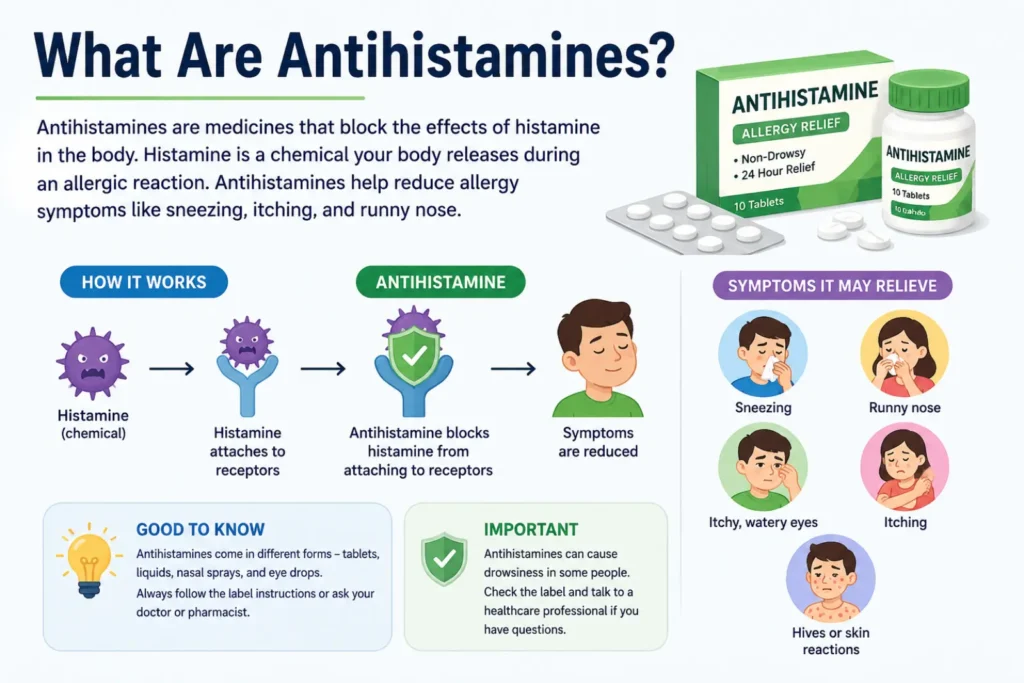
Antihistamines are medicines that reduce the effects of histamine.
Your body releases histamine during many allergic reactions. This chemical can cause symptoms such as sneezing, itching, and watery eyes.
Antihistamines come in several forms. These include tablets, liquids, nasal sprays, and eye drops.
The right treatment depends on the person’s symptoms and health needs.
How Do Antihistamines Work?
Think of histamine as a signal that causes allergy symptoms.
Antihistamines block some of that signal. This can reduce symptoms caused by allergies.
They do not remove the allergy itself. Instead, they help control certain symptoms.
Different allergy medicines work in different ways. A healthcare professional can explain which type fits a person’s situation.
What Symptoms Can Antihistamines Help?
Antihistamines may help with several common allergy symptoms.
These include:
- Sneezing
- Runny nose
- Nose itching
- Itchy eyes
- Watery eyes
- Some forms of itching
- Hives and certain skin symptoms
Not every allergy symptom responds equally to every medicine.
For ongoing nasal allergies, other treatments may sometimes work better. MedlinePlus notes that nasal corticosteroid sprays are among the most effective treatments for allergic rhinitis.
Common Types of Allergy Medicine
Allergy medicines come in several groups.
Antihistamines
These block the effects of histamine. They can help with sneezing, itching, and runny noses.
Nasal corticosteroids
These reduce inflammation inside the nose. They can work well for allergic rhinitis.
Decongestants
These can reduce nasal stuffiness. However, some products have important age and safety warnings.
Saline nasal products
Saline can help rinse mucus from the nose. It may provide relief for mild nasal symptoms.
The best option depends on symptoms, age, health, and other medicines.
Do Antihistamines Cause Sleepiness?
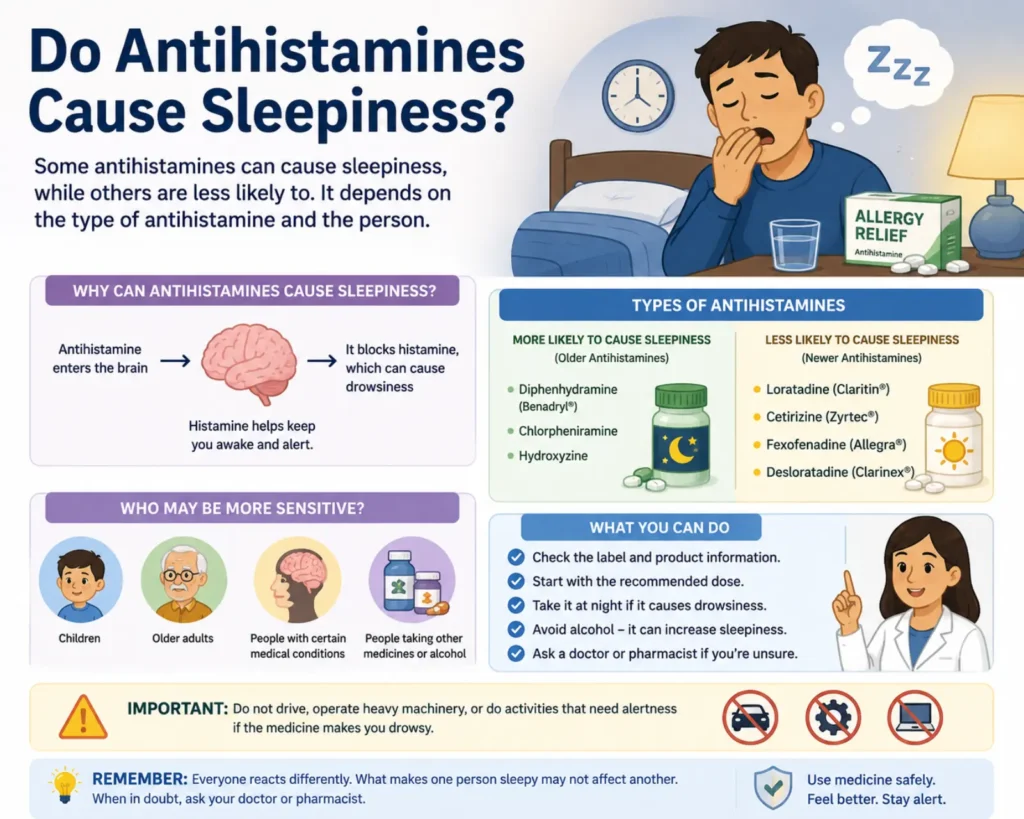
Some antihistamines can cause drowsiness.
Newer antihistamines generally cause less sleepiness than older types. However, individual responses can differ.
Sleepiness can affect schoolwork and daily activities. It can also make driving or operating machinery unsafe.
Always check the product information for warnings. Ask a healthcare professional if you are unsure about side effects.
Antihistamines and Teen Safety
Teens should not choose or change medicine based only on an online article.
A parent, guardian, doctor, or pharmacist can help check the product label. They can also check possible interactions with other medicines.
Age matters when choosing medicines. Some products have different instructions for children and teens.
Never take more than the label recommends. Also, do not combine products unless a healthcare professional says it is safe.
The American Academy of Pediatrics recommends careful attention to medicine labels and warns that some antihistamines can cause sleepiness.
Common Side Effects
Possible antihistamine side effects can include:
- Drowsiness
- Dizziness
- Dry mouth
- Blurred vision
- Constipation
- Changes in appetite
- Nervousness or irritability
Not everyone experiences these effects.
If a medicine causes an unexpected problem, tell a parent or guardian. A pharmacist or doctor can also provide advice.
Common Allergy Medicine Mistakes
Avoid these common mistakes:
Ignoring the label
Always check the age directions, warnings, and ingredients.
Taking more than directed
More medicine does not automatically mean better relief.
Mixing similar products
Some products contain the same active ingredients. Combining them can increase risk.
Ignoring sleepiness
Drowsiness can affect learning and daily activities.
Assuming every rash is an allergy
Some rashes have causes other than allergies. A healthcare professional can help identify the cause.
Treating severe reactions as ordinary allergies
Severe allergic reactions require urgent medical attention.
Everyday Tips for Managing Allergies
Medicine is only one part of allergy care.
Reducing exposure to triggers can also help.
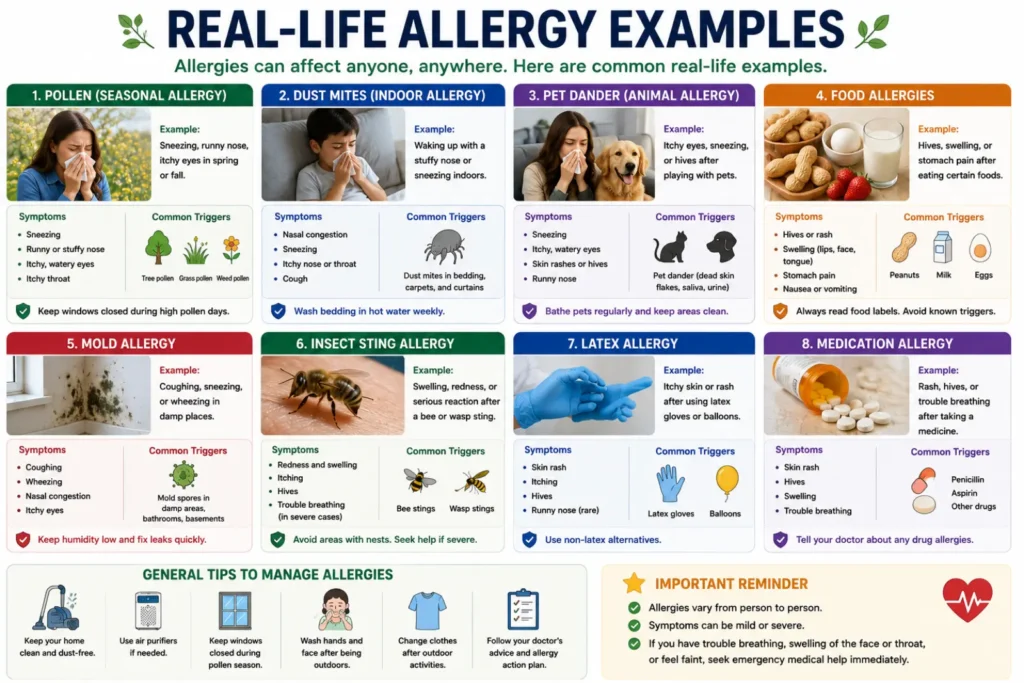
Common triggers include pollen, dust mites, mold, and pet dander.
Helpful habits may include keeping indoor spaces clean and reducing exposure to known triggers.
During high-pollen periods, limiting exposure can also help some people.
MedlinePlus recommends several trigger-control steps for allergic rhinitis.
Real-Life Allergy Examples
Example 1: Seasonal allergies
A teen develops sneezing and itchy eyes during pollen season.
The family can discuss symptoms with a healthcare professional. They can also reduce exposure to pollen.
Example 2: Pet-related symptoms
Someone notices symptoms after spending time around a pet.
Keeping the person’s environment clean may help reduce exposure.
Example 3: Indoor allergies
Someone has symptoms that appear mostly at home.
Dust, mold, or dust mites could be possible triggers. A healthcare professional can help identify the cause.
These examples show why finding triggers matters.
Antihistamines vs Other Allergy Treatments
| Treatment type | Common purpose |
|---|---|
| Antihistamines | Reduce several allergy symptoms |
| Nasal corticosteroids | Reduce nasal inflammation |
| Decongestants | Reduce nasal stuffiness |
| Saline nasal products | Help rinse mucus from the nose |
| Allergy immunotherapy | May help certain persistent allergies |
No single treatment works best for every person.
Symptoms, age, health history, and other medicines can affect treatment choices.
Synonyms and Related Allergy Keywords
For SEO, natural related terms can include:
- Allergy medicine
- Allergy symptoms
- Antihistamine medicine
- Seasonal allergies
- Hay fever
- Allergic rhinitis
- Allergy relief
- Allergy treatment
- Itchy eyes from allergies
- Runny nose from allergies
- Sneezing from allergies
- Allergy medicine side effects
- Antihistamine side effects
- Allergy safety
Use these terms naturally. Avoid repeating the same keyword in every paragraph.
Expert Insights
Good health content should explain both benefits and risks.
A strong article should not promise that one medicine works for everyone.
It should also explain when professional advice matters.
For allergy treatment, healthcare professionals consider symptoms, age, other health conditions, and other medicines.
That makes personalized advice important.
For stronger EEAT signals, publishers should:
- Cite trusted medical sources.
- Show the article’s review date.
- Identify the medical reviewer when applicable.
- Avoid unsupported medical claims.
- Keep medication information current.
- Explain safety warnings clearly.
- Encourage professional advice when appropriate.
When Should You Ask a Doctor?
Talk with a healthcare professional when allergy symptoms remain difficult to control.
You should also seek advice when symptoms change or treatment no longer works.
Severe allergic reactions can cause serious breathing problems and require emergency medical care.
Do not rely on an online article during a medical emergency.
FAQs About Antihistamines for Allergies
What are antihistamines used for?
Antihistamines help reduce symptoms caused by histamine. These can include sneezing, itching, and runny noses.
Can antihistamines make you sleepy?
Yes. Some antihistamines can cause drowsiness. The effect varies between medicines and people.
Can teenagers take antihistamines?
Some antihistamines are used in children and teens. However, age instructions vary by product. Check the label and ask a healthcare professional when unsure.
What causes seasonal allergies?
Pollen from plants can trigger seasonal allergic rhinitis. Symptoms often include sneezing, itching, and a runny nose.
Can allergies cause itchy eyes?
Yes. Allergies can cause itchy and watery eyes. Antihistamines and other allergy treatments may help.
Are all allergy medicines antihistamines?
No. Allergy treatment includes several medicine types. These include antihistamines, nasal corticosteroids, and other treatments.
When should allergy symptoms be checked by a doctor?
Seek medical advice when symptoms are severe, persistent, or no longer respond to treatment.
Conclusion
Antihistamines can help manage several common allergy symptoms. They work by blocking the effects of histamine. They may help with sneezing, itching, runny noses, and itchy eyes. However, different allergy medicines have different effects and warnings. Some can cause sleepiness or other side effects. Age and health conditions can also affect medicine safety. Therefore, always follow the product label. Ask a parent, doctor, or pharmacist if you have questions. Reducing exposure to allergy triggers can also help. Persistent or severe symptoms deserve professional medical advice. Most importantly, do not use an online article to replace personalized medical care. Good allergy care combines safe medicine use, trigger control, and appropriate professional guidance.