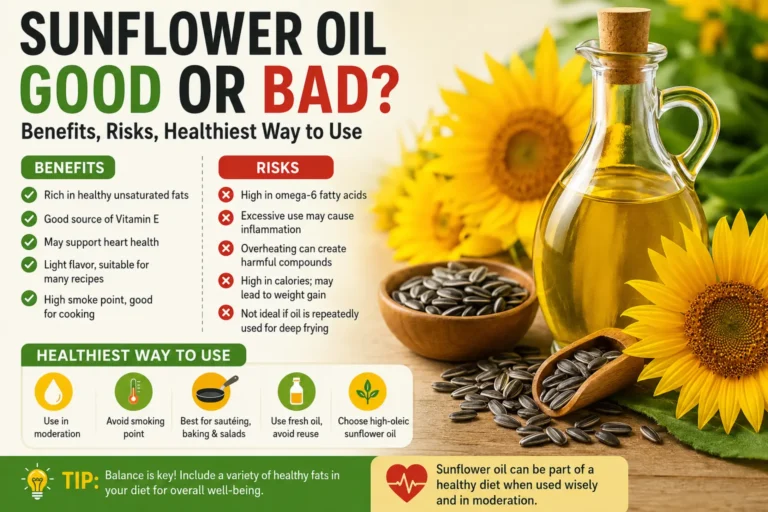
Sunflower oil good or bad? The answer depends on the type and how you use it. Sunflower oil comes from sunflower seeds. Many people use it for frying, baking, and cooking. It contains unsaturated fats and vitamin E. However, not all sunflower oils have the same fat profile. Some types contain more omega-6 fat. Excessive use may create an unbalanced diet. The cooking method also matters. High heat can affect any cooking oil. So, should you stop using sunflower oil? Not necessarily. The best choice depends on the oil type, your overall diet, and your cooking habits. This guide explains the benefits, risks, nutrition, and best uses of sunflower oil. You will also learn how it compares with other popular cooking oils.
Quick Summary
- Sunflower oil can be part of a healthy diet.
- It contains unsaturated fats and vitamin E.
- High-oleic sunflower oil offers a different fat profile.
- Regular sunflower oil often contains more omega-6 fat.
- Excessive use may add too many calories to your diet.
- Reusing oil repeatedly can reduce cooking quality.
- Your overall diet matters more than one cooking oil.
- Use sunflower oil in moderation and choose the right type.
What Is Sunflower Oil?
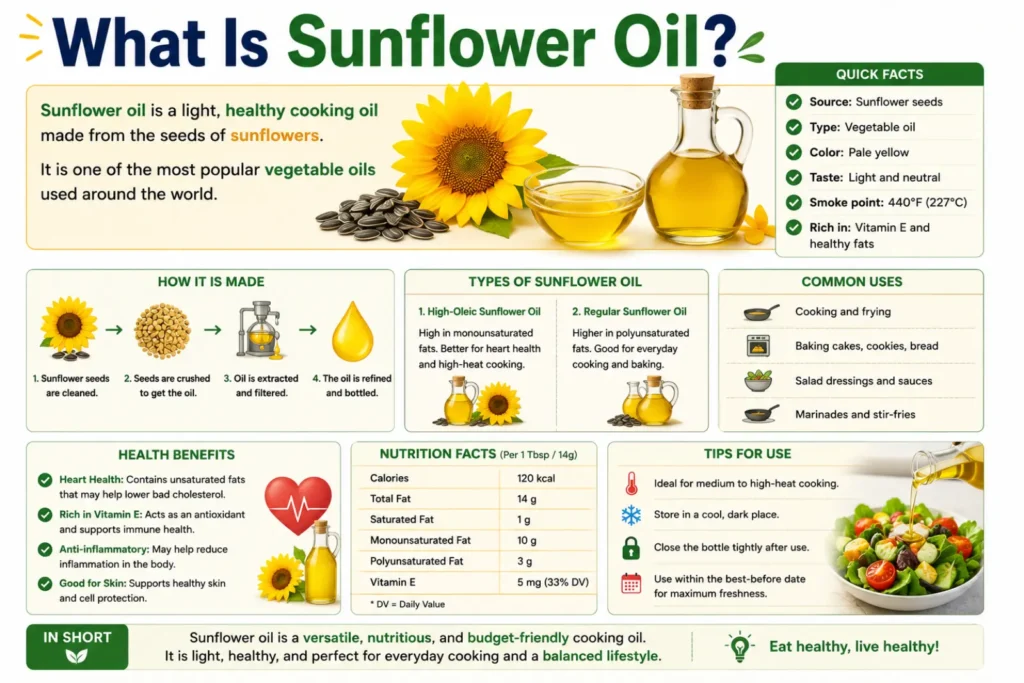
Sunflower oil comes from pressed sunflower seeds. Manufacturers extract the oil through different processing methods.
The oil contains several types of fat. These include monounsaturated and polyunsaturated fats.
Some sunflower oils also contain vitamin E. Vitamin E acts as an antioxidant in the body.
The exact nutrition depends on the sunflower variety. Processing methods also affect the final product.
Therefore, “sunflower oil” does not always mean one identical product
Sunflower Oil Good or Bad? The Simple Answer
Sunflower oil can be good in moderation.
However, the type of sunflower oil matters. Your cooking habits also matter.
For example, high-oleic sunflower oil contains more monounsaturated fat. This fat profile can provide better stability during cooking.
Traditional sunflower oil often contains more linoleic acid. Linoleic acid belongs to the omega-6 fatty acid family.
Omega-6 fats support important body functions. However, your diet should still include a good balance of different fats.
The biggest problem usually comes from excess use. Eating too many calories from any oil can affect overall health.
Sunflower Oil Nutrition: What Does It Contain?
Sunflower oil mainly contains fat. Like other cooking oils, it provides many calories.
A typical tablespoon contains about 120 calories. The exact amount can vary slightly by product.
Sunflower oil may provide:
- Unsaturated fats
- Vitamin E
- Omega-6 fatty acids
- Small amounts of other nutrients
It contains no protein or carbohydrates.
Remember, oil remains calorie-dense. Therefore, portion size matters.
Adding large amounts of any oil can increase your total calorie intake.
Potential Benefits of Sunflower Oil
1. It Contains Unsaturated Fats
Sunflower oil contains unsaturated fats. These fats can fit into a balanced eating pattern.
Many health experts recommend replacing some saturated fats with unsaturated fats.
For example, you might replace butter with a liquid vegetable oil.
However, your entire diet still matters most.
2. It Provides Vitamin E
Some sunflower oils contain vitamin E. Vitamin E helps protect cells from oxidative stress.
Sunflower oil can contribute to your daily vitamin E intake.
However, you should not depend on one food for all your nutrients.
Nuts, seeds, vegetables, and other foods also provide important nutrients.
3. It Works Well in Many Recipes
Sunflower oil has a mild flavor. Therefore, it does not overpower most foods.
You can use it for:
- Baking
- Sautéing
- Roasting
- Light frying
- Salad dressings
Its neutral taste makes it popular in many kitchens.
4. High-Oleic Sunflower Oil Can Offer a Different Fat Profile
High-oleic sunflower oil contains more monounsaturated fat.
This type often provides greater oxidative stability than some traditional varieties.
That feature can make it useful for certain cooking applications.
Always check the product label. The term “high oleic” should appear clearly.
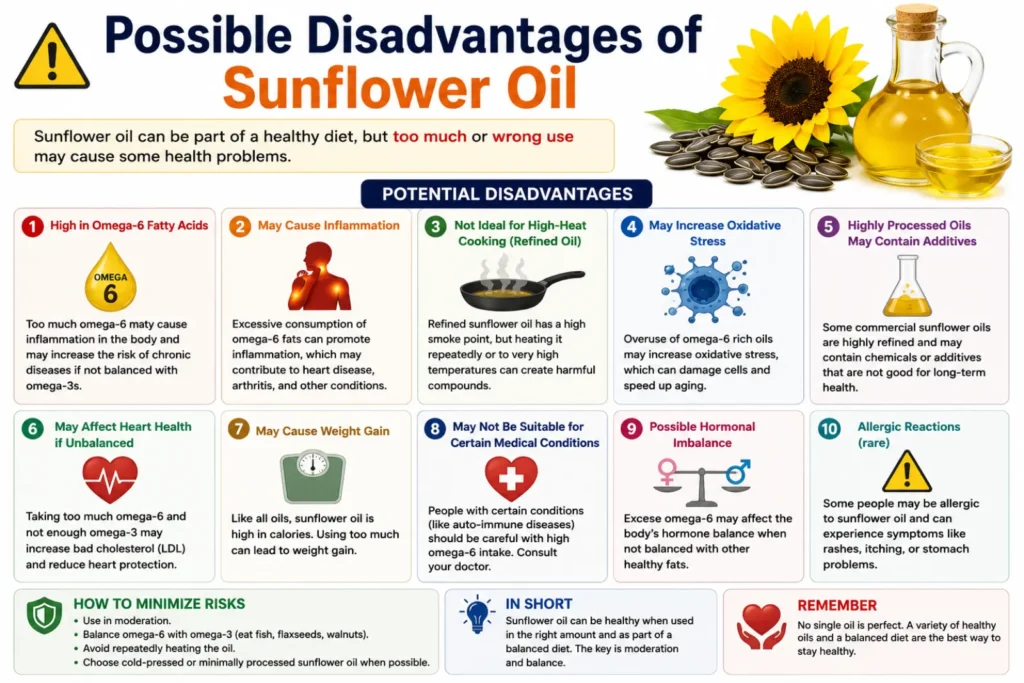
Possible Disadvantages of Sunflower Oil
1. It Can Add Many Calories
All cooking oils contain a lot of calories.
Using large amounts can increase your daily calorie intake.
This can happen even when the oil contains healthy fats.
Therefore, measure oil when possible.
2. Some Types Contain High Omega-6 Fat
Traditional sunflower oil may contain a high amount of omega-6 fatty acids.
Omega-6 fats are essential fats. Your body needs them from food.
However, a balanced diet should include different types of fats.
The issue often involves the overall eating pattern. One ingredient rarely tells the complete health story.
3. Repeatedly Heating Oil Can Reduce Quality
Repeatedly heating and reusing oil can affect its quality.
This becomes especially important during deep frying.
Oil can develop unwanted breakdown products when exposed to repeated high heat.
Therefore, avoid repeatedly reusing cooking oil.
4. Highly Processed Products May Differ
Many commercial oils undergo processing.
Processing can improve shelf life and cooking performance.
However, some people prefer less processed oils.
Check the label if processing matters to your food choices.
Regular Sunflower Oil vs High-Oleic Sunflower Oil
| Feature | Regular Sunflower Oil | High-Oleic Sunflower Oil |
|---|---|---|
| Main fat profile | More polyunsaturated fat | More monounsaturated fat |
| Omega-6 content | Often higher | Often lower |
| Heat stability | Depends on the product | Often higher |
| Flavor | Mild | Mild |
| Common uses | Cooking and baking | Cooking and food production |
| Best choice | Depends on your diet | Useful for some cooking needs |
The best choice depends on your overall diet and cooking needs.
Do not assume one type works best for everyone.
Sunflower Oil vs Olive Oil: Which Is Better?
Both oils can fit into a healthy eating pattern.
Olive oil contains more monounsaturated fat. Extra virgin olive oil also contains natural plant compounds.
Sunflower oil often has a lighter flavor. It can work well for baking and general cooking.
Olive oil offers a stronger flavor in some varieties.
The best choice depends on the recipe and your personal food preferences.
Simple Example
Use sunflower oil when you want a neutral flavor.
Use extra virgin olive oil when you want a stronger taste.
You can also use different oils for different meals.
Real-Life Examples of Using Sunflower Oil
Example 1: Baking
You can use sunflower oil in cakes and muffins.
Its mild flavor allows other ingredients to stand out.
Example 2: Stir-Frying
Sunflower oil can work for quick cooking.
Use the amount needed for the recipe.
Avoid leaving oil to smoke heavily.
Example 3: Salad Dressing
You can combine sunflower oil with vinegar and herbs.
This creates a simple homemade dressing.
Example 4: Everyday Cooking
Many people use sunflower oil for vegetables, eggs, and other foods.
The key point involves portion size and overall diet quality.
How to Use Sunflower Oil in a Healthier Way
Follow these simple tips:
- Use a reasonable amount.
- Avoid repeatedly reheating the same oil.
- Do not let oil smoke heavily.
- Store the bottle away from heat and light.
- Check the label before buying.
- Consider high-oleic sunflower oil for certain cooking needs.
- Use different healthy fat sources in your diet.
- Eat more whole foods alongside cooking oils.
A balanced diet does not require avoiding every type of oil.
Instead, focus on variety and moderation.
Common Mistakes People Make With Sunflower Oil
Mistake 1: Thinking All Sunflower Oil Is the Same
Different varieties have different fat profiles.
Always check the label when comparing products.
Mistake 2: Using Too Much Oil
Even healthy oils contain many calories.
More oil does not automatically mean better health.
Mistake 3: Reusing Oil Too Many Times
Repeated heating can reduce oil quality.
Use fresh oil when appropriate.
Mistake 4: Believing One Oil Controls Your Health
Your total diet matters more than one ingredient.
Sleep, activity, food choices, and lifestyle also matter.
Mistake 5: Ignoring Cooking Temperature
Very high heat can affect cooking oil.
Use suitable heat for the recipe.
Is Sunflower Oil Good for Daily Cooking?
Sunflower oil can work well for daily cooking.
However, the amount matters.
You should also consider the rest of your diet.
If your diet already contains many omega-6-rich foods, variety may help.
You can rotate different cooking oils based on your recipes.
For example, you might use sunflower oil for baking. You could use olive oil for some dressings.
This approach adds variety without making food choices complicated.
Sunflower Oil Synonyms and Related Search Terms
People may search for this topic using different phrases.
Common variations include:
- Is sunflower oil healthy?
- Is sunflower oil bad for you?
- Sunflower oil benefits and side effects
- Is sunflower oil good for cooking?
- Is sunflower oil better than olive oil?
- Is high-oleic sunflower oil healthy?
- Sunflower oil nutrition facts
- Best oil for everyday cooking
- Healthy cooking oil choices
- Sunflower oil and heart health
These terms show different search intentions.
Some users want health information. Others want cooking advice.
A helpful article should answer both needs clearly.
Expert Insights
Look Beyond the Oil Name
The exact type of oil matters.
Regular and high-oleic sunflower oils have different fat profiles.
Focus on Your Whole Diet
One food rarely determines your health.
Your overall eating pattern matters more.
Use Moderation
Oil can be part of a balanced diet.
However, large amounts can add many calories.
Choose Cooking Methods Carefully
Avoid repeatedly heating the same oil.
Use sensible cooking temperatures.
Read the Label
Check the oil type and ingredient information.
Labels can help you compare different products.
When Should You Limit Sunflower Oil?
Some people may choose to limit sunflower oil based on their personal diet.
For example, someone may prefer oils with a different fat profile.
Others may want to reduce highly processed foods.
Your personal health needs may also affect your choices.
If you have a specific medical condition, ask a qualified healthcare professional.
Avoid making major diet changes based on one online article.
Frequently Asked Questions
Is sunflower oil good or bad for health?
Sunflower oil can fit into a healthy diet when used in moderation. The oil type and overall diet matter.
Is sunflower oil good for cooking?
Yes, sunflower oil works well for many cooking methods. Use appropriate heat and avoid repeated oil reuse.
Is sunflower oil healthier than olive oil?
Neither oil wins for every situation. Olive oil has a different fat profile and flavor. Sunflower oil works well in many recipes.
Can I use sunflower oil every day?
You can use sunflower oil regularly as part of a balanced diet. Keep portions reasonable and include dietary variety.
Is high-oleic sunflower oil better?
High-oleic sunflower oil has more monounsaturated fat. It can also offer greater stability during some cooking methods.
Does sunflower oil contain omega-6?
Yes, many sunflower oils contain omega-6 fatty acids. The amount depends on the variety.
Can sunflower oil cause weight gain?
Any oil can contribute to weight gain when you consume too many total calories. Portion size matters.
Should I stop using sunflower oil?
Most people do not need to stop automatically. Consider the oil type, amount, cooking method, and overall diet.
Conclusion
So, is sunflower oil good or bad? The answer depends on how you use it. Sunflower oil can provide unsaturated fats and vitamin E. It also works well in many everyday recipes. However, all cooking oils contain many calories. Some sunflower oil varieties also contain more omega-6 fat. Repeatedly heating oil can also reduce its quality. Therefore, moderation remains important. Choose the right type for your cooking needs. Use reasonable portions and avoid repeatedly reusing oil. Most importantly, consider your entire diet. A balanced eating pattern matters more than one cooking oil. The simple takeaway is this: sunflower oil can be a healthy choice when you use it wisely and in moderation.