
Sit or start fantasy football decisions can make or break your week. Every fantasy manager faces this challenge. Choosing the right players helps you score more points and win matchups.
Many owners struggle with close lineup calls. Should you trust your star player? Should you bench someone facing a tough defense?
This guide makes the process simple. You will learn how sit or start decisions work. You will also see examples, expert tips, and common mistakes to avoid.
Whether you are new to fantasy football or an experienced manager, this guide can help you build stronger weekly lineups.
Quick Summary Box
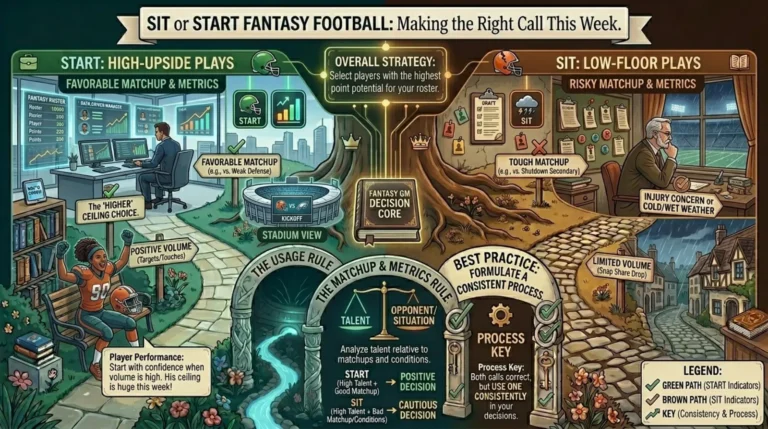
- Sit or start fantasy football means deciding who plays in your lineup.
- Start players with favorable matchups.
- Sit players with poor matchups or injury concerns.
- Use projections as a guide, not a rule.
- Follow player trends and opportunity.
- Check injury reports before kickoff.
- Weather and defense matchups matter.
- Smart lineup choices increase your chance of winning.
What Does Sit or Start Fantasy Football Mean?
Sit or start fantasy football refers to weekly lineup decisions.
Managers choose:
- Which players to start.
- Which players to bench.
- Which matchups provide the best chance for points.
Every week brings new choices. Injuries, weather, and defenses can change player value.
Why Sit or Start Decisions Matter
Fantasy football rewards points.
Starting the wrong player can cost you a win.
Good decisions help you:
- Win close matchups.
- Reach the playoffs.
- Maximize player value.
- Improve your season record.
Even small lineup changes can make a huge difference.
How Sit or Start Fantasy Football Works
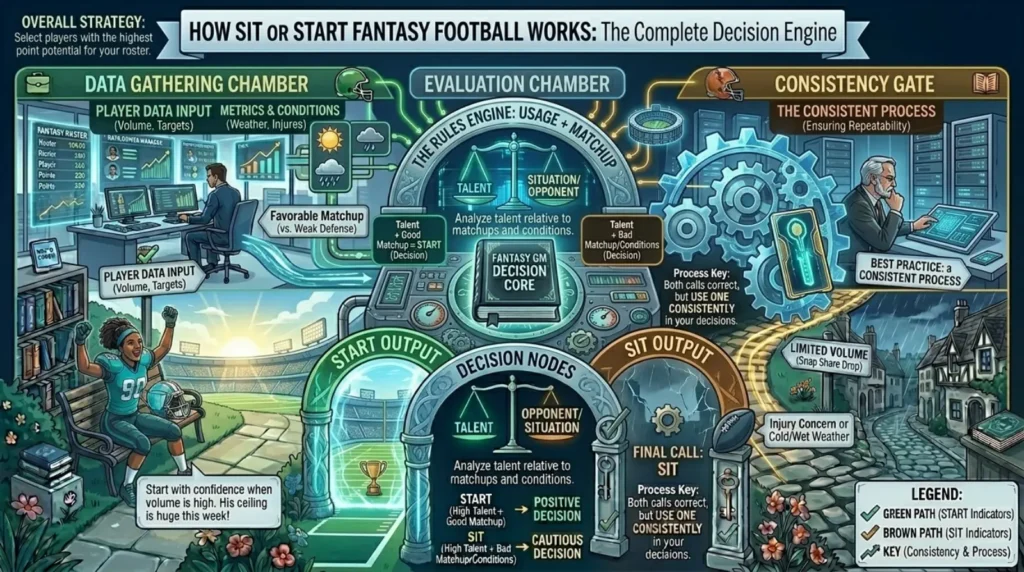
Before each NFL week, managers review:
- Player health.
- Opponent strength.
- Recent performance.
- Projected points.
- Game environment.
Then they decide who belongs in the starting lineup.
Key Factors to Consider Before Starting a Player
Several factors influence fantasy success.
Matchup Difficulty
Weak defenses create scoring opportunities.
Recent Usage
Volume matters.
Look at:
- Targets.
- Carries.
- Snap counts.
Injury Status
Limited players carry more risk.
Team Situation
Quarterback changes can affect receivers and running backs.
Weather Conditions
Bad weather often hurts passing games.
Start vs Sit Comparison Table
| Factor | Start Player | Sit Player |
|---|---|---|
| Matchup | Easy defense | Elite defense |
| Recent Form | Trending up | Trending down |
| Health | Fully healthy | Injury concerns |
| Opportunity | High volume | Limited touches |
| Game Script | Favorable | Negative game flow |
| Confidence Level | High | Low |
Real-Life Sit or Start Examples
Example 1: Running Back
Start: A running back facing the league’s worst run defense.
Sit: A backup runner sharing carries against a top defense.
Example 2: Wide Receiver
Start: A receiver averaging ten targets per game.
Sit: A player with declining opportunities.
Example 3: Quarterback
Start: A quarterback in a projected shootout.
Sit: A quarterback playing in heavy rain.
Sit or Start Fantasy Football by Position
Quarterbacks
Focus on:
- Passing volume.
- Rushing ability.
- Opponent rankings.
Running Backs
Look for:
- Workload.
- Goal-line touches.
- Matchup quality.
Wide Receivers
Target players with:
- High target share.
- Strong quarterback play.
- Favorable coverage.
Tight Ends
Volume matters most.
Defense and Special Teams
Stream defenses against weak offenses.
Common Mistakes Fantasy Managers Make
Ignoring Matchups
Great players can struggle against elite defenses.
Chasing Last Week’s Points
One big game does not guarantee another.
Starting Injured Players
Limited players often disappoint.
Trusting Name Value
Famous players are not always the best option.
Overreacting to Projections
Projections help, but they are not perfect.
Tips and Tricks for Better Sit or Start Decisions
Check Injury Reports Daily
Late news changes everything.
Follow Snap Counts
More snaps often lead to more opportunities.
Trust Consistent Volume
Targets and carries matter more than touchdowns.
Use Multiple Sources
Compare rankings from several experts.
Think Long-Term
Avoid emotional decisions.
Usage in Daily Fantasy Football Life
Fantasy managers use sit or start advice every week.
Common situations include:
- Choosing flex players.
- Replacing injured starters.
- Deciding between two receivers.
- Streaming quarterbacks.
- Preparing for playoff matchups.
Weekly decisions create the excitement of fantasy football.
Advanced Strategies for Sit or Start Success
Understand Game Script
Teams trailing often throw more.
Teams leading usually run more.
Identify Breakout Candidates
Watch young players gaining opportunities.
Consider Vegas Totals
High-scoring games create fantasy upside.
Monitor Defensive Injuries
Missing defenders can improve matchups.
Synonyms and LSI Keywords
Related Search Terms
- fantasy football start sit
- fantasy football lineup advice
- who should I start fantasy football
- fantasy football rankings
- weekly fantasy football picks
- fantasy football sleeper picks
- fantasy football waiver advice
- fantasy football lineup decisions
Long-Tail Keywords
- who should I start in fantasy football this week
- best sit or start fantasy football advice
- fantasy football lineup help
- start or bench fantasy football players
Expert Insights
Experienced fantasy managers focus on opportunity.
Volume predicts success better than touchdowns.
Smart managers avoid emotional decisions.
They also stay informed throughout the week.
Successful fantasy football owners combine:
- Statistics.
- Matchups.
- Injury news.
- Player trends.
This balanced approach improves long-term results.
Frequently Asked Questions
What does sit or start fantasy football mean?
It means choosing who starts and who stays on your bench.
How do I decide who to start?
Look at matchups, injuries, and recent performance.
Should I trust fantasy projections?
Use projections as guidance, not guarantees.
Why are matchups important?
Strong defenses can limit fantasy production.
Should I start injured players?
Only if they are fully expected to play.
What matters most in fantasy football?
Opportunity and consistent usage.
Can weather affect fantasy points?
Yes. Rain and wind often impact passing games.
When should I set my lineup?
Check final injury updates before kickoff.
Internal Linking Suggestions
Link this article to:
- Fantasy Football Sleepers Guide
- Best Fantasy Football Draft Strategy
- Waiver Wire Pickups for This Week
- PPR vs Standard Fantasy Football Explained
- How Fantasy Football Scoring Works
Conclusion
Making the right sit or start fantasy football decisions takes practice. Every week brings new challenges. Matchups, injuries, and player usage all matter.
Do not rely only on projections. Instead, combine statistics with current news and game situations.
The best fantasy managers stay active and adjust their lineups wisely.
Over time, better decisions lead to more wins and stronger playoff chances.
Remember this simple rule:
Start players with opportunity and favorable matchups. Sit players facing difficult situ

