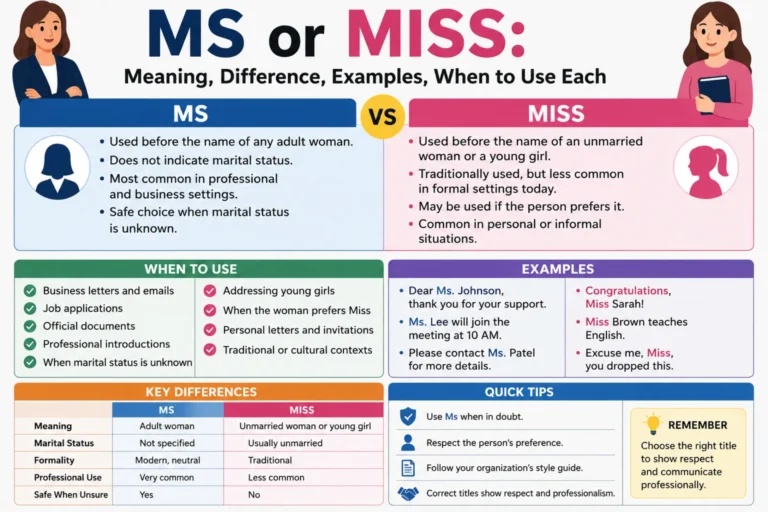
MS or Miss is a common question for anyone writing emails, letters, forms, or invitations. Many people feel unsure about which title is correct. The good news is that the difference is easy to understand. Each title has a specific purpose. Using the right one shows respect and good manners. It also helps you communicate clearly in both personal and professional settings. In this guide, you will learn the meaning of Ms and Miss, their key differences, real-life examples, common mistakes, and expert tips. By the end, you will know exactly when to use each title with confidence.
Quick Summary
- Ms is a title for any adult woman, no matter her marital status.
- Miss is usually used for an unmarried woman or a young girl.
- Ms is the safest choice when you do not know a woman’s marital status.
- Miss is more common in personal or traditional situations.
- In business, Ms is generally preferred.
- Both titles show respect when used correctly.
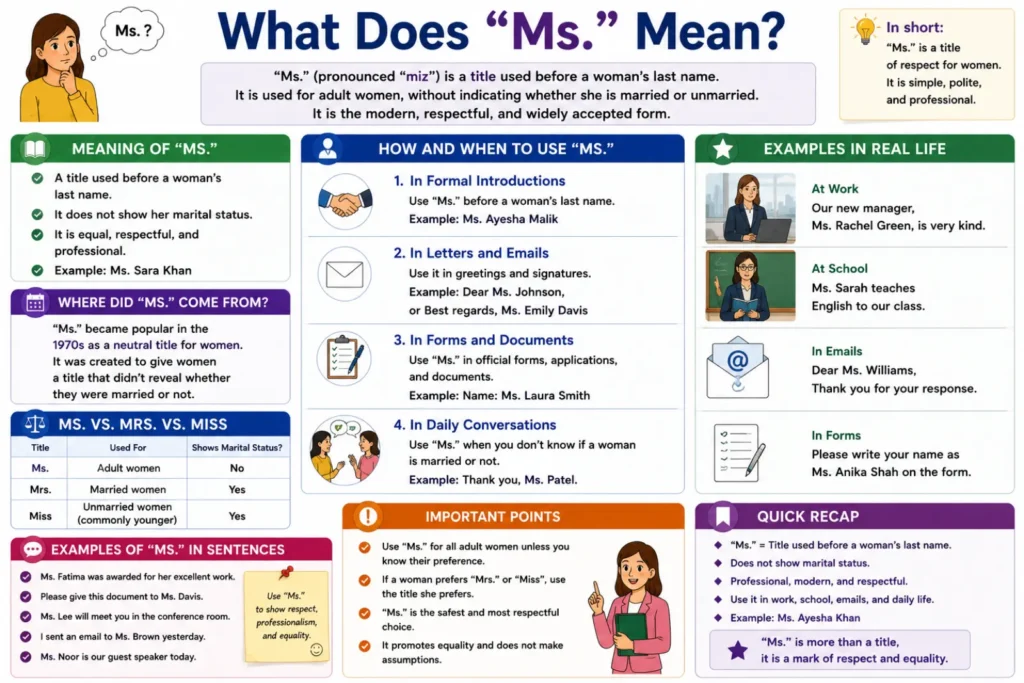
What Does Ms Mean?
Ms is a respectful title for an adult woman.
Unlike Mrs, it does not tell people whether the woman is married.
Today, Ms is the most common title in workplaces, schools, and official documents.
Examples
- Ms Sarah Brown will lead today’s meeting.
- Please contact Ms Johnson for more details.
- Thank you, Ms Lee, for your support.
What Does Miss Mean?
Miss is a title used for an unmarried woman or a young girl.
People often use it in personal conversations or traditional settings.
Some women also choose Miss as their preferred title.
Examples
- Miss Emily Carter won the award.
- Excuse me, Miss, you dropped your wallet.
- Miss Brown teaches Grade 4.
MS or Miss: Key Difference
The biggest difference is marital status and modern usage.
- Ms does not show marital status.
- Miss usually refers to someone who is unmarried.
Today, many women prefer Ms because it focuses on the person, not their relationship status.
MS vs Miss Comparison Table
| Feature | Ms | Miss |
|---|---|---|
| Meaning | Adult woman | Unmarried woman or young girl |
| Marital status | Not specified | Usually unmarried |
| Formality | Professional and modern | Traditional and personal |
| Workplace use | Very common | Less common |
| Safe when unsure | Yes | No |
| Business letters | Recommended | Only if preferred |
When Should You Use Ms?
Use Ms in these situations:
- Business emails
- Job applications
- Official documents
- Customer communication
- Academic writing
- Professional introductions
- When marital status is unknown
Example
Correct:
Dear Ms Taylor,
Thank you for your application.
When Should You Use Miss?
Use Miss when:
- Addressing a young girl
- The woman prefers the title
- Writing personal invitations
- Following traditional customs
Example
Dear Miss Anderson,
Congratulations on your graduation.
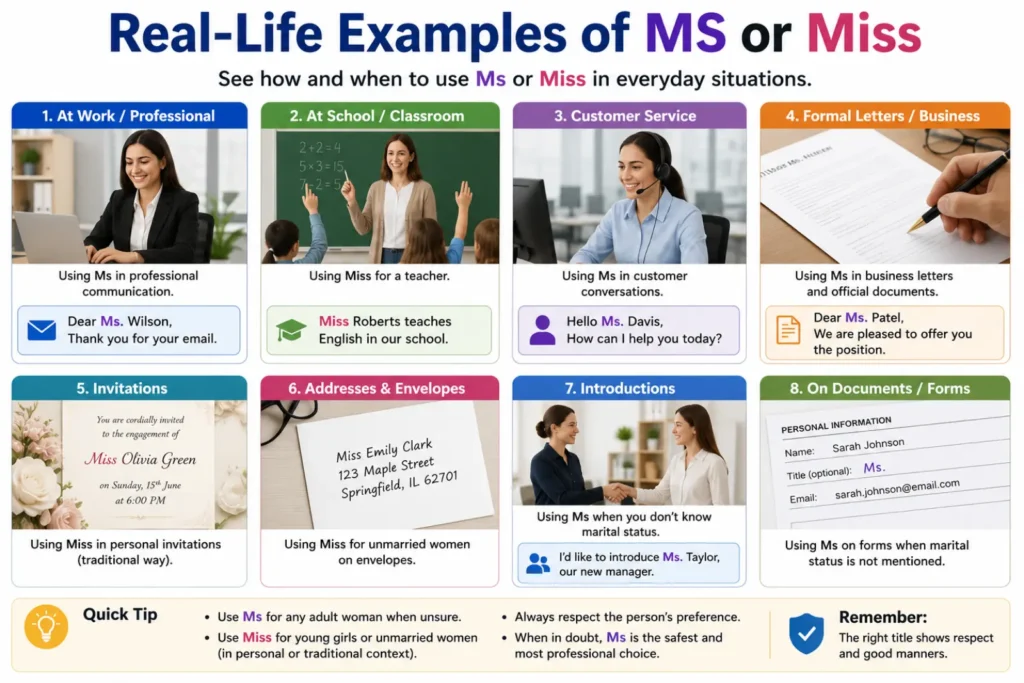
Real-Life Examples of MS or Miss
At Work
✔ Dear Ms Wilson,
Thank you for attending the interview.
At School
✔ Miss Roberts teaches mathematics.
Customer Service
✔ Hello Ms Davis,
Your order has been shipped.
Wedding Invitation
✔ Miss Olivia Clark
requests the pleasure of your company.
Common Mistakes People Make
Using Miss for Every Woman
This is outdated in many professional settings.
Guessing Marital Status
Never assume someone is married or unmarried.
Forgetting Personal Preference
Some women prefer Miss, Mrs, or Ms.
Always respect their choice.
Using Periods Incorrectly
American English:
- Ms.
- Miss
British English:
- Ms
- Miss
Both styles are acceptable if used consistently.
Tips for Choosing Between MS or Miss
- Choose Ms if you are unsure.
- Use Miss only when appropriate.
- Follow company style guides.
- Respect personal preferences.
- Keep your writing consistent.
Why MS Is More Popular Today
Modern workplaces value equality.
Using Ms removes unnecessary attention from marital status.
Many companies now use Ms as the standard title for women.
It creates a professional and respectful tone.
MS or Miss in Daily Life
You may use these titles when:
- Writing emails
- Filling out forms
- Sending greeting cards
- Mailing invitations
- Speaking politely
- Creating business documents
Correct titles leave a positive impression.
Synonyms and Related Terms
Related Titles
- Mrs
- Madam
- Mx
- Lady
- Ma’am
LSI Keywords
- Ms meaning
- Miss meaning
- Ms vs Miss
- Difference between Ms and Miss
- Formal titles for women
- Professional title for women
- Female honorifics
- Business letter titles
- How to address a woman
- Email greetings
Common Grammar Rules
Correct
Ms Jennifer White
Miss Emma Green
Incorrect
Ms. Jennifer White (British style)
Miss. Emma Green
Always follow one style throughout your document.
Expert Insights
Language changes over time.
Today, Ms has become the standard professional title because it respects privacy and equality.
Many organizations encourage employees to use Ms unless someone requests another title.
When in doubt, asking politely or using Ms helps avoid mistakes.
Good communication starts with respectful language.
Frequently Asked Questions
Is Ms the same as Miss?
No.
Ms does not show marital status.
Miss usually refers to an unmarried woman.
Which is more professional, Ms or Miss?
Ms is more professional in most workplaces.
Should I use Ms if I do not know marital status?
Yes.
It is the safest and most respectful choice.
Can a married woman use Ms?
Yes.
Many married women prefer Ms.
Is Miss only for young girls?
Not always.
Some adult women also prefer Miss.
Why do companies use Ms?
It avoids mentioning marital status and promotes equality.
Is Ms used in formal letters?
Yes.
It is widely accepted in business and official communication.
Can I ask someone which title they prefer?
Yes.
It is polite and respectful.
Featured Snippet: MS or Miss
Ms is a title for any adult woman, regardless of whether she is married. Miss is traditionally used for an unmarried woman or a young girl. If you are unsure which title to use, Ms is usually the safest and most professional choice.
Conclusion
Choosing between MS or Miss is easier once you understand their meanings. Ms is the preferred title for most professional and formal situations because it does not reveal marital status. Miss remains appropriate for young girls, unmarried women, or those who specifically prefer it. When you are unsure, Ms is the respectful and modern choice. Using the correct title shows courtesy, professionalism, and attention to detail. Keep these simple rules in mind, and you will confidently address women in emails, letters, forms, and everyday conversations.