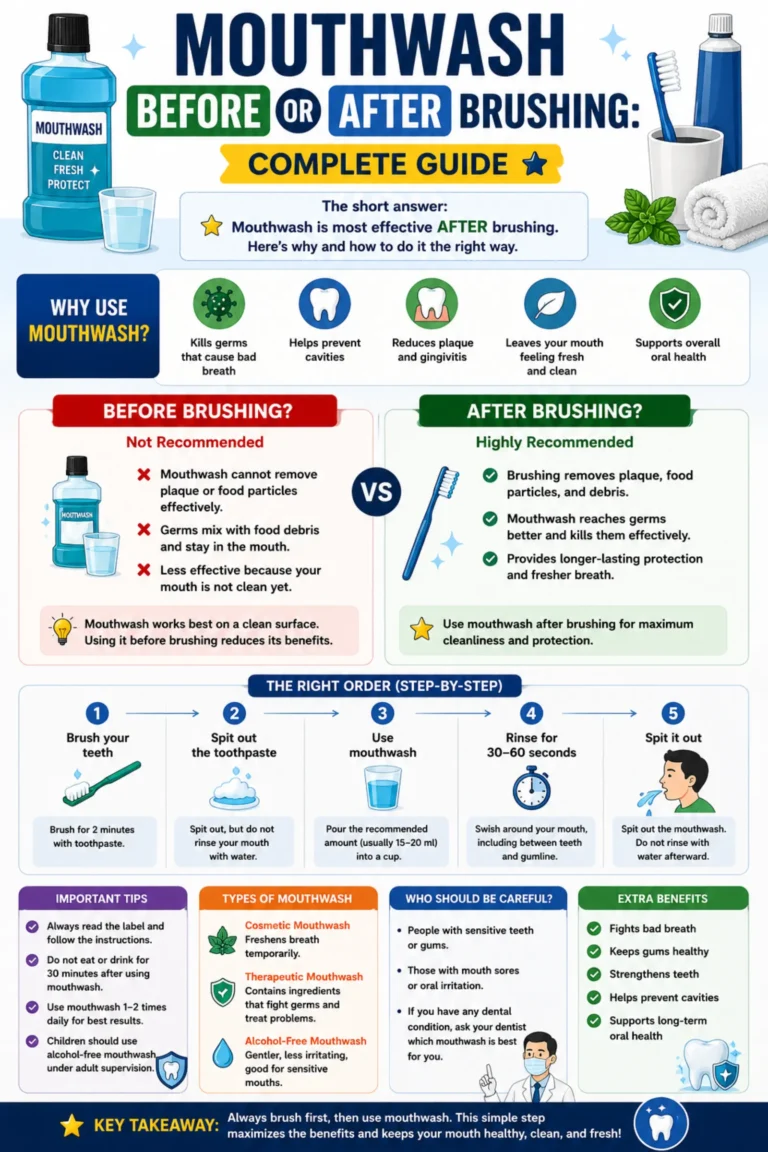
Mouthwash before or after brushing is one of the most common questions people ask about oral hygiene. Many people use mouthwash every day, but they are not sure when to use it. Some rinse before brushing, while others use it right after brushing. This small step can make a big difference in your dental health.
The right routine helps protect your teeth, strengthen enamel, and keep your breath fresh. However, using mouthwash at the wrong time may reduce the benefits of fluoride toothpaste. That is why dentists often recommend a specific order for brushing, flossing, and rinsing.
This guide explains everything in simple words. You will learn what dentists recommend, why timing matters, the benefits of each method, and the best daily routine for healthier teeth and gums.
Quick Summary
Featured Snippet Answer
- Most dentists recommend not using mouthwash immediately after brushing.
- Fluoride toothpaste continues protecting your teeth after brushing.
- Rinsing right away can wash away helpful fluoride.
- You can use mouthwash before brushing or wait at least 30 minutes after brushing.
- Alcohol-free mouthwash is a good choice for daily use.
- Mouthwash supports oral hygiene but does not replace brushing or flossing.
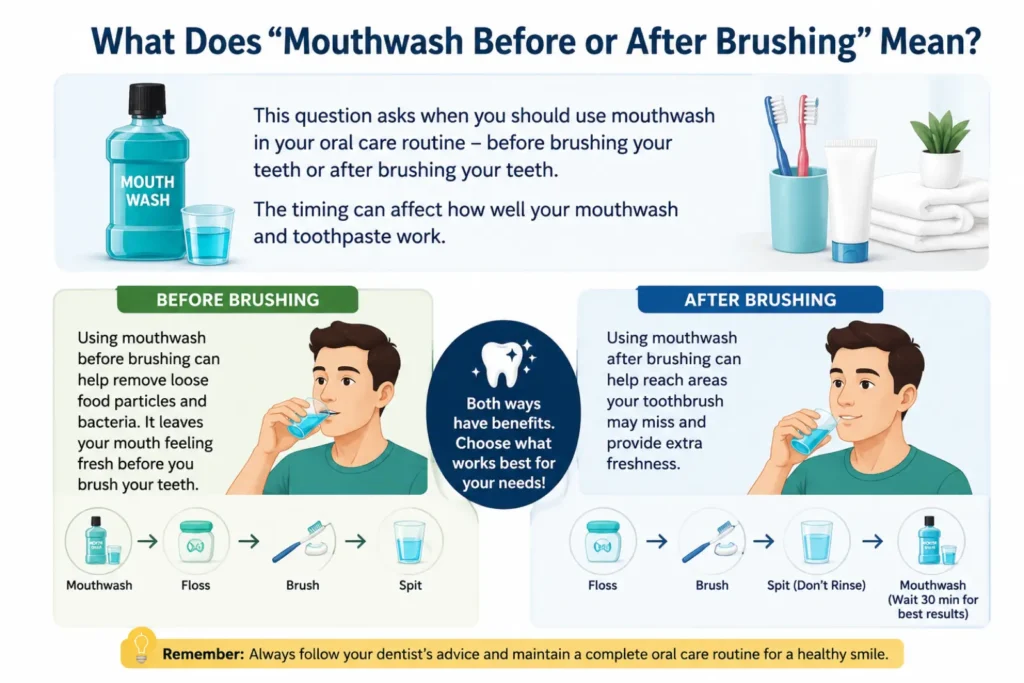
What Does “Mouthwash Before or After Brushing” Mean?
The question simply asks when you should use mouthwash during your daily oral care routine.
Many people brush their teeth first because they think it should always come before mouthwash. Others prefer using mouthwash before brushing because it leaves the mouth feeling fresh. Some even use mouthwash several times each day.
The truth is that each method offers different benefits. The best choice depends on the type of mouthwash you use and your dental health goals.
For example:
- A fluoride mouthwash helps strengthen enamel.
- An antibacterial mouthwash helps reduce harmful bacteria.
- A cosmetic mouthwash mainly freshens breath.
Knowing the purpose of your mouthwash helps you decide when to use it.
Should You Use Mouthwash Before or After Brushing?
This is the answer most people want.
Dental professionals generally recommend avoiding mouthwash immediately after brushing.
Why?
Most toothpastes contain fluoride. Fluoride stays on your teeth after brushing and keeps working for some time. It strengthens tooth enamel and helps prevent cavities.
If you rinse with mouthwash immediately after brushing, especially one without fluoride, you may wash away much of the fluoride before it has enough time to work.
Instead, dentists usually suggest one of these options:
- Use mouthwash before brushing.
- Wait at least 30 minutes after brushing.
- Use mouthwash after lunch.
- Use mouthwash during the afternoon.
- Use mouthwash at another time of the day between brushing sessions.
This simple change allows fluoride to protect your teeth longer.
Why Timing Matters More Than You Think
Many people believe brushing is enough.
However, the timing of each step in your routine also affects your oral health.
Think of fluoride like sunscreen.
After you brush, fluoride creates a protective layer on your teeth. That layer needs time to bond with the enamel.
If you rinse immediately, you remove part of that protective layer before it finishes its job.
This may slightly reduce the cavity-fighting benefits of your toothpaste.
Although one rinse will not ruin your teeth, repeating this habit every day for years can reduce the long-term protection your teeth receive.
That is why dentists focus not only on brushing but also on what happens after brushing.
Why Fluoride Is So Important
Fluoride is one of the most studied ingredients in modern dentistry.
Its main job is protecting teeth from decay.
Every day, acids from food and bacteria attack your tooth enamel. This process removes minerals from the enamel.
Dentists call this demineralization.
Fortunately, fluoride helps reverse early damage.
It returns minerals to the enamel and makes teeth stronger.
Benefits of fluoride include:
- Strengthens tooth enamel
- Helps repair early tooth decay
- Reduces cavity risk
- Protects children and adults
- Makes teeth more resistant to acids
Because fluoride keeps working after brushing, dentists recommend leaving it on your teeth instead of rinsing it away.
Scientific Research Behind the Recommendation
Many dental organizations recommend limiting rinsing after brushing.
Research shows that leaving fluoride toothpaste on your teeth increases fluoride levels in the mouth for a longer time.
Higher fluoride levels help:
- Reduce cavities
- Strengthen enamel
- Slow tooth decay
- Improve long-term oral health
This is why many dentists advise patients to:
- Spit out excess toothpaste.
- Avoid rinsing with water.
- Delay mouthwash for at least 30 minutes.
These recommendations are especially important for people who have:
- Frequent cavities
- Weak enamel
- Orthodontic braces
- Sensitive teeth
- High sugar intake
Following these simple steps can improve your oral health without adding extra work to your daily routine.
Mouthwash Before vs After Brushing
The table below makes the differences easier to understand.
| Feature | Before Brushing | Immediately After Brushing |
|---|---|---|
| Freshens breath | ✅ Yes | ✅ Yes |
| Removes loose food particles | ✅ Yes | ✅ Yes |
| Helps loosen plaque | ✅ Yes | Slightly |
| Washes away bacteria | ✅ Yes | ✅ Yes |
| Keeps fluoride from toothpaste on teeth | ✅ Yes | ❌ No |
| Recommended by many dentists | ✅ Yes | ❌ Not immediately |
Which Option Wins?
Using mouthwash before brushing is usually the better choice if you plan to brush right away.
If you prefer using mouthwash after brushing, simply wait around 30 minutes before rinsing.
This allows fluoride to continue protecting your teeth.
Real-Life Examples
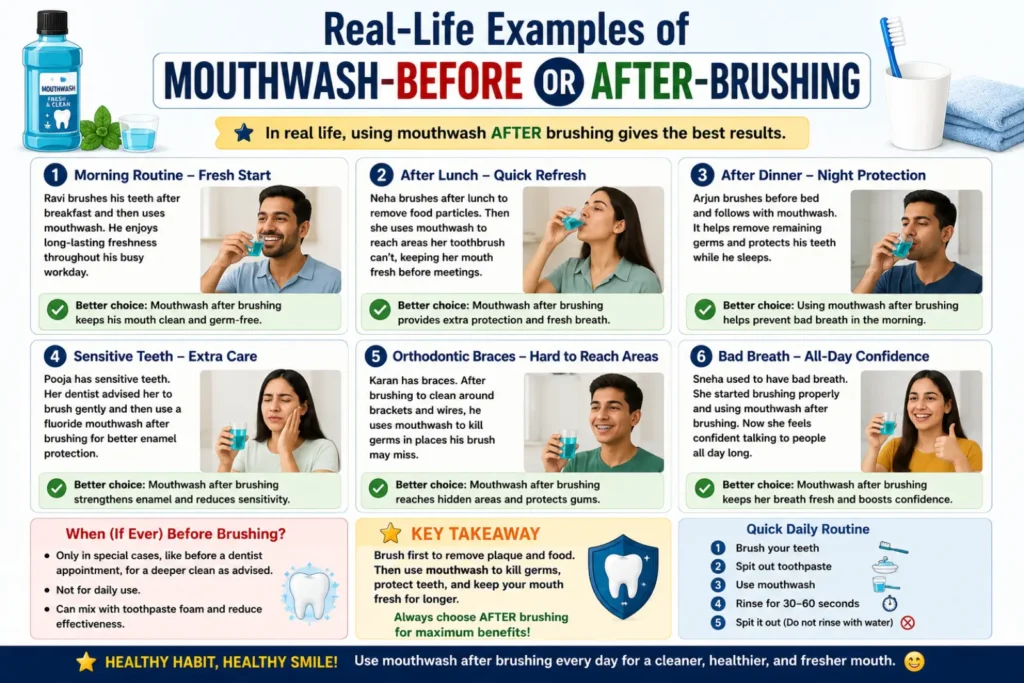
Example 1: Busy Morning
Sarah wakes up at 7:00 AM.
She uses mouthwash first while getting ready.
Then she brushes with fluoride toothpaste.
She spits out the toothpaste but does not rinse with water.
Her teeth stay protected throughout the morning.
Example 2: Office Worker
David brushes before leaving for work.
After lunch, he cannot brush again.
Instead, he uses mouthwash to freshen his breath and reduce bacteria.
This keeps his mouth cleaner until he brushes again at night.
Example 3: Teenager With Braces
Emma wears braces.
Food often gets trapped around the brackets.
She brushes twice daily.
She also uses an antibacterial mouthwash after school to reduce bacteria and improve gum health.
Her orthodontist recommends waiting after brushing before using the rinse.
Example 4: Someone With Dry Mouth
Ali experiences dry mouth because of medication.
His dentist recommends an alcohol-free mouthwash instead of a traditional alcohol-based rinse.
His mouth feels more comfortable, and he avoids irritation while still keeping his breath fresh.
Best Daily Oral Care Routine
Following the right order helps you get the most from your toothpaste and mouthwash.
Here is a simple routine that many dentists recommend.
Step 1: Floss Your Teeth
Floss before brushing.
Floss removes food particles and plaque between your teeth. These areas are hard to reach with a toothbrush.
Daily flossing also lowers the risk of gum disease.
Step 2: Use Mouthwash (Optional)
If you use mouthwash before brushing, rinse for the time listed on the label.
Most mouthwashes recommend rinsing for 30 to 60 seconds.
Spit it out after rinsing.
Do not swallow mouthwash.
Step 3: Brush with Fluoride Toothpaste
Brush for two minutes.
Clean every surface of your teeth.
Use gentle, circular motions instead of brushing too hard.
Step 4: Spit, Don’t Rinse
After brushing, spit out the extra toothpaste.
Avoid rinsing with water right away.
This lets fluoride stay on your teeth longer.
Step 5: Wait Before Eating or Drinking
Wait at least 30 minutes before eating, drinking, or using mouthwash.
This gives fluoride enough time to protect your enamel.
Types of Mouthwash and When to Use Them
Not every mouthwash works the same way.
Choosing the right one depends on your oral health needs.
Fluoride Mouthwash
Fluoride mouthwash helps strengthen tooth enamel.
It also lowers the risk of cavities.
It is a good choice for people who:
- Get cavities often
- Have weak enamel
- Wear braces
- Have sensitive teeth
Many dentists recommend fluoride mouthwash for extra cavity protection.
Antibacterial Mouthwash
Antibacterial mouthwash reduces harmful bacteria.
It can also help lower plaque buildup.
Many people use it to improve gum health.
It may be helpful if you have:
- Gingivitis
- Bleeding gums
- Swollen gums
- Persistent bad breath
Your dentist may recommend a stronger prescription rinse if you have advanced gum disease.
Cosmetic Mouthwash
Cosmetic mouthwash mainly freshens your breath.
It helps reduce unpleasant odors for a short time.
However, it does not treat cavities or gum disease.
It works well before:
- School
- Work
- Meetings
- Social events
Alcohol-Free Mouthwash
Many people prefer alcohol-free mouthwash.
It cleans the mouth without causing a burning feeling.
It is often recommended for people with:
- Dry mouth
- Sensitive gums
- Mouth sores
- Braces
- Older adults
Alcohol-free formulas are also suitable for daily use.
Natural Mouthwash
Natural mouthwashes use ingredients like:
- Aloe vera
- Xylitol
- Tea tree oil
- Essential oils
- Herbal extracts
Some people choose natural products because they avoid artificial ingredients.
Still, not every natural mouthwash contains fluoride.
Always check the label before buying one.
Benefits of Using Mouthwash Correctly
Using mouthwash at the right time offers several advantages.
Fresher Breath
Mouthwash helps remove odor-causing bacteria.
This keeps your breath fresh for longer.
Cleaner Mouth
A toothbrush cannot reach every corner of your mouth.
Mouthwash reaches many areas around your gums and cheeks.
Healthier Gums
Some mouthwashes reduce bacteria that cause gum disease.
Healthy gums are less likely to bleed or become swollen.
Stronger Teeth
Fluoride mouthwash adds another layer of protection against cavities.
It supports your daily brushing routine.
Better Confidence
Fresh breath helps many people feel more confident.
This can improve social interactions and workplace confidence.
Common Mistakes People Make
Small mistakes can reduce the benefits of mouthwash.
Here are the most common ones.
Using Mouthwash Right After Brushing
This is the mistake dentists mention most often.
It may wash away fluoride from your toothpaste.
Instead, wait about 30 minutes.
Skipping Brushing
Mouthwash cannot replace brushing.
Only brushing removes sticky plaque from your teeth.
Always brush twice each day.
Skipping Flossing
Food often gets trapped between teeth.
Mouthwash cannot remove stuck food like floss can.
Floss every day for better oral health.
Using Too Much Mouthwash
More mouthwash does not clean your mouth better.
Use only the amount recommended on the bottle.
Swallowing Mouthwash
Mouthwash is not meant to be swallowed.
Always spit it out after rinsing.
Keep it away from young children unless directed by a dentist.
Choosing the Wrong Product
Different mouthwashes solve different problems.
For example:
- Fluoride helps prevent cavities.
- Antibacterial formulas target bacteria.
- Cosmetic rinses mainly freshen breath.
Choose one that matches your needs.
Tips for Getting the Best Results
Healthy habits make a big difference.
Follow these simple tips every day.
- Brush twice daily.
- Floss once each day.
- Replace your toothbrush every three months.
- Clean your tongue.
- Drink plenty of water.
- Limit sugary snacks.
- Visit your dentist every six months.
- Use mouthwash as a supplement, not a replacement.
- Read product labels before buying.
- Follow your dentist’s recommendations.
Small improvements can lead to healthier teeth over time.
Who Should Use Mouthwash?
Many people can benefit from mouthwash.
It is especially helpful for:
- Adults
- Teenagers
- People with braces
- People with gum disease
- People with frequent bad breath
- People at higher risk of cavities
- People with dry mouth who use alcohol-free products
Children should only use mouthwash if it is appropriate for their age and recommended by a dentist.
Who May Not Need Mouthwash?
Not everyone needs to use mouthwash every day.
If you:
- Brush twice daily
- Floss regularly
- Eat a healthy diet
- Visit your dentist regularly
You may already have excellent oral hygiene.
Your dentist can tell you whether adding mouthwash would provide extra benefits for your specific situation.
Mouthwash Myths vs. Facts
Many people believe things about mouthwash that are not true. Let’s separate the facts from the myths.
| Myth | Fact |
|---|---|
| Mouthwash can replace brushing. | No. Mouthwash is only an extra step. Brushing removes plaque from your teeth. |
| A stronger burning feeling means better cleaning. | Not always. The burning usually comes from alcohol, not better cleaning power. |
| Everyone needs mouthwash every day. | No. Some people have healthy mouths without using mouthwash. |
| Mouthwash cures bad breath forever. | No. It only controls bad breath for a while. You must treat the cause of bad breath. |
| All mouthwashes are the same. | No. Some contain fluoride, while others fight bacteria or simply freshen breath. |
| More mouthwash works better. | No. Always use the amount recommended on the label. |
Understanding these facts helps you build a better oral care routine.
Expert Insights
Dentists agree that brushing with fluoride toothpaste remains the most important part of daily oral care.
Mouthwash is helpful, but it works best as a supplement rather than a replacement.
Dental professionals often recommend these habits:
- Brush your teeth twice every day.
- Floss once a day.
- Leave fluoride toothpaste on your teeth after brushing.
- Wait before using mouthwash if you brush first.
- Visit your dentist for regular checkups and cleanings.
If you have braces, gum disease, dry mouth, or frequent cavities, your dentist may recommend a specific type of mouthwash for your needs.
The best oral care routine is the one you follow consistently every day.
Related Search Terms (LSI Keywords)
Using related keywords helps search engines better understand the topic.
Naturally include terms like:
- best time to use mouthwash
- should you use mouthwash after brushing
- mouthwash before brushing teeth
- fluoride mouthwash benefits
- oral hygiene routine
- brushing teeth correctly
- when should I use mouthwash
- dental care routine
- fresh breath tips
- healthy teeth habits
- fluoride toothpaste
- antibacterial mouthwash
- alcohol-free mouthwash
- mouthwash for bad breath
- cavity prevention
These keywords fit naturally throughout the article without keyword stuffing.
(FAQs)
1. Is it better to use mouthwash before or after brushing?
Most dentists recommend using mouthwash before brushing or waiting at least 30 minutes after brushing. This allows fluoride toothpaste to continue protecting your teeth.
2. Should I rinse with water after brushing?
No.
Simply spit out the excess toothpaste. Avoid rinsing with water so fluoride stays on your teeth longer.
3. Can I use mouthwash every day?
Yes.
Most mouthwashes are safe for daily use when you follow the directions on the label.
4. How long should I wait to use mouthwash after brushing?
Wait at least 30 minutes after brushing if you want to use mouthwash.
This gives fluoride time to strengthen your enamel.
5. Does mouthwash remove plaque?
Some antibacterial mouthwashes help reduce plaque.
However, brushing and flossing remain the best ways to remove plaque from your teeth.
6. Which mouthwash is best for cavities?
A fluoride mouthwash is usually the best choice for helping prevent cavities.
Ask your dentist which product is right for you.
7. Is alcohol-free mouthwash better?
Alcohol-free mouthwash is often a good option for people with dry mouth, sensitive gums, or mouth sores.
Many people also prefer it for daily use because it causes less irritation.
8. Can children use mouthwash?
Some children can safely use mouthwash.
Always choose a product made for their age group and follow your dentist’s advice.
Conclusion
Knowing mouthwash before or after brushing can make your daily oral care routine more effective. While mouthwash helps freshen breath and reduce bacteria, it should never replace brushing and flossing. Most dental experts recommend avoiding mouthwash immediately after brushing because fluoride toothpaste needs time to protect your teeth. A better approach is to use mouthwash before brushing or wait at least 30 minutes after brushing. Choosing the right mouthwash for your needs and following a consistent routine can improve your oral health over time. Remember that healthy teeth depend on good daily habits, regular dental checkups, and proper use of oral care products. Small changes in your routine today can help protect your smile for many years to come.