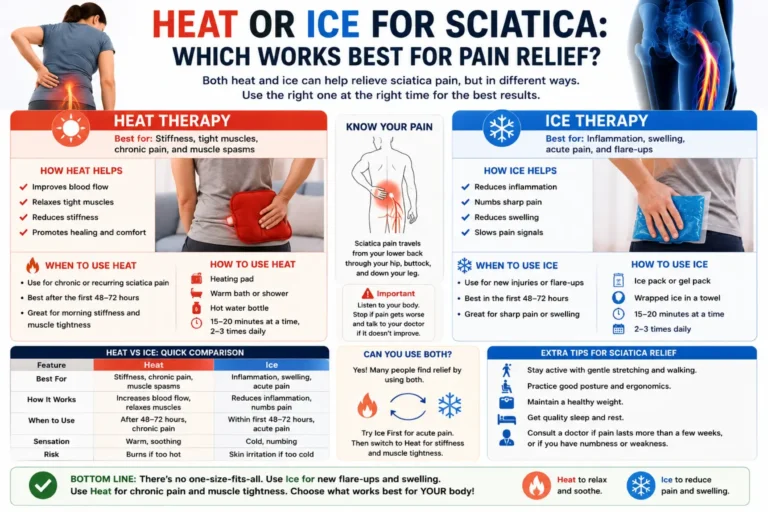
Heat or ice for sciatica can help ease pain and make movement easier. But the best choice depends on your symptoms. Ice may help with new pain and swelling. Heat may relax tight muscles and reduce stiffness. Some people also feel better when they switch between both. Sciatica usually causes pain that travels from the lower back into the buttock and leg. It may also cause tingling, numbness, or weakness.
Home treatments can offer short-term relief. However, heat and ice do not fix the cause of sciatica. Gentle movement also matters during recovery. Long periods of bed rest can make symptoms harder to manage.
This guide explains when to use heat, when to use ice, and how to use both safely.
Quick Summary
- Ice may help during a new or painful flare.
- Heat may help tight muscles, stiffness, and aching.
- Use heat or ice for about 10 to 20 minutes at a time.
- Always place a cloth between your skin and the pack.
- Do not sleep with a heating pad or ice pack.
- Gentle movement usually works better than prolonged bed rest.
- Heat and ice only manage symptoms. They do not treat the root cause.
- Seek urgent care for severe weakness, saddle numbness, or bladder problems.
What Is Sciatica?
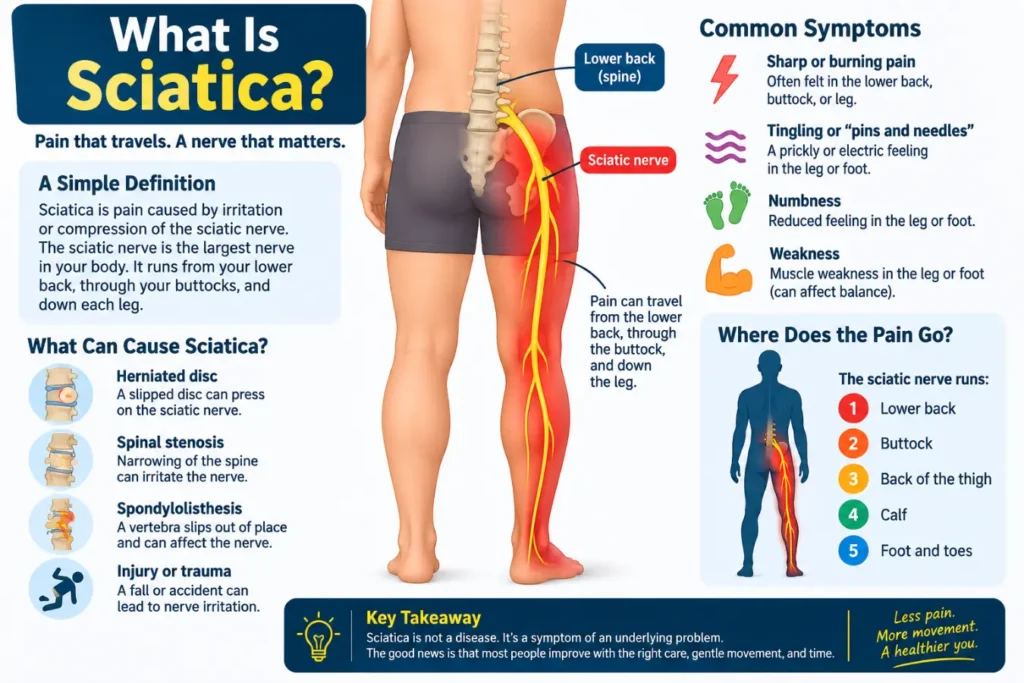
Sciatica describes pain caused by irritation or compression of the sciatic nerve. This nerve runs from your lower back toward your legs and feet.
The pain often affects one side. It may feel sharp, burning, or electric. You may also notice tingling, numbness, or weakness.
A slipped disc often causes sciatica. Other causes include spinal narrowing, back injuries, and spondylolisthesis.
Sciatica differs from simple lower back pain. Sciatica usually sends symptoms down the buttock and leg.
Heat or Ice for Sciatica: Which Is Better?
There is no single answer for everyone.
Ice may work better for new symptoms. It can numb pain and may reduce inflammation and swelling.
Heat may work better for stiffness and muscle tightness. Warmth can relax muscles and make movement more comfortable.
Some people find heat more helpful than ice. Others prefer cold. Your response can help guide your choice.
A simple rule works well:
New, irritated pain → try cold.
Tight, stiff, aching pain → try heat.
You can also try both at different times.
How Does Ice Help Sciatica?
Ice can provide short-term pain relief during a painful flare.
Cold reduces sensation around the treated area. It can also reduce blood flow for a short period. This may help limit swelling after an acute injury.
Sciatica does not always involve visible swelling. Therefore, ice may mainly help by reducing pain rather than fixing nerve compression.
Try an ice pack when your symptoms feel newly irritated. This may happen after lifting, bending, exercise, or another trigger.
Wrap the pack in a thin towel first. Never place ice directly against your skin.
Keep each session around 10 to 20 minutes. Cleveland Clinic recommends keeping icing sessions under 20 minutes.
How Does Heat Help Sciatica?
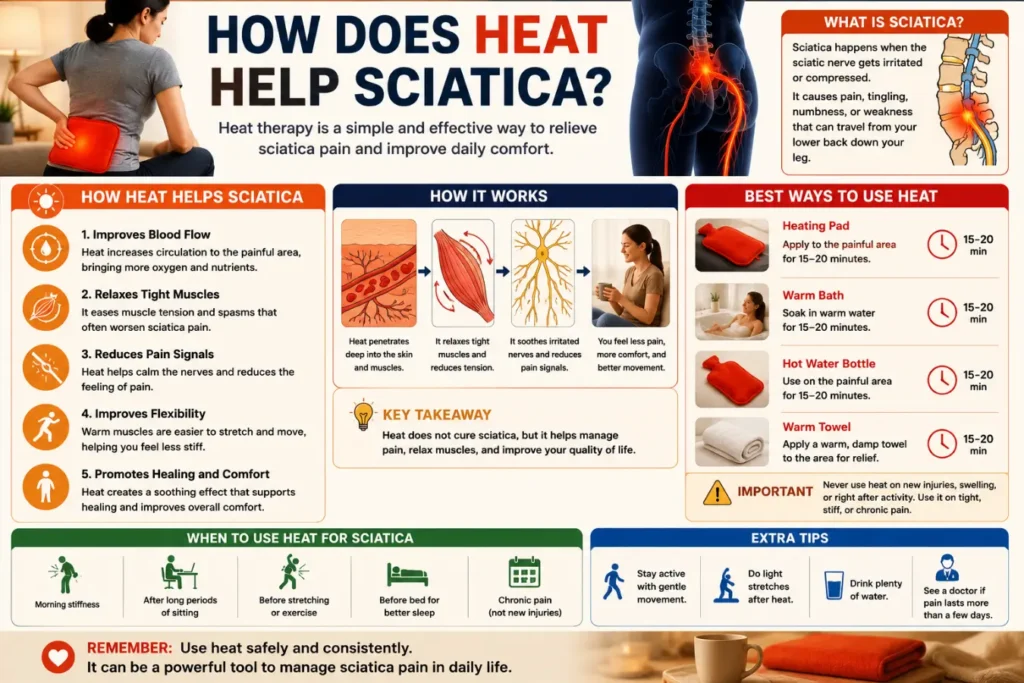
Heat can help when muscles feel tight, stiff, or sore.
Warmth can increase blood flow and relax tight muscles. It may also make stiff areas feel more comfortable.
Heat can work well before gentle movement. For example, you might use a warm pack before walking or stretching.
A warm shower can offer another simple option. A hot water bottle can also work.
Do not make the heat extremely hot. High temperatures can burn your skin.
Avoid falling asleep while using a heating pad.
Heat vs. Ice for Sciatica: Comparison Table
| Feature | Heat | Ice |
|---|---|---|
| Best for | Tightness and stiffness | New or irritated pain |
| Main effect | Relaxes muscles | Numbs pain |
| Typical session | 10–20 minutes | 10–20 minutes |
| Best time | Before gentle movement | During a painful flare |
| Skin safety | Avoid very high heat | Never apply directly |
| Can you alternate? | Yes, if comfortable | Yes, if comfortable |
These approaches mainly provide symptom relief. Your underlying cause still needs attention when symptoms persist or worsen.
When Should You Use Ice for Sciatica?
Consider ice when your pain feels new, sharp, or irritated.
For example, imagine you lifted a heavy box yesterday. Your back and leg pain suddenly became worse. A wrapped cold pack may provide temporary relief.
Ice may also help after an activity that triggers a flare.
Keep the session short. Check your skin during treatment.
Stop if your skin becomes very painful, extremely numb, or unusually pale.
People with reduced sensation should take extra care. They may not notice cold-related skin damage quickly.
When Should You Use Heat for Sciatica?
Heat may suit symptoms that feel stiff, tight, or achy.
For example, you may wake with a stiff lower back. Your leg feels uncomfortable, but gentle movement helps. A warm shower may help you move more comfortably.
You can also try heat before a short walk.
Use a comfortable temperature rather than intense heat. A towel can provide an extra barrier between your skin and the heat source.
Never use heat on numb skin without professional advice. Reduced sensation can increase burn risk.
Can You Alternate Heat and Ice?
Yes. Some people find alternating heat and ice helpful.
For example, you could use cold during a painful flare. Later, you could use gentle heat when your muscles feel tight.
However, you do not need to alternate them on a strict schedule.
Choose the option that gives you better relief.
Cleveland Clinic notes that either heat or ice can sometimes help. Some people may benefit from using both.
Heat and ice should support movement. They should not replace appropriate medical care.
How to Use Heat or Ice Safely
Follow these simple safety tips:
- Wrap ice packs in a thin towel.
- Keep cold sessions around 10 to 20 minutes.
- Use comfortable heat, not extreme heat.
- Limit heat sessions to about 20 minutes.
- Check your skin during treatment.
- Never sleep with a heating pad.
- Do not put ice directly on your skin.
- Avoid heat or cold over areas with poor sensation.
- Stop if treatment causes worse pain.
- Keep moving gently between treatments.
These precautions help reduce burns, cold injuries, and skin irritation.
Real-Life Examples: Heat or Ice for Sciatica
Example 1: Sudden pain after lifting
You lift something heavy and develop sharp leg pain.
Start with gentle activity and consider a wrapped cold pack for short-term relief. Avoid movements that sharply increase symptoms.
Example 2: Morning stiffness
Your sciatica feels worse after sitting or sleeping.
A warm shower may relax tight muscles. Follow it with gentle movement.
Example 3: Pain after exercise
You exercise and notice a sudden flare afterward.
A cold pack may provide temporary comfort. Reduce the activity that triggered the flare.
Example 4: Long-term stiffness
Your main problem feels like muscle tightness rather than new swelling.
Heat may feel more soothing. Gentle walking and appropriate exercises can also help.
These examples do not replace an individual medical assessment.
Common Mistakes to Avoid
Leaving ice on too long
Long icing sessions can damage the skin. Keep sessions short.
Using extreme heat
Very hot heating pads can cause burns. Comfortable warmth works better.
Putting ice directly on skin
Always use a cloth barrier.
Staying in bed all day
Long periods of rest may slow recovery. NHS guidance recommends staying as active as possible.
Stretching through severe pain
Gentle movement can help. However, stop exercises that clearly worsen your symptoms.
Treating only the pain
Heat and ice can reduce discomfort. They do not remove pressure on an irritated nerve.
Ignoring worsening symptoms
Increasing weakness or severe numbness needs medical attention.
Tips for Using Heat or Ice in Daily Life
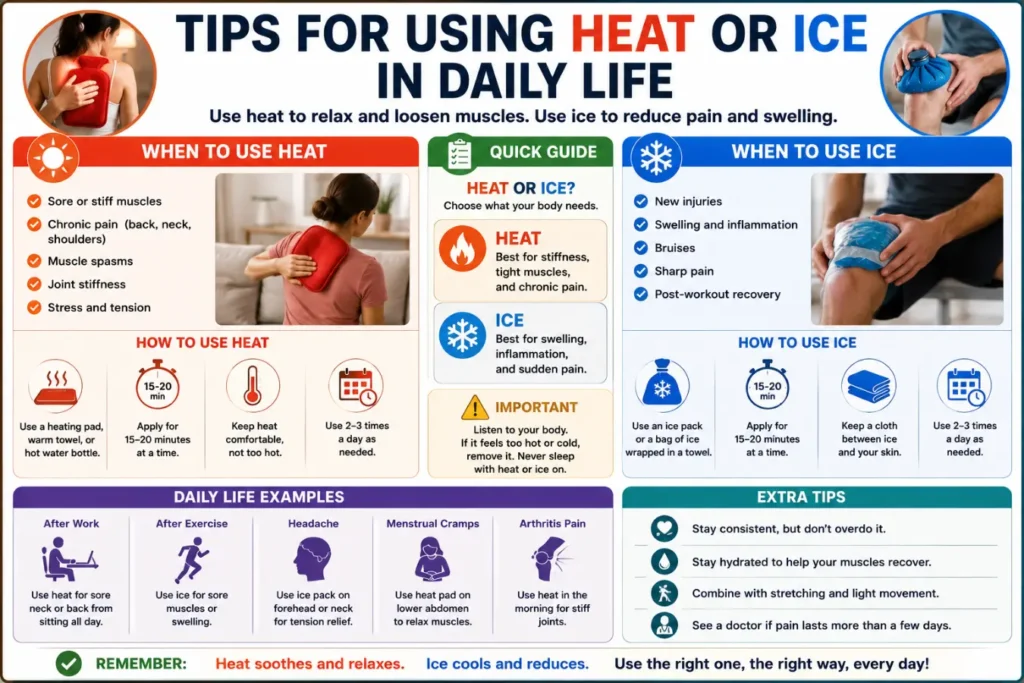
You can fit simple pain-relief habits into your normal routine.
Try heat before a gentle morning walk if stiffness bothers you.
Use cold after an activity that causes a new flare.
Take short movement breaks if you sit for long periods.
Change positions often rather than staying still for hours.
Use supportive posture while working at a desk.
When lifting, use safe lifting techniques and avoid sudden twisting.
The NHS recommends regular exercise, staying active, and good posture to help manage sciatica.
Other Ways to Ease Sciatica Pain
Heat and ice are only part of self-care.
Gentle exercise can help maintain strength and flexibility. Walking can be a useful low-impact option for many people.
Physical therapy may also help. A physical therapist can recommend exercises based on your symptoms and movement.
Medication may help some people. However, not every pain medicine suits everyone. Ask a pharmacist or clinician before using medication regularly.
Most people improve over time. Cleveland Clinic notes that many people recover with conservative care.
If symptoms continue for several weeks, become worse, or affect daily activities, seek medical advice.
Synonyms and Related Search Terms
Use these related terms naturally when researching or discussing sciatica:
- ice pack for sciatica
- heat pack for sciatica
- cold therapy for sciatic nerve pain
- heat therapy for sciatica
- sciatica pain relief
- sciatic nerve pain relief
- lower back and leg pain
- pinched nerve in lower back
- hot or cold for nerve pain
- cold compress for sciatica
- heating pad for sciatica
- home remedies for sciatica
- acute sciatica pain relief
- sciatica flare-up treatment
- how to relieve sciatic nerve pain
These semantic terms can help search engines understand the article’s topic without repeating the main keyword excessively.
Expert Insights: What Matters Most?
The biggest point is simple: heat and ice provide temporary relief.
They do not usually correct the underlying cause of sciatica.
Your treatment should focus on recovery and safe movement. Your healthcare professional can help identify the cause when symptoms persist.
One useful principle comes from clinical guidance: do not rely on prolonged bed rest. Staying active within your limits can support recovery.
Another important point involves symptom changes. Moderate or severe numbness, tingling, or weakness deserves medical assessment.
Think of heat and ice as comfort tools. Think of movement, assessment, and rehabilitation as part of the bigger plan.
When Should You See a Doctor?
Contact a healthcare professional if your sciatica does not improve after a few weeks.
You should also seek help if the pain becomes worse or stops normal activities.
Get urgent medical help if you develop:
- Severe or worsening weakness in both legs
- Numbness around your genitals or anus
- Trouble starting urination
- Inability to urinate
- Loss of bladder control
- Loss of bowel control
- Severe symptoms affecting both legs
These symptoms can signal a serious spinal problem. NHS guidance recommends emergency assessment in these situations.
Frequently Asked Questions
Is heat or ice better for sciatica?
Neither option works best for everyone. Ice may help new irritated pain. Heat may help stiffness and muscle tightness.
How long should I use ice for sciatica?
Try about 10 to 20 minutes at a time. Always wrap the ice pack in a cloth.
How long should I use heat for sciatica?
Use comfortable heat for about 10 to 20 minutes. Avoid very high temperatures and never sleep with a heating pad.
Should I use heat or ice for a sciatic nerve flare-up?
Ice may help when the flare feels new and irritated. Heat may help if tight muscles are your main problem.
Can I use heat and ice together?
You can use both at different times if they feel helpful. You do not need to alternate them on a fixed schedule.
Does heat cure sciatica?
No. Heat can reduce discomfort and stiffness. It does not remove the underlying cause of nerve irritation.
Does ice reduce sciatic nerve inflammation?
Ice may reduce pain and inflammation around an acute injury. Sciatica often results from nerve irritation or compression, so ice does not fix the cause.
Is walking good for sciatica?
Gentle activity can help many people. NHS guidance recommends staying active and avoiding long periods of sitting or lying down.
Conclusion
Heat or ice for sciatica can provide useful short-term pain relief. Ice may suit new, irritated symptoms. Heat may feel better for stiffness and tight muscles. Some people benefit from using both at different times.
The safest approach is simple. Keep ice sessions short and protect your skin. Use comfortable heat and avoid sleeping with heating pads. Keep moving gently when you can.
Remember that heat and ice do not cure the cause of sciatica. Persistent, worsening, or severe symptoms need professional assessment. Emergency symptoms need urgent care.