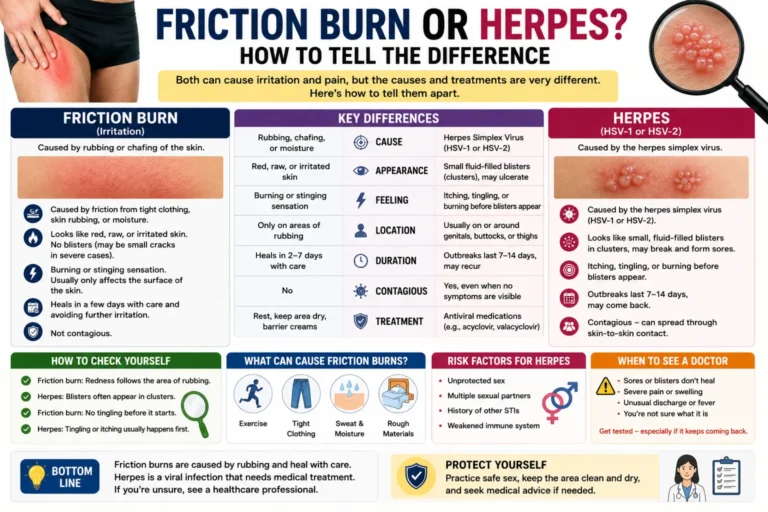
Friction burn or herpes can cause similar-looking skin irritation, but they have different causes. Friction burn usually happens when skin rubs against skin or clothing. Herpes comes from the herpes simplex virus, also called HSV.
The two conditions can both cause redness, soreness, burning, or blisters. That makes self-diagnosis difficult. Herpes can also cause symptoms that look like other common skin problems.
The timing can offer useful clues. Friction often follows rubbing, exercise, or tight clothing. Herpes may cause tingling, burning, blisters, or sores.
However, appearance alone cannot confirm herpes. A healthcare professional can examine the area and may test a visible sore.
This guide explains the key differences in simple terms.
Quick Summary
- Friction burn comes from repeated rubbing or skin irritation.
- Herpes comes from herpes simplex virus infection.
- Friction can cause redness, soreness, raw skin, or blisters.
- Herpes can cause small blisters that become painful sores.
- Tingling or burning can happen with herpes before sores appear.
- A rash alone cannot confirm herpes.
- A healthcare professional can help identify the cause.
- Testing may help when herpes is suspected and a sore is present.
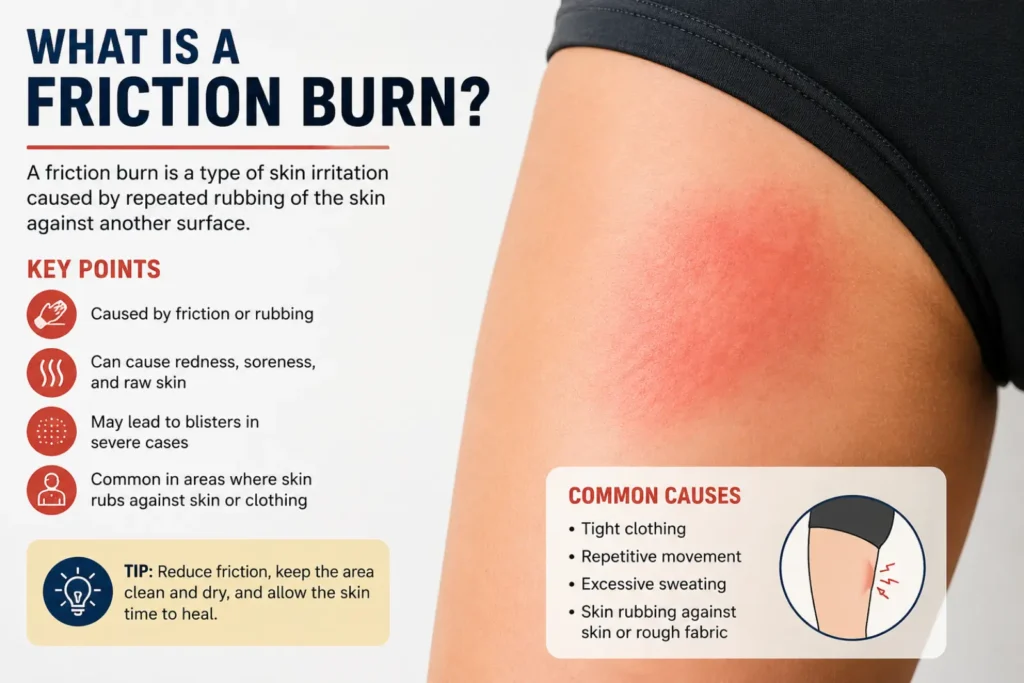
What Is a Friction Burn?
A friction burn is skin irritation caused by repeated rubbing.
The rubbing can happen between skin surfaces or against clothing. Sweat can make the irritation worse.
Common examples include irritated skin after exercise, walking, or wearing rough clothing.
Friction can also cause blisters. These blisters form because the skin becomes damaged by repeated rubbing.
The affected skin may feel:
- Red
- Tender
- Sore
- Burning
- Raw
- Irritated
A friction injury often appears where rubbing happened.
What Is Herpes?
Herpes is an infection caused by herpes simplex virus.
Genital herpes can involve HSV-1 or HSV-2. Some people have no symptoms or only mild symptoms.
When symptoms occur, they may include small blisters or painful sores. Some people also notice tingling, burning, or itching.
Symptoms can appear around the genitals, anus, thighs, or buttocks. Symptoms can also vary between people.
Because herpes can look like other skin conditions, a visual check cannot always give a definite answer.
Friction Burn or Herpes: Key Differences
| Feature | Friction Burn | Herpes |
|---|---|---|
| Main cause | Repeated rubbing | Herpes simplex virus |
| Common feeling | Burning, soreness, irritation | Burning, tingling, itching, or pain |
| Skin changes | Redness, raw skin, possible blisters | Blisters or painful sores |
| Common trigger | Friction, sweat, clothing | HSV infection and outbreaks |
| Can return? | Yes, if friction happens again | Yes, because HSV can cause recurring outbreaks |
| Diagnosis | Often based on the skin history | May require clinical examination or testing |
| Treatment | Reduce irritation and protect skin | Medical treatment may reduce symptoms and outbreaks |
These differences provide clues, but they do not prove the diagnosis. Healthcare professionals may use examination and laboratory testing when needed.
What Does a Friction Burn Usually Look and Feel Like?
Friction irritation often starts after repeated rubbing.
For example, a person may notice sore skin after prolonged activity. Tight or rough clothing can also increase rubbing.
The area may feel tender when touched. It may also sting when exposed to sweat or other irritants.
Friction can produce blisters too. Therefore, a blister does not automatically mean herpes.
The location and recent activity can provide useful clues.
What Can Herpes Symptoms Feel Like?
Herpes symptoms can vary widely.
Some people have no noticeable symptoms. Others develop blisters, sores, itching, burning, or tingling.
A first outbreak can sometimes include general symptoms such as fever or body aches. However, symptoms differ from person to person.
Herpes sores can also resemble other conditions. For that reason, guessing from appearance alone can lead to mistakes.
If you notice unexplained genital sores, talk with a healthcare professional.
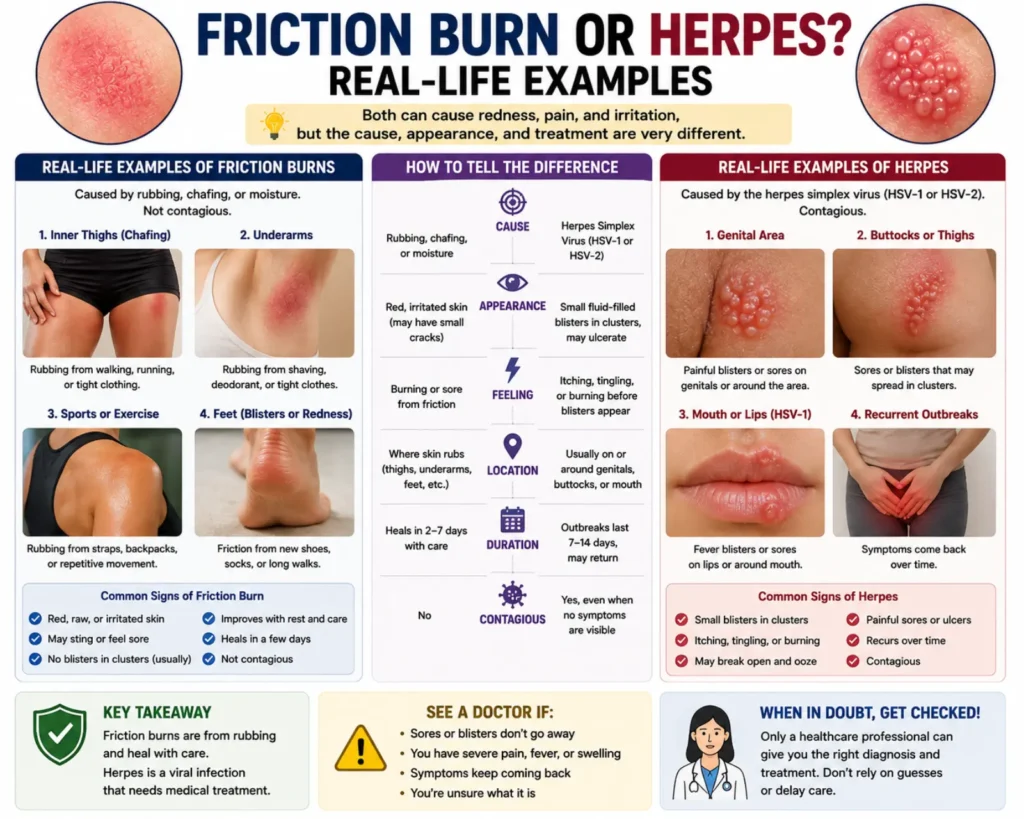
Real-Life Examples
Example 1: Irritation After Exercise
Someone notices sore skin after prolonged exercise. Their clothing rubbed against the affected area.
The skin looks red and irritated.
This pattern can fit friction-related irritation.
Example 2: New Blisters Without a Clear Friction Trigger
Someone notices several painful blisters or sores. They cannot identify a recent source of rubbing.
Herpes becomes one possible cause, among several others.
A healthcare professional should assess unexplained sores.
Example 3: Repeated Skin Irritation
Someone repeatedly develops irritation after wearing the same tight clothing.
The symptoms improve after avoiding the rubbing.
That pattern can suggest friction.
These examples show why the history of symptoms matters. They do not replace a medical diagnosis.
Can Friction Cause Blisters?
Yes.
Repeated friction can damage the outer layers of skin. The body may then form a blister over the damaged area.
This creates an important point:
Blisters do not always mean herpes.
Friction, burns, allergic reactions, infections, and other skin problems can also cause blisters.
Therefore, look at the whole pattern rather than one symptom.
Common Mistakes When Comparing Friction Burn and Herpes
Mistake 1: Assuming Every Blister Is Herpes
Blisters have many possible causes.
Friction is one common cause.
Mistake 2: Assuming Burning Means Herpes
Burning can happen with skin irritation too.
Friction can make skin sore and painful.
Mistake 3: Diagnosing Yourself From Photos
Pictures can provide clues, but they cannot reliably confirm the cause.
Different skin conditions can look similar.
Mistake 4: Ignoring Persistent or Painful Sores
Unexplained sores deserve proper medical attention.
A clinician can decide whether testing is appropriate.
Mistake 5: Waiting for Symptoms to Become Severe
Early medical advice can help identify the problem sooner.
This matters especially when sores are new or unusual.
What Should You Do If You Are Unsure?
First, avoid further irritation to the affected skin.
Keep the area clean and avoid activities that clearly worsen the irritation.
Do not pick, squeeze, or break blisters.
If the area remains painful, develops unexplained sores, or keeps returning, speak with a healthcare professional.
If herpes is suspected, testing may involve a sample from a visible sore. The CDC notes that molecular testing from a lesion is highly sensitive.
Because genital sores can have several causes, proper assessment matters.
Tips for Preventing Friction Irritation
You can reduce friction by limiting repeated rubbing.
Useful skin-care habits include:
- Choose comfortable, well-fitting clothing.
- Change out of sweaty clothing.
- Keep irritated skin clean.
- Give irritated skin time to recover.
- Reduce activities that repeatedly rub the area.
- Protect areas that commonly experience chafing.
The American Academy of Dermatology notes that petroleum jelly can help prevent chafing in areas prone to rubbing.
However, do not use random products on broken or sensitive genital skin without medical advice.
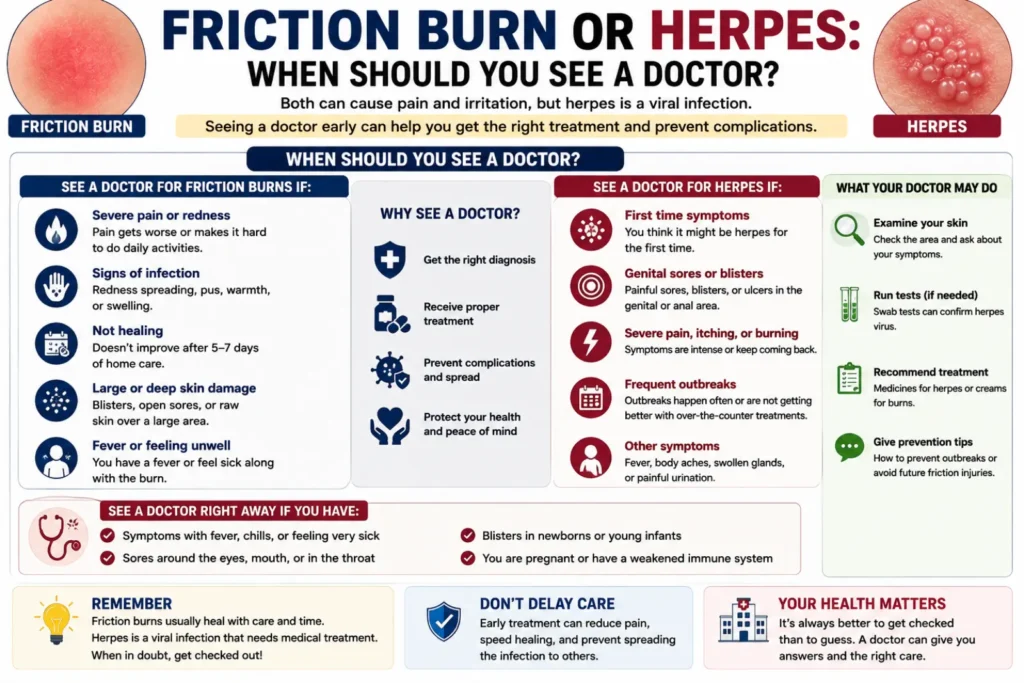
Friction Burn or Herpes: When Should You See a Doctor?
Seek medical advice when you have unexplained blisters or sores.
You should also get checked if symptoms are painful, persistent, or repeatedly return.
A healthcare professional can examine the skin and consider other possible causes.
If a visible sore is present, testing from that lesion may help confirm herpes.
Do not feel embarrassed about asking for medical help. Skin symptoms are common, and several conditions can look alike.
Expert Insight: Why Diagnosis Matters
The biggest expert tip is simple:
Do not diagnose herpes from appearance alone.
Genital herpes can be difficult to diagnose clinically because its classic symptoms may not always appear. The CDC recommends laboratory confirmation when genital lesions are present.
A healthcare professional can also consider other explanations.
That approach prevents unnecessary worry and helps people receive the right care.
It also explains why online symptom comparisons should serve as general education, not diagnosis.
Synonyms and Related Search Terms
People may use different phrases when searching for this topic.
Related terms include:
- friction burn vs herpes
- friction rash or herpes
- chafing vs herpes
- friction blister vs herpes
- skin irritation vs herpes
- genital irritation causes
- herpes symptoms
- herpes blisters
- friction blisters
- genital sores
- burning skin causes
- painful skin irritation
These terms describe related questions, but they do not mean the same thing.
Frequently Asked Questions
Can a friction burn look like herpes?
Yes. Friction can cause redness, soreness, and blisters. Herpes can also cause blisters and sores. Appearance alone cannot confirm the cause.
Does herpes always cause blisters?
No. Many people with genital herpes have no symptoms or only mild symptoms.
Can friction cause a blister?
Yes. Repeated rubbing is a common cause of blisters.
Does burning always mean herpes?
No. Burning can occur with ordinary skin irritation and other conditions.
How is genital herpes diagnosed?
A healthcare professional may examine the area. If a sore is present, they may collect a sample for testing.
Can herpes sores come back?
Yes. Herpes can cause recurring outbreaks. Later outbreaks are often shorter and milder.
Should I see a doctor for unexplained sores?
Yes. A healthcare professional can help determine the cause and decide whether testing is needed.
Can I tell the difference from a photo?
Not reliably. Several skin conditions can look similar. A proper medical assessment gives a better answer.
Conclusion
Friction burn or herpes can be difficult to distinguish because both can cause burning, soreness, redness, or blisters.
Friction usually follows repeated rubbing or skin irritation. Herpes results from herpes simplex virus infection. Herpes can cause blisters and painful sores, but some people have no symptoms.
The key lesson is simple: do not rely on appearance alone.
If symptoms follow clear friction and improve after the irritation stops, friction may be more likely. However, unexplained or recurring sores deserve professional evaluation.
A healthcare professional can examine the area and recommend testing when appropriate.
When in doubt, getting accurate medical advice is better than guessing.