Ageing or Aging: Meaning, usage Differences, and Examples
Ageing or aging are two spellings of the same word. Both are correct. However, the right choice depends on the type of English you use. Aging is the standard spelling in American English. Ageing is …
Written by: Lily Watson
Published on:
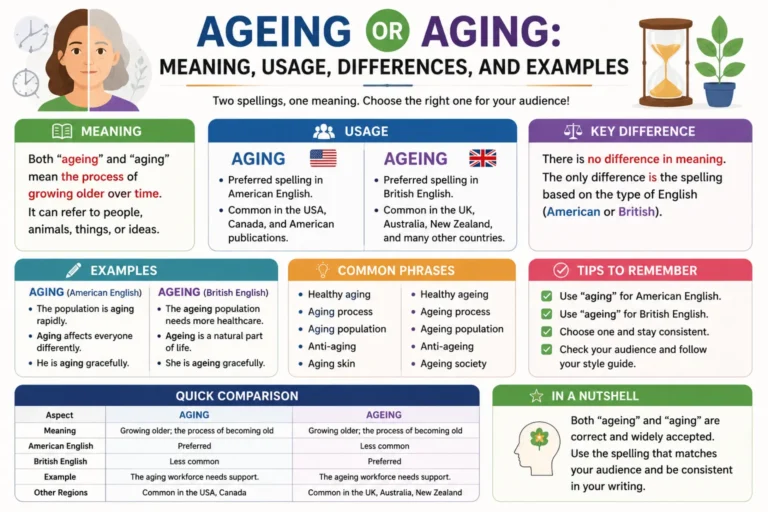
Ageing or aging are two spellings of the same word. Both are correct. However, the right choice depends on the type of English you use. Aging is the standard spelling in American English. Ageing is the preferred spelling in British English and many other English-speaking countries.
Many writers feel confused about which spelling to use. The good news is that both words have the same meaning. They describe the process of growing older over time. This process affects people, animals, plants, objects, and even ideas.
In this guide, you will learn the meaning of ageing or aging, the differences between them, real-life examples, common mistakes, and simple tips to choose the correct spelling with confidence.
Quick Summary
Ageing and aging have the same meaning.
Aging is the preferred spelling in American English.
Ageing is the preferred spelling in British English.
Both words describe the process of growing older.
Choose one spelling and stay consistent throughout your writing.
What Does Ageing or Aging Mean?
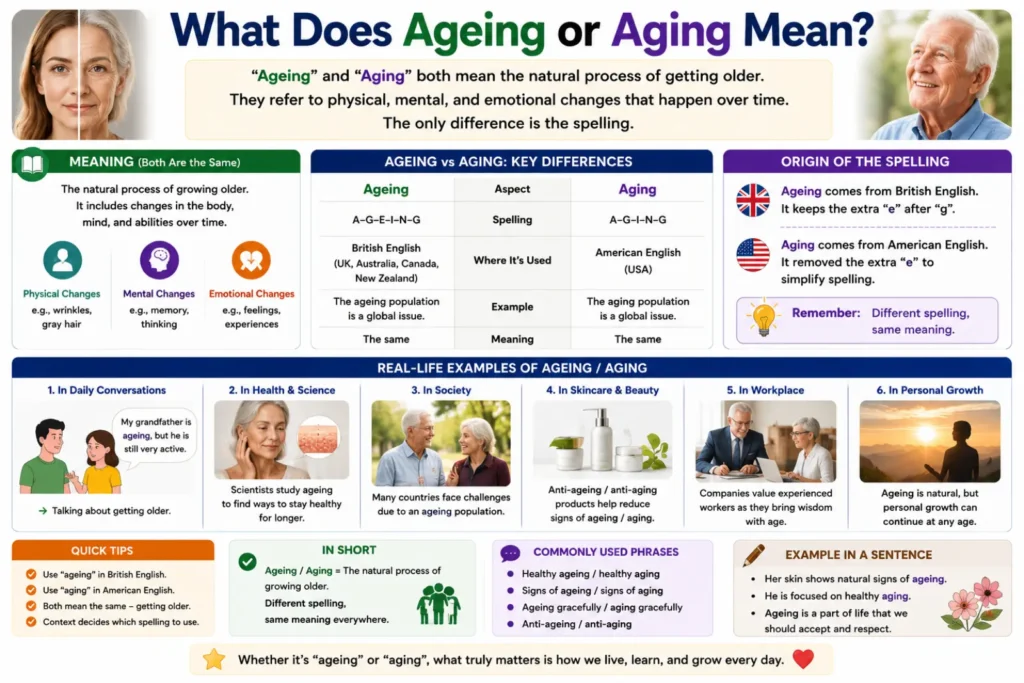
Ageing or aging means the natural process of becoming older over time.
This process happens to:
People
Animals
Plants
Buildings
Machines
Products
It can also describe changes in appearance, health, or performance.
Simple Definition
Ageing or aging is the process of becoming older with time.
Ageing vs Aging: What’s the Difference?
The only difference is the spelling.
Feature
Ageing
Aging
Meaning
Growing older
Growing older
American English
Rare
Preferred
British English
Preferred
Less common
Australian English
Preferred
Less common
Canadian English
Often ageing
Sometimes aging
Meaning Difference
None
None
Key Point
The meaning never changes.
Only the regional spelling changes.
Why Are There Two Spellings?
English has many spelling differences between countries.
American English often removes extra letters.
British English usually keeps traditional spellings.
Examples include:
American English
British English
Aging
Ageing
Color
Colour
Favor
Favour
Center
Centre
Organize
Organise
This spelling difference follows the same pattern.
When Should You Use Aging?
Use aging if you write for an American audience.
It appears in:
American books
US newspapers
Academic papers in the US
American websites
Business writing in the US
Examples
The population is aging quickly.
Aging affects everyone differently.
Scientists study healthy aging.
Aging skin needs extra care.
Aging bridges require repairs.
When Should You Use Ageing?
Use ageing if your readers use British English.
It is common in:
The United Kingdom
Australia
New Zealand
Ireland
Many Commonwealth countries
Examples
The ageing population needs more healthcare.
Ageing is a natural part of life.
Healthy eating supports healthy ageing.
The ageing building needs repairs.
Governments study ageing trends.
Real-Life Examples of Ageing or Aging
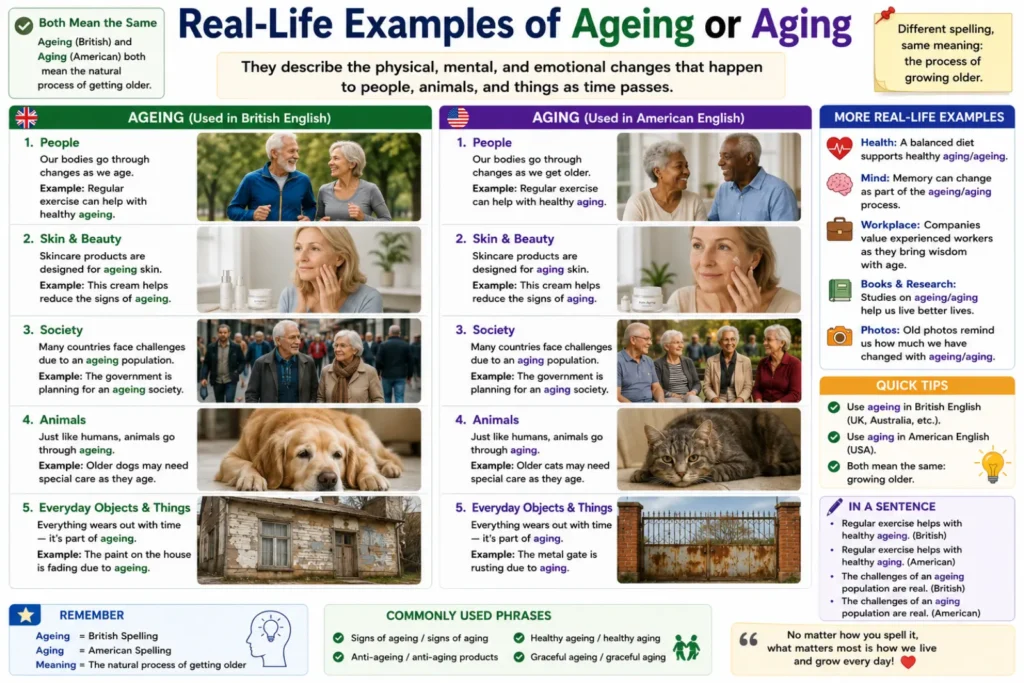
Here are everyday examples.
People
My grandparents are aging gracefully.
Healthy habits slow visible ageing.
Animals
The dog is aging but remains active.
Ageing horses need special care.
Buildings
The aging bridge requires repairs.
The ageing castle attracts many visitors.
Food
Cheese improves through aging.
Wine benefits from careful ageing.
Common Uses in Daily Life
You may see these phrases often.
Healthy aging
Active ageing
Aging population
Ageing society
Aging process
Ageing skin
Aging workforce
Ageing infrastructure
Aging brain
Healthy ageing habits
These phrases appear in healthcare, science, education, and business.
Common Mistakes to Avoid
Many writers make simple spelling mistakes.
Mistake 1: Mixing Spellings
❌ The ageing population is aging rapidly.
✅ The ageing population is ageing rapidly.
OR
✅ The aging population is aging rapidly.
Mistake 2: Choosing the Wrong Audience
American website?
Use aging.
British website?
Use ageing.
Mistake 3: Thinking They Have Different Meanings
They do not.
Both words mean exactly the same thing.
Tips to Remember the Correct Spelling
These simple tricks help.
Choose by Audience
American readers → Aging
British readers → Ageing
Stay Consistent
Never switch spellings in one article.
Consistency improves professionalism.
Follow Your Style Guide
Schools, companies, and publishers often have preferred spelling rules.
Always follow those guidelines.
Synonyms and Related Words
Synonyms
Growing older
Growing old
Maturing
Developing
Advancing in years
Ripening
Wearing over time
Related (LSI) Keywords
Healthy aging
Healthy ageing
Aging process
Ageing process
Growing older
Senior health
Elderly care
Age-related changes
Anti-aging
Anti-ageing
Active aging
Population aging
Biological aging
Successful aging
Why Ageing or Aging Matters
Everyone experiences aging.
Understanding the process helps people make healthier choices.
Good habits can improve quality of life.
Researchers continue to study healthy aging.
Governments also plan for aging populations.
Businesses create products for older adults.
Because of this, the word appears in many industries.
Expert Insights
Language experts agree that ageing and aging are both correct.
The choice depends on your audience.
SEO professionals also recommend using one spelling consistently.
If your website targets American visitors, use aging.
If you target UK readers, use ageing.
Consistency improves trust and creates a better reading experience.
Featured Snippet Box
Ageing or Aging: Which Is Correct?
Both ageing and aging are correct spellings. Aging is the standard spelling in American English, while ageing is preferred in British English. Both words describe the process of growing older and have exactly the same meaning.
Frequently Asked Questions
Is ageing or aging correct?
Both are correct.
The choice depends on your English style.
Which spelling is used in America?
Americans usually write aging.
Which spelling is used in Britain?
British English prefers ageing.
Do ageing and aging have different meanings?
No.
Both words describe becoming older.
Which spelling should I use for SEO?
Use the spelling that matches your target audience.
Stay consistent throughout your content.
Is healthy aging different from healthy ageing?
No.
Only the spelling changes.
Can I use both spellings in one article?
No.
Choose one spelling and use it consistently.
Conclusion
Ageing or aging are two correct spellings of the same word. They both describe the natural process of growing older. The only difference is the type of English you use. Aging is standard in American English, while ageing is preferred in British English and many Commonwealth countries. Choosing the right spelling helps your writing match your audience and look more professional. Once you pick one version, use it consistently throughout your article, website, or document. That simple step improves clarity, builds trust, and supports better SEO. Whether you write ageing or aging, your meaning stays exactly the same.
Lily Watson is a content writer and digital researcher who specializes in creating simple, helpful, and reader-focused content. She writes about compression tools, file optimization, and practical online solutions with clarity and accuracy. Her goal is to make technical topics easy to understand for everyday users.
Lily Watson is a content writer and digital researcher who specializes in creating simple, helpful, and reader-focused content. She writes about compression tools, file optimization, and practical online solutions with clarity and accuracy. Her goal is to make technical topics easy to understand for everyday users.