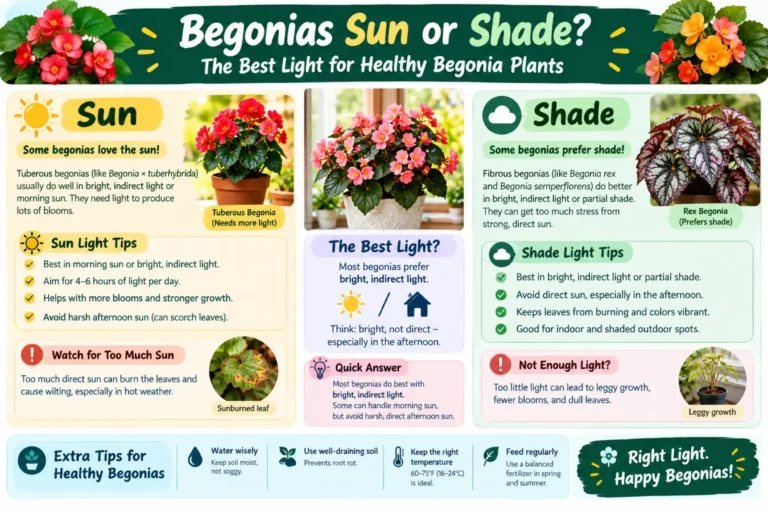
Begonias sun or shade is a common question for gardeners. The answer depends on the begonia type and your local climate. Most begonias prefer bright light with some protection from harsh sun. Too much direct sun can burn their leaves. Too much shade can cause weak growth and fewer flowers. The right light helps begonias grow full, green, and healthy. It also helps flowering varieties produce more blooms. Some begonias handle morning sun very well. Others prefer filtered light throughout the day. Your climate also changes how much sun a begonia can tolerate. In hot areas, afternoon shade often works best. In cooler areas, begonias may handle more gentle sunlight. This guide explains exactly where to place begonias. You will also learn common mistakes, care tips, and answers to popular questions.
Quick Summary: Do Begonias Like Sun or Shade?
- Most begonias prefer bright, indirect light or partial shade.
- Morning sun usually works better than strong afternoon sun.
- Too much direct sun can scorch begonia leaves.
- Deep shade can reduce flowering and cause weak growth.
- Tuberous begonias often prefer filtered light and partial shade.
- Wax begonias can tolerate more sun than many other types.
- Rex begonias usually prefer bright indirect light.
- Hot climates require more protection from afternoon sun.
- The best location depends on the begonia variety and climate.
- Watch the leaves to adjust light when needed.
What Does “Begonias Sun or Shade” Mean?
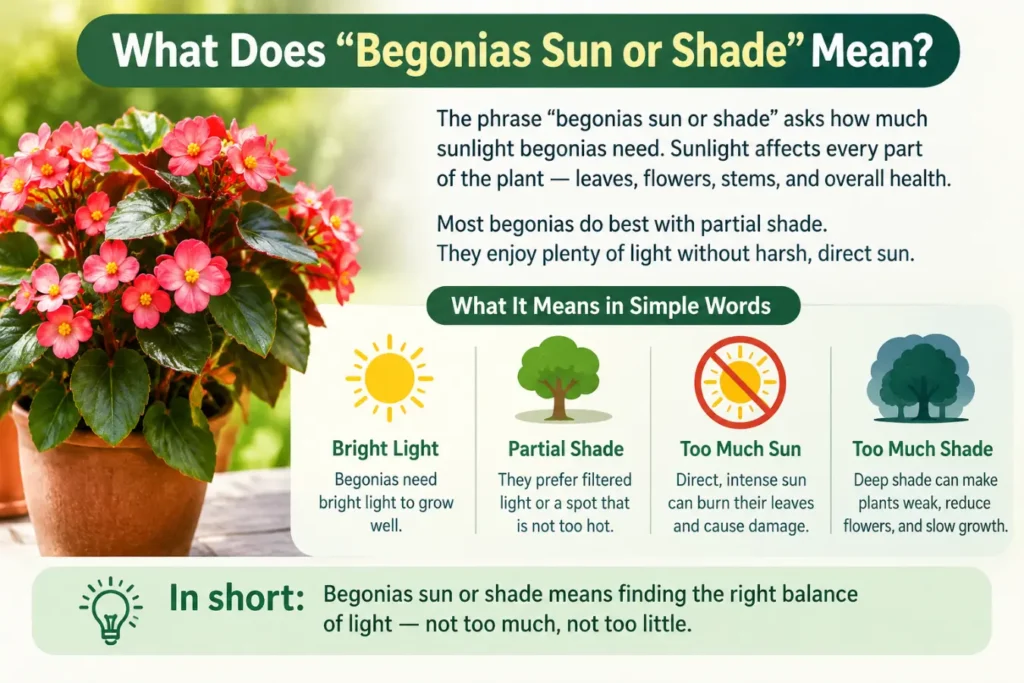
The phrase “begonias sun or shade” asks how much sunlight begonias need.
Sunlight affects nearly every part of a begonia’s growth. It affects leaves, flowers, stems, and overall plant strength.
Most begonias do best with partial shade. They enjoy plenty of light without intense midday heat.
However, “shade” does not always mean a dark location. Bright shade can provide enough light for healthy growth.
For many begonias, a spot near a bright window works well indoors. Outdoors, filtered light under a tree can also work.
The key is to avoid extreme conditions. Protect begonias from harsh afternoon sunlight and very deep shade.
Do Begonias Like Full Sun?
Some begonias can tolerate full sun. However, most varieties do not perform best in strong, all-day sunlight.
Full sun means around six or more hours of direct sunlight each day.
Strong sunlight can cause:
- Brown leaf edges
- Pale or faded leaves
- Scorched patches
- Drooping foliage
- Dry soil
- Reduced plant growth
Wax begonias often tolerate more sun than rex or tuberous begonias. Even sun-tolerant varieties may need protection in hot climates.
If your summers are very hot, give begonias morning sun and afternoon shade.
Do Begonias Like Full Shade?
Begonias usually do not need full shade.
A dark location can limit photosynthesis. This can make the plant weak and leggy.
Low light may also reduce flower production. Some plants may grow leaves but produce very few blooms.
Instead, choose bright shade or filtered light.
For example, place a begonia beneath a tree with a thin canopy. You can also place it near a bright window indoors.
The goal is simple. Give the plant plenty of light without exposing it to harsh heat.
The Best Light for Different Begonia Types
Different begonia varieties have different light needs.
Understanding the variety helps you choose the right location.
| Begonia Type | Best Light | Direct Sun Tolerance |
|---|---|---|
| Rex begonia | Bright indirect light | Low |
| Tuberous begonia | Partial shade | Low to moderate |
| Wax begonia | Partial shade to sun | Moderate to high |
| Angel wing begonia | Bright indirect light | Moderate |
| Cane begonia | Bright filtered light | Moderate |
| Rhizomatous begonia | Bright indirect or filtered light | Low to moderate |
| Dragon wing begonia | Partial shade | Moderate |
These are general guidelines. Growing conditions can change the plant’s needs.
For example, morning sunlight feels much gentler than afternoon sunlight.
Morning Sun vs. Afternoon Sun for Begonias
The time of day matters as much as the number of sunlight hours.
Morning sun is usually safer for begonias.
Morning light tends to be less intense. It gives the plant useful energy without creating as much heat.
Afternoon sunlight can become much stronger. This can quickly dry the soil and damage sensitive leaves.
A good outdoor location might receive two to four hours of morning sun. The plant can then receive bright shade during the afternoon.
This setup works especially well in hot climates.
If your begonia develops brown or crispy leaves, check its afternoon sun exposure first.
Begonias Sun or Shade: What Works in Hot Climates?
Hot climates require extra care.
High temperatures can make direct sunlight much harder for begonias to handle.
In warm regions, place begonias where they receive:
- Gentle morning sun
- Bright filtered light
- Afternoon shade
- Good air movement
- Protection from extreme heat
A covered patio can provide excellent conditions.
You can also grow begonias beneath trees. Make sure the area still receives enough filtered light.
Avoid placing sensitive begonias beside hot walls or concrete surfaces. These areas can reflect additional heat onto the leaves.
Begonias Sun or Shade Indoors
Indoor begonias usually need bright light without harsh direct rays.
A bright east-facing window can work well. It often provides gentle morning sunlight.
A bright north-facing window may also work in some climates.
South- or west-facing windows can provide stronger light. Use a sheer curtain when sunlight becomes intense.
Keep the plant close enough to receive useful light. However, avoid placing sensitive leaves directly against hot glass.
Indoor signs of too much light include faded leaves and brown patches.
Signs of too little light include stretched stems and poor flowering.
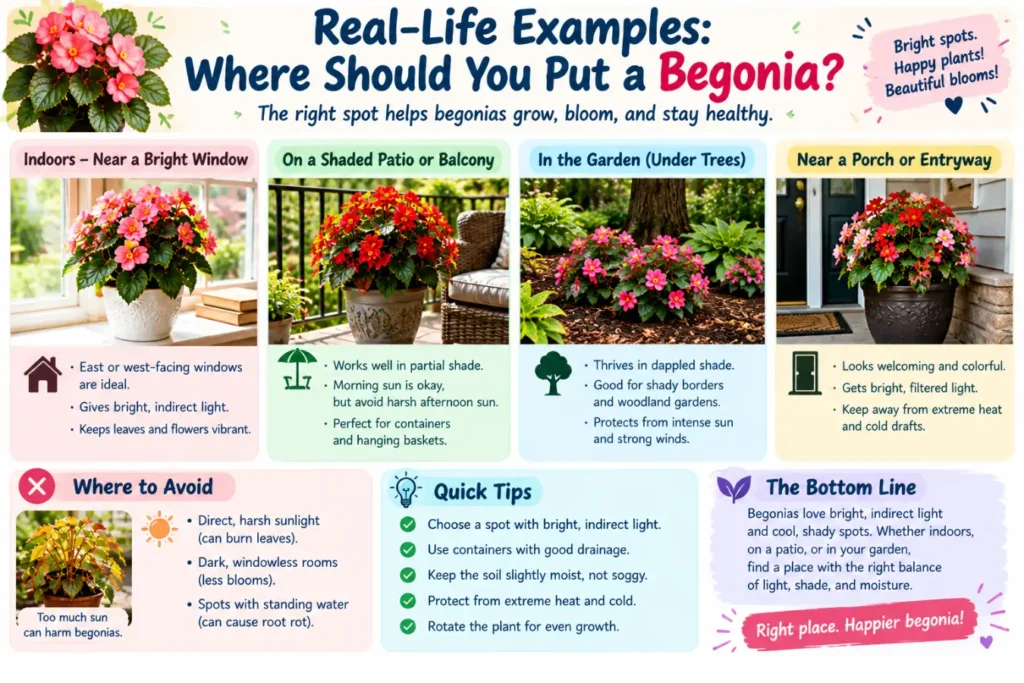
Real-Life Examples: Where Should You Put a Begonia?
Example 1: A Shady Garden
You have a garden beneath a large tree.
The area receives filtered sunlight for most of the day.
This can be an excellent location for many begonias.
Make sure the soil does not stay constantly wet.
Example 2: A Sunny Balcony
Your balcony receives strong afternoon sunlight.
A begonia may struggle in this location.
Move the plant behind a shade screen or larger container plant.
Morning sun followed by afternoon shade would work better.
Example 3: A Bright Indoor Room
Your room has a bright window with indirect light.
This can provide a good growing environment.
Keep the begonia away from harsh direct rays.
Rotate the pot occasionally for even growth.
Example 4: A Dark Corner
Your begonia sits several feet from a small window.
The plant grows slowly and rarely flowers.
Move it closer to a brighter light source.
Avoid sudden exposure to strong direct sunlight.
Increase light gradually when possible.
How to Tell If a Begonia Gets Too Much Sun
Your begonia can show clear signs of light stress.
Watch the leaves closely.
Common signs include:
- Brown or crispy spots
- Bleached leaf areas
- Faded foliage
- Curling leaves
- Drooping during hot afternoons
- Dry soil that loses moisture quickly
Sunburn often appears as pale, brown, or damaged patches.
Move the plant to a more protected location if these signs appear.
Do not move a stressed plant into complete darkness. It still needs enough light for healthy growth.
How to Tell If a Begonia Needs More Light
Begonias also show signs of insufficient light.
Look for these symptoms:
- Long, weak stems
- Large gaps between leaves
- Slow growth
- Few flowers
- Small new leaves
- Leaves turning toward the light
These signs often indicate low light.
Move the plant closer to a bright window or brighter outdoor location.
Make changes gradually when possible. A sudden jump from deep shade to intense sun can cause leaf damage.
Common Begonia Light Mistakes
1. Giving Every Begonia Full Sun
Different begonia types have different needs.
Always consider the variety before choosing a location.
2. Confusing Shade With Darkness
Shade should still provide useful ambient light.
A completely dark corner will not support strong growth.
3. Ignoring Your Climate
A few hours of sun can feel very different in cool and hot climates.
Adjust light exposure based on temperature and sun intensity.
4. Moving a Plant Too Quickly
A begonia grown in shade may burn when moved into direct sun.
Acclimate it gradually.
5. Looking Only at the Flowers
Healthy leaves provide important clues.
Check the foliage regularly for stress signs.
6. Forgetting Soil Moisture
Strong sunlight can dry containers quickly.
Check the soil before watering.
Expert Tips for Growing Begonias in the Right Light
Experienced growers focus on the plant’s response rather than following one rigid rule.
Use these practical tips:
Start with bright filtered light.
This gives most begonias a safe starting point.
Favor morning sun.
Gentle morning light can support growth without excessive heat.
Protect plants during extreme heat.
Temporary shade can prevent leaf damage.
Watch the leaves.
Leaves often reveal light stress before the entire plant declines.
Rotate indoor plants.
This helps each side receive more even light.
Acclimate outdoor plants slowly.
Increase direct sunlight over several days.
Consider the season.
A location that works in spring may become too hot during summer.
Combine light and watering care.
Plants in stronger light often lose moisture faster.
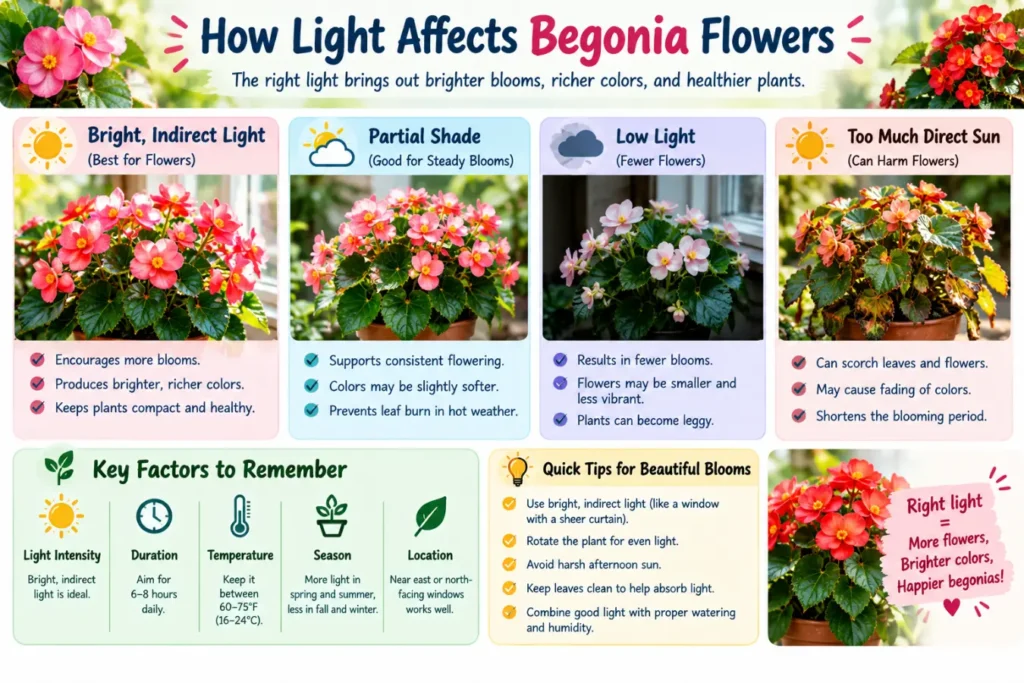
How Light Affects Begonia Flowers
Light plays an important role in flowering.
Flowering begonias need enough light to produce strong growth and blooms.
However, more sunlight does not always mean more flowers.
Excessive heat can stress the plant. This can reduce overall performance.
The ideal balance provides bright light without severe heat stress.
If your begonia has healthy leaves but few flowers, check its light first. Also consider watering, nutrition, temperature, and pruning.
Begonias Sun or Shade: A Simple Decision Guide
Use this quick guide to choose a location.
Does the spot receive harsh afternoon sun?
If yes, provide afternoon shade.
Does the spot receive gentle morning sun?
If yes, many begonias can grow well there.
Is the area bright but mostly shaded?
This can work well for many varieties.
Is the area very dark?
Move the plant to a brighter location.
Are the leaves getting brown and crispy?
Reduce direct sunlight and heat.
Is the plant stretched and producing few flowers?
Increase its access to bright light.
This simple approach helps you adjust conditions without guessing.
Synonyms and LSI Keywords for “Begonias Sun or Shade”
Search engines understand related terms and topics around the main keyword.
Useful semantic keywords include:
- begonia light requirements
- do begonias like sun
- do begonias like shade
- best light for begonias
- begonia sunlight requirements
- begonias in full sun
- begonias in partial shade
- begonias indoors
- begonia care
- growing begonias
- begonia plant care
- rex begonia light requirements
- tuberous begonia light requirements
- wax begonia sun requirements
- bright indirect light for begonias
- filtered sunlight for begonias
- begonias for shade gardens
- how much sun do begonias need
Use these terms naturally. Avoid repeating them in every paragraph.
Expert Insights: Why the Right Light Matters
The biggest lesson is simple: begonias need light, but many dislike intense heat and direct sun.
Gardeners often focus only on sunlight hours. Light intensity also matters.
Morning sunlight and afternoon sunlight can create very different conditions.
Climate matters too. A begonia that tolerates sun in a cool region may struggle in a hot region.
Plant variety also matters.
Rex begonias generally prefer protected light. Wax begonias usually tolerate more sunlight.
Therefore, treat sunlight recommendations as starting points rather than strict rules.
Observe the plant and adjust its location when needed.
This approach creates a more reliable care routine.
FAQs About Begonias Sun or Shade
Do begonias prefer sun or shade?
Most begonias prefer partial shade or bright indirect light. Some varieties tolerate more direct sun.
Can begonias grow in full shade?
Begonias can grow in bright shade. However, deep shade may cause weak growth and fewer flowers.
Can begonias tolerate morning sun?
Yes. Many begonias tolerate gentle morning sun well. Afternoon shade can protect them from intense heat.
How many hours of sun do begonias need?
Many begonias perform well with several hours of bright light each day. Sensitive varieties prefer filtered or indirect light.
Can begonias grow indoors?
Yes. Begonias can grow indoors near bright windows. Protect sensitive varieties from strong direct sunlight.
Why are my begonia leaves turning brown?
Strong sunlight, heat, dry soil, or other growing problems can cause brown leaves. Check the plant’s light and moisture first.
Why is my begonia not flowering?
Low light can reduce flowering. Check whether the plant receives enough bright light without excessive heat.
Are begonias good plants for shady gardens?
Yes. Many begonia varieties work well in bright, partially shaded garden areas.
Conclusion
So, begonias sun or shade? For most varieties, the best answer is bright light with partial shade. Gentle morning sun can work very well. Strong afternoon sun can damage sensitive leaves. Deep shade can also cause weak growth and fewer flowers.
Your begonia variety matters. Rex begonias often need more protection. Wax begonias usually handle more sunlight. Tuberous begonias often perform best with filtered light and partial shade.
Your climate matters too. Hot weather usually calls for extra afternoon protection.
Watch your plant for clues. Brown leaves can signal too much sun. Weak, stretched growth can signal too little light.