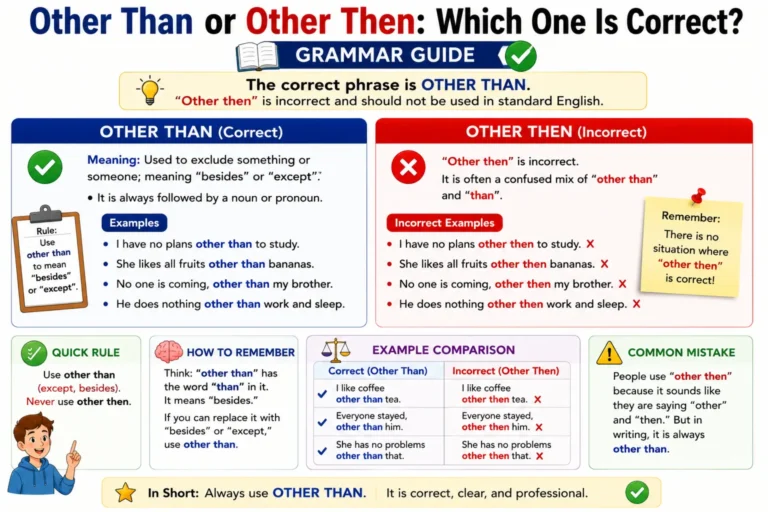
Other than or other then is a common grammar question. Many people confuse these two phrases because than and then sound alike. However, they have different meanings.
The correct phrase is usually other than. It means except for or apart from. On the other hand, other then is almost always incorrect in English.
Knowing the difference helps you write better. It also makes your speech clearer. Whether you are a student, writer, or professional, this guide will help you understand both words. You will learn their meanings, see real-life examples, avoid common mistakes, and use them with confidence.
Let’s make this grammar topic simple.
Quick Summary
- Other than is the correct phrase.
- It means except for or apart from.
- Other then is usually a grammar mistake.
- Than compares or excludes.
- Then talks about time or sequence.
- Remember: Use other than, not other then, in almost every case.
What Does “Other Than” Mean?
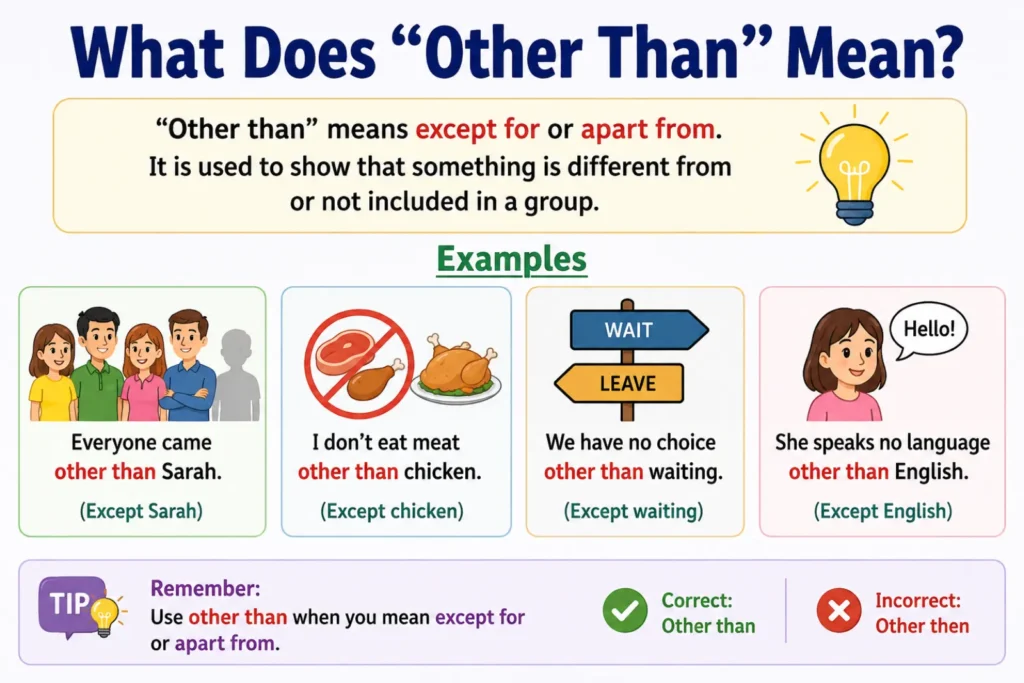
Other than means except, apart from, or excluding someone or something.
It helps show that one thing is different from everything else.
Examples
- I don’t eat meat other than chicken.
- Everyone came other than Sarah.
- We have no choice other than waiting.
- She speaks no language other than English.
In each example, other than excludes one item from a group.
What Does “Other Then” Mean?
In standard English, other then is incorrect.
The word then refers to time, order, or what happens next.
Correct uses of then
- Finish your homework, then watch TV.
- We went home and then had dinner.
- Back then, life was simpler.
Because then relates to time, it does not fit after other in this phrase.
Other Than vs Other Then
The biggest difference is simple.
| Feature | Other Than | Other Then |
|---|---|---|
| Correct English | ✅ Yes | ❌ No (usually) |
| Meaning | Except for | No standard meaning |
| Grammar | Correct phrase | Grammar mistake |
| Common Use | Very common | Rare and incorrect |
Simple Rule
- Use other than when you mean except.
- Never replace than with then.
Why Do People Confuse Than and Then?
Many English learners make this mistake.
There are several reasons.
- Both words sound similar.
- Spell check may not catch the error.
- Fast typing causes mistakes.
- People forget each word has a different meaning.
Fortunately, the difference is easy once you learn one simple rule.
- Than = comparison or exception
- Then = time or order
Real-Life Examples of “Other Than”
Here are everyday examples.
At School
I like every subject other than math.
At Work
We discussed everything other than money.
While Shopping
I don’t need anything other than milk.
During Travel
No country other than Canada was on our list.
In Conversation
There is nothing other than the truth.
These examples show how naturally the phrase fits into daily English.
Common Mistakes People Make
Many writers accidentally type other then.
Incorrect
- Other then John, everyone arrived.
- I need nothing other then coffee.
- She likes every color other then red.
Correct
- Other than John, everyone arrived.
- I need nothing other than coffee.
- She likes every color other than red.
Always double-check your writing before publishing or submitting it.
Easy Trick to Remember the Difference
Here is a simple memory trick.
Think of “Than” as Comparison
- Bigger than
- Smaller than
- Other than
Think of “Then” as Time
- First
- Then
- Next
If your sentence talks about time, use then.
If it means except, use than.
When Should You Use “Than”?
Use than when making comparisons or exceptions.
Examples
- She is taller than her brother.
- I know no one other than you.
- This book is better than that one.
- Nothing matters other than honesty.
When Should You Use “Then”?
Use then only when discussing time or sequence.
Examples
- We ate lunch, then we left.
- Finish your work then call me.
- Life was different back then.
- If it rains, then stay inside.
Notice that other then does not fit these examples.
Synonyms of “Other Than”
Using related words makes your writing more natural.
Common synonyms include:
- Except
- Apart from
- Besides
- Excluding
- Excluding the fact
- Save for
- With the exception of
- Aside from
- Beyond
- Leaving out
Choose the synonym that best matches your sentence.
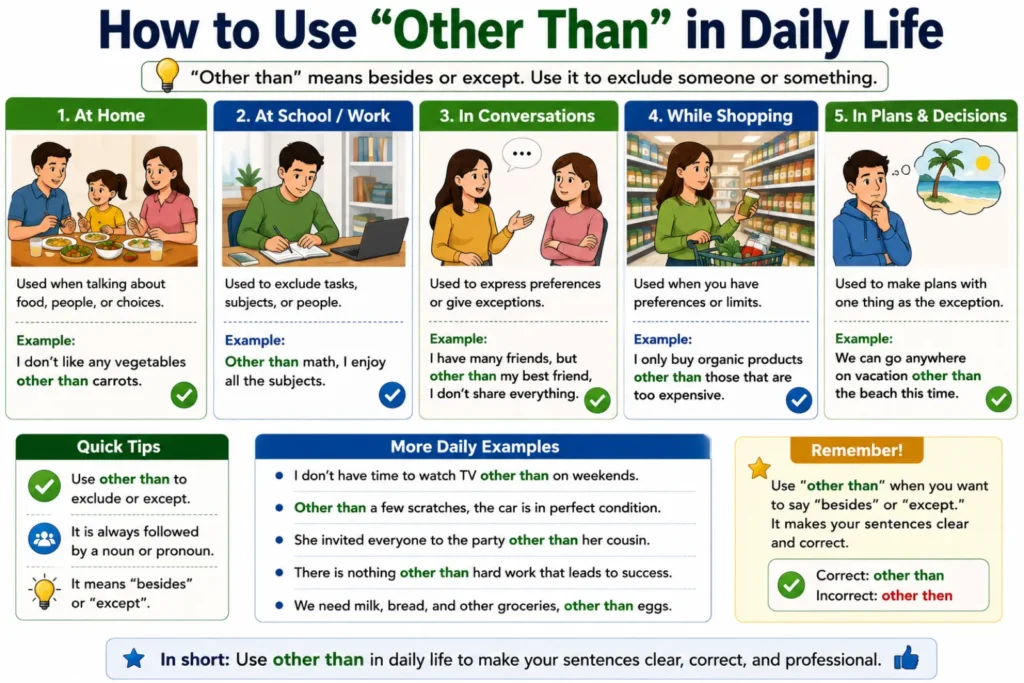
How to Use “Other Than” in Daily Life
You can use this phrase in many situations.
At Home
I drink nothing other than water.
At School
No student other than Emma answered.
At Work
We discussed everything other than salaries.
Online
I use no browser other than Chrome.
While Traveling
I visited no city other than Paris.
The phrase sounds natural in both speaking and writing.
Expert Grammar Tips
Grammar experts agree that other than is the standard English expression.
Here are some helpful tips.
- Proofread before publishing.
- Learn the difference between than and then.
- Read your sentence aloud.
- Ask whether you mean except or next.
- If you mean except, choose other than.
Good grammar builds trust. It also improves your writing quality.
Why This Grammar Rule Matters
Small grammar mistakes can change how people see your writing.
Correct grammar helps:
- Improve school assignments.
- Create professional emails.
- Build trust with readers.
- Increase writing confidence.
- Improve SEO content quality.
Search engines also reward clear, helpful content that answers user questions.
(FAQs)
Is “other then” ever correct?
No. In standard English, other then is considered incorrect. The correct phrase is other than.
Which is correct: other than or other then?
Other than is correct. It means except for or apart from.
Why do people write “other then”?
People confuse than and then because they sound alike and are easy to mistype.
Can I use “other than” in formal writing?
Yes. It is correct in formal, academic, and business writing.
Is “other than” the same as “except”?
Most of the time, yes. Both mean something is excluded.
Example:
- Everyone came except John.
- Everyone came other than John.
What does “then” actually mean?
Then refers to time or sequence.
Example:
We finished dinner, then watched a movie.
How can I remember the difference?
Remember this rule:
- Than = comparison or exception
- Then = time
This trick works in almost every sentence.
Related Keywords (LSI & Semantic Keywords)
Use these naturally throughout related content:
- other than meaning
- other than examples
- other then or other than
- than vs then
- difference between than and then
- grammar mistakes
- English grammar rules
- common English errors
- correct English usage
- except vs other than
- English writing tips
- proper grammar examples
- confusing English words
- grammar for beginners
conclusion
Many people search for other than or other then because the words than and then look and sound similar. However, the correct phrase is other than. It means except for or apart from, while then refers to time or the order of events.
A simple way to remember the difference is this: than is for comparisons and exceptions, while then is for time. This small grammar rule can make a big difference in your writing. It helps you communicate clearly and avoid common mistakes.
The next time you write this phrase, choose other than with confidence. Your writing will be more accurate, professional, and easier for readers to understand.