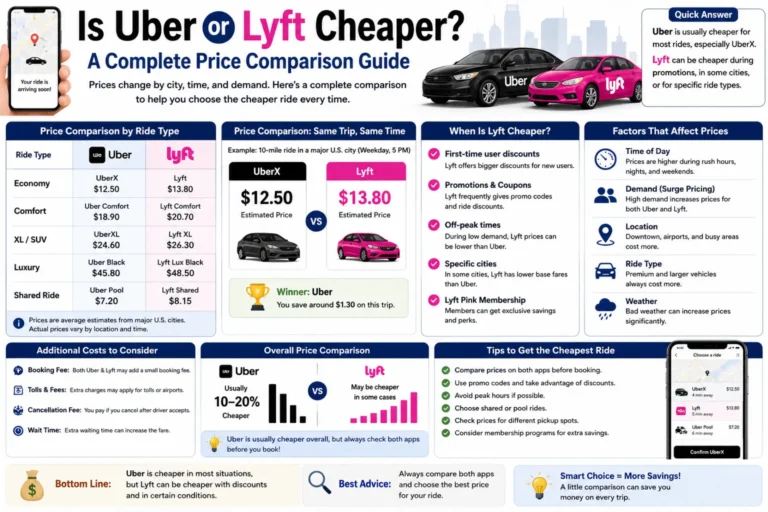
Is Uber or Lyft cheaper? This is one of the most common questions people ask before booking a ride. Both services offer convenient transportation, but their prices can vary widely. Your final fare may depend on your location, distance, time of day, traffic, demand, and selected ride type. During busy hours, either app can become more expensive because of higher demand. Discounts, promotions, memberships, and available drivers can also affect the price.
In some situations, Uber may offer the lower fare. In others, Lyft may provide a better deal. There is no single service that stays cheaper for every trip. The best way to save money is to compare both apps before you request a ride.
In this complete guide, we compare Uber vs. Lyft prices, fees, surge pricing, ride options, memberships, discounts, and other factors that affect your total cost. You will also learn practical tips for finding the cheapest ride.
Quick summary
- Neither app is always cheaper.
- Uber may cost less in some cities and travel times.
- Lyft may offer cheaper fares during certain periods.
- Prices change based on demand and driver availability.
- Surge pricing can make either app more expensive.
- Comparing both apps before booking often saves money.
- Membership plans and discounts can reduce ride costs.
- The cheapest option depends on your exact trip.
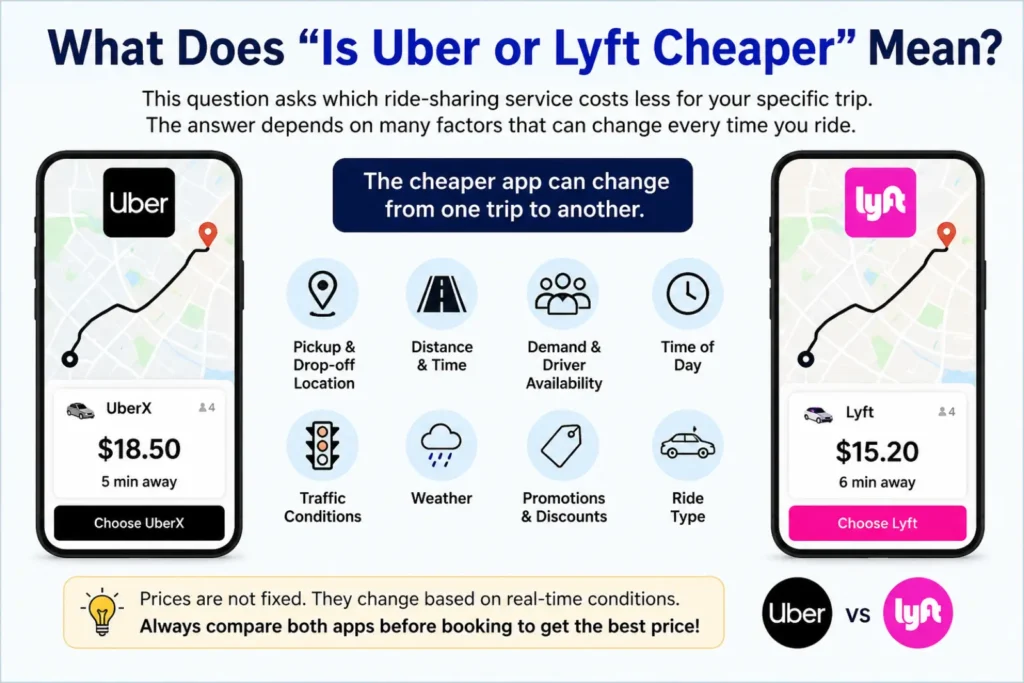
What Does “Is Uber or Lyft Cheaper” Mean?
The question asks which rideshare service costs less for a specific trip.
Uber and Lyft use similar pricing systems. Each app estimates your fare before you book. The price usually depends on several factors.
These factors include:
- Pickup location
- Drop-off location
- Distance
- Travel time
- Traffic
- Time of day
- Rider demand
- Driver availability
- Ride type
- Promotions
Therefore, the cheaper app can change from one trip to another.
A ride that costs less on Uber today may cost less on Lyft tomorrow. Even the same trip can show different prices within minutes.
How Uber and Lyft Pricing Works
Both companies use dynamic pricing. This means fares can change based on current demand.
For example, imagine a busy concert ends at 10 p.m. Hundreds of people request rides at once. Fewer drivers may remain nearby.
The apps may then increase prices.
This pricing model helps attract more drivers. However, it can also make rides more expensive.
Your final fare usually includes several parts:
- Base fare
- Distance charge
- Time charge
- Booking or service fees
- Local taxes
- Demand-based pricing
- Optional tips
The exact pricing system varies by location.
Uber vs Lyft: Which One Is Usually Cheaper?
There is no universal winner.
However, many riders find that prices often stay close between the two services. One app may offer a lower price for one trip. The other may win on the next trip.
Your location plays a major role.
Uber often has a larger network in many markets. This can improve driver availability. Lyft can still offer competitive prices and special promotions.
The best strategy remains simple:
Open both apps. Enter the same destination. Compare the prices.
That method gives you the most accurate answer for your tri
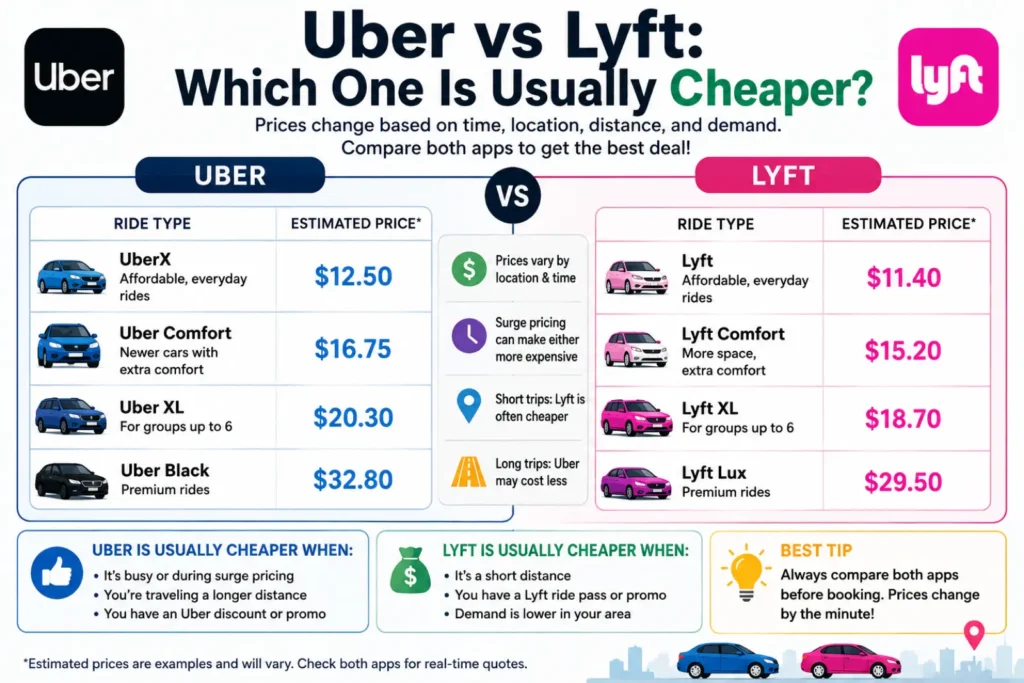
Uber vs Lyft Price Comparison Table
| Factor | Uber | Lyft |
|---|---|---|
| Basic ride price | Changes by trip | Changes by trip |
| Surge or demand pricing | Yes | Yes |
| Price changes | Can happen quickly | Can happen quickly |
| Driver availability | Often strong in many markets | Strong in many markets |
| Discounts | Offers vary | Offers vary |
| Membership savings | Available through paid plans | Available through paid plans |
| Cheapest option | Depends on location and demand | Depends on location and demand |
| Best strategy | Compare before booking | Compare before booking |
Bottom line: Neither Uber nor Lyft is always cheaper.
Real-Life Example: A Short City Ride
Suppose you need a five-mile ride across town.
Uber shows a price of $18.
Lyft shows a price of $15.
In this example, Lyft is cheaper by $3.
Now imagine the same trip during a busy evening.
Uber may show $24.
Lyft may show $31.
The cheaper option has now changed.
This example shows why general price claims can become misleading. Rideshare prices depend on current conditions.
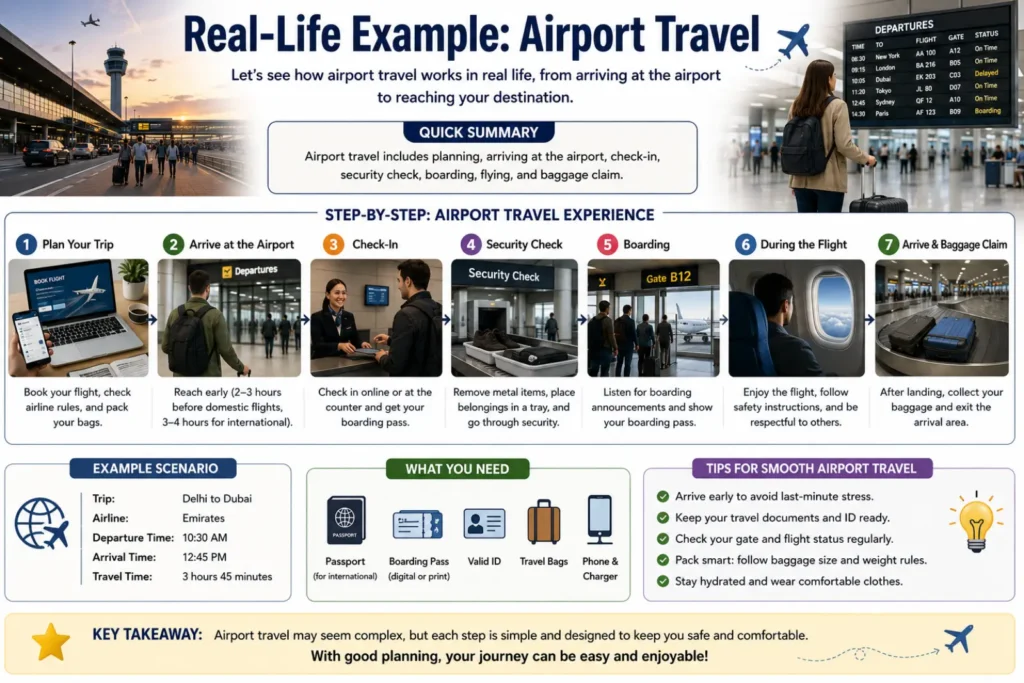
Real-Life Example: Airport Travel
Airport rides often cost more than short city trips.
The trip may cover a longer distance. It may also include airport fees.
For example:
- Uber estimate: $42
- Lyft estimate: $38
Lyft would cost less in this example.
However, prices may change before you request the ride. Traffic can also affect the final price in some situations.
Always check the fare before confirming your trip.
Real-Life Example: Busy Events
Large events can create high demand.
Concerts, sports games, festivals, and holidays often increase ride requests.
During these times, both services may raise prices.
You might see:
- Uber: $35
- Lyft: $28
A few minutes later, the prices may reverse.
Therefore, waiting briefly and checking both apps can sometimes help. However, prices can also rise while you wait.
Use your judgment.
Why Uber or Lyft Prices Change So Often
Several factors can change your fare.
1. Demand
More riders usually mean higher prices.
2. Driver Supply
Fewer available drivers can increase prices.
3. Traffic
Longer travel times can affect some fare estimates.
4. Time of Day
Morning and evening rush hours often create higher demand.
5. Weather
Rain, snow, and extreme weather can increase ride requests.
6. Special Events
Concerts and sports games can create sudden demand spikes.
7. Location
Prices differ between cities and neighborhoods.
That explains why the same trip can have different prices at different times.
When Is Uber Usually Cheaper?
Uber may be cheaper when it has stronger driver availability in your area.
This can happen during certain times or in markets where Uber has more active drivers.
Uber may also offer promotions to selected riders.
However, do not assume Uber always wins on price.
Check the current fare before booking.
When Is Lyft Usually Cheaper?
Lyft may be cheaper when it has more nearby drivers or active discounts.
Some riders may also receive personalized offers.
Lyft can sometimes provide a lower estimate for the same route.
Again, the price depends on your exact trip.
A quick comparison usually gives the best answer.
Uber vs Lyft: Which Is Better for Daily Use?
The best app depends on your travel habits.
For Daily Commuters
Compare prices during your regular travel times.
A membership plan may help frequent riders.
For Airport Trips
Check both apps before leaving.
Airport prices can vary widely.
For Late-Night Rides
Driver availability can affect prices.
Compare both apps before requesting a ride.
For Event Travel
Expect demand-based pricing.
Check prices before the event ends if possible.
For Budget Travelers
Use discounts and compare prices every time.
Small savings can add up over many trips.
Common Mistakes Riders Make
Many riders pay more because they skip simple checks.
Mistake 1: Using Only One App
You may miss a cheaper fare.
Better approach: Compare Uber and Lyft.
Mistake 2: Ignoring Demand Pricing
Prices can increase during busy periods.
Better approach: Check both apps before booking.
Mistake 3: Comparing Different Ride Types
An UberX ride may not match a Lyft XL ride.
Better approach: Compare similar ride categories.
Mistake 4: Forgetting Membership Costs
A membership may save money only for frequent riders.
Better approach: Calculate your expected monthly savings.
Mistake 5: Chasing Small Price Changes
Prices may change while you wait.
Better approach: Compare quickly and book a reasonable fare.
Mistake 6: Ignoring Pickup Location
A nearby pickup point may cost less.
Better approach: Check whether a short walk changes the fare.
10 Tips to Get the Cheapest Uber or Lyft Ride
1. Compare Both Apps
This remains the simplest money-saving strategy.
2. Check Prices Before Booking
Do not assume your favorite app costs less.
3. Avoid Major Demand Spikes
Prices often rise during busy periods.
4. Compare Similar Ride Types
Always compare standard rides with standard rides.
5. Use Available Promotions
Check your account for current discounts.
6. Consider Membership Plans
Frequent riders may benefit from subscription savings.
7. Check Nearby Pickup Points
A short walk may sometimes reduce the fare.
8. Avoid Unnecessary Ride Upgrades
Luxury and larger vehicles cost more.
9. Plan Flexible Travel Times
Traveling outside busy periods may reduce costs.
10. Review the Final Fare
Always check the estimated price before confirming.
Are Uber and Lyft the Same Price?
No.
Uber and Lyft calculate fares separately.
They use different pricing systems, driver availability, promotions, and fees.
Therefore, the prices can differ significantly.
Sometimes the difference may be small. Other times, one service may cost much more.
The only reliable answer comes from checking both apps for the same trip.
Is Uber Cheaper Than Lyft for Airport Rides?
Sometimes.
Airport rides often include extra costs. These costs may include airport fees and longer-distance charges.
One service may offer a lower fare for your route.
The cheaper choice can also change based on:
- Airport location
- Time of day
- Traffic
- Driver supply
- Passenger demand
Always compare both services before leaving for the airport.
Is Lyft Cheaper Than Uber for Short Rides?
Lyft can be cheaper for short rides.
However, Uber may also offer the lower price.
Short trips can still experience demand-based pricing.
A $10 ride may become much more expensive during a busy period.
Therefore, compare the current prices instead of relying on general claims.
Is Uber or Lyft Cheaper at Night?
Neither service is always cheaper at night.
Late-night demand can increase after events, parties, and holidays.
Driver availability can also change.
As a result, Uber may be cheaper one night. Lyft may be cheaper another night.
Compare both apps before booking.
Can Uber and Lyft Prices Change While You Wait?
Yes.
Prices can change when demand or driver availability changes.
A fare may increase after many people request rides.
It may also decrease when more drivers become available.
However, waiting does not guarantee a lower price.
If you need the ride soon, compare both apps and choose a reasonable fare
What Are the Best Synonyms and LSI Keywords?
Use related phrases naturally throughout your content.
Relevant semantic keywords include:
- Uber vs Lyft price comparison
- Uber or Lyft cost
- cheapest rideshare app
- Uber fare comparison
- Lyft fare comparison
- rideshare prices
- Uber surge pricing
- Lyft peak pricing
- cheapest way to get a ride
- Uber airport fare
- Lyft airport fare
- rideshare cost comparison
- affordable transportation apps
- ride-hailing prices
- compare Uber and Lyft fares
These terms help search engines understand the topic.
Avoid repeating the exact keyword in every paragraph.
Natural language creates better content.
Expert Insights
The smartest riders focus on real-time price comparison.
No single rideshare app wins every trip.
Prices depend on supply, demand, location, and timing.
Therefore, broad claims can become outdated quickly.
A strong money-saving habit involves three steps:
- Enter your destination in both apps.
- Compare similar ride categories.
- Choose the lower fare that meets your needs.
Frequent riders should also track their monthly spending.
Membership plans may help some users. However, they may not provide value for occasional riders.
Expert takeaway: The best rideshare strategy uses current data instead of brand loyalty.
Why This Topic Matters for Riders
Rideshare prices can add up quickly.
A small difference can matter when you travel often.
For example, saving $3 per ride can create meaningful monthly savings.
This matters most for:
- Daily commuters
- Students
- Airport travelers
- Families
- Business travelers
- Frequent rideshare users
Price comparison takes only a few seconds.
That small habit can help you spend less over time.
Frequently Asked Questions
Is Uber or Lyft cheaper overall?
Neither service is always cheaper. Prices change based on demand, location, time, and driver availability.
Is Uber cheaper than Lyft?
Sometimes. Uber may offer a lower price for one trip, while Lyft may cost less for another.
Is Lyft cheaper than Uber?
Sometimes. The cheapest option depends on current prices for your specific route.
Which rideshare app has the lowest prices?
There is no permanent winner. Compare both apps before booking.
Is Uber or Lyft cheaper for airport rides?
Either service can be cheaper. Airport fees, distance, demand, and timing affect the final price.
Does Uber cost more than Lyft?
Not always. Prices vary by trip and location.
How can I get the cheapest rideshare fare?
Compare Uber and Lyft, avoid peak demand when possible, and use available discounts.
Should I wait for Uber or Lyft prices to drop?
You can wait briefly, but prices may also increase. Compare both apps before deciding.
Conclusion
So, is Uber or Lyft cheaper? The answer changes from trip to trip. Neither app stays the cheapest all the time. Uber may offer a better price in one situation. Lyft may win on another trip.
Prices depend on location, timing, demand, traffic, and driver availability. Promotions can also change the final cost.
The best strategy is simple. Open both apps and compare similar ride options before booking. This gives you the most accurate price for your journey.
If you ride often, track your spending. Discounts and membership plans may help reduce your total costs.
Simple takeaway: The cheapest rideshare app is usually the one offering the lower fare right now.