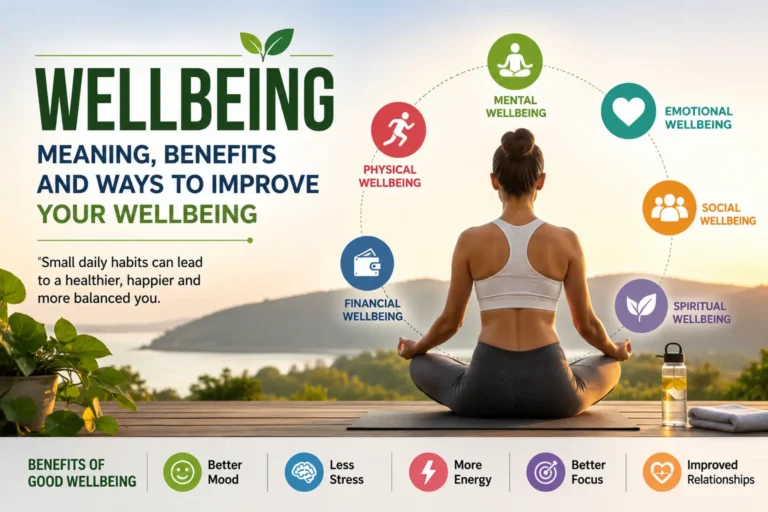
Wellbeing means feeling healthy, balanced, safe, and satisfied with life. It includes more than physical health. Your thoughts, emotions, relationships, habits, and surroundings also affect your wellbeing.
Good wellbeing helps you handle daily stress and enjoy life more. It can improve your focus, energy, confidence, and relationships. However, wellbeing does not mean feeling happy every day.
Everyone faces stress, sadness, and difficult moments. Healthy wellbeing helps you manage these experiences. It also helps you recover and move forward.
This guide explains the meaning of wellbeing in simple terms. You will learn about its main types, benefits, examples, and common mistakes. You will also discover practical ways to improve your wellbeing each day.
Quick Summary
- Wellbeing means overall health, balance, and life satisfaction.
- It includes physical, mental, emotional, social, and spiritual health.
- Wellbeing affects how you think, feel, act, and connect with others.
- Small daily habits can improve your wellbeing over time.
- Good wellbeing does not require a perfect life.
- Rest, healthy food, movement, relationships, and purpose all matter.
- Wellbeing looks different for every person.
What Is the Meaning of Wellbeing?
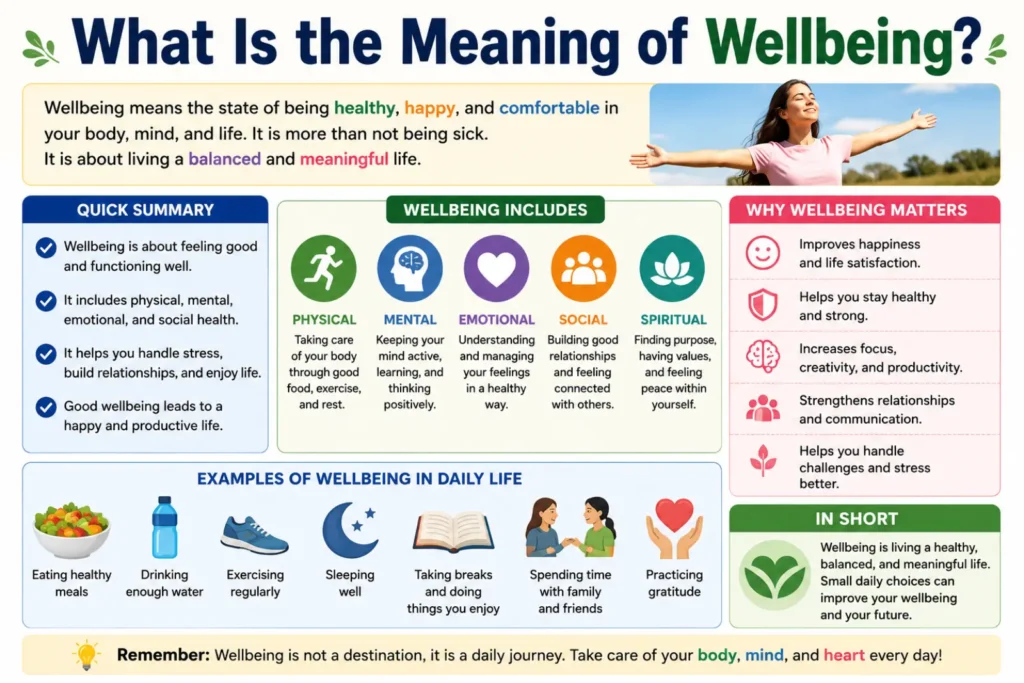
Wellbeing means your overall state of health and happiness.
It describes how well you feel and function in daily life. It includes your body, mind, emotions, relationships, and sense of purpose.
For example, someone may have good physical health but feel lonely. Their overall wellbeing may still need attention.
Another person may face a difficult situation but have strong support. They may maintain good wellbeing despite challenges.
In simple words, wellbeing means living in a way that supports your health, balance, and quality of life.
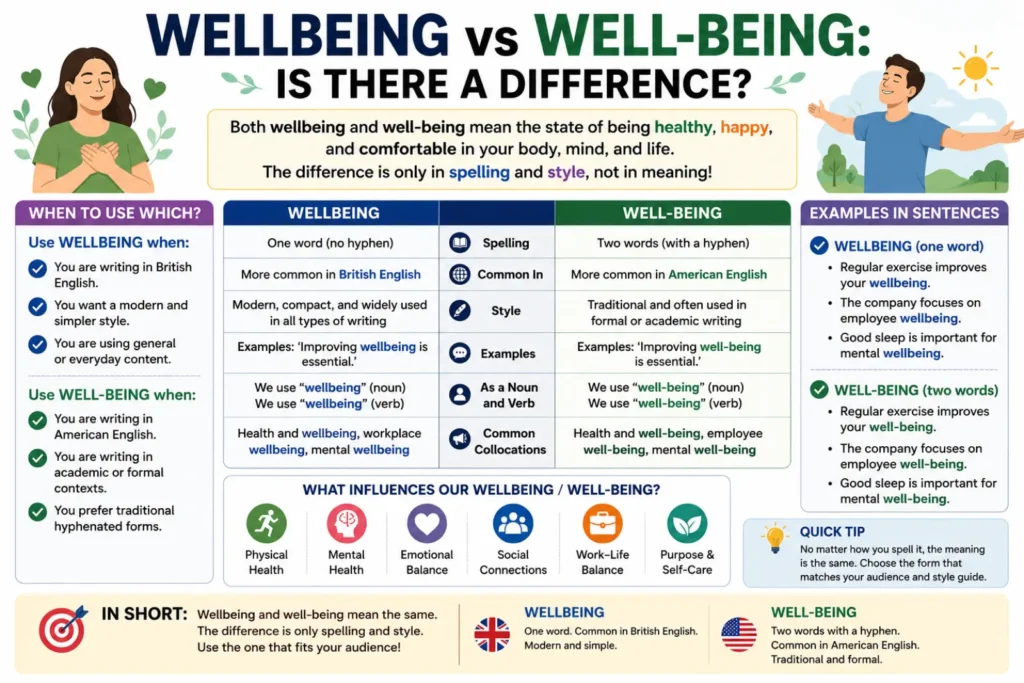
The spelling “wellbeing” is common. “Well-being” is also correct. Both forms share the same meaning.
Wellbeing Explained in Simple Words
Think of wellbeing as a personal health balance.
Imagine several parts of your life working together. These parts include sleep, food, movement, emotions, relationships, work, and purpose.
When one area suffers, other areas may feel the effect.
For example, poor sleep can reduce your energy. Low energy can affect your mood. A bad mood can affect your relationships.
The opposite can also happen. Better sleep can improve your energy and focus. This can make daily tasks feel easier.
Wellbeing does not mean perfect balance every day. Life changes constantly. Your needs can change too.
The goal involves noticing your needs and making helpful choices.
Why Is Wellbeing Important?
Wellbeing affects many areas of everyday life.
Good wellbeing can help you:
- Manage daily stress
- Improve concentration
- Support healthy habits
- Build stronger relationships
- Feel more confident
- Sleep better
- Handle challenges
- Enjoy daily activities
- Maintain better work-life balance
Wellbeing also supports long-term health. Healthy habits often reduce the effects of constant stress.
However, wellbeing requires regular care. One healthy meal cannot solve every problem. One good night of sleep cannot fix months of exhaustion.
Small actions create lasting change when you repeat them.
What Are the Main Types of Wellbeing?
Wellbeing includes several connected areas. Experts often describe wellbeing through different dimensions.
1. Physical Wellbeing
Physical wellbeing relates to your body and physical health.
It includes:
- Regular movement
- Healthy eating
- Good sleep
- Personal hygiene
- Medical care
- Energy levels
- Rest and recovery
You do not need extreme workouts or a perfect diet. Simple, consistent habits can support physical wellbeing.
2. Mental Wellbeing
Mental wellbeing involves how you think and handle daily challenges.
It includes:
- Clear thinking
- Focus
- Learning
- Problem-solving
- Stress management
- Emotional awareness
Mental wellbeing does not mean avoiding every negative thought. Everyone experiences worry and frustration.
Healthy mental wellbeing helps you respond to challenges more effectively.
3. Emotional Wellbeing
Emotional wellbeing involves understanding and managing your feelings.
It includes:
- Recognizing emotions
- Expressing feelings safely
- Managing stress
- Building self-awareness
- Recovering from difficult experiences
You do not need to feel positive all the time. Healthy emotional wellbeing allows space for many emotions.
4. Social Wellbeing
Social wellbeing involves your relationships and connections.
It includes:
- Supportive friendships
- Family relationships
- Communication
- Trust
- Belonging
- Healthy boundaries
Strong relationships can provide emotional support during difficult times.
5. Spiritual Wellbeing
Spiritual wellbeing relates to meaning, values, and purpose.
It may involve:
- Personal beliefs
- Nature
- Meditation
- Faith
- Gratitude
- Personal values
- A sense of purpose
Spiritual wellbeing does not require a specific religion. Each person may define meaning differently.
6. Financial Wellbeing
Financial wellbeing involves feeling more secure and in control of money.
It includes:
- Managing spending
- Planning ahead
- Understanding financial choices
- Reducing unnecessary money stress
Financial wellbeing can affect mental and emotional health.
7. Environmental Wellbeing
Environmental wellbeing relates to the spaces around you.
A clean, safe, and comfortable environment can support your wellbeing. Your home, school, workplace, and community all matter.
Wellbeing vs Well-Being: Is There a Difference?
The terms wellbeing and well-being have the same meaning.
| Term | Meaning | Common Use |
|---|---|---|
| Wellbeing | Overall health and quality of life | Modern general writing |
| Well-being | Overall health and quality of life | Traditional spelling |
| Mental wellbeing | Health of the mind and emotions | Health content |
| Physical wellbeing | Health of the body | Fitness and health content |
The main difference involves spelling, not meaning.
Choose one spelling and use it consistently throughout your content. For SEO, both variations can appear naturally.
What Does Wellbeing Look Like in Real Life?
Wellbeing can appear in simple daily choices.
Example 1: A Busy Student
A student feels tired and stressed. They improve their routine by sleeping earlier and taking short study breaks.
These changes support physical and mental wellbeing.
Example 2: A Remote Worker
A remote worker spends most of the day alone. They schedule regular calls with friends and take daily walks.
These habits support social and physical wellbeing.
Example 3: A Parent
A parent feels overwhelmed by daily responsibilities. They ask for support and create quiet time for themselves.
This supports emotional wellbeing.
Example 4: A Professional
An employee feels constant work pressure. They set clearer boundaries around work hours.
This may improve mental and emotional wellbeing.
These examples show one important idea. Wellbeing often grows through small, practical choices.
How Can You Improve Your Wellbeing?
You can improve your wellbeing through simple daily habits.
Get Enough Sleep
Sleep supports your body and mind. Create a regular sleep routine when possible.
Keep your sleeping space comfortable and reduce distractions before bed.
Move Your Body
Regular movement supports physical and mental health.
Choose activities you enjoy. Walking, stretching, cycling, dancing, and sports can all help.
Eat Balanced Meals
Food provides energy and important nutrients.
Try to include a variety of foods in your meals. Avoid focusing on perfection.
Spend Time With Supportive People
Healthy relationships can improve your sense of connection.
Make time for people who respect, support, and encourage you.
Take Regular Breaks
Your brain and body need recovery time.
Short breaks can improve focus and reduce mental fatigue.
Practice Self-Awareness
Notice how you feel during the day.
Ask yourself simple questions:
- Am I tired?
- Am I stressed?
- Do I need support?
- What would help me today?
Self-awareness helps you make better choices.
Create Healthy Boundaries
Boundaries protect your time and energy.
You can say no to some requests. You can also limit activities that create unnecessary stress.
Spend Time Outdoors
Nature can support relaxation and mental wellbeing.
Even a short walk outside may help you reset.
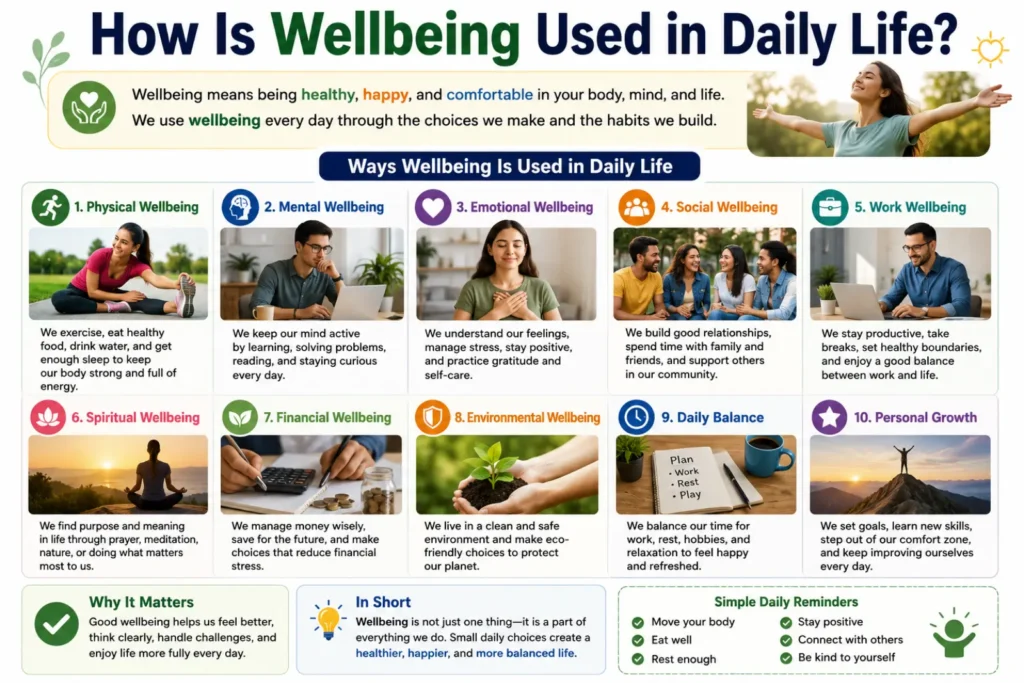
How Is Wellbeing Used in Daily Life?
The word wellbeing appears in many areas of modern life.
Workplace Wellbeing
Companies may create wellbeing programs for employees.
These programs can include:
- Flexible work options
- Mental health support
- Fitness activities
- Stress management
- Healthy workplace policies
School Wellbeing
Schools may support student wellbeing through:
- Counseling
- Physical activity
- Social support
- Healthy routines
- Emotional education
Personal Wellbeing
People may track their wellbeing through daily habits.
They may monitor:
- Sleep
- Mood
- Energy
- Stress
- Exercise
- Social connection
The goal involves understanding personal needs. It does not involve chasing perfection.
Common Wellbeing Mistakes to Avoid
Many people misunderstand wellbeing.
Mistake 1: Thinking Wellbeing Means Constant Happiness
No one feels happy every day.
Wellbeing includes difficult emotions. It involves managing life in healthy ways.
Mistake 2: Focusing Only on Physical Health
Exercise and food matter. However, relationships, emotions, and mental health matter too.
Mistake 3: Trying to Change Everything at Once
Large changes often feel overwhelming.
Start with one or two simple habits. Build slowly from there.
Mistake 4: Comparing Your Wellbeing With Others
Every person faces different challenges and has different needs.
Your wellbeing journey may look different from someone else’s.
Mistake 5: Ignoring Warning Signs
Constant stress, exhaustion, or sadness may signal a need for support.
Talking with a trusted person or qualified professional can help.
Mistake 6: Treating Self-Care as a Luxury
Self-care supports your ability to function.
Rest and recovery form important parts of healthy wellbeing.
Simple Wellbeing Tips and Tricks
Try these practical strategies:
- Start your day with one healthy habit.
- Take short movement breaks.
- Drink enough water throughout the day.
- Keep a regular sleep schedule.
- Spend time with people you trust.
- Write down your main worries.
- Focus on one task at a time.
- Take time away from screens.
- Celebrate small progress.
- Ask for help when you need it.
Small actions can create meaningful improvements over time.
Wellbeing Synonyms and Related Terms
People use several words related to wellbeing.
Common Synonyms
- Health
- Wellness
- Welfare
- Happiness
- Prosperity
- Quality of life
- Life satisfaction
- Personal health
Related LSI Keywords
- Mental health
- Emotional health
- Physical health
- Healthy lifestyle
- Self-care
- Stress management
- Life balance
- Personal growth
- Healthy habits
- Social connection
- Positive lifestyle
- Mind-body health
These terms help explain the wider meaning of wellbeing. Use them naturally and avoid keyword stuffing.
Expert Insights
Wellbeing matters because health involves more than the absence of illness.
Your daily habits influence how you feel, think, work, and connect with others.
A strong wellbeing strategy should consider the whole person. Physical health, mental health, emotions, relationships, and purpose can affect one another.
Experts also emphasize consistency. Small habits often work better than dramatic changes.
For example, a regular sleep routine may help more than occasional extreme lifestyle changes.
Another important insight involves personalization. No single wellbeing plan works for everyone.
Your age, lifestyle, responsibilities, environment, and personal needs all matter.
SEO authority tip: Use trustworthy sources, expert-reviewed information, and clear author credentials when publishing health-related content. Add updated references and explain claims carefully.
Frequently Asked Questions
What is wellbeing in simple words?
Wellbeing means your overall health, balance, and quality of life. It includes your body, mind, emotions, relationships, and sense of purpose.
What are the five main types of wellbeing?
The five common types include physical, mental, emotional, social, and spiritual wellbeing.
Is wellbeing the same as wellness?
The terms often have similar meanings. Wellbeing usually describes your overall quality of life. Wellness often focuses on active health habits.
Why is wellbeing important?
Wellbeing supports your health, relationships, daily performance, stress management, and overall life satisfaction.
How can I improve my wellbeing?
Start with simple habits. Improve your sleep, move regularly, eat balanced meals, connect with others, and manage stress.
What affects a person’s wellbeing?
Many factors affect wellbeing. These include health, sleep, relationships, finances, work, environment, emotions, and personal values.
Can wellbeing change over time?
Yes. Wellbeing can change because of life events, health, stress, relationships, and daily habits.
Does wellbeing mean feeling happy all the time?
No. Wellbeing does not mean constant happiness. It means managing life and emotions in healthy ways.
Conclusion
Wellbeing means more than feeling happy or staying physically fit. It includes your physical health, mental state, emotions, relationships, environment, and sense of purpose.
Good wellbeing does not require a perfect life. Everyone faces stress and difficult moments. Healthy habits can help you manage those challenges.
Start small. Improve your sleep, move your body, connect with supportive people, and take regular breaks. Pay attention to your needs and make changes gradually.
Remember, wellbeing looks different for every person. The best approach involves finding habits that support your real life.