
Nurse salary is one of the most searched topics among healthcare professionals and students. Many people want to know how much nurses earn and what affects their income. Nursing offers stable jobs, competitive pay, and many career paths. However, salaries can vary based on experience, education, location, and specialty.
If you plan to become a nurse or advance your career, understanding salary trends is important. It helps you make better career decisions and set realistic income goals. This guide explains nurse salaries in simple language. You will also learn what factors increase earnings, which nursing specialties pay the most, and practical tips to boost your salary.
Quick Summary Box
What Is Nurse Salary? (Featured Snippet)
- Nurse salary is the amount of money a nurse earns for providing patient care.
- Salary depends on experience, education, location, employer, and nursing specialty.
- Registered Nurses (RNs) usually earn more than Licensed Practical Nurses (LPNs).
- Advanced Practice Registered Nurses (APRNs) often receive the highest salaries.
- Nurses can increase their income through certifications, higher education, and specialized roles.
What Is Nurse Salary?
A nurse salary is the yearly or hourly pay a nurse receives for their work. Nurses care for patients, assist doctors, educate families, and support healthcare teams. Their income reflects their skills, responsibilities, and workplace.
Nurses work in many healthcare settings, including:
- Hospitals
- Private clinics
- Emergency rooms
- Nursing homes
- Schools
- Home healthcare agencies
- Government healthcare facilities
Some nurses earn a fixed annual salary, while others receive hourly wages. Many employers also offer overtime pay, bonuses, retirement plans, and health insurance.
Simple Definition
Nurse salary is the total compensation a nurse earns for providing healthcare services.
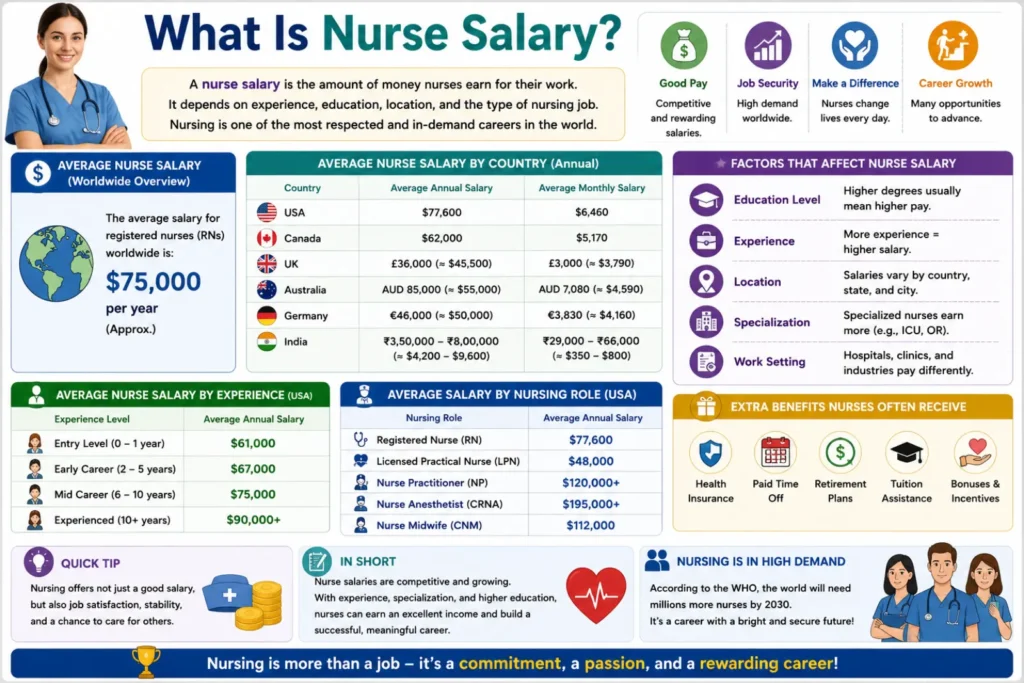
Average Nurse Salary in 2026
Nurse salaries vary across countries and employers. However, registered nursing remains one of the highest-paying healthcare careers that does not always require medical school.
The table below shows estimated average annual salaries.
| Nurse Type | Average Annual Salary | Average Hourly Rate |
|---|---|---|
| Certified Nursing Assistant (CNA) | $38,000 | $18 |
| Licensed Practical Nurse (LPN/LVN) | $60,000 | $29 |
| Registered Nurse (RN) | $95,000 | $46 |
| Nurse Practitioner (NP) | $135,000 | $65 |
| Certified Registered Nurse Anesthetist (CRNA) | $230,000 | $110 |
Note: Actual salaries vary by country, employer, certifications, and years of experience.
What Factors Affect Nurse Salary?
Many factors determine how much a nurse earns. Understanding these can help you plan your career and increase your income.
1. Experience
Experience plays a major role in salary growth.
A new graduate usually starts with an entry-level salary. As experience grows, employers often increase pay.
For example:
- 0–2 years: Entry-level salary
- 3–5 years: Moderate salary increase
- 6–10 years: Higher earning potential
- 10+ years: Senior-level salary
Experienced nurses may also qualify for leadership positions.
2. Education
Higher education often leads to higher salaries.
Examples include:
- Diploma in Nursing
- Associate Degree in Nursing (ADN)
- Bachelor of Science in Nursing (BSN)
- Master of Science in Nursing (MSN)
- Doctor of Nursing Practice (DNP)
Many hospitals now prefer nurses with a BSN because they often have broader clinical knowledge.
3. Nursing Specialty
Not every nursing specialty pays the same.
Specialized nurses often earn more because they require advanced skills.
Some high-paying specialties include:
- Nurse Practitioner
- Nurse Anesthetist
- Critical Care Nurse
- Operating Room Nurse
- Emergency Room Nurse
- Neonatal Intensive Care Nurse
- Oncology Nurse
These roles usually involve additional certifications and greater responsibility.
4. Geographic Location
Location greatly affects salary.
Large cities often pay higher wages because living costs are higher.
Rural areas may offer lower base salaries but sometimes provide housing assistance or hiring bonuses.
Countries also have different salary ranges based on healthcare systems and economic conditions.
5. Employer Type
Different employers offer different pay scales.
Common employers include:
- Public hospitals
- Private hospitals
- Government agencies
- Military healthcare
- Outpatient clinics
- Universities
- Corporate healthcare organizations
Private hospitals may offer higher salaries, while government employers often provide stronger retirement and job security benefits.
6. Certifications
Professional certifications increase both skills and earning potential.
Popular certifications include:
- Critical Care Registered Nurse (CCRN)
- Certified Emergency Nurse (CEN)
- Oncology Certified Nurse (OCN)
- Pediatric Nursing Certification (CPN)
Certified nurses often qualify for promotions and salary increases.
Nurse Salary by Experience
Experience has a direct impact on earnings.
| Experience Level | Average Salary Range |
|---|---|
| Entry Level (0–2 years) | $65,000–$80,000 |
| Mid-Level (3–7 years) | $80,000–$100,000 |
| Experienced (8–15 years) | $100,000–$120,000 |
| Senior Nurse (15+ years) | $120,000+ |
Many nurses also earn additional income through:
- Overtime shifts
- Weekend work
- Night shift differentials
- Holiday pay
- Performance bonuses
These benefits can significantly increase annual earnings.
Why Nursing Is a High-Demand Career
Healthcare systems continue to need qualified nurses. An aging population and increasing healthcare needs create steady job opportunities.
Benefits of a nursing career include:
- Strong job security
- Competitive salaries
- Flexible schedules
- Career advancement opportunities
- Opportunities to specialize
- Meaningful work helping patients
Because of these advantages, nursing remains one of the most respected and rewarding professions.
Nurse Salary by Specialty
Choosing the right specialty can greatly affect your income. Specialized nurses often earn more because they handle complex patient care and require advanced training.
| Nursing Specialty | Average Annual Salary | Typical Work Setting |
|---|---|---|
| Registered Nurse (RN) | $95,000 | Hospitals, clinics |
| Intensive Care Unit (ICU) Nurse | $105,000 | Intensive care units |
| Emergency Room (ER) Nurse | $102,000 | Emergency departments |
| Operating Room (OR) Nurse | $108,000 | Surgical centers and hospitals |
| Labor and Delivery Nurse | $104,000 | Maternity hospitals |
| Pediatric Nurse | $98,000 | Children’s hospitals |
| Oncology Nurse | $106,000 | Cancer treatment centers |
| Cardiac Nurse | $109,000 | Cardiology departments |
| Nurse Practitioner (NP) | $135,000 | Clinics, hospitals, private practice |
| Certified Registered Nurse Anesthetist (CRNA) | $230,000 | Operating rooms and surgical centers |
Note: Salaries are estimates and may vary depending on location, employer, education, certifications, and years of experience.
Highest-Paying Nursing Jobs
Some nursing careers offer significantly higher salaries because they require advanced education, specialized certifications, or greater responsibility.
1. Certified Registered Nurse Anesthetist (CRNA)
CRNAs administer anesthesia before, during, and after surgery. This role consistently ranks among the highest-paying nursing careers.
2. Nurse Practitioner (NP)
Nurse Practitioners diagnose illnesses, prescribe medications, and develop treatment plans. Many work independently in primary care clinics.
3. Clinical Nurse Specialist (CNS)
Clinical Nurse Specialists improve patient care while supporting healthcare teams through education and leadership.
4. Nurse Midwife
Certified Nurse Midwives provide prenatal care, assist with childbirth, and offer postpartum support.
5. Educator
Educators teach future nurses at colleges, universities, and healthcare organizations while continuing clinical practice.
Nurse Salary by Work Setting
Where you work also affects your earnings.
| Workplace | Average Salary Level |
|---|---|
| Private Hospital | High |
| Government Hospital | High |
| Specialty Hospital | Very High |
| Outpatient Clinic | Moderate |
| Home Healthcare | Moderate to High |
| Nursing Home | Moderate |
| School Nursing | Moderate |
| Military Healthcare | High with excellent benefits |
Many hospitals also provide:
- Annual bonuses
- Retirement plans
- Health insurance
- Paid vacation
- Tuition reimbursement
- Shift differential pay
These benefits can add significant value beyond your base salary.
Nurse Salary Around the World
Nursing salaries differ widely between countries due to healthcare systems, cost of living, and demand.
| Country | Estimated Average Annual Salary |
|---|---|
| United States | $95,000 |
| Canada | $75,000 |
| United Kingdom | $45,000 |
| Australia | $70,000 |
| Germany | $55,000 |
| New Zealand | $65,000 |
| United Arab Emirates | $50,000–$80,000 (tax benefits may apply) |
Always compare salary with the local cost of living and employee benefits before accepting a job offer.
Nurse Salary by Experience Level
Experience remains one of the strongest predictors of earning potential.
| Experience | Salary Growth |
|---|---|
| New Graduate | Entry-level pay |
| 2–5 Years | Moderate increase |
| 5–10 Years | Strong salary growth |
| 10–20 Years | Senior-level compensation |
| 20+ Years | Leadership and management opportunities |
Many experienced nurses move into supervisory, administrative, or educational roles that offer higher pay.
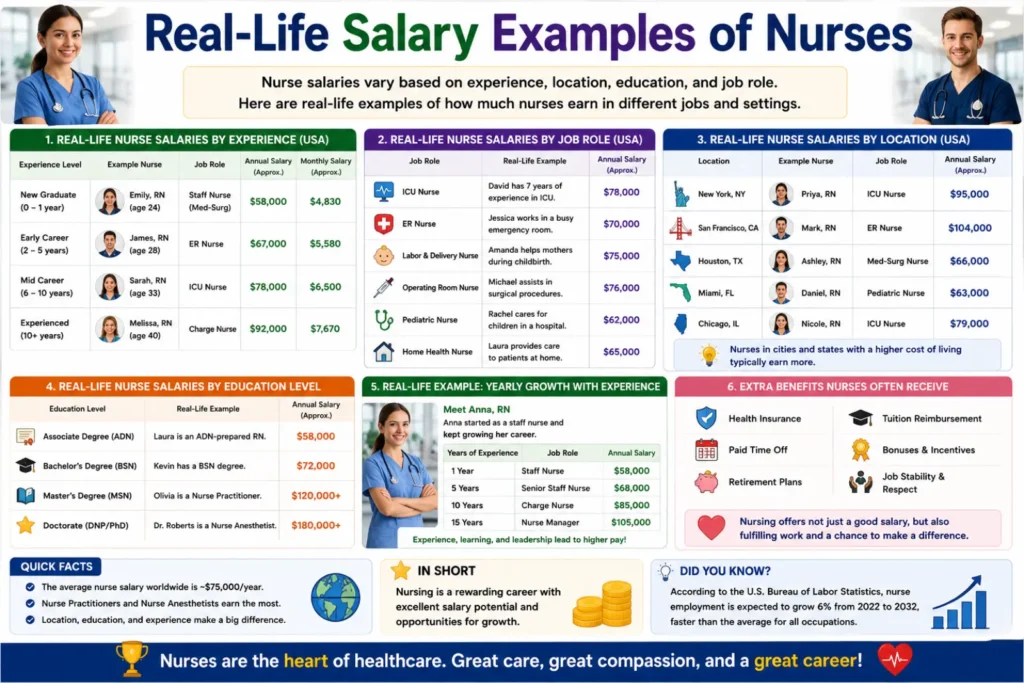
Real-Life Salary Examples
Example 1: New Graduate Nurse
Sarah starts her first hospital job after earning her Bachelor of Science in Nursing (BSN). She receives a competitive entry-level salary and gains valuable experience.
Example 2: ICU Nurse
After five years of experience and earning a critical care certification, Michael transfers to the ICU. His specialized skills lead to higher pay and additional shift differentials.
Example 3: Nurse Practitioner
Emily completes a Master of Science in Nursing (MSN) and becomes a Nurse Practitioner. Her expanded responsibilities result in a significant salary increase.
These examples show how education, experience, and specialization can improve long-term earning potential.
Nurse Salary Comparison
Registered Nurse vs Nurse Practitioner
| Feature | Registered Nurse | Nurse Practitioner |
|---|---|---|
| Education | ADN or BSN | Master’s or Doctorate |
| Prescribe Medication | No | Yes (depending on regulations) |
| Average Salary | Moderate | Higher |
| Patient Responsibility | High | Advanced |
| Career Growth | Strong | Excellent |
Hospital Nurse vs Clinic Nurse
Common Mistakes That Limit Nurse Salary
Many nurses unintentionally slow their salary growth.
Avoid these common mistakes:
- Staying in one position for too long without negotiating pay.
- Skipping professional certifications.
- Not pursuing higher education.
- Ignoring specialty training opportunities.
- Accepting the first job offer without comparing benefits.
- Overlooking relocation opportunities for higher-paying positions.
Planning your career strategically can lead to much higher lifetime earnings.
Tips to Increase Your Nurse Salary
Use these practical strategies to boost your income:
- Earn a BSN, MSN, or DNP degree.
- Obtain specialty certifications.
- Gain experience in high-demand departments.
- Work overtime when appropriate.
- Consider travel nursing opportunities.
- Develop leadership and management skills.
- Negotiate your salary during job offers.
- Continue professional education each year.
- Stay updated with healthcare technology.
- Build a strong professional network.
Even small career improvements can lead to significant salary growth over time.
Nurse Salary in Daily Life
Understanding nurse salaries helps in many situations, including:
- Choosing a nursing specialty.
- Planning your education.
- Comparing job offers.
- Negotiating employment contracts.
- Preparing long-term financial goals.
- Deciding whether to relocate for better opportunities.
Salary information helps nurses make informed career decisions.
Synonyms and LSI Keywords
Using related keywords helps search engines understand your content and improves SEO. Include these naturally throughout your article.
Primary Keyword
- Nurse salary
Secondary Keywords
- Registered nurse salary
- RN salary
- Nursing salary
- Average nurse pay
- Nurse income
- Nurse wages
- Nursing career salary
- Hospital nurse salary
- Entry-level nurse salary
- Experienced nurse salary
Long-Tail Keywords
- How much does a nurse make?
- Average registered nurse salary in 2026
- Highest-paying nursing specialties
- Nurse salary by experience
- Nurse salary by state
- Ways to increase nurse salary
- Best-paying nursing jobs
- Nurse salary comparison
Semantic Keywords
- Healthcare careers
- Nursing profession
- Clinical nursing
- Patient care
- Medical careers
- Healthcare salary
- Nursing education
- Nursing certification
Expert Insights
Understanding nurse salary is about more than knowing a number. It helps you plan a successful and rewarding career.
Healthcare continues to grow, creating strong demand for qualified nurses. Those who invest in education, certifications, and specialized skills often enjoy higher salaries and more career opportunities.
Many employers also value leadership, communication, and critical thinking. Developing these skills can improve your chances of promotions and salary increases.
Instead of focusing only on base pay, compare the complete compensation package. Health insurance, retirement plans, tuition assistance, paid leave, and bonuses can significantly increase the overall value of a job offer.
Expert Tip: Review salary trends every year. Healthcare salaries change as demand, technology, and workforce needs evolve.
(FAQs)
1. What is the average nurse salary?
The average salary depends on the country, experience, and nursing role. Registered Nurses generally earn competitive salaries with opportunities for annual increases.
2. Which nursing specialty pays the most?
Certified Registered Nurse Anesthetists (CRNAs) are among the highest-paid nursing professionals. Other high-paying specialties include Nurse Practitioners and Clinical Nurse Specialists.
3. Does education affect nurse salary?
Yes. Nurses with advanced degrees, such as a BSN, MSN, or DNP, often qualify for higher-paying positions and leadership roles.
4. Can nurses increase their salary?
Yes. Earning certifications, gaining experience, working overtime, specializing in high-demand fields, and negotiating job offers can all increase income.
5. Do hospital nurses earn more than clinic nurses?
In many cases, yes. Hospital nurses often receive higher pay because they work longer shifts, nights, weekends, and holidays. However, salaries vary by employer and location.
6. Does experience increase nurse salary?
Yes. Nurses usually earn more as they gain clinical experience, develop specialized skills, and take on leadership responsibilities.
7. What benefits do nurses receive besides salary?
Many employers offer valuable benefits, including:
- Health insurance
- Retirement plans
- Paid vacation
- Sick leave
- Tuition reimbursement
- Continuing education support
- Performance bonuses
These benefits can significantly improve overall compensation.
8. Is nursing a good career for long-term financial growth?
Yes. Nursing offers stable employment, competitive salaries, career advancement opportunities, and strong demand worldwide. Continuous learning and specialization can further increase earning potential.
Conclusion
A nurse salary depends on many factors, including education, experience, specialty, location, and employer. While entry-level nurses earn competitive salaries, those who pursue advanced education, certifications, and specialized roles often achieve much higher incomes.
Nursing is more than a well-paying career. It offers job stability, opportunities for growth, and the chance to make a meaningful difference in people’s lives. Whether you are just starting your nursing journey or looking to advance your career, understanding salary trends can help you make informed decisions.
Keep learning, build your clinical expertise, and stay updated with industry changes. With the right skills and dedication, nursing can provide both professional satisfaction and long-term financial success.