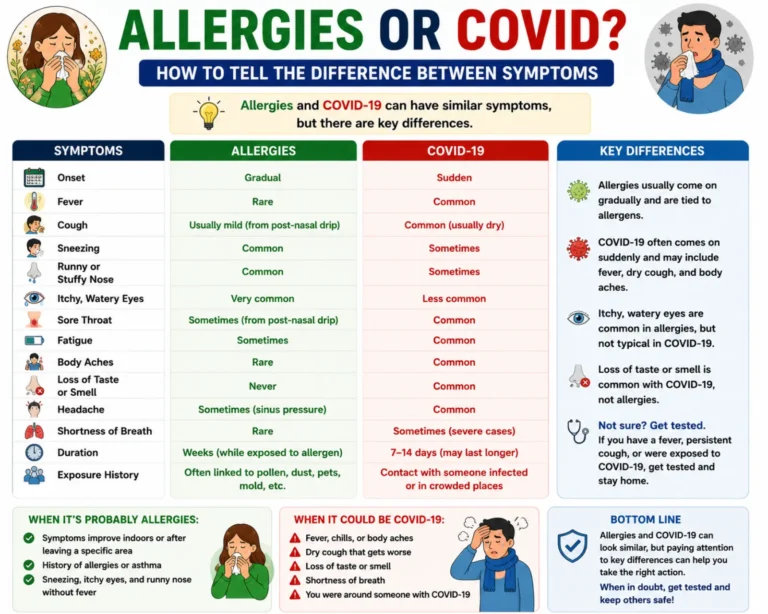
Allergies or COVID can seem hard to tell apart because both may cause sneezing, coughing, and a runny nose. Many people worry when these symptoms appear. They want to know if they have seasonal allergies or a viral infection.
The good news is that allergies and COVID have important differences. Learning these signs can help you choose the right next steps. You can avoid unnecessary stress and protect the people around you.
This guide explains the symptoms in simple words. It also compares allergies and COVID side by side. You will learn when to get tested, when to stay home, and when to contact a healthcare provider. By the end, you will feel more confident about understanding your symptoms.
Quick Summary Box
- Allergies happen when your immune system reacts to harmless substances like pollen or dust.
- COVID is a contagious viral infection.
- Itchy eyes and sneezing often point to allergies.
- Fever usually suggests COVID rather than allergies.
- Loss of taste or smell can happen with COVID.
- Allergy symptoms often last as long as you are exposed to the trigger.
- COVID symptoms usually improve over several days to weeks.
- A COVID test helps confirm the diagnosis if you are unsure.
- Contact a healthcare provider if symptoms become severe or you have trouble breathing.
What Are Allergies?
Allergies happen when the immune system mistakes a harmless substance for a dangerous one. The body then releases chemicals called histamines. These chemicals cause allergy symptoms.
Common allergy triggers include:
- Pollen
- Dust mites
- Mold
- Pet dander
- Certain foods
- Insect stings
Many people experience seasonal allergies during spring or fall. Others have allergies all year because of indoor triggers.
Common Allergy Symptoms
- Sneezing
- Runny nose
- Stuffy nose
- Itchy eyes
- Watery eyes
- Itchy throat
- Skin rash or hives
- Mild cough caused by postnasal drip
Most allergies do not cause fever or body aches.
What Is COVID?
COVID is a respiratory illness caused by a coronavirus. It spreads mainly through droplets and tiny airborne particles released when an infected person breathes, talks, coughs, or sneezes.
Symptoms can range from mild to severe. Some people recover quickly. Others need medical care.
Common COVID Symptoms
- Fever
- Chills
- Cough
- Sore throat
- Fatigue
- Headache
- Muscle aches
- Runny nose
- Nasal congestion
- Loss of taste or smell
- Shortness of breath
Symptoms usually begin a few days after infection, although timing can vary.
Allergies or COVID: Why They Feel Similar
Many people confuse allergies with COVID because both affect the nose and throat.
For example, both conditions can cause:
- Sneezing
- Coughing
- Stuffy nose
- Runny nose
- Sore throat in some cases
This overlap makes it difficult to know the cause based on one symptom alone.
However, several symptoms strongly favor one condition over the other.
Allergies or COVID: Key Differences
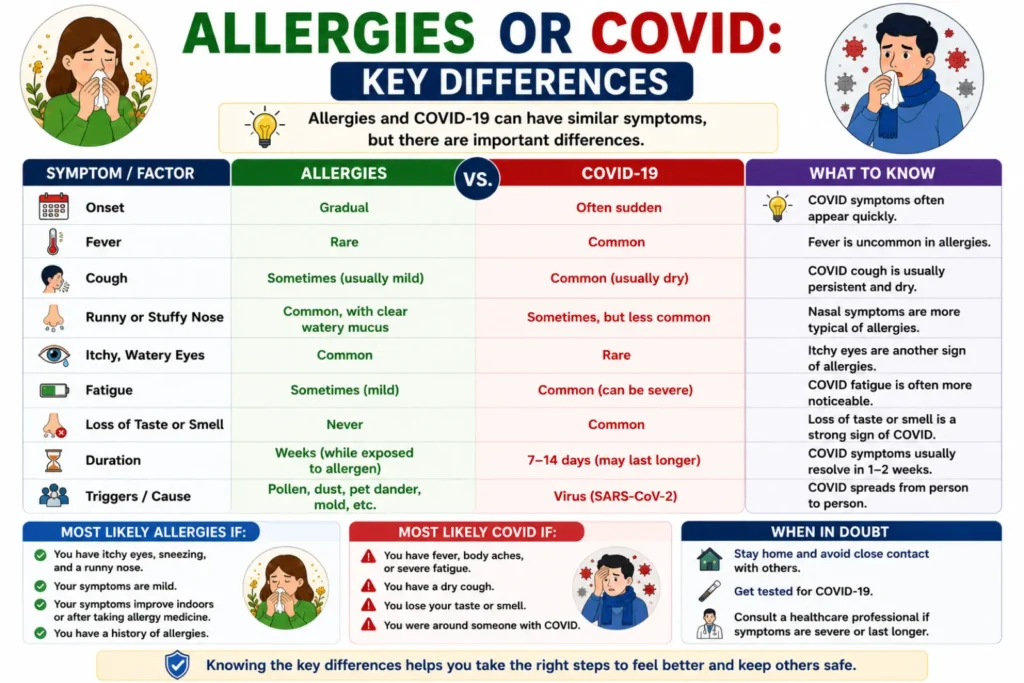
The easiest way to compare the two conditions is by looking at their symptoms.
| Symptom | Allergies | COVID |
|---|---|---|
| Fever | Rare | Common |
| Sneezing | Very common | Sometimes |
| Itchy eyes | Very common | Rare |
| Runny nose | Common | Common |
| Stuffy nose | Common | Common |
| Cough | Mild | Common |
| Loss of taste or smell | Rare | Can occur |
| Muscle aches | Rare | Common |
| Fatigue | Mild or none | Common |
| Shortness of breath | Rare | Possible |
| Contagious | No | Yes |
This comparison helps narrow the cause, but it cannot replace testing when COVID is possible.
Real-Life Examples
Example 1: Seasonal Allergies
Sarah starts sneezing every spring. Her eyes itch all day. She has no fever and feels energetic. Her symptoms improve after taking allergy medicine.
This pattern strongly suggests seasonal allergies.
Example 2: COVID Infection
James develops a fever and body aches. He also has a cough and feels very tired. Two family members become sick a few days later.
His symptoms are more consistent with COVID.
Example 3: Unsure Which One It Is
Emma wakes up with a sore throat and runny nose. She is unsure whether it is allergies or COVID. She takes a COVID test and limits close contact with others until she knows the result.
Testing helps when symptoms overlap.
When Should You Get Tested for COVID?
Testing is a good idea if you have symptoms that could be caused by COVID, especially if:
- You have a fever.
- You have new body aches.
- You recently spent time with someone who has COVID.
- Your symptoms began suddenly.
- You live with people at higher risk of serious illness.
- Your healthcare provider recommends testing.
A positive test confirms COVID. A negative result may still require follow-up if symptoms continue or worsen.
Common Mistakes People Make
Many people guess the cause of their symptoms without enough information.
Avoid these common mistakes:
- Assuming every sneeze means allergies.
- Ignoring a fever.
- Going to work while feeling sick.
- Skipping a COVID test when symptoms match.
- Believing itchy eyes always rule out COVID.
- Stopping allergy medicine too soon.
- Waiting too long to seek medical care for severe symptoms.
Paying attention to your symptoms helps you make better decisions.
Tips to Tell Allergies from COVID More Easily
Sometimes, symptoms overlap. However, looking at the full picture makes the difference clearer.
Use these tips to help identify the likely cause:
Notice Your Eyes
Itchy, watery, and red eyes often point to allergies. COVID rarely causes these symptoms.
Check for Fever
A fever is one of the biggest clues. Allergies do not usually cause a fever.
Think About the Season
Do your symptoms appear every spring or fall? If so, seasonal allergies are more likely.
Consider Recent Exposure
Have you been around someone with COVID recently? If yes, your risk of infection is higher.
Watch How Symptoms Change
Allergy symptoms often stay the same until the trigger goes away. COVID symptoms may worsen over the first few days before improving.
Use a COVID Test
A home COVID test can help if you are unsure. Follow the instructions carefully and repeat the test if advised.
Treatment Options for Allergies
Allergy treatment focuses on reducing symptoms and avoiding triggers.
Common treatment options include:
- Antihistamines
- Saline nasal sprays
- Nasal steroid sprays
- Eye drops for itchy eyes
- Allergy shots for long-term management
- Avoiding pollen, dust, or pet dander when possible
Simple lifestyle changes can also help. Keep windows closed during high pollen days. Wash your hands and face after spending time outdoors. Shower before bed to remove pollen from your hair and skin.
Treatment Options for COVID
Most people with mild COVID recover at home with rest and supportive care.
Helpful steps include:
- Drink plenty of fluids.
- Get enough rest.
- Eat nutritious foods.
- Follow your healthcare provider’s advice.
- Use over-the-counter medicines if appropriate and recommended.
Some people, especially those at higher risk of severe illness, may benefit from antiviral treatments. These work best when started early. Contact a healthcare provider promptly if you have risk factors or your symptoms become worse.
Seek emergency care if you have trouble breathing, chest pain, confusion, or other serious warning signs.
How to Prevent Allergies and COVID
Although allergies and COVID have different causes, you can reduce your risk of symptoms with healthy habits.
To Reduce Allergy Symptoms
- Check local pollen forecasts.
- Keep your home clean.
- Vacuum carpets regularly.
- Wash bedding weekly.
- Use air filters if recommended.
- Keep pets out of the bedroom if pet dander triggers symptoms.
To Reduce COVID Risk
- Wash your hands often.
- Stay home when you feel sick.
- Improve indoor ventilation.
- Follow current public health guidance when appropriate.
- Stay up to date with recommended vaccinations if advised by your healthcare provider.
Prevention is often easier than treatment.
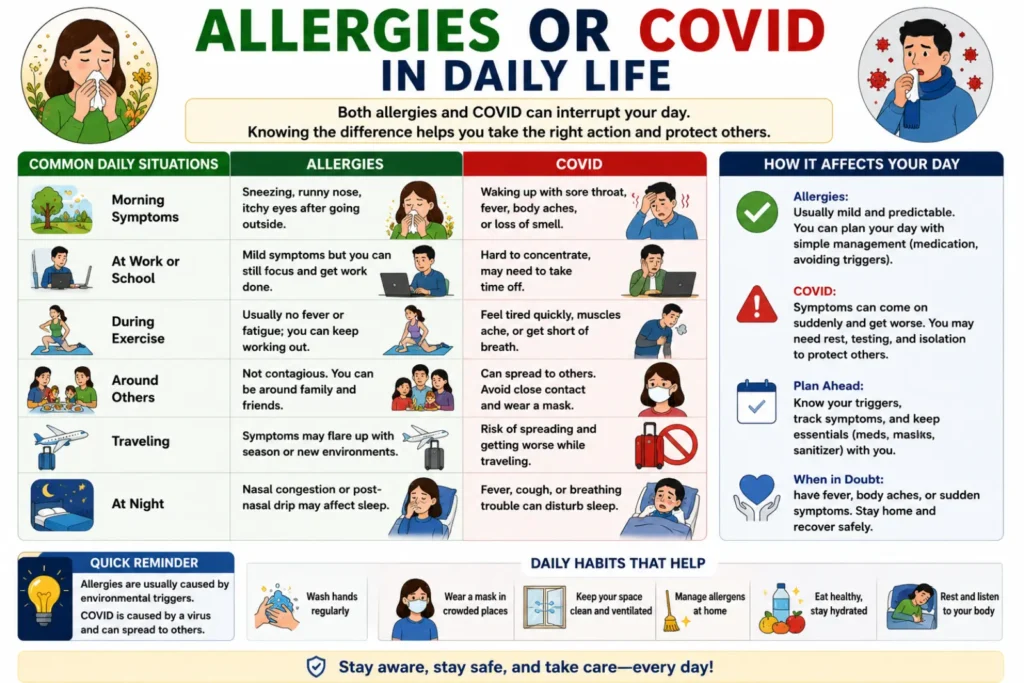
Allergies or COVID in Daily Life
Many everyday situations can make symptoms confusing.
At School
A student starts sneezing during pollen season. They have itchy eyes but no fever. Allergies may be the cause, but parents should monitor symptoms and consider testing if COVID is possible.
At Work
An employee develops a cough, fever, and fatigue. They should avoid exposing coworkers and consider COVID testing.
During Travel
Travel can expose you to new allergens and viruses. Pack allergy medicine if you have seasonal allergies. If you develop symptoms while traveling, follow local health guidance and test if COVID is suspected.
Daily awareness helps protect both you and those around you.
Synonyms and Related Keywords
Using related terms helps readers understand the topic and supports SEO naturally.
Some common related keywords include:
- Seasonal allergies
- Allergy symptoms
- COVID symptoms
- Coronavirus infection
- Hay fever
- Pollen allergy
- Runny nose
- Sneezing
- Fever
- Respiratory infection
- Allergies vs COVID
- COVID or allergies
- Allergy or cold
- Viral infection symptoms
- How to tell allergies from COVID
Use these terms naturally instead of repeating the same keyword too often.
Expert Insights
Health experts recommend looking at your overall symptoms instead of focusing on just one sign.
For example, itchy eyes strongly suggest allergies, while fever and body aches are more common with COVID. When symptoms overlap, testing provides more reliable answers than guessing.
It is also important to remember that allergies and COVID can occur at the same time. Having allergies does not prevent someone from getting COVID.
If symptoms are severe, last longer than expected, or keep returning, seek medical advice. Early evaluation can help you receive the right care and avoid complications.
Frequently Asked Questions
1. How can I tell if I have allergies or COVID?
Itchy eyes and sneezing usually suggest allergies. Fever, body aches, and fatigue are more common with COVID. Testing can help confirm the cause.
2. Can allergies cause a fever?
No. Allergies do not usually cause a fever. A fever may point to an infection such as COVID or another illness.
3. Can COVID start like allergies?
Yes. Early COVID may include a runny nose or congestion, which can resemble allergies. Other symptoms often develop later.
4. Can I have allergies and COVID at the same time?
Yes. A person can experience seasonal allergies while also having COVID. This can make symptoms harder to interpret.
5. Does sneezing mean I have allergies?
Not always. Sneezing is common with allergies, but it can also occur with viral infections, including COVID.
6. When should I see a doctor?
Contact a healthcare provider if symptoms become severe, breathing is difficult, symptoms persist, or you are at high risk for serious illness.
7. Is a home COVID test reliable?
Home tests are useful when used correctly. Follow the instructions carefully and repeat testing if recommended or if symptoms continue.
conclusion
Understanding the difference between allergies or COVID can help you respond with confidence. While both conditions share some symptoms, important differences often make the cause clearer. Itchy eyes, sneezing, and predictable seasonal patterns usually point to allergies. Fever, body aches, and unusual fatigue are more common with COVID.
When you are uncertain, avoid making assumptions. Monitor your symptoms, consider your recent exposure, and use a COVID test if needed. If symptoms become severe or you have trouble breathing, seek medical care without delay.
By learning these key differences, you can make informed decisions, protect your health, and reduce the risk of spreading illness to others.