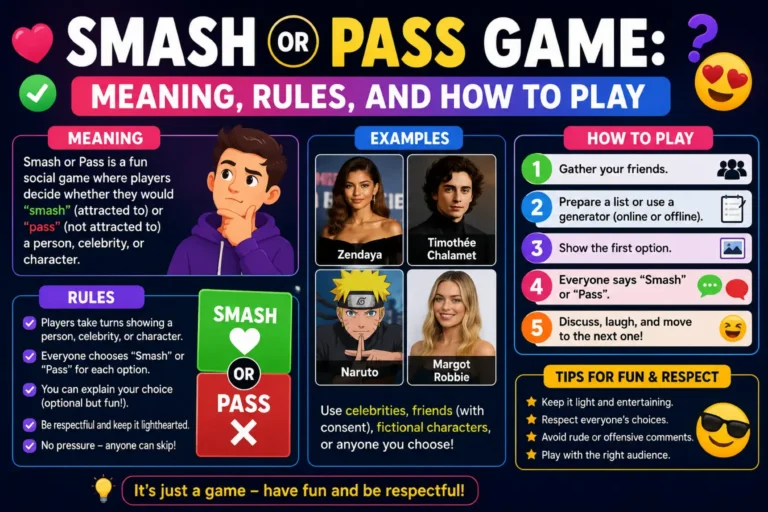
Smash or pass game is a popular social game played online and with friends. The game asks players if they would “smash” or “pass” a person, celebrity, character, or fictional figure.
Many people enjoy the game because it feels simple and fun. It often appears on TikTok, YouTube, Instagram, and party nights.
However, players should always show respect and avoid hurting others. The game works best when everyone feels comfortable.
In this guide, you will learn the meaning, rules, examples, and tips for playing the smash or pass game in a fun and respectful way.
Quick Summary Box
- Smash or pass game is a social question game.
- Players choose “smash” or “pass” for each option.
- The game often features celebrities, characters, or fictional people.
- Friends also play it during parties and online challenges.
- Respect and consent matter when playing.
- Avoid making others feel uncomfortable.
What Is the Smash or Pass Game?
The smash or pass game is a guessing and opinion game.
Players see a person, celebrity, fictional character, or image. Then they answer:
- Smash = interested or attracted.
- Pass = not interested.
People usually play for entertainment and laughs.
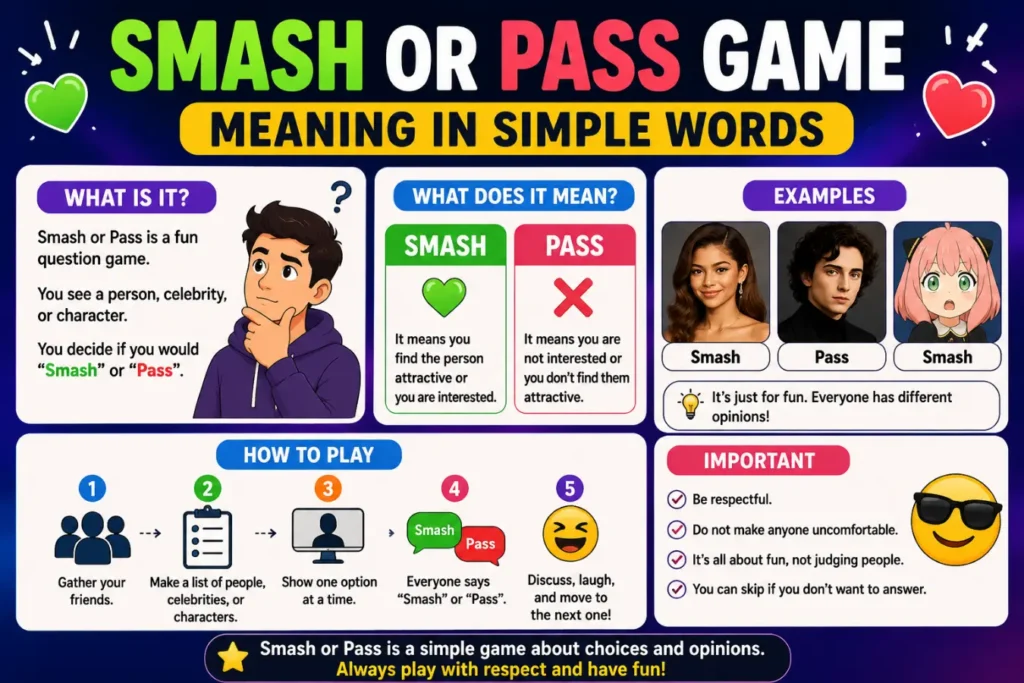
Smash or Pass Game Meaning in Simple Words
In simple English, the game asks whether someone would choose or reject a person based on attraction.
The game does not require serious answers.
Most players treat it as a lighthearted activity.
How Does the Smash or Pass Game Work?
The rules are easy:
- Pick a list of names or pictures.
- Show one option at a time.
- Each player answers “smash” or “pass.”
- Move to the next person.
- Continue until the list ends.
Many groups also explain their choices for extra fun.
Basic Rules of the Smash or Pass Game
Follow these rules for a better experience:
- Keep answers respectful.
- Do not pressure anyone.
- Allow players to skip questions.
- Avoid insulting comments.
- Use celebrities or fictional characters when possible.
- Stop if someone feels uncomfortable.
Where Did the Smash or Pass Game Come From?
The game became popular on social media.
Platforms that helped spread the trend include:
- TikTok
- YouTube
- Twitch
Content creators often film reaction videos using this format.
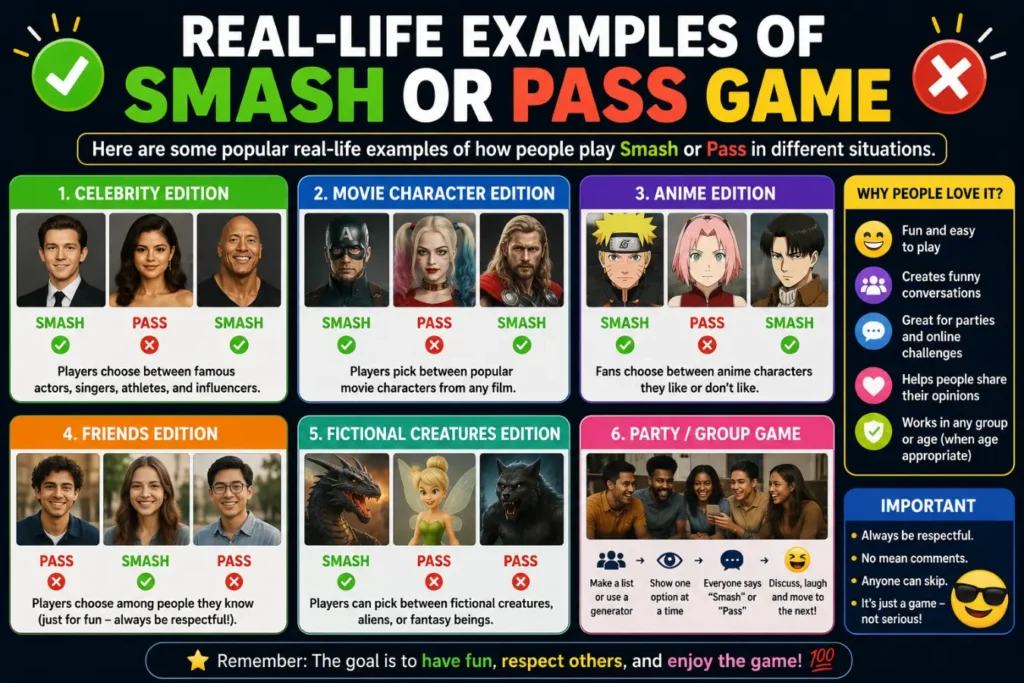
Real-Life Examples of Smash or Pass Game
Example 1: Celebrity Edition
Players answer questions about actors, singers, and athletes.
Example 2: Movie Character Edition
Friends choose between famous fictional characters.
Example 3: Anime Edition
Anime fans discuss their favorite characters.
Example 4: Party Version
Groups play during birthdays or game nights.
Online Smash or Pass Game vs Party Version
| Feature | Online Version | Party Version |
|---|---|---|
| Played with strangers | Sometimes | No |
| Face-to-face interaction | Rare | Yes |
| Social media sharing | Common | Less common |
| Group discussion | Limited | Strong |
| Privacy | Depends on platform | More private |
| Fun factor | High | High |
Why Is the Smash or Pass Game So Popular?
Several reasons explain its popularity:
- Easy rules
- Fast gameplay
- Funny reactions
- Social interaction
- Viral videos
- Celebrity discussions
People enjoy sharing opinions with friends.
Common Mistakes Players Make
Making Personal Attacks
The game should stay fun.
Pressuring Others
Everyone deserves the right to skip.
Using Hurtful Comments
Respect always matters.
Forgetting Privacy
Avoid sharing personal information online.
Taking Results Too Seriously
Remember that the game is only entertainment.
Tips for Playing the Smash or Pass Game Respectfully
Choose Fictional Characters
This reduces awkward situations.
Respect Boundaries
Never force participation.
Keep Comments Positive
Avoid rude jokes.
Play With Trusted Friends
Comfort creates a better experience.
Know When to Stop
If someone feels upset, change the activity.
Usage of Smash or Pass Game in Daily Life
People use the game in different situations:
- School friend groups
- Birthday parties
- TikTok videos
- YouTube challenges
- Icebreaker games
- Online communities
Many people prefer celebrity versions because they feel less personal.
Similar Games to Smash or Pass
If you enjoy this game, you may also like:
- Would You Rather
- Truth or Dare
- Never Have I Ever
- This or That
- Kiss, Marry, Kill
- Most Likely To
These games encourage conversation and laughter.
Synonyms and LSI Keywords
Related Search Terms
- smash or pass challenge
- celebrity smash or pass
- online smash or pass game
- TikTok smash or pass
- party question games
- fun games with friends
- viral social games
Semantic Keywords
- opinion games
- group party games
- social media challenges
- interactive games
- friendship activities
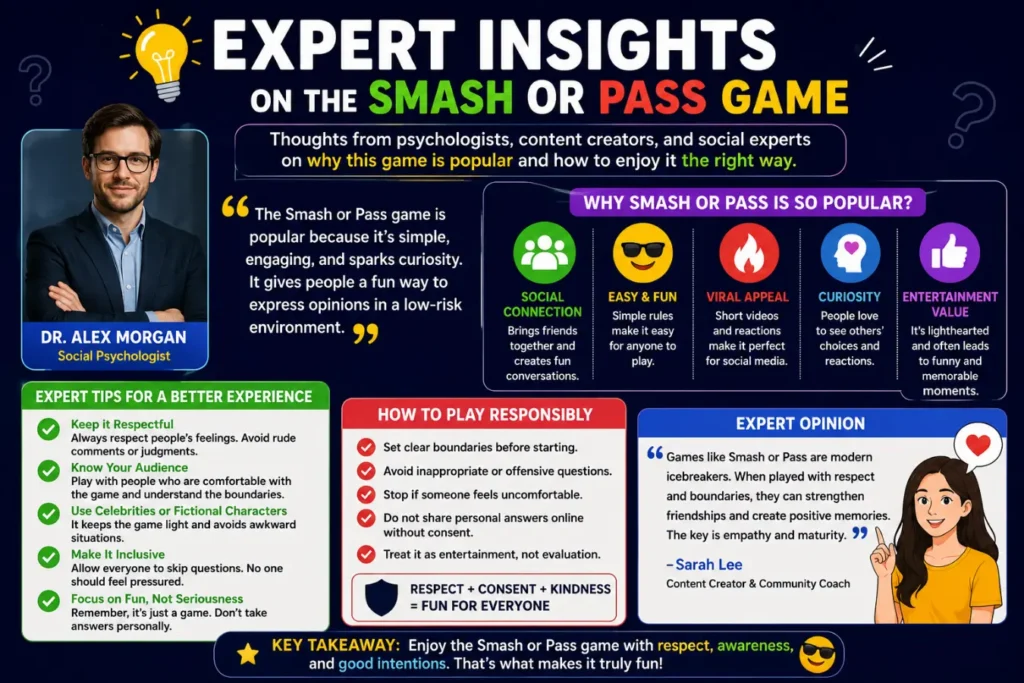
Expert Insights
Digital culture experts suggest keeping social games respectful.
Healthy group activities build stronger friendships.
Games should create fun, not embarrassment.
Using fictional characters or celebrities often prevents awkward moments.
Players should always respect consent and personal boundaries.
Frequently Asked Questions
What is the smash or pass game?
It is a social game where players choose “smash” or “pass” for each option.
Is the smash or pass game popular?
Yes. It became popular through TikTok and YouTube.
Can friends play smash or pass?
Yes. Many people play it during parties and gatherings.
Is the game meant to be serious?
No. Most people play it for fun.
Can the game include fictional characters?
Yes. Many players prefer fictional characters and celebrities.
Is smash or pass safe for everyone?
It depends on the group. Respect and boundaries are important.
What games are similar to smash or pass?
Would You Rather, Truth or Dare, and Never Have I Ever are similar choices.
Conclusion
The smash or pass game remains one of the most popular social games online. Its simple rules and funny reactions make it enjoyable for many groups.
Still, respect should always come first. Players should avoid hurtful comments and honor personal boundaries.
Using celebrities or fictional characters often creates a more comfortable experience. The goal is to laugh, connect, and enjoy time together.
When played respectfully, the smash or pass game can become a fun activity for friends, parties, and online communities.