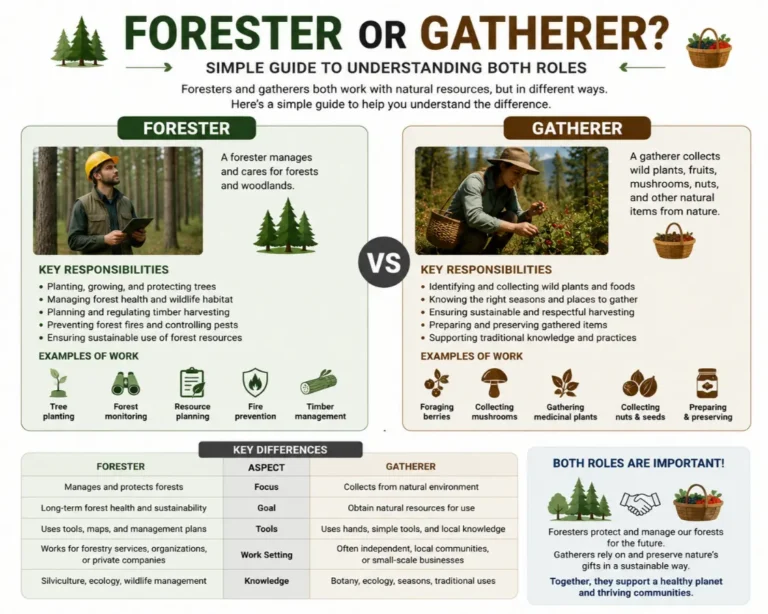
Forester or gatherer is a phrase people often use when talking about nature, survival, and traditional lifestyles. Although both roles connect with the environment, they have different purposes.
A forester manages and protects forests. A gatherer collects food and natural resources from the wild.
People sometimes confuse these terms because both involve working with nature. However, each role serves a unique purpose.
Understanding the difference helps students, writers, and nature lovers use the right word. It also provides insight into how humans have interacted with forests for thousands of years.
This guide explains the meaning of each term, compares them, and shows how they apply in everyday life.
Quick Summary Box
- A forester manages and protects forests.
- A gatherer collects natural resources from the environment.
- Foresters often work professionally.
- Gatherers usually focus on finding food or useful materials.
- Both roles depend on knowledge of nature.
- The terms describe different activities and responsibilities.
What Does Forester or Gatherer Mean?
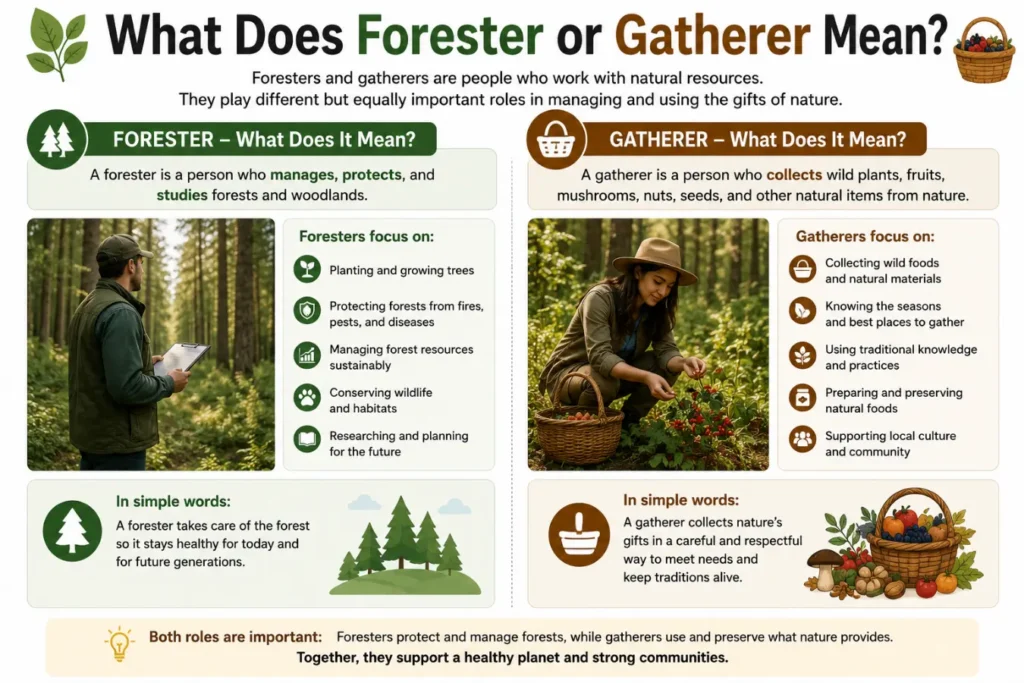
The phrase forester or gatherer compares two different roles related to the natural world.
Forester
A forester studies, manages, and protects forests.
Gatherer
A gatherer collects berries, nuts, herbs, mushrooms, or other natural resources.
Both roles involve nature, but their goals differ.
What Is a Forester?
A forester is a person who cares for forests.
Their work may include:
- Planting trees
- Preventing forest fires
- Protecting wildlife habitats
- Managing timber resources
- Monitoring forest health
Foresters often work for governments, parks, or environmental organizations.
What Is a Gatherer?
A gatherer finds and collects resources from nature.
Gatherers may collect:
- Fruits
- Berries
- Nuts
- Mushrooms
- Medicinal plants
- Firewood
Many ancient societies relied on gathering for survival.
Some modern communities still practice gathering today.
Forester vs Gatherer Comparison Table
| Feature | Forester | Gatherer |
|---|---|---|
| Main Purpose | Manage forests | Collect natural resources |
| Work Type | Professional or scientific | Survival or traditional activity |
| Tools Used | Maps, equipment, data systems | Baskets, bags, simple tools |
| Focus | Forest health and conservation | Food and useful materials |
| Education Required | Often formal training | Learned through experience |
| Modern Role | Environmental management | Foraging and resource collection |
Explanation in Simple Words
Think of a forester as someone who takes care of the forest.
Think of a gatherer as someone who takes things from the forest for use.
One protects and manages.
The other collects and uses.
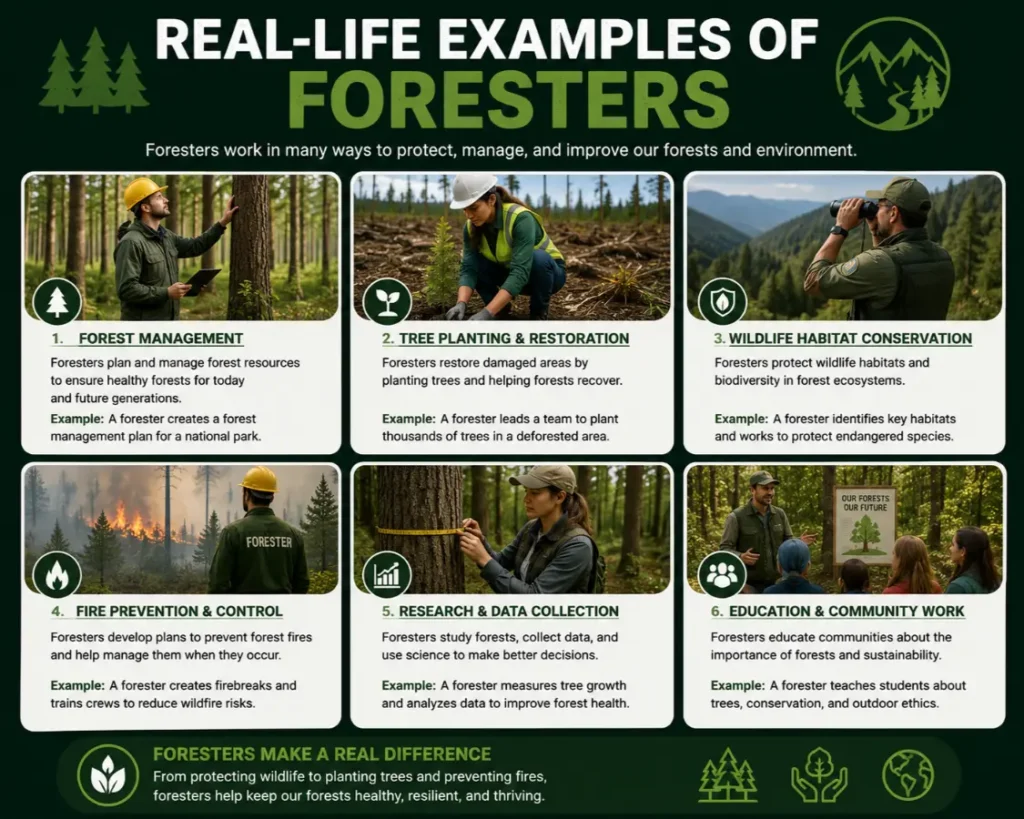
Real-Life Examples of Foresters
Examples include:
National Park Employees
They monitor trees and wildlife.
Forest Rangers
They prevent illegal logging and fires.
Environmental Scientists
They study ecosystems and conservation.
Timber Managers
They ensure sustainable tree harvesting.
Real-Life Examples of Gatherers
Examples include:
People Picking Wild Berries
They collect food from nature.
Mushroom Foragers
They search forests for edible mushrooms.
Indigenous Communities
Many communities gather plants for food and medicine.
Survival Experts
They teach safe wild food collection.
Why Were Gatherers Important in Human History?
Before farming, humans survived through hunting and gathering.
Gatherers supplied:
- Fruits
- Seeds
- Roots
- Herbs
- Nuts
These resources helped early humans thrive.
Many historians call these societies hunter-gatherer communities.
How Foresters Help the Environment
Foresters support nature in many ways.
They:
- Protect forests from disease.
- Reduce wildfire risks.
- Preserve animal habitats.
- Promote sustainable tree growth.
- Support biodiversity.
Healthy forests benefit everyone.
Common Mistakes People Make
Mistake 1: Thinking Both Words Mean the Same Thing
They do not.
Foresters manage forests.
Gatherers collect resources.
Mistake 2: Assuming Gatherers Only Existed in Ancient Times
Modern foraging still exists today.
Mistake 3: Believing Foresters Only Cut Trees
Foresters focus on conservation and sustainability.
Usage in Daily Life
You may hear these terms in:
- History books
- Environmental studies
- Survival courses
- Nature documentaries
- Archaeology discussions
Example sentences:
- “The forester inspected the damaged trees.”
- “The gatherer collected wild berries.”
Tips for Remembering the Difference
Remember the Word “Forest”
A forester cares for forests.
Remember the Word “Gather”
A gatherer gathers resources.
Think About Purpose
Foresters manage.
Gatherers collect.
Synonyms and Related Keywords
Forester Synonyms
- Forest manager
- Ranger
- Conservation officer
- Woodland specialist
Gatherer Synonyms
- Forager
- Collector
- Harvester
- Resource gatherer
LSI Keywords
- hunter gatherer society
- forest conservation
- foraging in nature
- forest management
- wild food collection
- environmental stewardship
- natural resource gathering
- forestry careers
Expert Insight
Understanding the difference between forester or gatherer improves accuracy in writing and education.
Foresters play a key role in conservation.
Gatherers represent one of humanity’s oldest traditions.
Using the correct term helps readers understand the context clearly.
Strong vocabulary also improves communication and supports better learning.
Frequently Asked Questions
What is the difference between a forester and a gatherer?
A forester manages forests, while a gatherer collects resources from nature.
Is a gatherer the same as a forager?
Yes. Many people use these terms interchangeably.
Do gatherers still exist today?
Yes. Many people practice modern foraging.
What does a forester do?
A forester protects and manages forest ecosystems.
Did ancient humans have gatherers?
Yes. Early societies depended on gathering for survival.
Do foresters cut down trees?
Sometimes. However, they focus on sustainable management.
Which career requires education?
Forestry usually requires professional training.
Internal Linking Suggestions
Link this article to:
- What Is a Hunter-Gatherer Society?
- Forest Conservation Explained
- Types of Ecosystems
- Sustainable Resource Management
- Benefits of Biodiversity
Conclusion
The comparison between forester or gatherer highlights two important relationships humans have with nature.
A forester manages and protects forests for future generations. A gatherer collects useful resources from the environment.
Although both roles connect with nature, they serve different purposes.
Understanding these terms helps readers, students, and writers communicate more clearly.
The simple takeaway is this:
Foresters care for forests. Gatherers collect from them.