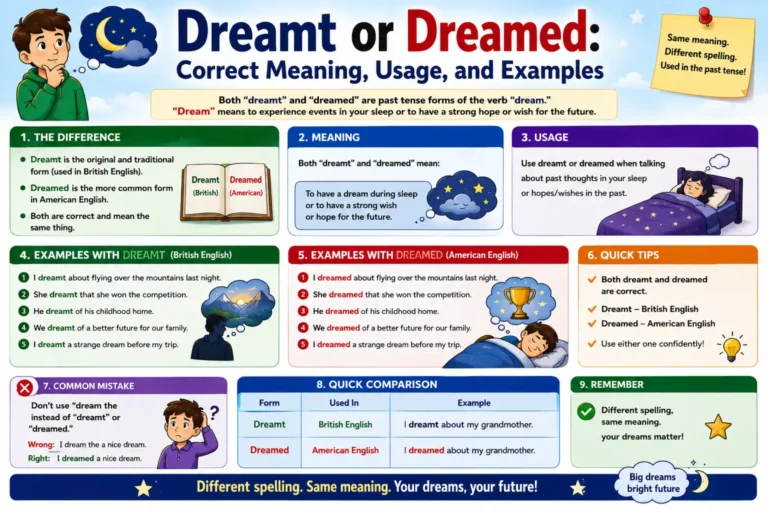
Dreamt or dreamed can both be correct forms of the verb dream. The right choice often depends on your audience and writing style. Dreamed appears more often in American English. Dreamt appears more often in British English and other varieties. Both words describe having dreams during sleep. They can also describe hopes, wishes, or future goals.
Many learners feel confused because the two forms look different. However, the rule is simple. You can usually use either form when talking about dreams. This guide explains the difference between dreamt and dreamed in simple English. You will also learn which form sounds more natural in different countries. By the end, you will know exactly which word to choose in your writing.
Quick Summary:
- Dreamed and dreamt are both correct past forms of dream.
- Dreamed is more common in American English.
- Dreamt is more common in British English.
- Both forms can describe sleep dreams and life goals.
- Use one form consistently within the same piece of writing.
- Neither form is grammatically wrong.
- Dreamed often sounds more neutral worldwide.
- Dreamt often sounds more literary or British.
What Does “Dreamt or Dreamed” Mean?
The phrase dreamt or dreamed asks which past-tense form of dream you should use.
The verb dream means to experience thoughts during sleep. It can also mean to imagine something you want.
For example:
- I dreamed about flying.
- I dreamt about flying.
- She dreamed of becoming a doctor.
- She dreamt of becoming a doctor.
All four sentences are grammatically correct.
The main difference involves regional preference and style. American writers usually choose dreamed. British writers often choose dreamt.
Dreamt vs. Dreamed: The Main Difference
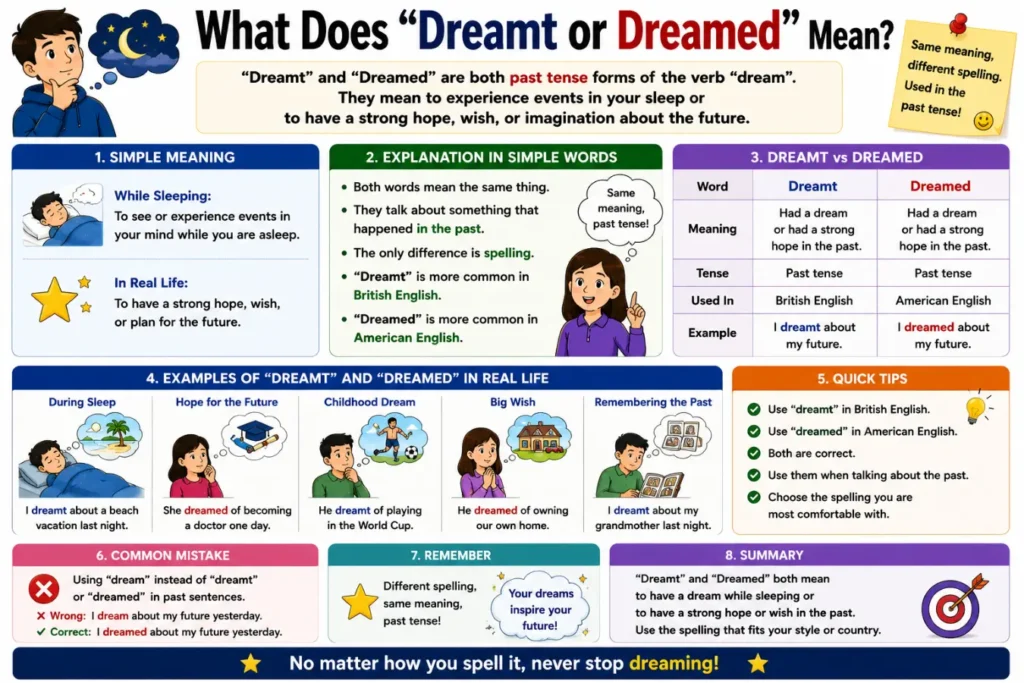
The biggest difference comes from English variety.
| Word | Common Usage | Example |
|---|---|---|
| Dreamed | American English and global English | I dreamed about my old school. |
| Dreamt | British English and some other varieties | I dreamt about my old school. |
Both forms have the same basic meaning.
The choice does not usually change the meaning of the sentence. Instead, it can change the style or regional feel.
For example:
I dreamed of traveling around the world.
This sounds natural in American English.
I dreamt of traveling around the world.
This sounds natural in British English.
Therefore, both choices work wel
Is “Dreamt” a Correct Word?
Yes, dreamt is completely correct.
Dreamt works as both the simple past tense and the past participle of dream.
Examples include:
- I dreamt about my childhood home.
- She had dreamt about that moment for years.
- We dreamt of building a better future.
Many British English speakers use dreamt naturally.
However, some learners mistakenly think dreamt is informal or incorrect. That idea is wrong.
Dreamt appears in standard dictionaries and professional writing.
Is “Dreamed” a Correct Word?
Yes, dreamed is also completely correct.
It works as both the simple past tense and the past participle.
Examples include:
- I dreamed about the ocean.
- He dreamed of becoming a pilot.
- They had dreamed about success for years.
American English strongly prefers dreamed.
Many international readers also find dreamed easy to understand.
Therefore, dreamed remains a safe choice for global audiences.
Dreamt or Dreamed: Which One Should You Use?
Choose dreamed when writing for an American audience.
Choose dreamt when writing for a British audience.
You can also consider your writing style.
Dreamed often feels:
- Neutral
- Modern
- Common
- International
Dreamt often feels:
- British
- Literary
- Traditional
- Slightly more poetic
For example, a business article may prefer dreamed.
A British novel may naturally use dreamt.
The key rule remains simple: both forms are correct.
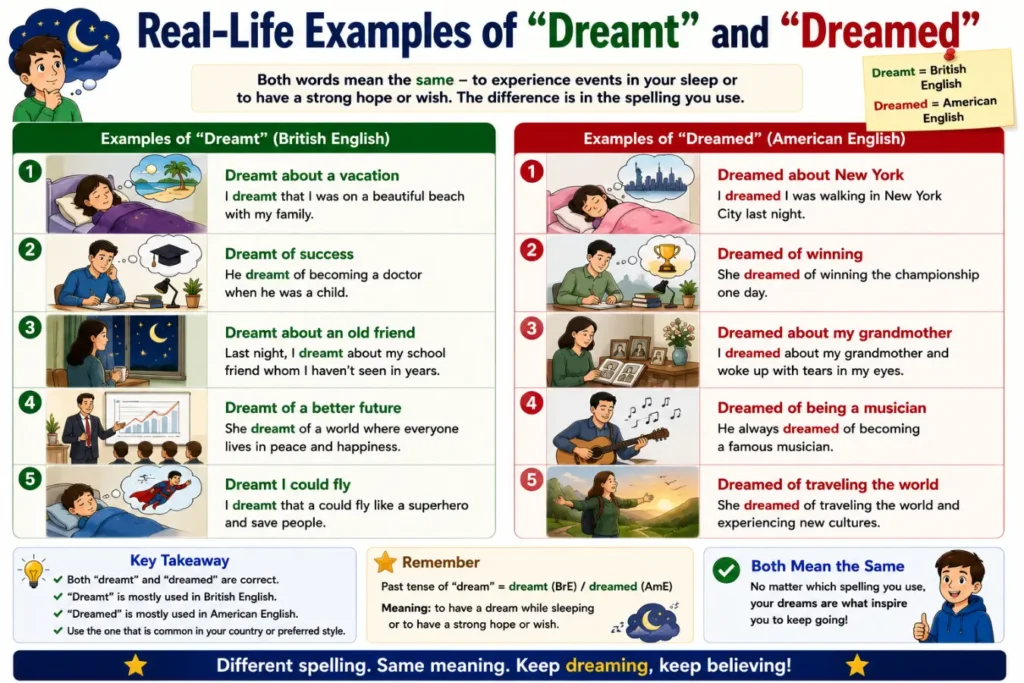
Real-Life Examples of “Dreamt” and “Dreamed”
Here are simple examples from everyday English.
Talking About Sleep
- I dreamed about my family last night.
- I dreamt about my family last night.
Both sentences work.
Talking About Goals
- She dreamed of opening a bakery.
- She dreamt of opening a bakery.
Again, both forms are correct.
Using the Past Perfect
- He had dreamed about the trip for years.
- He had dreamt about the trip for years.
Both versions work naturally.
Talking About a Strange Dream
- We dreamed about a city under the sea.
- We dreamt about a city under the sea.
The meaning stays the same.
Dreamt or Dreamed in American English
American English usually prefers dreamed.
For example:
- I dreamed about winning the competition.
- She dreamed of becoming a writer.
- They dreamed about their future home.
American English often prefers regular -ed endings.
This pattern appears in other verbs too.
For example:
- learned
- burned
- spelled
- smelled
British English may also use alternative forms for some of these words.
Therefore, dreamed often sounds more natural to American readers.
Dreamt or Dreamed in British English
British English often uses dreamt.
Examples include:
- I dreamt about the sea.
- She dreamt of a better life.
- He had dreamt about the opportunity.
British writers may choose dreamt because it fits traditional British usage.
However, dreamed remains correct in British English too.
The choice depends on personal preference and context.
A British writer may use dreamed without making a grammar mistake.
Is “Dreamed” More Correct Than “Dreamt”?
No.
Dreamed is not more grammatically correct than dreamt.
Both forms are standard English.
The difference mainly involves:
- Regional English
- Personal preference
- Writing style
- Audience expectations
For American readers, dreamed may sound more natural.
For British readers, dreamt may sound more natural.
So, the best choice depends on your audience.
Common Mistakes With Dreamt and Dreamed
Many learners make small mistakes with these words.
Mistake 1: Thinking “Dreamt” Is Wrong
Some learners believe only dreamed is correct.
That is incorrect.
Dreamt is a standard English word.
Mistake 2: Using Both Forms Randomly
A writer may use dreamt in one paragraph and dreamed later.
This does not create a grammar error. However, it can make the writing feel inconsistent.
Try to choose one form for a single article or document.
Mistake 3: Confusing “Dreamed Of” and “Dreamed About”
Both phrases can work.
Use dream of when discussing a hope or goal.
She dreamed of becoming a singer.
Use dream about when discussing sleep experiences.
I dreamed about my old house.
However, native speakers sometimes use both phrases differently.
Mistake 4: Writing “Dream” for Past Events
Incorrect:
I dream about it last night.
Correct:
I dreamed about it last night.
Or:
I dreamt about it last night.
The time expression last night requires a past-tense form.
Dreamed Of vs. Dreamed About
This difference often causes confusion.
“Dreamed Of”
Use dreamed of for goals, hopes, or ambitions.
Examples:
- She dreamed of becoming a doctor.
- He dreamed of owning a small farm.
- They dreamed of traveling the world.
“Dreamed About”
Use dreamed about for something experienced during sleep.
Examples:
- I dreamed about my old school.
- She dreamed about a strange animal.
- He dreamed about flying.
However, English speakers sometimes use dreamed about for goals too.
For example:
I dreamed about becoming a professional athlete.
This sentence can still sound natural.
Synonyms and Related Keywords for Dreamt or Dreamed
The best synonym depends on the meaning.
When Talking About Sleep
Related words include:
- imagined while sleeping
- saw in a dream
- had a dream about
- envisioned during sleep
When Talking About Goals
Related words include:
- hoped
- wished
- imagined
- envisioned
- aspired to
- longed for
- wanted deeply
Related Search Terms
These semantic keywords can help explain the topic naturally:
How to Choose the Right Form in Daily Writing
Choosing the right form does not need to feel difficult.
Follow these simple steps.
Step 1: Identify Your Audience
Are you writing for American readers?
Choose dreamed more often.
Are you writing for British readers?
Choose dreamt more often.
Step 2: Check Your Existing Style
Look at nearby verbs.
Do you usually write:
- learned
- burned
- spelled
Then dreamed may fit your style.
Do you prefer:
- learnt
- burnt
- spelt
Then dreamt may fit better.
Step 3: Stay Consistent
Choose one form for the same article.
Consistency improves readability.
It also creates a more polished writing style.
Expert Insight: Why This Small Difference Matters
Language choices can affect how readers perceive your content.
A word may be grammatically correct but less familiar to your audience.
For example, American readers may expect dreamed.
British readers may expect dreamt.
Good writers consider both correctness and audience expectations.
SEO writers should also understand regional language differences.
Search engines understand both forms.
However, users may search for either version.
Therefore, a strong article can naturally include both forms.
The best approach avoids forced keyword repetition.
Instead, explain the relationship clearly.
That strategy supports readability, user satisfaction, and topical relevance.
Frequently Asked Questions About Dreamt or Dreamed
Is “dreamt” or “dreamed” correct?
Both dreamt and dreamed are correct past forms of dream.
Which is more common, dreamt or dreamed?
Dreamed is more common in American English. Dreamt is common in British English.
Is “dreamt” British English?
Yes, dreamt is especially common in British English.
Is “dreamed” American English?
Yes, dreamed is especially common in American English.
Can I use “dreamt” in American English?
Yes. American English speakers will understand dreamt. However, dreamed usually sounds more natural in the United States.
What is the past tense of dream?
The past tense can be dreamed or dreamt.
Should I say “dreamed of” or “dreamed about”?
Use dreamed of for hopes and goals. Use dreamed about for sleep experiences. However, both phrases can sometimes overlap.
Which form should I use in formal writing?
Both forms work. Choose the form that matches your audience and writing style.
Conclusion:
When choosing dreamt or dreamed, remember one simple rule. Both forms are correct. The main difference comes from regional English and personal style. American English usually prefers dreamed. British English often prefers dreamt.
Use dreamed when you want a widely familiar form. Use dreamt when British English or a literary style fits your audience. You can also use both forms in English. However, consistency makes your writing look cleaner.
The past tense of dream can therefore be dreamed or dreamt. Neither form is wrong. Choose the word that best matches your readers and your writing style.
Simple takeaway: If you are unsure, use “dreamed.” If you prefer British English, “dreamt” works perfectly.