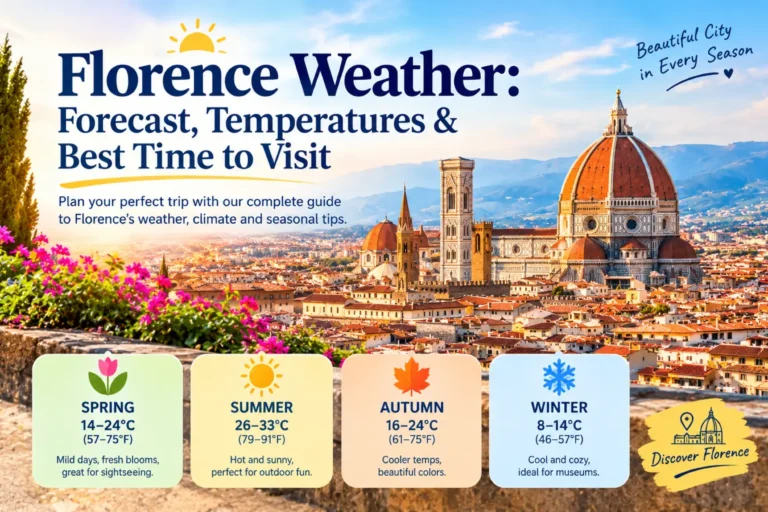
Florence weather plays an important role when planning a trip to this beautiful Italian city. The weather changes throughout the year, from cold winter mornings to hot summer afternoons. Spring and autumn often bring comfortable conditions for sightseeing and outdoor activities.
Florence sits in Tuscany, in central Italy. The city has warm summers, cool winters, and rainfall throughout the year. July and August usually bring the hottest weather. November often brings more rain than the summer months.
Understanding the weather in Florence helps you choose the right travel dates. It also helps you pack suitable clothes and plan daily activities. Whether you want to explore historic streets or visit famous museums, the right season can improve your experience.
In this guide, you will discover monthly temperatures, seasonal weather patterns, rainfall, packing tips, and the best time to visit Florence.
Quick Summary: Florence Weather at a Glance
- Climate: Florence has a climate with hot summers and cool winters.
- Hottest months: July and August are usually the hottest.
- Coldest months: January and February are generally the coldest.
- Best sightseeing periods: Spring and autumn often offer comfortable temperatures.
- Rainiest period: Autumn, especially October and November, can bring frequent rainfall.
- Summer temperatures: Average daytime highs can reach around 30–32°C in July and August.
- Winter temperatures: Average daytime highs are often around 10–13°C.
- What to pack: Bring light clothes in summer and warm layers in winter.
- Travel tip: Check the local forecast before your trip because daily conditions can change.
1. What Is the Weather Like in Florence, Italy?
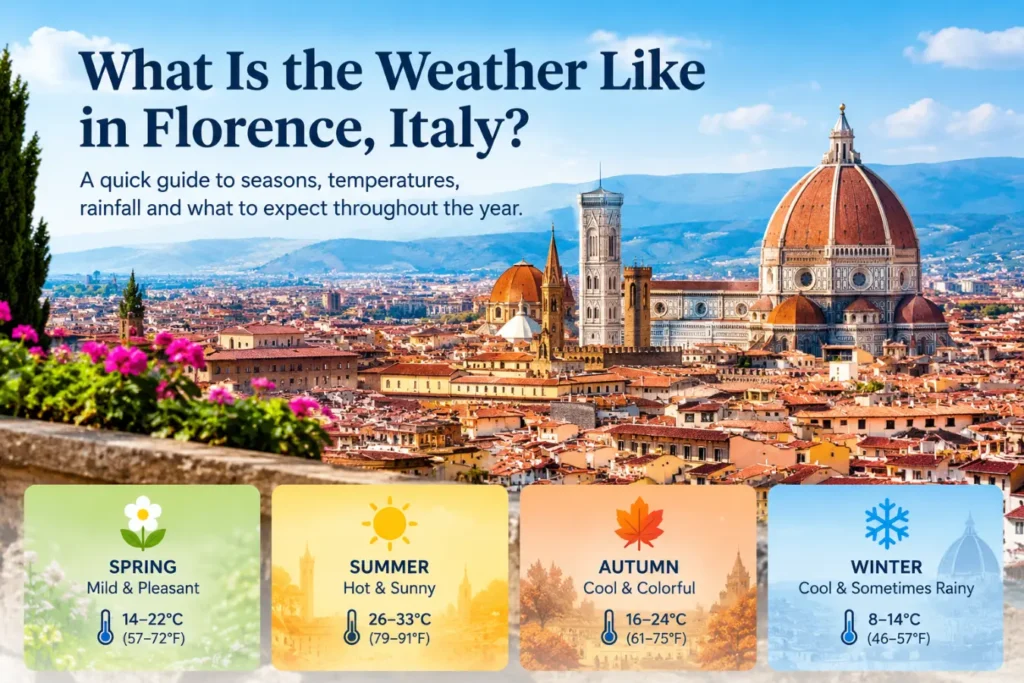
Florence has a varied climate with four distinct seasons. Summers are generally hot and sunny, while winters are cooler and wetter.
Spring brings gradually rising temperatures. Autumn offers mild days at first, followed by cooler and wetter conditions. Winter can feel cold, especially during early mornings and evenings.
The city also experiences occasional heatwaves in summer. During these periods, temperatures can rise above typical seasonal averages. Rain showers may also affect outdoor plans during spring and autumn.
According to Tuscany’s regional climate service, historical climate records for Florence show a clear seasonal pattern. July and August have high average temperatures, while winter months have much lower averages.
For travelers, this means the best time to visit depends on personal preferences. Some visitors enjoy warm summer days, while others prefer mild spring or autumn weather.
2. Florence Weather by Month
The following table provides approximate monthly daytime highs and nighttime lows. These rounded figures summarize typical conditions and may differ from individual weather stations or actual daily readings.
| Month | Average daytime high | Average nighttime low | General conditions |
|---|---|---|---|
| January | 10–12°C | 1–3°C | Cold and sometimes rainy |
| February | 11–13°C | 2–4°C | Cool with occasional rain |
| March | 14–16°C | 4–6°C | Mild and changeable |
| April | 17–19°C | 7–9°C | Pleasant with spring showers |
| May | 22–24°C | 11–13°C | Warm and comfortable |
| June | 27–29°C | 15–17°C | Warm to hot |
| July | 31–33°C | 17–19°C | Very hot and generally dry |
| August | 30–33°C | 17–19°C | Hot, often sunny |
| September | 26–28°C | 14–16°C | Warm with changing conditions |
| October | 20–22°C | 10–12°C | Mild with more rain |
| November | 14–16°C | 6–8°C | Cool and often wet |
| December | 10–12°C | 2–4°C | Cold and sometimes rainy |
Note: These figures are rounded travel-planning estimates based on typical climate patterns, not official monthly forecasts. Consult the local forecast for exact dates.
Which month has the best Florence weather?
May, June, September, and early October can offer a good balance of comfortable temperatures and outdoor sightseeing opportunities.
May is suitable for walking tours and garden visits. June offers longer daylight hours but can become hot. September often combines warm days with cooler evenings. Early October may provide pleasant conditions, although rain becomes more likely.
July and August suit travelers who enjoy hot weather. However, midday sightseeing can feel tiring during heatwaves.
3. Florence Weather in Spring
Spring usually lasts from March through May. Temperatures rise gradually, and outdoor conditions become more comfortable.
March can still feel cool, especially in the morning. April brings milder days, although showers remain possible. May often offers warm temperatures that suit long walks and outdoor sightseeing.
Spring is a popular time to explore Florence’s historic center. Visitors can walk through Piazza del Duomo, admire Renaissance architecture, and enjoy the city’s outdoor cafés.
The Boboli Gardens also become attractive during spring. Flowers and fresh greenery add color to the landscape.
What should you wear in spring?
Pack lightweight layers, comfortable walking shoes, and a small umbrella. A light jacket helps during cool mornings and evenings.
Spring weather can change quickly. Check the forecast each morning before planning a full day outdoors.
4. Florence Weather in Summer
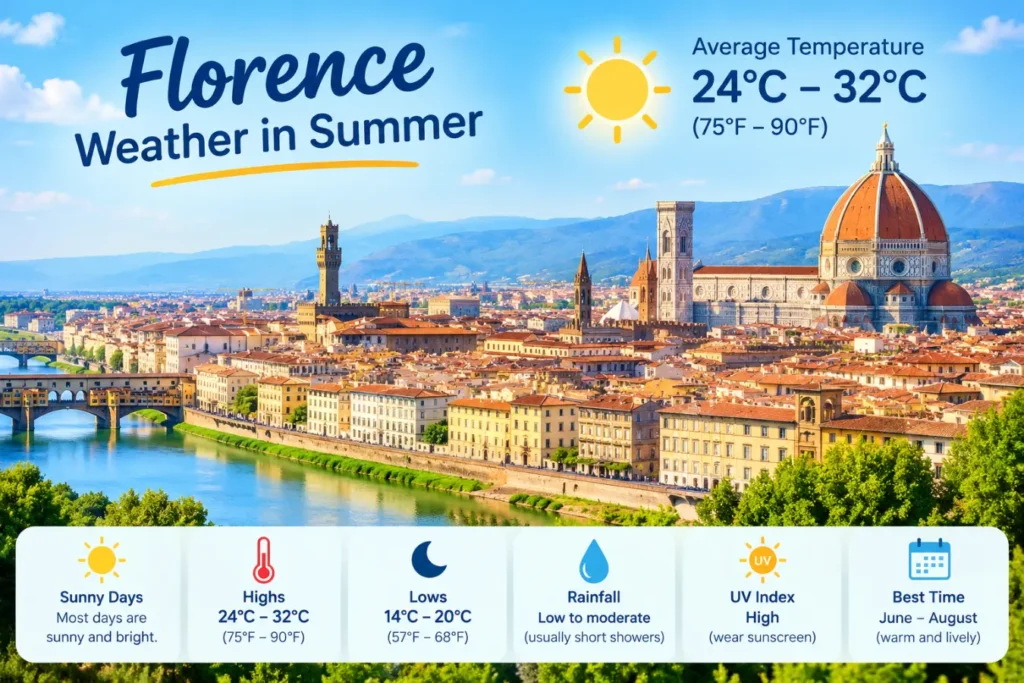
Summer runs from June through August. It brings long days, plenty of sunshine, and some of the hottest temperatures of the year.
June is often warm and suitable for outdoor activities. July and August can become very hot, with daytime temperatures frequently reaching around 30°C or higher.
The city’s historic streets may feel especially warm during the afternoon. Stone buildings and limited shade can make long walks more tiring.
Summer remains a popular travel season. Visitors can enjoy outdoor dining, evening walks, and cultural events. However, attractions can be busy, and popular museums may require advance booking.
Tips for visiting Florence in summer
- Start sightseeing early in the morning.
- Visit museums during the hottest part of the day.
- Carry drinking water and use sun protection.
- Wear breathable clothing and comfortable shoes.
- Plan outdoor activities for the morning or evening.
- Book popular attractions ahead of time.
Summer rainfall is often lower than in autumn, but thunderstorms can still occur. Always check the local forecast before heading out.
5. Florence Weather in Autumn
Autumn lasts from September through November. It begins with warm conditions and gradually becomes cooler and wetter.
September often feels like an extension of summer. Daytime temperatures remain comfortable for walking tours and outdoor meals.
October brings cooler weather and a greater chance of rain. November is generally colder and can be one of the wettest months of the year.
Autumn is a good option for visitors who prefer milder temperatures. The surrounding Tuscan countryside also attracts travelers during the harvest season.
However, rainfall can interrupt outdoor plans. Keep a flexible itinerary and include indoor activities.
What should you pack for autumn?
Bring layers, a light or medium-weight jacket, comfortable shoes, and a compact umbrella. Waterproof footwear may help during wetter periods.
6. Florence Weather in Winter
Winter usually lasts from December through February. Days are cool, while nights can become quite cold.
January and February often have the lowest average temperatures. Daytime highs commonly remain near 10–13°C, although warmer and colder days can occur.
Rain is possible throughout winter. Frost may occur during colder periods, but snow is uncommon in the city center.
Winter can suit visitors who enjoy museums, architecture, and quieter sightseeing experiences. Indoor attractions offer plenty to do when the weather turns wet.
You can visit the Uffizi Gallery, explore historic churches, or enjoy traditional Tuscan food.
Winter also brings festive decorations and seasonal markets during parts of December.
Winter packing tips
- Wear a warm coat and layered clothing.
- Bring a scarf for cold mornings and evenings.
- Pack an umbrella or waterproof jacket.
- Choose comfortable shoes with good grip.
- Check opening hours before visiting attractions during holidays.
7. Florence Temperature and Rainfall: A Comparison
Florence experiences both hot summer weather and cooler, wetter periods.
| Weather feature | Summer | Winter |
|---|---|---|
| Temperatures | Hot to very hot | Cool to cold |
| Daylight | Longer days | Shorter days |
| Rainfall | Generally lower | Rain remains possible |
| Clothing | Light, breathable fabrics | Coats and warm layers |
| Best activities | Early walks and evening outings | Museums and indoor attractions |
| Main concern | Heat and sun exposure | Cold mornings and rain |
Spring and autumn fall between these seasonal extremes. They often provide comfortable conditions for walking around the city.
However, no season guarantees perfect weather. Your travel dates, planned activities, and tolerance for heat or rain should guide your decision.
8. When Is the Best Time to Visit Florence?
The best time to visit Florence depends on what you want from your trip.
Best for sightseeing
May and September often offer a good balance of warmth and comfortable walking conditions. These months can be suitable for exploring museums, squares, and historic neighborhoods.
Best for warm weather
June, July, and August offer warmer temperatures and longer days. Choose these months if you enjoy summer weather, but prepare for possible heatwaves.
Best for cooler temperatures
March, April, October, and November offer cooler conditions than midsummer. However, spring and autumn can bring changeable weather and rain.
Best for indoor attractions
Winter can work well for travelers who want to focus on art galleries, churches, and historic buildings. Cooler weather makes indoor activities especially appealing.
Best for budget-conscious travelers
Consider comparing accommodation and flight prices during quieter travel periods. Prices depend on events, demand, holidays, and booking dates, so no month guarantees the lowest cost.
Ultimately, May, September, and early October are useful starting points for travelers seeking comfortable sightseeing weather.
9. How to Check the Florence Weather Forecast
Climate averages help with long-term planning, but they cannot tell you exactly what the weather will be on your travel dates.
Follow these steps to check the forecast:
- Search for Florence, Italy, rather than another place named Florence.
- Check daytime and nighttime temperatures.
- Review the chance of rain and expected rainfall amounts.
- Look at wind speed and any weather warnings.
- Check the forecast again shortly before your planned activities.
For regional climate information, visit the Consorzio LaMMA Florence climate page. For wider Italian climate data, consult ISPRA’s climate normals information.
Remember that a climate average describes long-term patterns. A weather forecast estimates conditions for specific upcoming dates.
10. What Should You Pack for Florence Weather?
Your packing list should match the season and the activities you plan to enjoy.
Spring packing list
- Light jacket or cardigan
- T-shirts and long-sleeved tops
- Comfortable walking shoes
- Compact umbrella
- Sunglasses
Summer packing list
- Lightweight clothing
- Breathable walking shoes
- Hat or cap
- Sunscreen
- Reusable water bottle
- Light evening layer
Autumn packing list
- Long-sleeved shirts
- Sweater or jacket
- Comfortable closed shoes
- Umbrella or waterproof outer layer
- Extra layers for cooler evenings
Winter packing list
- Warm coat
- Sweaters and thermal layers
- Scarf
- Waterproof shoes
- Umbrella
Florence is a city best explored on foot. Comfortable shoes are useful in every season because many streets have stone paving.
11. Common Mistakes When Planning Around Florence Weather
Travelers sometimes make simple mistakes when choosing their dates or packing for the trip.
Mistake 1: Assuming summer always feels comfortable.
July and August can bring intense heat. Plan outdoor activities for cooler parts of the day.
Mistake 2: Ignoring rain in spring and autumn.
These seasons can offer pleasant temperatures, but showers may affect outdoor plans. Carry a compact umbrella.
Mistake 3: Packing only for daytime temperatures.
Mornings and evenings can feel much cooler than afternoons. Bring layers, especially in spring and autumn.
Mistake 4: Treating climate averages as a daily forecast.
Monthly averages cannot predict rain or temperature on a specific date. Check a reliable forecast before traveling.
Mistake 5: Forgetting about the walking involved.
Sightseeing often involves several hours on foot. Choose comfortable shoes and schedule breaks during hot weather.
Mistake 6: Booking outdoor activities without a backup plan.
Rain or extreme heat can change your plans. Keep a list of indoor attractions and flexible activities.
12. Expert Tips for Understanding Florence Weather
Good travel planning starts with reliable information rather than assumptions.
Use official climate records. Regional climate services provide historical temperature and rainfall data. These records help you compare seasons using consistent measurements.
Separate climate from weather. Climate describes patterns over many years. Weather describes conditions on a particular day.
Look beyond the temperature. Rainfall, humidity, sunshine, and wind can affect how comfortable a day feels.
Plan around heat. During summer, schedule outdoor walks early and take indoor breaks during the hottest hours.
Keep your plans flexible. A rainy morning does not need to ruin your trip. Move outdoor activities to a clearer period when possible.
Check the forecast close to departure. Long-range forecasts can change. Review updated information as your travel dates approach.
These steps help you make informed choices and avoid relying on broad seasonal expectations alone.
13. Florence Weather: Synonyms and Related Search Terms
If you are researching Florence weather or creating related website content, these terms can help cover different search needs naturally.
Primary keyword
- Florence weather
Secondary keywords
- Florence Italy weather
- Weather in Florence Italy
- Florence temperature
- Florence climate
- Florence weather forecast
- Florence average weather
Long-tail keywords
- Florence weather by month
- Best time to visit Florence Italy
- Florence Italy weather in May
- Florence weather in July
- Florence weather in September
- Florence weather in October
- Florence winter temperatures
- Does it rain in Florence Italy?
- What to wear in Florence in summer
Related semantic terms
- Average high temperature
- Average low temperature
- Seasonal climate
- Monthly rainfall
- Summer heat
- Winter weather
- Spring travel
- Autumn sightseeing
- Weather forecast
- Tuscan climate
Use these phrases where they fit the subject. Avoid repeating the same keyword in every paragraph. Helpful content matters more than keyword repetition.
14. Frequently Asked Questions About Florence Weather
What is the weather like in Florence, Italy?
Florence generally has hot summers, cool winters, and changeable spring and autumn weather. Rain can occur in every season.
What is the hottest month in Florence?
July and August are usually the hottest months. Average daytime highs can reach around 30–33°C, with higher temperatures possible during heatwaves.
What is the coldest month in Florence?
January is generally among the coldest months. Average nighttime lows can approach 1–3°C, although actual temperatures vary.
What is the best month to visit Florence?
May and September are useful choices for comfortable sightseeing weather. Early October can also offer mild conditions, but rainfall becomes more likely.
Does it rain a lot in Florence?
Rain falls throughout the year, but autumn often brings wetter conditions than midsummer. November is commonly one of the wettest months.
Does Florence get snow?
Snow is possible, but it is uncommon in central Florence. Winter visitors should prepare for cold and rain rather than expect regular snowfall.
Is Florence too hot in August?
August can feel very hot, especially during the afternoon. Travelers can still enjoy the city by starting early, drinking water, and taking indoor breaks.
What should I wear in Florence?
Wear light clothing in summer and warm layers in winter. In spring and autumn, bring a jacket and an umbrella because temperatures and rainfall can change.
Conclusion
Florence weather changes with the seasons, so choosing the right travel dates can make your visit more comfortable. Summer brings hot days and long daylight hours. Winter offers cooler conditions and opportunities to explore museums and historic buildings. Spring and autumn often provide a pleasant balance for sightseeing.
May, September, and early October are worth considering if you prefer moderate temperatures. However, your ideal travel month depends on your plans, budget, and weather preferences.
Before leaving, check the latest Florence weather forecast and pack clothes suited to the expected conditions. Bring comfortable walking shoes, stay hydrated during hot weather, and prepare for rain when needed.
With a little planning, you can enjoy Florence’s art, architecture, food, and historic streets in every season.
The key takeaway: Use climate averages to choose your travel season, then check the local forecast to plan each day.