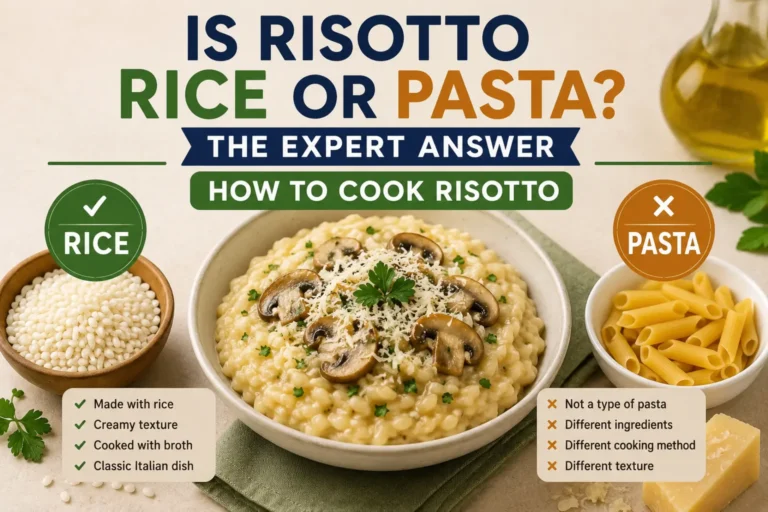
Is risotto rice or pasta? Risotto is a rice dish, not a type of pasta. It uses short-grain rice that releases starch while cooking. This starch creates risotto’s famous creamy texture.
Many people confuse risotto with pasta because both foods belong to Italian cuisine. However, their ingredients and cooking methods differ.
Risotto also offers useful choices for health-conscious readers. You can control the oil, salt, cheese, and portion size. You can also add vegetables, beans, seafood, or lean protein.
The key lies in cooking the rice correctly. You should add warm stock slowly and stir often. This method helps the rice release starch without becoming mushy.
In this guide, you will learn what risotto is, how to cook it, and how it compares with pasta.
Quick Summary
- Risotto is a rice dish, not pasta.
- Traditional risotto uses short- or medium-grain rice.
- Arborio rice remains the most common choice.
- Risotto becomes creamy from released rice starch.
- You cook risotto slowly with warm stock.
- Pasta usually cooks in boiling water.
- Risotto can fit a balanced diet with healthy ingredients.
- Portion size and toppings affect the meal’s nutrition.
What Is Risotto?
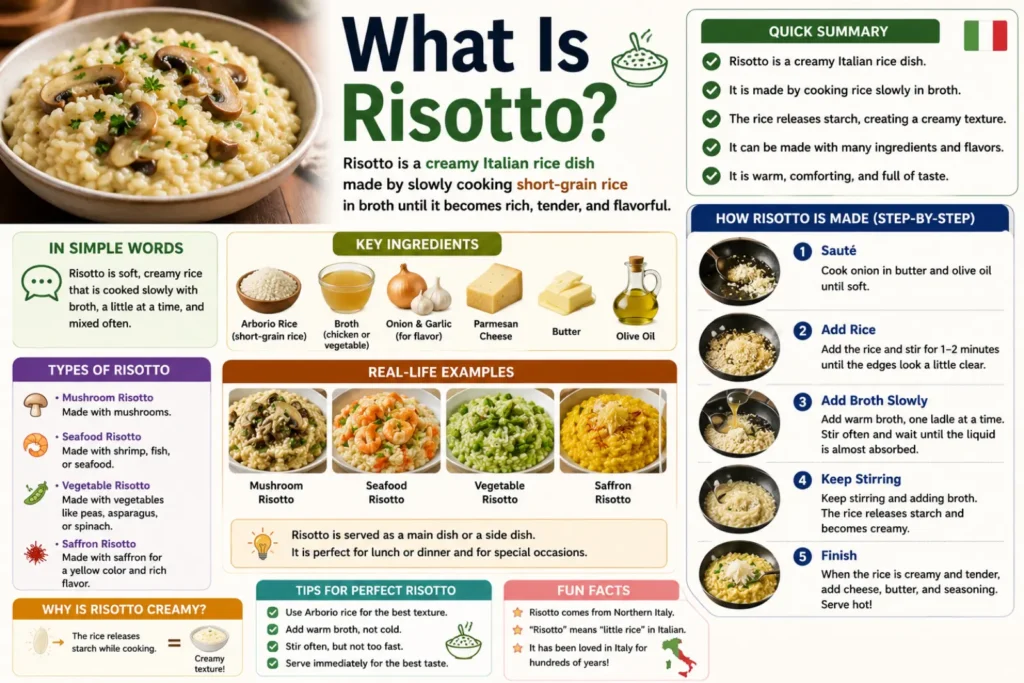
Risotto is a creamy Italian rice dish. Cooks prepare it with rice, stock, and other ingredients.
Traditional recipes often include onion, olive oil, butter, cheese, and wine. However, recipes vary by region and personal preference.
The cooking method creates risotto’s unique texture. You add warm stock gradually instead of adding all liquid at once.
The rice absorbs the stock during cooking. Meanwhile, gentle stirring helps release starch.
That starch creates a smooth, creamy texture. The dish should feel creamy but still contain slightly firm rice grains.
This texture makes risotto different from ordinary cooked rice.
Is Risotto Rice or Pasta?
Risotto is rice.
The word “risotto” describes a cooking method and a finished dish. It does not describe a type of pasta.
Most risotto recipes use special rice varieties. These varieties contain more starch than many common long-grain rice types.
That extra starch creates risotto’s creamy texture.
So, the simple answer is:
Risotto is a creamy Italian rice dish made with starchy short- or medium-grain rice.
What Type of Rice Does Risotto Use?
Risotto usually uses short- or medium-grain rice with high starch content.
The most popular varieties include:
- Arborio
- Carnaroli
- Vialone Nano
- Baldo
Arborio rice remains the easiest variety to find. It creates a creamy texture and works well for home cooking.
Carnaroli rice often gives more consistent results. It can stay firm while releasing enough starch.
Vialone Nano works especially well in certain regional Italian recipes.
The rice variety matters because different rice types absorb liquid differently.
Long-grain rice usually does not create the same creamy result. It often stays separate and fluffy instead.
How to Cook Risotto Correctly
Cooking risotto correctly requires patience. However, the method remains simple.
Step 1: Warm the Stock
Heat your stock in a separate pot.
Keep it warm throughout the cooking process. Cold stock can lower the pan temperature.
Warm stock helps the rice cook more evenly.
Step 2: Cook the Aromatics
Heat a little olive oil in a wide pan.
Add chopped onion or shallot. Cook until soft.
Avoid browning the onion too much. A gentle flavor works best.
Step 3: Toast the Rice
Add the dry risotto rice to the pan.
Stir the rice for one to two minutes.
This step helps develop flavor. The rice should become lightly coated with oil.
Step 4: Add Liquid Gradually
Add a small amount of warm stock.
Stir gently as the rice absorbs the liquid.
Add more stock only after the previous amount mostly disappears.
Continue this process until the rice becomes tender.
Step 5: Check the Texture
Proper risotto should feel creamy.
The grains should remain slightly firm in the center.
Italian cooks often describe this texture as al dente.
Avoid cooking the rice until it becomes completely soft and mushy.
Step 6: Finish the Dish
Remove the pan from heat.
Add your chosen finishing ingredients.
Traditional recipes may use butter and Parmesan cheese.
Health-conscious cooks can use less cheese and add vegetables instea
How Long Does Risotto Take to Cook?
Most risotto takes about 18 to 25 minutes after you begin adding stock.
The exact time depends on the rice variety and cooking temperature.
Do not rely only on the clock.
Taste the rice near the end of cooking. The grains should feel tender but slightly firm.
If the rice feels hard, add more warm stock.
If the rice feels soft and heavy, stop adding liquid.
Risotto vs. Pasta: What Is the Difference?
Risotto and pasta are both popular Italian foods. However, they differ in several important ways.
| Feature | Risotto | Pasta |
|---|---|---|
| Main ingredient | Rice | Wheat-based dough |
| Cooking method | Slowly absorbs stock | Boils in water |
| Texture | Creamy and soft | Firm or tender |
| Starch source | Rice starch | Pasta starch |
| Common base | Stock | Water |
| Typical preparation | Gradual liquid addition | Full boiling |
| Gluten | Often naturally gluten-free | Usually contains gluten |
| Common toppings | Vegetables, seafood, cheese | Sauces, vegetables, meat |
Risotto uses rice as its main grain. Pasta usually uses wheat flour and water.
Therefore, risotto does not become pasta simply because it looks creamy.
Why Does Risotto Become Creamy?
Risotto becomes creamy because rice releases starch during cooking.
Slow cooking helps the rice release starch into the surrounding liquid.
Stirring also helps distribute that starch.
The result feels creamy without requiring large amounts of cream.
This point matters for health-conscious readers.
A creamy risotto does not always contain heavy cream. The rice itself creates much of the creamy texture.
However, butter, cheese, oil, and other toppings can increase calories.
Is Risotto Healthier Than Pasta?
Neither food automatically wins the health debate.
The overall recipe matters more than the name of the dish.
A vegetable-rich risotto may offer fiber, vitamins, and minerals. A simple risotto can also contain moderate amounts of fat.
Pasta can also support a balanced diet. Whole-wheat pasta may provide more fiber than refined pasta.
Health depends on several factors:
- Portion size
- Grain type
- Added fats
- Cheese quantity
- Vegetable content
- Protein choices
- Overall meal balance
For example, a mushroom and vegetable risotto can provide a balanced meal.
A risotto loaded with butter, cheese, and large portions may provide more calories.
The same principle applies to pasta dishes.
Is Risotto Naturally Gluten-Free?
Traditional risotto rice is naturally gluten-free.
Rice does not contain gluten.
However, the complete dish requires attention.
Some stocks, seasonings, sauces, or processed ingredients may contain gluten.
Cross-contact can also happen during food preparation.
People who must avoid gluten should check ingredient labels carefully.
They should also confirm that the kitchen follows safe preparation practices.
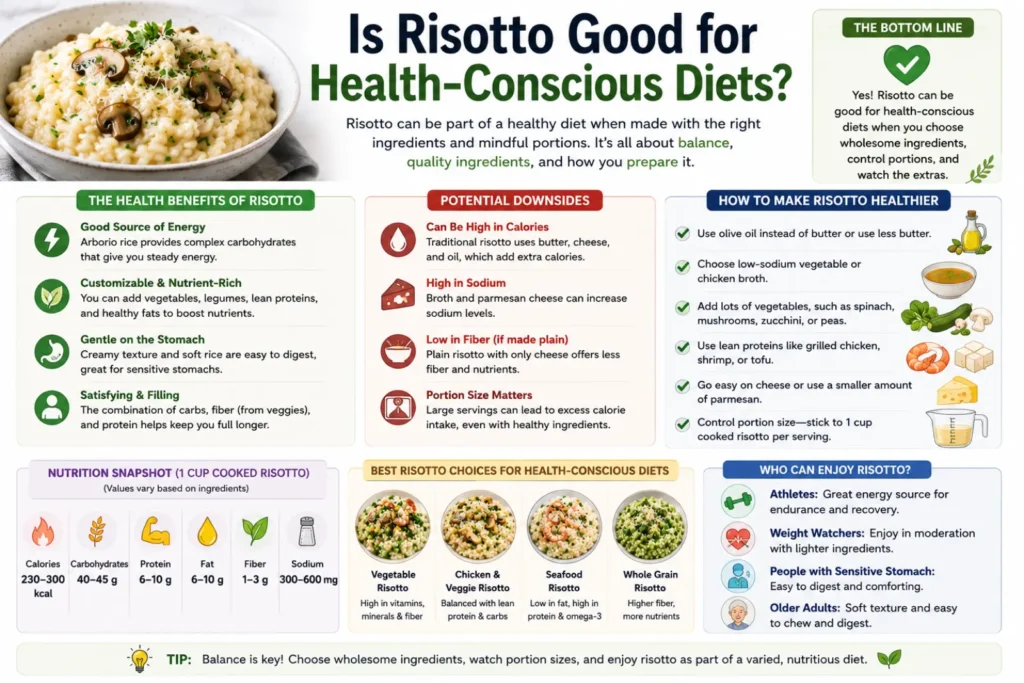
Is Risotto Good for Health-Conscious Diets?
Risotto can fit a health-conscious eating pattern.
The best approach involves building a balanced recipe.
Try adding:
- Mushrooms
- Peas
- Spinach
- Asparagus
- Pumpkin
- Tomatoes
- Beans
- Seafood
- Chicken
You can also control added fats.
Use enough olive oil for cooking without adding excessive amounts.
Use cheese for flavor rather than making it the main ingredient.
A balanced portion can make risotto part of a varied diet.
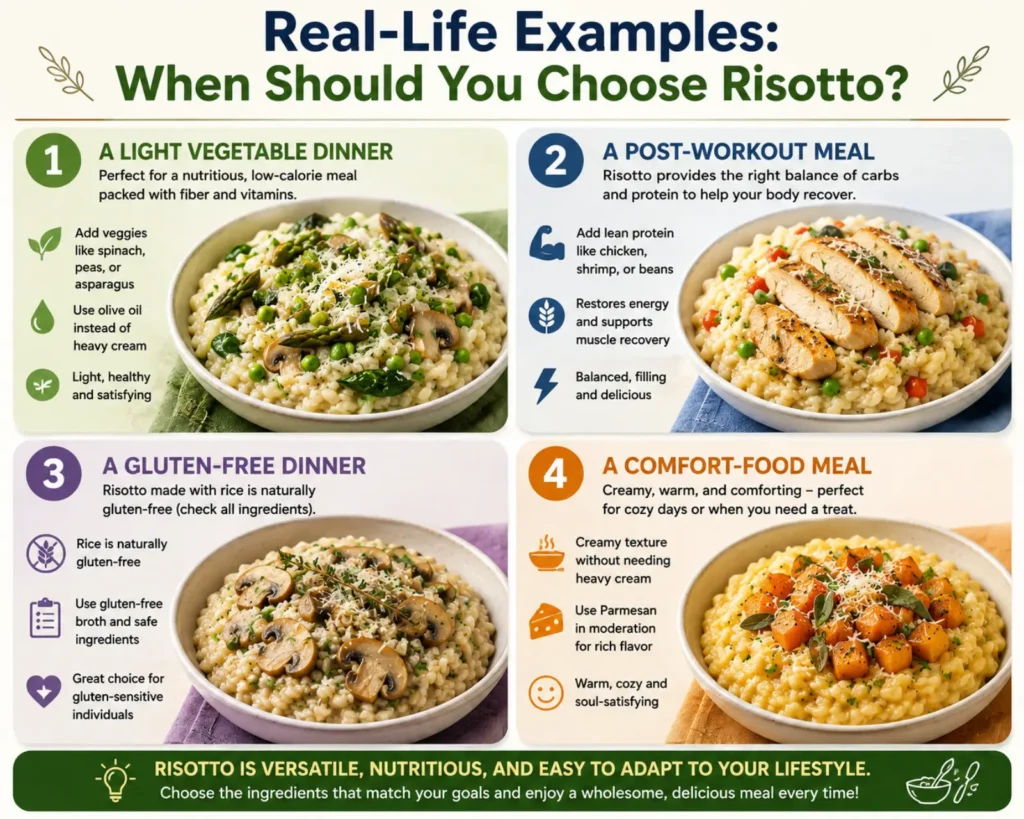
Real-Life Examples: When Should You Choose Risotto?
Example 1: A Light Vegetable Dinner
You could prepare risotto with mushrooms, peas, and spinach.
This option adds more vegetables and flavor.
Use a moderate amount of olive oil and cheese.
Example 2: A Post-Workout Meal
Risotto can provide carbohydrates for energy.
Add a protein source such as beans, chicken, fish, or seafood.
Include vegetables for a more balanced meal.
Example 3: A Gluten-Free Dinner
Rice-based risotto can work well for people avoiding gluten.
Check the stock and other ingredients first.
Example 4: A Comfort Food Meal
Risotto offers a creamy texture without requiring heavy cream.
You can create a rich texture through proper cooking.
Common Risotto Cooking Mistakes
Many beginners make simple mistakes when cooking risotto.
Adding Cold Stock
Cold stock lowers the temperature of the pan.
Use warm stock instead.
Adding Too Much Liquid
Adding all the stock at once changes the cooking process.
Gradual additions help the rice release starch.
Using the Wrong Rice
Long-grain rice usually does not create traditional risotto texture.
Choose Arborio, Carnaroli, or another suitable variety.
Overcooking the Rice
Risotto should not become completely mushy.
Taste it before serving.
Stirring Too Aggressively
Gentle stirring works better.
Excessive stirring can damage the rice grains.
Adding Too Much Cheese
Cheese can add flavor quickly.
You often need less than you expect.
Expert Tips
Professional cooking results often come from small details.
Use a wide pan. A wide surface helps the rice cook evenly.
Keep the stock warm. This helps maintain steady cooking.
Toast the rice briefly. This adds flavor before liquid enters the pan.
Add stock gradually. This supports the creamy texture.
Taste before serving. Texture matters more than cooking time.
Finish off the heat. Butter or cheese can blend smoothly after cooking.
Serve immediately. Risotto thickens as it stands.
A well-made risotto should flow gently across the plate. It should not sit like a firm mound.
Risotto in Daily Life: Simple Healthy Ingredient Ideas
You can adapt risotto to many eating styles.
vegetables, add mushrooms, spinach, peas, or zucchini.
protein, add beans, lentils, chicken, fish, or seafood.
flavor, use herbs, garlic, lemon, or roasted vegetables.
added fat, reduce butter and use olive oil carefully.
For a gluten-free meal, check every packaged ingredient.
These simple changes can make risotto more flexible.
You do not need to avoid risotto because it contains rice.
Instead, consider the complete meal.
Risotto Synonyms and Related Search Terms
Readers may use different phrases when searching for this topic.
Related terms include:
- Is risotto made from rice?
- Is risotto a type of pasta?
- What is risotto made of?
- What rice is used for risotto?
- Arborio rice vs pasta
- Risotto rice cooking method
- How to cook creamy risotto
- Is risotto gluten-free?
- Is risotto healthy?
- Risotto vs pasta
- Italian rice dish
- Short-grain rice for risotto
These phrases help explain the topic naturally.
They also reflect common questions from people searching online.
Expert Insight: Why the Cooking Method Matters
The rice itself does not create perfect risotto.
The cooking method matters just as much.
Slow liquid absorption allows the rice to release starch gradually.
This creates the classic creamy texture.
Experts also focus on texture.
The best risotto should remain slightly firm inside.
It should feel creamy without becoming watery or gluey.
For health-conscious cooking, ingredient control matters too.
You can create a satisfying dish without relying on excessive cream or fat.
Use quality ingredients and balance the plate with vegetables and protein.
Frequently Asked Questions About Risotto
Is risotto rice or pasta?
Risotto is rice, not pasta. It uses starchy short- or medium-grain rice.
Is Arborio rice the same as risotto?
Arborio is one type of rice used to make risotto. Risotto describes the dish and cooking method.
Can you make risotto with regular rice?
You can, but the texture may differ. Long-grain rice usually creates less creaminess.
Does risotto contain gluten?
Traditional rice-based risotto can be gluten-free. Always check stocks, seasonings, and packaged ingredients.
Is risotto healthier than pasta?
Neither option is always healthier. Ingredients, portion size, preparation, and toppings matter most.
Why does risotto taste creamy?
Rice releases starch during gradual cooking. That starch creates much of the creamy texture.
Should you rinse rice before making risotto?
Usually, no. Rinsing can remove surface starch needed for the traditional creamy texture.
How do you know when risotto is ready?
The rice should feel creamy and tender. The center should remain slightly firm.
Conclusion
So, is risotto rice or pasta? Risotto is a rice dish, not pasta. Traditional recipes use starchy rice varieties such as Arborio or Carnaroli.
The cooking method creates the creamy texture. You slowly add warm stock while the rice releases starch.
For health-conscious readers, risotto can fit a balanced diet. Focus on portion size and ingredient quality. Add vegetables, beans, seafood, or lean protein for more nutritional balance.
You can also control the amount of butter, cheese, oil, and salt.
The simple takeaway is clear: risotto is creamy rice cooked slowly with stock. It is not a type of pasta.