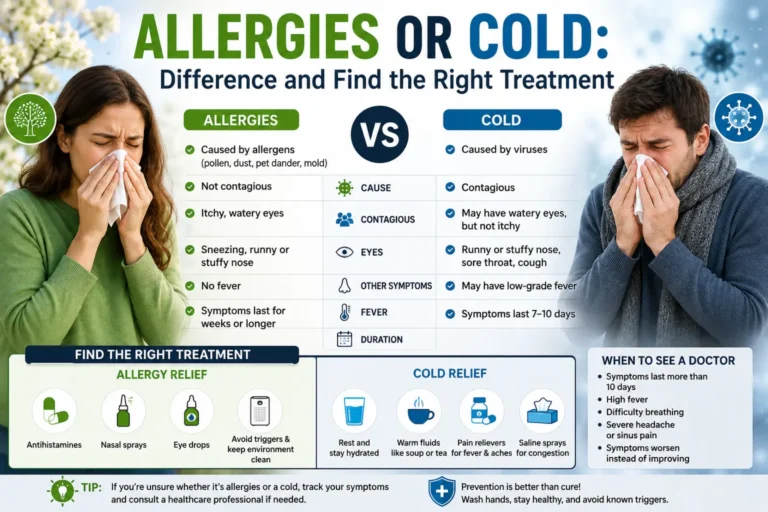
Allergies or cold is a common question, especially during spring and fall. Both conditions share many symptoms. That makes them easy to confuse. However, they have different causes and treatments. A cold comes from a virus. Allergies happen when your immune system reacts to harmless substances like pollen or pet dander. Knowing the difference helps you feel better faster. It also helps you avoid unnecessary medicine. In this guide, you will learn how to tell allergies from a cold. You will discover the main symptoms, common triggers, treatment options, and prevention tips. By the end, you will know which condition you may have and when it is time to see a doctor.
Quick Summary Box
- A cold is a viral infection.
- Allergies are an immune system reaction.
- Colds usually last 7–10 days.
- Allergies can last for weeks or months.
- Fever often means a cold, not allergies.
- Itchy eyes usually point to allergies.
- Thick mucus may develop with a cold.
- Allergy medicine does not cure a cold.
- A doctor can help if symptoms become severe.
Featured Snippet: Allergies or Cold
How do you know if it’s allergies or a cold?
You likely have allergies if you experience itchy eyes, sneezing, and symptoms that last for weeks without a fever. You likely have a cold if you develop a sore throat, body aches, mild fever, and symptoms that improve within 7 to 10 days.
What Are Allergies?
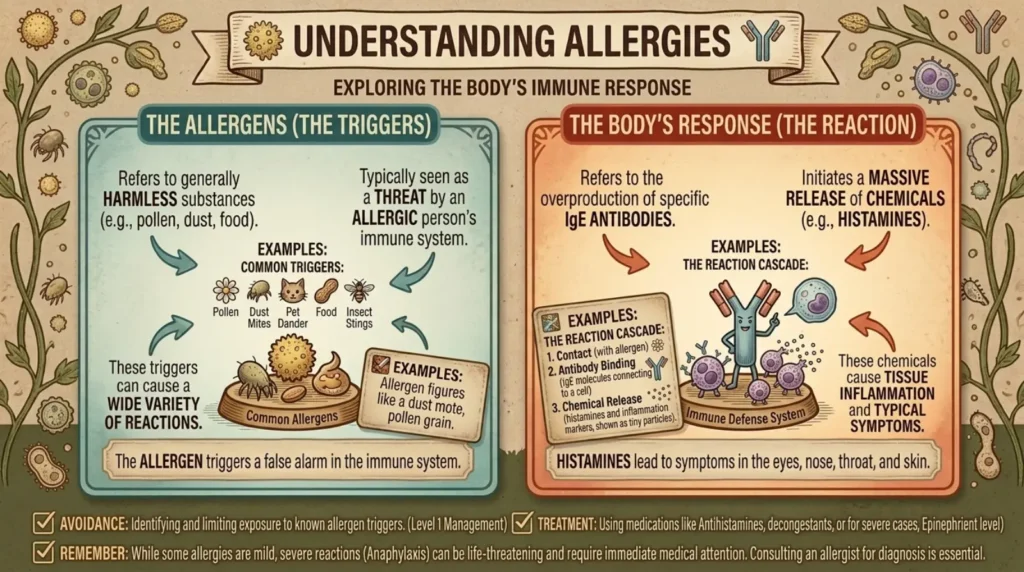
Allergies happen when your immune system reacts to harmless substances.
These substances are called allergens.
Common allergens include:
- Pollen
- Dust mites
- Mold
- Pet dander
- Certain foods
Your body releases histamine during an allergic reaction.
Histamine causes sneezing, itchy eyes, and a runny nose.
What Is a Cold?
A cold is a viral infection.
More than 200 viruses can cause it.
The rhinovirus is the most common cause.
Colds spread through:
- Coughing
- Sneezing
- Touching contaminated surfaces
- Close contact with infected people
Most colds improve within one week.
Allergies or Cold: Comparison Table
| Feature | Allergies | Cold |
|---|---|---|
| Cause | Allergens | Virus |
| Contagious | No | Yes |
| Fever | Rare | Sometimes |
| Itchy Eyes | Common | Rare |
| Sneezing | Very common | Common |
| Sore Throat | Sometimes | Common |
| Body Aches | Rare | Common |
| Runny Nose | Yes | Yes |
| Duration | Weeks or months | 7–10 days |
| Treatment | Allergy medicine | Rest and fluids |
Symptoms of Allergies
Allergy symptoms often appear quickly.
Common signs include:
- Sneezing
- Runny nose
- Itchy nose
- Itchy eyes
- Watery eyes
- Nasal congestion
- Postnasal drip
- Mild cough
Symptoms often return when you are around allergens.
Symptoms of a Cold
Cold symptoms develop slowly.
They often include:
- Sore throat
- Runny nose
- Stuffy nose
- Sneezing
- Mild cough
- Body aches
- Headache
- Fatigue
- Mild fever
Most people recover within 10 days.
How Long Do Allergies and Colds Last?
Duration is one of the biggest clues.
Allergies
- Last as long as you are exposed to allergens.
- May continue for weeks.
- Seasonal allergies return every year.
Cold
- Usually lasts 7–10 days.
- Symptoms slowly improve.
- Lingering cough may last longer.
Common Triggers
Allergy Triggers
- Tree pollen
- Grass pollen
- Ragweed
- Dust
- Mold
- Pets
Cold Triggers
- Viruses
- Close contact with sick people
- Crowded places
- Poor hand hygiene
Real-Life Examples
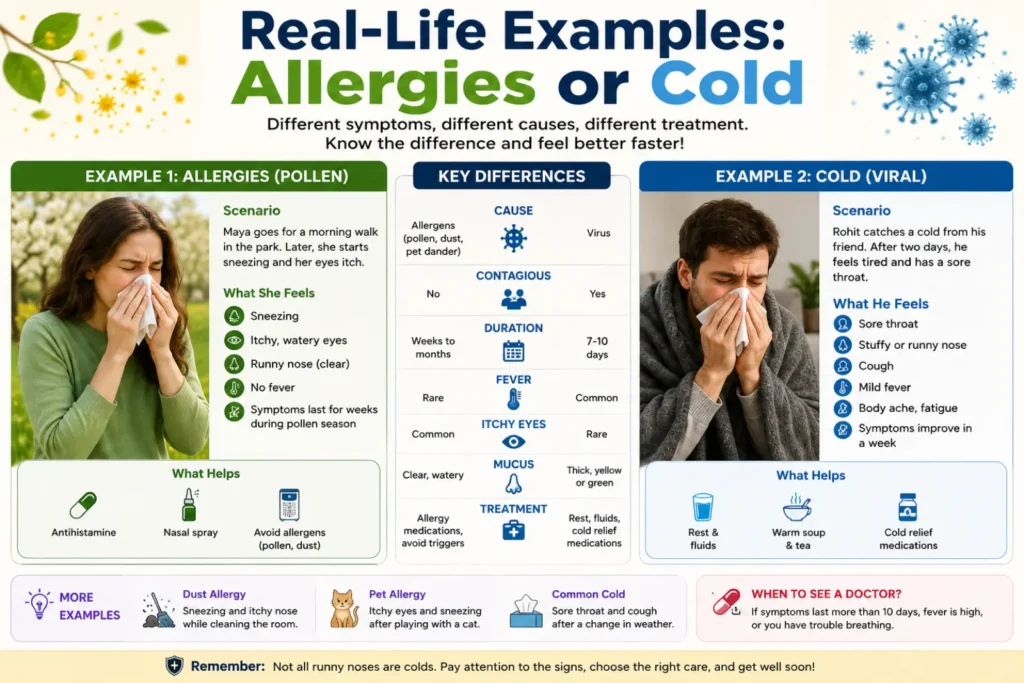
Example 1
Emily sneezes every morning.
Her eyes itch.
She never gets a fever.
She likely has allergies.
Example 2
James develops a sore throat.
He feels tired.
He has a mild fever.
His symptoms improve after one week.
He likely has a cold.
Example 3
Sarah feels fine indoors.
She starts sneezing after mowing the lawn.
Her symptoms disappear later.
She likely has seasonal allergies.
How Doctors Diagnose Allergies or a Cold
Doctors often diagnose both conditions by reviewing symptoms.
For allergies, they may recommend:
- Skin allergy tests
- Blood tests
- Medical history review
For colds, testing is usually unnecessary.
Doctors mainly check symptoms and rule out other illnesses.
Best Treatments for Allergies
Treatment depends on your allergy type.
Common options include:
- Antihistamines
- Nasal steroid sprays
- Saline nasal rinse
- Allergy eye drops
- Decongestants
- Allergy shots for long-term control
Avoiding allergens also helps reduce symptoms.
Best Treatments for a Cold
There is no cure for the common cold.
Treatment focuses on comfort.
Helpful remedies include:
- Drink plenty of water.
- Get enough sleep.
- Use saline nasal spray.
- Drink warm tea.
- Gargle with salt water.
- Take fever medicine if needed.
- Use a humidifier.
Antibiotics do not treat viral colds.
Common Mistakes People Make
Avoid these common errors.
Assuming Every Runny Nose Is a Cold
Many people actually have allergies.
Taking Antibiotics for a Cold
Antibiotics do not kill viruses.
Ignoring Long-Lasting Symptoms
Symptoms lasting several weeks may indicate allergies.
Forgetting About Seasonal Patterns
Symptoms that return every spring often suggest allergies.
Tips to Prevent Allergies and Colds
Allergy Prevention
- Keep windows closed during high pollen days.
- Wash bedding weekly.
- Vacuum often.
- Shower after outdoor activities.
- Use air purifiers.
Cold Prevention
- Wash hands often.
- Avoid touching your face.
- Cover coughs and sneezes.
- Stay away from sick people.
- Eat healthy foods.
- Sleep well.
How Allergies or Cold Affect Daily Life
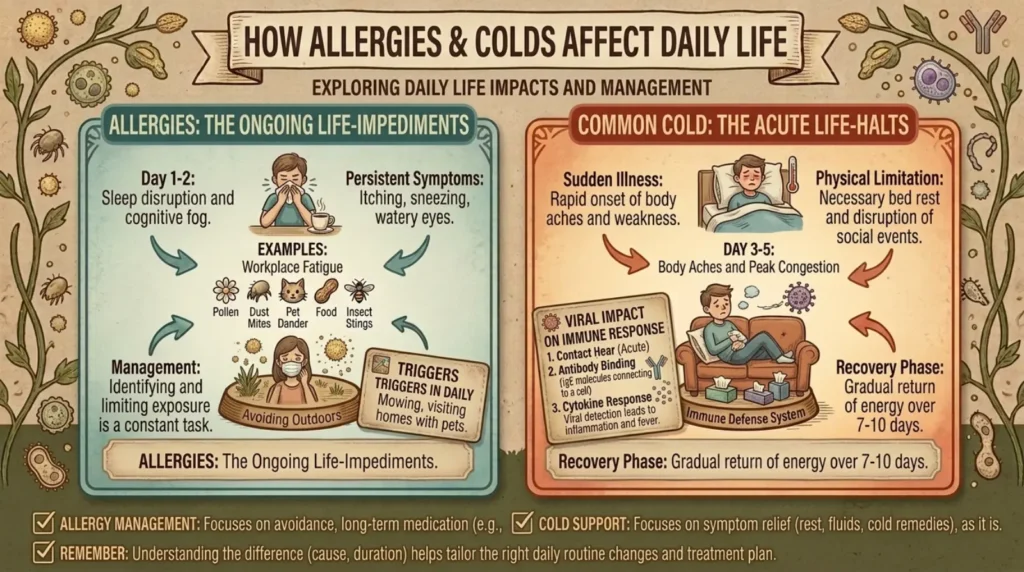
Both conditions can disrupt daily activities.
They may affect:
- School performance
- Work productivity
- Sleep quality
- Exercise
- Outdoor activities
- Family gatherings
Managing symptoms early helps you stay active.
Synonyms and Related Keywords
Synonyms
- Seasonal allergies
- Hay fever
- Common cold
- Allergic rhinitis
- Viral cold
Related Search Terms
- allergies vs cold
- cold symptoms
- allergy symptoms
- itchy eyes or cold
- sneezing allergies
- runny nose causes
- seasonal allergy relief
- cold treatment
- pollen allergy
- sinus allergy
- difference between allergies and cold
- allergy medicine
- cold remedies
Expert Insights
Health experts recommend paying attention to symptom patterns.
A fever usually points to a viral infection.
Itchy eyes strongly suggest allergies.
If symptoms continue beyond two weeks, consider speaking with a healthcare professional.
People with asthma should manage allergies carefully because uncontrolled allergies can worsen breathing problems.
(FAQs)
How can I tell if I have allergies or a cold?
Itchy eyes, no fever, and long-lasting symptoms often suggest allergies. Fever and body aches usually suggest a cold.
Can allergies cause a sore throat?
Yes. Postnasal drip from allergies can irritate the throat.
Can a cold turn into allergies?
No. A cold cannot become allergies because they have different causes.
Do allergies cause fever?
No. Allergies rarely cause fever.
Is sneezing a sign of allergies or a cold?
Sneezing happens with both conditions. It is usually more frequent with allergies.
Should I take antibiotics for a cold?
No. Antibiotics do not work against viruses.
Can allergies make you tired?
Yes. Ongoing allergies and poor sleep can cause fatigue.
When should I see a doctor?
See a doctor if symptoms become severe, last longer than expected, include trouble breathing, or you develop a high fever.
Conclusion
Understanding allergies or cold can help you choose the right treatment and recover faster. Although the symptoms often overlap, key differences make each condition easier to identify. Allergies usually cause itchy eyes, frequent sneezing, and symptoms that last as long as you are exposed to allergens. A cold often brings a sore throat, body aches, and sometimes a mild fever. It usually clears within 7 to 10 days. Paying attention to symptom patterns can save time and prevent unnecessary medication. If your symptoms become severe, last longer than expected, or affect your breathing, seek medical advice. The right diagnosis leads to better treatment and greater comfort.